
August 14, 2026
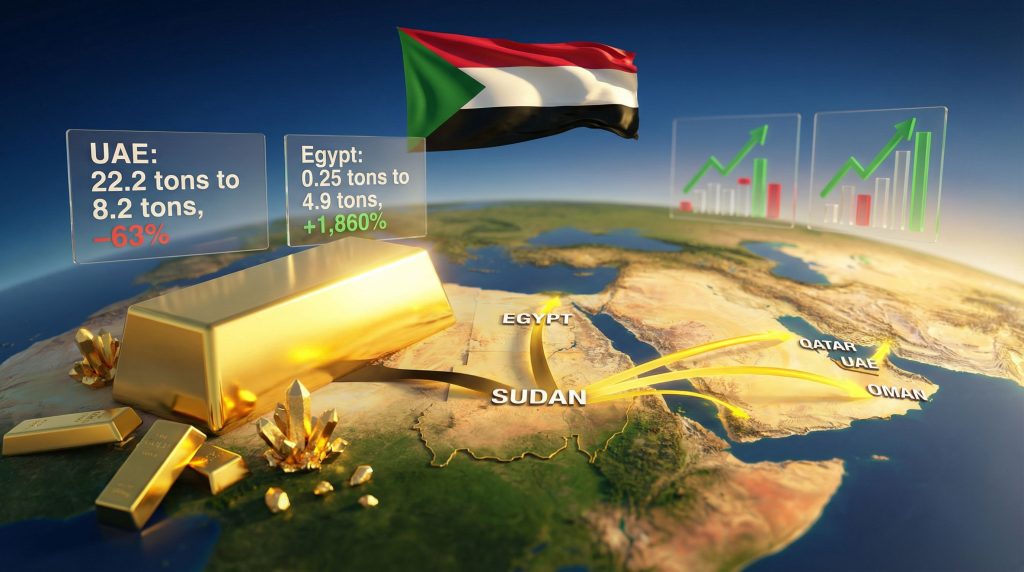
African mineral exporters face mounting challenges as geopolitical tensions reshape traditional trade corridors. The vulnerability of single-market dependency has become increasingly apparent across the continent, where commodity-rich nations often concentrate their exports through limited channels. Sudan gold exports to UAE slump after diplomatic ties severed demonstrates how diplomatic fractures translate into economic disruption, particularly in sectors where revenue streams depend on stable bilateral relationships and established shipping infrastructure.
The consequences extend beyond immediate revenue losses. When diplomatic tensions escalate into trade restrictions, mining economies must rapidly restructure their market access strategies while navigating complex logistical challenges. Furthermore, this transformation process reveals critical insights about export diversification, alternative route development, and the resilience mechanisms that determine whether commodity exporters can successfully pivot during political crises.
Understanding Sudan's Gold Export Dependency Crisis
Sudan's gold trading architecture demonstrates the extreme risks associated with concentrated export strategies. In 2024, the nation shipped 22.9 tons of official gold exports, with an unprecedented 99% flowing to a single destination market. This level of concentration created systemic vulnerability that materialised dramatically when diplomatic relations deteriorated.
The economic impact manifested through multiple dimensions:
- Export volume decline: Official shipments dropped 35.8% from 22.9 tons (2024) to 14.7 tons (2025)
- Market share concentration risk: Single-buyer dependency exposed the entire export economy to geopolitical shocks
- Revenue vulnerability: Despite maintaining approximately $15.5-16 billion in equivalent export value across both years, the dramatic volume redistribution highlighted structural weaknesses
According to Suliman Baldo, Executive Director of the Sudan Transparency and Policy Tracker, shipping restrictions in August 2025 created immediate systemic disruption, prompting officials at Port Sudan to rapidly explore alternative markets. This response timeline illustrates how quickly policy shifts must occur when primary trade routes become compromised.
Economic Concentration Mechanics
Sudan's extreme market concentration created what economists term buyer concentration risk. With 99% of official exports flowing through one destination in 2024, the nation faced multiple vulnerability points:
- Bilateral diplomatic deterioration exposure
- Unilateral port access restriction risks
- Financial system disconnection impacts
- Shipping route disruption cascades
The Red Sea port infrastructure at Port Sudan became a critical chokepoint. When August 2025 shipping delays occurred, they impacted not only gold cargoes but also fuel shipments from Sudan's Red Sea operations. Consequently, this demonstrates how trade route dependencies create cross-commodity vulnerabilities, similar to the tariff impacts on markets seen in other sectors.
Informal Sector Complexity
Sudan's state gold producer acknowledges that official figures fail to capture massive illicit and unrecorded trade volumes, including small-scale mining operations. This parallel economy complicates accurate assessment of total export capacity and revenue generation potential. The underground trade networks operating outside official channels suggest actual gold production and movement exceed documented statistics significantly.
When big ASX news breaks, our subscribers know first
What Triggered the UAE-Sudan Trade Relationship Collapse?
The deterioration between Sudan and the UAE followed a systematic progression spanning multiple phases. Sudan's civil war erupted in April 2023, with the UAE becoming Sudan's largest trading partner during the subsequent 24-month period ending in May 2025.
Timeline of Diplomatic Breakdown
The relationship collapse occurred through three distinct phases:
- Accusation Phase (2023-2025): Sudan's military-backed government repeatedly accused Abu Dhabi of backing the Rapid Support Forces (RSF), the paramilitary group battling the army for territorial control
- Formal Severance Phase (May 2025): Sudan officially cut diplomatic ties with the UAE
- Economic Implementation Phase (August 2025 onwards): Shipping access restrictions began affecting cargo movements through UAE ports
The UAE consistently denied allegations of RSF support, stating it supports neither side in the conflict. Most recently, the Gulf state repeated calls for immediate ceasefire and political transition, highlighting the fundamental breakdown in diplomatic communication where factual claims remain in direct contradiction.
Conflict Context Impact
The Sudan civil conflict has claimed tens of thousands of lives and caused what humanitarian organisations describe as the world's biggest humanitarian crisis as of 2026. United Nations experts have accused the RSF of using informal gold sales to fund military campaigns, allegations the group denies. This broader conflict context indicates Sudan gold exports to UAE slump after diplomatic ties severed occurred within internal warfare dynamics rather than isolated bilateral trade disputes.
The progression from diplomatic dispute to trade restriction followed a three-month lag between formal tie-cutting and implementation of port access barriers. However, this suggests either administrative delays or deliberate escalation timeline management.
How Severe Was the Gold Export Volume Decline?
The transformation of Sudan's gold export patterns represents one of the most dramatic commodity trade redistributions in recent African mining history. The data reveals both the magnitude of disruption and the speed of market adaptation, particularly relevant when considering the historic gold price surge occurring simultaneously.
Sudan Gold Export Redistribution (2024-2025)
| Destination | 2024 Volume (tons) | 2025 Volume (tons) | Change (%) | Value Impact (USD) |
|---|---|---|---|---|
| UAE | 22.2 | 8.2 | -63% | -$635 million |
| Egypt | 0.25 | 4.9 | +1,860% | +$517 million |
| Oman | 0.35 | 0.7 | +100% | +$77 million |
| Qatar | 0.15 | 0.382 | +153% | +$41 million |
| Ethiopia | 0 | 0.294 | New market | +$31 million |
Market Share Transformation Analysis
The UAE's dominance reduction from 99% to 56% market share represents a 43 percentage point displacement within 12 months. This dramatic shift required Sudan to simultaneously develop new trade relationships, establish alternative shipping arrangements, and negotiate competitive pricing with previously minor trading partners.
The remaining 44% of exports distributed across multiple destinations:
- Egypt: 33.3% of total exports (4.9 of 14.7 tons)
- Oman: 4.8% of total exports
- Qatar: 2.6% of total exports
- Ethiopia: 2.0% of total exports
Revenue Recovery Through Diversification
Despite the 63% volume loss to UAE markets, Sudan achieved near-complete revenue replacement through alternative channels. The net calculation reveals:
- Total value loss: $635 million (UAE reduction)
- Value gained through alternatives: $666 million (Egypt $517M + Oman $77M + Qatar $41M + Ethiopia $31M)
- Net revenue recovery: Approximately 105% compensation
This indicates Sudan successfully optimised pricing through access to competitive alternative markets rather than accepting distressed sale pricing during the transition period. For instance, this recovery occurred despite the broader context of gold market performance volatility.
Which Alternative Markets Emerged for Sudanese Gold?
Egypt emerged as the primary beneficiary of Sudan's export redirection, capturing nearly 74% of the volume displaced from UAE markets. The 1,860% increase from 0.25 to 4.9 tons represents the most significant bilateral trade shift in the redistribution.
Egypt's Strategic Advantages
Egypt's geographic proximity to Sudan, including shared borders along the Red Sea region, provided natural logistical advantages for overland transport. The nation's existing refining infrastructure and processing capacity enabled rapid absorption of increased gold volumes without requiring significant infrastructure development.
The $517 million value from Egypt's 4.9-ton imports translates to approximately $105,510 per kilogram, aligning with 2025 market pricing and confirming legitimate commercial transactions rather than distressed pricing arrangements.
Gulf State Market Expansion
Oman's Increased Capacity
Oman doubled its Sudanese gold imports to 0.7 tons valued at $77 million, representing a 100% year-over-year increase. This expansion suggests Oman's precious metals trading infrastructure possessed sufficient capacity to handle elevated volumes.
Qatar's Market Entry
Qatar received more than twice its previous volume, importing 382 kilograms worth $41 million. The consistent pricing per unit weight indicates competitive market-rate transactions rather than premium or discount arrangements.
African Regional Integration
Ethiopia's Market Debut
Ethiopia imported 294 kilograms worth $31 million, marking its first entry as a Sudanese gold importer. This development indicates cross-border trade facilitation mechanisms enabled rapid establishment of new commercial relationships within the African regional framework.
The emergence of Ethiopia as an alternative destination suggests regional economic integration frameworks provide viable alternatives to traditional Middle Eastern trade routes. In addition, this potentially strengthens intra-African commodity flows.
How Do Illicit Trade Networks Complicate Official Statistics?
Sudan's official export figures represent only documented transactions, excluding substantial underground economy activities. The state gold producer acknowledges that massive illicit and unrecorded trade volumes, particularly from small-scale mining operations, remain unaccounted in government statistics.
Underground Economy Scale
The parallel economy operates through multiple channels:
- Small-scale mining operations: Independent miners operating outside formal regulatory frameworks
- Cross-border smuggling networks: Informal trade routes bypassing official export documentation
- Conflict financing mechanisms: Undocumented sales potentially funding military operations
United Nations experts have identified concerns regarding informal gold sales being used to fund military campaigns. However, specific volumetric estimates of illicit flows remain unavailable through public sources.
Revenue Loss Quantification
The government's inability to capture taxation and export duties from unofficial trade represents significant revenue loss. While exact figures remain classified, the acknowledgment by state producers indicates the scale substantially exceeds official export volumes.
This parallel economy complicates efforts to:
- Accurately assess total national gold production capacity
- Implement effective export monitoring systems
- Capture appropriate government revenue from mineral wealth
- Comply with international trade documentation requirements
Furthermore, it raises questions about the complete picture when Sudan gold exports to UAE slump after diplomatic ties severed is analysed using only official data.
What Are the Broader Implications for African Commodity Exports?
Sudan's experience provides critical lessons for African mining economies regarding export vulnerability and diversification strategies. The rapid market redistribution demonstrates both the risks of concentration and the potential for successful pivot strategies, particularly relevant given current record high gold prices.
Sanctions Vulnerability Assessment
African commodity exporters face similar concentration risks across multiple sectors:
- Single-buyer dependency exposure: Many nations rely heavily on limited destination markets for mineral exports
- Infrastructure bottlenecks: Limited port access and shipping routes create chokepoint vulnerabilities
- Political stability requirements: Diplomatic relationships must be maintained for sustained trade access
Regional Trade Route Resilience
The successful redirection of Sudan's gold exports highlights opportunities for strengthening regional trade architecture:
- Alternative corridor development: Investment in multiple transport routes reduces dependency on single channels
- Regional processing capacity: Developing local refining and processing capabilities creates value-added export opportunities
- Cross-border facilitation: Streamlined customs and documentation processes enable rapid trade route establishment
Infrastructure Investment Priorities
Sudan's experience demonstrates the importance of maintaining multiple viable export routes. Key investment priorities include:
- Transport diversification: Road, rail, and port infrastructure connecting to multiple international markets
- Processing facility development: Local refining capacity reduces dependency on foreign processing arrangements
- Regional integration frameworks: Strengthened African Continental Free Trade Area implementation
The next major ASX story will hit our subscribers first
Future Outlook: Lessons for Resource-Dependent Economies
Sudan's rapid export diversification provides a template for other African mineral exporters facing similar geopolitical risks. The achievement of 105% revenue recovery through market diversification demonstrates that concentrated export dependencies can be successfully restructured, particularly when considering the gold price forecast for continued upward momentum.
Risk Mitigation Strategies
Effective export diversification requires:
- Geographic distribution targets: Establishing minimum thresholds for market concentration (avoiding >60% single-destination dependency)
- Political risk assessment integration: Regular evaluation of diplomatic relationship stability with major trading partners
- Alternative route maintenance: Continuous investment in backup shipping and transport infrastructure
Regional Integration Opportunities
The emergence of Ethiopia and expanded Egyptian trade relationships indicates intra-African commodity flows offer viable alternatives to traditional export destinations. Strengthening regional economic integration through the African Continental Free Trade Area framework could provide:
- Enhanced cross-border trade facilitation
- Reduced dependency on external markets
- Collective bargaining power in international negotiations
- Shared infrastructure development initiatives
Economic Security Through Trade Policy
Investment Disclaimer: This analysis contains forward-looking statements regarding trade patterns and economic relationships. Commodity markets remain subject to volatility, and political developments can rapidly alter trade dynamics. Readers should conduct independent research before making investment decisions based on trade flow projections.
The transformation of Sudan's gold export architecture within a 12-month timeframe illustrates both the vulnerability and adaptability of African commodity exporters. While geopolitical tensions can rapidly disrupt established trade relationships, strategic diversification efforts can successfully maintain revenue streams through alternative market development.
Future monitoring of Sudan's export patterns will provide valuable insights into the long-term sustainability of diversified trade strategies. Consequently, this will also inform the resilience of alternative market relationships under continued political pressure, particularly as Sudan gold exports to UAE slump after diplomatic ties severed continues to reshape regional commodity flows.
Considering Investment Opportunities in African Mining Stocks?
Discovery Alert's proprietary Discovery IQ model delivers instant notifications on significant ASX mineral discoveries, helping investors capitalise on market-moving announcements from companies with African operations and global commodity exposure. Explore Discovery Alert's discoveries page to understand why major mineral discoveries can generate substantial market returns, then begin your 14-day free trial to position yourself ahead of the market.