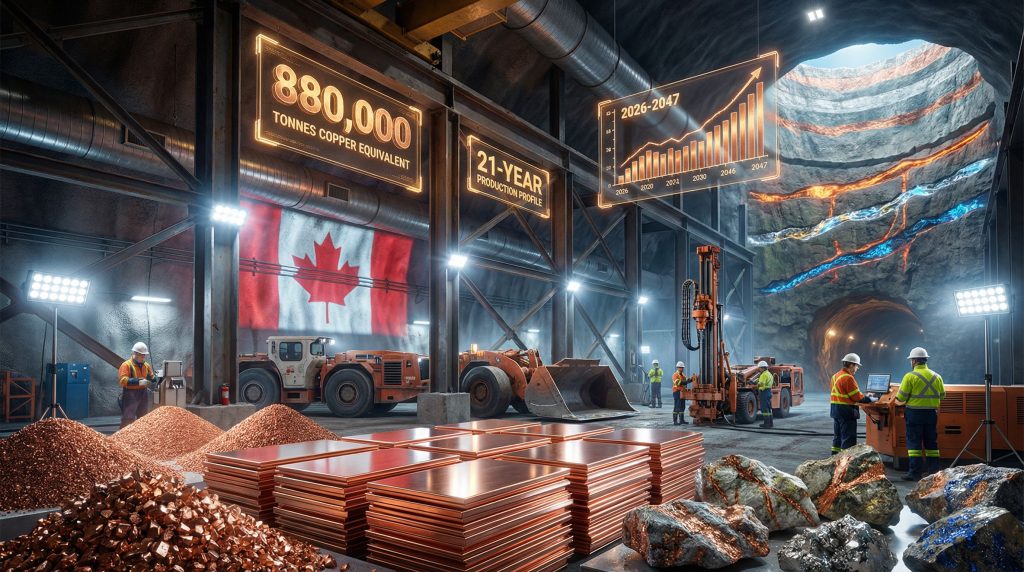
Vale Base Metals and Glencore Canada's groundbreaking partnership in the Sudbury Basin represents a transformative approach to unlocking complex copper deposits through collaborative infrastructure development. The Vale Base Metals and Glencore Canada Sudbury copper deposits project demonstrates how joint venture strategies can overcome individual capital constraints whilst maximising utilisation of existing mining infrastructure. This strategic alliance reflects broader mining industry evolution towards collaborative development models that address complex geological challenges through shared expertise and resources.
Strategic Infrastructure Advantages in Polymetallic Mining Systems
The Sudbury Basin's geological framework presents unique operational advantages that distinguish it from conventional mining districts worldwide. This 1.85 billion-year-old impact structure, spanning approximately 40 kilometres by 15 kilometres, contains concentrated mineralisation zones created through shock metamorphism during the original meteor impact event. Furthermore, the resulting ore distribution creates multiple overlapping mineral deposit tiers that yield copper, nickel, cobalt, gold, and platinum group metals from interconnected geological formations.
Established Underground Networks and Regional Mining Infrastructure
Existing shaft systems throughout the Sudbury region provide critical infrastructure foundations that dramatically reduce development costs for adjacent ore bodies. The Vale Base Metals and Glencore Canada Sudbury copper deposits partnership specifically leverages Glencore's Nickel Rim South mine infrastructure, which includes functioning shaft systems, underground development levels, and material handling networks positioned to access neighbouring mineral zones through coordinated expansion.
This brownfield approach contrasts sharply with greenfield mining projects that require complete infrastructure construction from surface level. In addition, established operations provide proven ventilation systems, hoisting equipment, power distribution networks, and surface facilities that can be modified and expanded rather than constructed entirely from baseline conditions.
Multi-Metal Recovery Potential in Impact Crater Geology
The Sudbury Basin's impact crater geology created distinctive mineralisation patterns where multiple valuable metals occur in close proximity within the same ore bodies. This polymetallic characteristic means that extracting copper-rich zones simultaneously yields nickel sulphides, precious metals, and critical minerals essential for modern technology applications.
Historical production data from Sudbury operations demonstrates consistent multi-commodity output, with primary metals (copper and nickel) supported by significant gold, platinum group metals, and cobalt recovery. Consequently, this geological association reduces processing complexity compared to operations that must handle separate ore types for different commodity targets.
The region's skilled workforce represents an additional strategic advantage, with decades of experience in polymetallic ore processing, underground engineering marvels, and complex metallurgical operations. This human capital infrastructure accelerates project development and reduces operational risk during production ramp-up phases.
Capital Efficiency Through Collaborative Underground Development
Joint venture partnerships in large-scale mining projects fundamentally alter project economics by distributing capital requirements across multiple operators whilst maximising utilisation of existing infrastructure assets. The Vale Base Metals and Glencore Canada Sudbury copper deposits agreement demonstrates how neighbouring properties can achieve economic viability through shared development costs and integrated operational planning.
Financial Architecture of Shared Mining Infrastructure
The proposed joint venture targets capital expenditure of $1.6 to $2.0 billion for combined development, representing significant savings compared to individual operation construction costs estimated at $2.5 to $3.0 billion per separate project. This $500 million to $1.4 billion combined capital reduction reflects the economic value of infrastructure sharing in complex underground mining environments.
Equal partnership structures distribute financial exposure whilst maintaining operational control balance between participating companies. Each partner contributes approximately $800 million to $1.0 billion towards total development costs, reducing individual company exposure to construction risk and financing requirements compared to standalone project development.
The following table illustrates key economic advantages of the joint venture approach:
| Development Factor | Individual Projects | Joint Venture Model |
|---|---|---|
| Total Capital Required | $5.0-6.0B (combined) | $1.6-2.0B (shared) |
| Individual Company Risk | $2.5-3.0B per operator | $0.8-1.0B per partner |
| Infrastructure Timeline | 8-10 years each | 5-7 years combined |
| Technical Risk Profile | High (separate builds) | Moderate (proven systems) |
Brownfield Modification Versus Greenfield Construction
Brownfield development leverages existing mine shaft infrastructure through deepening and lateral expansion rather than complete new construction. The Nickel Rim South mine provides established underground access that can be modified to reach ore bodies on both partner properties through coordinated drift development and shaft extension.
This approach eliminates several major cost centres typical in greenfield mining projects:
• Shaft collar construction and surface facilities development
• Primary ventilation system installation and commissioning
• Power supply infrastructure and electrical distribution networks
• Material handling systems and concentrate transportation logistics
• Waste management facilities and tailings infrastructure
Technical modifications focus on shaft deepening, new drift development from existing levels, and expansion of processing capacity rather than fundamental system construction. These modifications typically require 60-70% less capital investment and 2-3 fewer years for completion compared to equivalent greenfield development.
Risk Distribution and Technical Expertise Integration
Partnership structures distribute technical and operational risks across organisations with complementary expertise and operational experience. Vale Base Metals contributes global polymetallic mining experience and established nickel-copper processing capabilities, whilst Glencore Canada provides specific knowledge of Sudbury Basin operating conditions and existing infrastructure systems.
The contemplated partnership enables extraction of valuable copper-rich ore bodies that would otherwise remain uneconomical for individual operators, demonstrating how collaborative approaches unlock previously stranded mineral resources.
Equal governance structures ensure both partners maintain decision-making authority over operations affecting shared infrastructure and long-term strategic direction. This balanced control mechanism reduces conflicts over operational priorities whilst maintaining accountability for technical and environmental performance standards.
Production Economics and Multi-Commodity Revenue Strategies
The economic foundation of the Sudbury copper development rests on a 21-year production profile targeting 880,000 tonnes of copper equivalent output, representing approximately 41,900 tonnes annually of primary copper production. This extended operational timeline reflects substantial ore reserves accessible through shared infrastructure development and coordinated extraction planning.
Revenue Diversification Through Polymetallic Processing
Sudbury Basin ore bodies characteristically contain multiple valuable metals within the same geological formations, creating inherent revenue diversification that protects project economics from single-commodity price volatility. The polymetallic nature of the deposits means copper extraction simultaneously yields nickel, cobalt, gold, and platinum group metals as integral components of the processing stream.
This multi-commodity approach provides several economic advantages:
• Price volatility mitigation across different metal markets
• Revenue optimisation through selective concentrate blending
• Processing efficiency gains from integrated metallurgical circuits
• Market flexibility in product sales and concentrate contracts
• Enhanced project returns during favourable pricing cycles for any constituent metal
Historical Sudbury operations demonstrate consistent polymetallic output ratios, with copper and nickel as primary products supported by significant precious metal and critical mineral recovery. This established production pattern reduces metallurgical risk and provides predictable revenue stream composition for financial modelling and investor analysis.
Capital Intensity and Return Profile Analysis
At projected capital expenditure of $1.6 to $2.0 billion for the combined operation, the implied per-tonne capital intensity ranges from $1,818 to $2,273 per annual tonne of copper equivalent capacity. This capital efficiency compares favourably to recent greenfield copper project developments, which typically require $2,500 to $4,000 per annual tonne of capacity.
Annual gross revenue potential, based on typical long-term copper pricing of $8,000 to $10,000 per tonne, suggests $335 to $419 million in annual copper-equivalent revenue before operating costs and by-product credits. However, polymetallic by-products historically contribute 20-30% additional revenue beyond primary copper sales, potentially increasing total annual revenue to $420 to $545 million range.
Critical Minerals Integration and Market Positioning
The project's cobalt and nickel production aligns strategically with North American critical minerals supply security objectives and growing demand from battery manufacturing and clean energy infrastructure development. This positioning provides additional revenue stability through long-term supply contracts with technology sector consumers seeking domestic mineral sources.
Critical mineral components include:
-
Cobalt recovery for lithium-ion battery cathode materials
-
Nickel sulphate production for electric vehicle battery supply chains
-
Platinum group metals for hydrogen fuel cell and catalytic applications
-
Gold production providing revenue stability and inflation hedging characteristics
This diversified output profile reduces dependence on copper market cycles whilst supporting emerging technology sectors with reliable domestic mineral supplies, potentially commanding premium pricing relative to international sources with supply chain uncertainty.
Joint Venture Governance and Partnership Risk Management
Equal partnership structures in large-scale mining developments reflect evolving industry approaches to capital allocation, technical risk distribution, and operational control mechanisms. The 50-50 ownership model between Vale Base Metals and Glencore Canada represents balanced risk-sharing that addresses both organisations' strategic objectives whilst maintaining decision-making accountability.
Strategic Rationale for Equal Partnership Control
Historical attempts at Sudbury Basin partnerships faced challenges related to unequal control structures and misaligned operational priorities between participating companies. The equal partnership framework addresses these concerns by ensuring both operators maintain equivalent influence over strategic decisions, capital allocation, and operational management protocols.
Key governance advantages of the 50-50 structure include:
• Balanced technical expertise integration from both organisations
• Equal financial commitment ensuring aligned investment incentives
• Shared operational responsibility reducing single-operator dependency
• Unanimous decision requirements for major capital expenditures
• Proportional cost and revenue distribution maintaining partnership equity
This governance model contrasts with majority-controlled joint ventures where one partner maintains operational control whilst the minority partner provides capital investment. Furthermore, equal partnerships require more complex decision-making processes but typically result in more stable long-term operational relationships.
Technical Expertise Combination and Operational Synergies
Vale Base Metals contributes extensive global experience in polymetallic ore processing, advanced mining technologies, and large-scale underground operations management. The company's operational knowledge includes complex metallurgical processing, environmental management systems, and safety protocols applicable to Sudbury Basin geological conditions.
Glencore Canada provides specific expertise in Sudbury Basin operations, including detailed knowledge of local geological conditions, established relationships with regulatory authorities, and proven experience operating the Nickel Rim South mine infrastructure that forms the partnership's operational foundation.
Combined technical capabilities enable:
-
Optimised ore processing through integrated metallurgical expertise
-
Enhanced safety protocols combining global best practices with local knowledge
-
Improved environmental management through shared monitoring and mitigation systems
-
Accelerated permitting processes through established regulatory relationships
-
Reduced operational risk through dual-operator technical oversight
Community Relations and Regulatory Coordination
Joint ventures with established regional operators typically receive enhanced credibility in community consultation processes and regulatory approval procedures. Both partners bring existing relationships with local stakeholders, Indigenous communities, and government authorities essential for successful project permitting and social licence maintenance.
The partnership approach demonstrates long-term commitment to regional development through substantial combined investment, local employment creation, and community economic benefits. This collaborative engagement strategy often results in more streamlined approval processes and stronger community support compared to single-operator developments.
Market Timing and Copper Supply-Demand Alignment
The project development timeline strategically positions production commencement to coincide with projected copper market supply deficits during the late 2020s. Engineering and permitting work completion targeted for 2026, followed by final investment decision in the first half of 2027, suggests initial production availability during the 2028-2030 period when industry analysis indicates significant supply-demand imbalances.
Critical Minerals Strategy Integration and Policy Alignment
Canada's Critical Minerals Strategy identifies copper, nickel, and cobalt as essential materials for clean energy infrastructure, electric vehicle manufacturing, and technology sector supply chain security. The mineral exploration importance of the Sudbury project's polymetallic output directly supports these policy objectives through domestic production of strategically important minerals.
Key policy alignment factors include:
• Domestic supply chain strengthening for critical technology sectors
• Reduced dependence on international mineral sources with geopolitical risks
• Support for North American electric vehicle and clean energy manufacturing
• Strategic mineral reserve development for national economic security
• Export potential to allied nations seeking supply chain diversification
This policy alignment provides potential for government support, accelerated permitting processes, and preferential consideration for infrastructure development assistance programmes designed to enhance domestic critical minerals production capacity.
Electrification Demand and Long-Term Market Fundamentals
Global electrification trends, including electric vehicle adoption, renewable energy infrastructure development, and grid modernisation programmes, support sustained copper demand growth throughout the project's operational timeline. Industry forecasts suggest copper demand increases of 60-70% by 2040, driven primarily by clean energy technology deployment and transportation electrification.
The project's 21-year operational profile aligns with this demand growth trajectory, positioning production during peak electrification infrastructure development periods. Long-term supply contracts with technology sector consumers provide revenue stability whilst supporting strategic supply chain relationships for critical mineral end-users.
Underground Extraction Technical Challenges and Solutions
Complex underground mining operations in polymetallic ore bodies require sophisticated technical approaches to extraction, processing, and environmental management. The Vale Base Metals and Glencore Canada Sudbury copper deposits development incorporates established mining methodologies adapted for multi-commodity recovery from interconnected ore zones accessible through coordinated infrastructure development.
What Are the Key Engineering Challenges in Shaft Deepening?
Modification of existing mine shaft infrastructure requires precise engineering to maintain operational safety whilst extending access to deeper ore zones. The Nickel Rim South shaft deepening project involves:
-
Structural assessment and reinforcement of existing shaft walls and support systems
-
Hoisting system upgrades to handle increased depth and material volumes
-
Ventilation network expansion for enhanced air circulation in extended underground workings
-
New drift development connecting ore bodies on both partner properties
-
Underground crushing and material handling system integration
These modifications leverage existing infrastructure investments whilst extending operational capacity to previously inaccessible mineral zones. The engineering approach minimises surface disruption and construction timeline compared to new shaft development from surface level.
How Does Polymetallic Processing Optimise Recovery?
Multi-commodity ore processing requires sophisticated metallurgical circuits designed to maximise recovery of copper, nickel, cobalt, gold, and platinum group metals from integrated mineral phases. Processing optimisation involves:
• Differential flotation circuits for copper-nickel sulphide separation
• Gravity concentration for precious metal recovery
• Selective leaching processes for cobalt extraction
• Integrated smelting and refining for concentrate production
• Environmental management for processing waste streams
The established metallurgical knowledge base from decades of Sudbury Basin operations provides proven processing methodologies adapted for the specific ore characteristics of the target deposits. Consequently, this technical foundation reduces processing risk and accelerates production ramp-up compared to operations in geologically unfamiliar regions.
Environmental Management and Sustainability Protocols
Brownfield development provides environmental advantages through utilisation of existing permitted facilities and established environmental monitoring systems. Environmental management protocols include:
-
Water treatment systems for underground drainage and processing water
-
Tailings management using established storage facilities and monitoring protocols
-
Air quality monitoring and emissions control for processing operations
-
Biodiversity protection programmes for regional ecosystem preservation
-
Reclamation planning for post-mining land use restoration
Shared environmental management between partners provides enhanced technical resources and redundant monitoring systems that improve environmental performance whilst reducing individual company compliance risk.
Community Engagement and Indigenous Partnership Development
Successful mining development in Ontario requires comprehensive consultation with Indigenous communities, local stakeholders, and regional authorities throughout the project development process. The joint venture approach provides enhanced capabilities for community engagement through combined resources and established relationships from both partner organisations.
Indigenous Consultation and Traditional Territory Acknowledgment
The Sudbury Basin region encompasses traditional territories of several First Nations communities whose consultation and consent are essential for project permitting and social licence maintenance. According to Vale's official announcement, consultation protocols include:
• Traditional Ecological Knowledge integration into environmental assessment processes
• Economic benefit-sharing agreements providing community revenue participation
• Employment and training programmes for Indigenous community members
• Cultural heritage protection measures for significant sites and practices
• Ongoing consultation committees for operational oversight and community input
Both Vale and Glencore maintain established relationships with regional Indigenous communities through existing operations, providing consultation experience and community trust that facilitates effective engagement for the joint project.
Local Economic Development and Employment Creation
Large-scale mining development provides substantial economic benefits for regional communities through direct employment, supplier contracts, and induced economic activity. The joint venture is expected to create:
-
Direct employment for 800-1,200 workers during construction phases
-
Permanent operational employment for 400-600 personnel
-
Indirect employment through supplier contracts and service providers
-
Tax revenue for municipal and provincial governments
-
Skills development and training programmes for local workforce development
The extended 21-year operational timeline provides long-term economic stability for regional communities, supporting local business development and infrastructure investment that extends beyond the immediate mining operation.
Investment Implications and Capital Market Considerations
Joint venture mining partnerships represent evolving approaches to capital allocation in large-scale resource development projects. The equal partnership model reduces individual company exposure to development risks whilst maintaining operational control and revenue participation proportional to investment commitment.
Capital Allocation Efficiency and Risk Distribution
The shared development approach allows both partners to pursue large-scale mining development within constrained capital budgets whilst maintaining diversified project portfolios. Key investment advantages include:
• Reduced individual company capital requirements enabling multiple concurrent projects
• Shared technical and operational risks through dual-operator oversight
• Enhanced project economics through infrastructure cost sharing
• Improved financing options through combined creditworthiness of both partners
• Portfolio diversification across geographic regions and commodity exposures
This capital efficiency enables companies to pursue growth strategies within financial constraints whilst maintaining balance sheet flexibility for additional development opportunities.
Long-Term Production Stability and Revenue Predictability
The 21-year production timeline provides extended cash flow visibility that supports long-term financial planning and investor confidence. Multi-commodity output creates revenue diversification that reduces dependence on single metal price cycles whilst providing exposure to growing critical minerals markets.
Investment benefits include:
-
Predictable cash flow generation over extended operational timeline
-
Commodity price risk mitigation through multi-metal production
-
Exposure to critical minerals market growth trends
-
Established infrastructure providing operational cost advantages
-
Strategic positioning in politically stable mining jurisdiction
These characteristics appeal to investors seeking stable, long-term resource exposure with reduced volatility compared to single-commodity mining operations.
Strategic Portfolio Enhancement Through Partnership Models
Mining companies increasingly utilise joint venture structures to access development opportunities that exceed individual capital capacity whilst maintaining operational involvement and technical expertise application. This strategic approach enables:
• Access to larger, higher-quality mineral deposits requiring substantial capital investment
• Geographic and commodity diversification without proportional capital commitment
• Technical expertise sharing and operational knowledge transfer between partners
• Enhanced project viability through combined resources and capabilities
• Risk-adjusted returns improvement through shared development costs
The Sudbury partnership demonstrates how collaborative approaches unlock value from mineral resources that remain uneconomical for individual development whilst providing strategic portfolio benefits for both participating companies.
Future Applications of Infrastructure-Sharing Models in Mining
The successful development of shared infrastructure partnerships in established mining districts creates precedents for similar collaborative approaches in other regions with mature mining operations and adjacent undeveloped mineral resources. This model provides frameworks for unlocking stranded mineral assets through cooperative development strategies.
Replication Potential Across Mining Districts Globally
Similar geological and infrastructure conditions exist in numerous established mining regions where adjacent properties contain mineral resources that remain uneconomical for individual development. As reported by Mining.com, potential application areas include:
-
Australian mining districts with established underground operations and neighbouring deposits
-
South African mining regions with existing shaft infrastructure and adjacent ore bodies
-
Chilean copper districts with processing facilities serving multiple operations
-
Canadian mining camps with established infrastructure and exploration targets
-
Nevada gold districts with existing processing capacity and nearby mineral resources
The regulatory precedents, partnership structures, and technical methodologies developed through the Sudbury project provide templates for similar developments in comparable geological and infrastructure environments.
Technology Integration and Digital Mining Innovation
Modern mining technology applications, including automated equipment, remote monitoring systems, and integrated data management platforms, enhance the efficiency and safety of shared infrastructure operations. Technology integration benefits include:
• Centralised monitoring and control systems for multiple ore bodies
• Automated material handling reducing operational costs and safety risks
• Integrated data analytics optimising extraction and processing efficiency
• Remote operation capabilities reducing workforce exposure and operating costs
• Predictive maintenance systems minimising equipment downtime and repair costs
These technological capabilities provide competitive advantages that justify the complex coordination requirements of joint venture operations whilst improving overall project economics and operational performance.
Sustainability Improvements Through Collaborative Environmental Management
Shared operations enable enhanced environmental management through combined technical resources, integrated monitoring systems, and collaborative sustainability initiatives. Environmental benefits include:
-
Reduced surface footprint through shared infrastructure utilisation
-
Enhanced environmental monitoring through combined technical resources
-
Integrated waste management systems improving efficiency and reducing costs
-
Collaborative research and development for environmental technology advancement
-
Shared sustainability reporting and stakeholder engagement programmes
These environmental advantages support social licence maintenance and regulatory compliance whilst potentially reducing operational costs through efficiency improvements and shared environmental management resources.
The Vale Base Metals and Glencore Canada Sudbury copper deposits project represents a significant evolution in mining industry partnership approaches, demonstrating how collaborative infrastructure sharing can unlock mineral resources that remain uneconomical for individual development. The strategic integration of established technical expertise, shared capital commitment, and coordinated operational planning creates a framework for sustainable resource development that balances economic viability with community benefits and environmental responsibility.
Disclaimer: This analysis is based on publicly available information and industry reports. Mining development projects involve substantial risks including technical, environmental, regulatory, and market factors that may affect project outcomes. Readers should consult qualified professionals for investment advice and conduct independent research before making investment decisions.
Want to Capitalise on ASX Mining Discoveries Before the Market Reacts?
Discovery Alert's proprietary Discovery IQ model instantly identifies significant mineral discoveries across the ASX, providing real-time alerts that help investors position themselves ahead of broader market recognition. With historic discoveries like De Grey Mining and WA1 Resources demonstrating the substantial returns possible from early identification, explore Discovery Alert's track record of successful discoveries and begin your 30-day free trial to gain a competitive advantage in mining investment opportunities.