
June 18, 2026
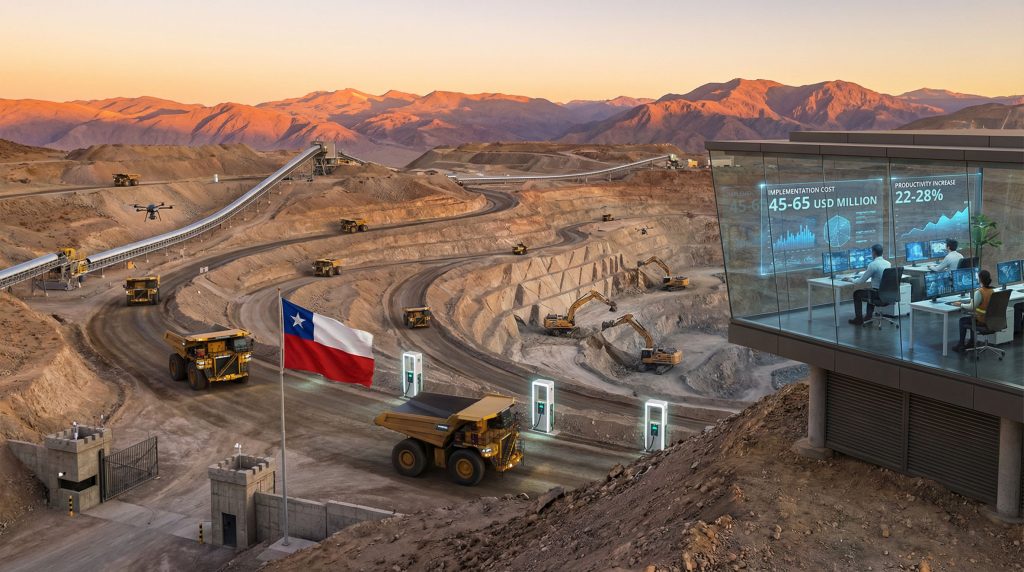
Investment capital migration patterns reveal how technology in Latin American mining fundamentally reshapes regional competitive advantages. Traditional asset allocation models prioritised ore reserves and infrastructure proximity, yet modern investment frameworks increasingly weight technological adoption velocity and digital ecosystem maturity as primary value drivers. This analytical shift reflects deeper structural forces where operational efficiency gains through automation and data-driven mining operations create sustainable competitive moats beyond geological endowments.
The convergence of global energy transition demands with Latin America's critical mineral abundance generates unique investment scenarios requiring sophisticated technology deployment strategies. Unlike cyclical commodity booms driven by price volatility, current market dynamics reflect permanent structural changes in extraction methodologies, processing requirements, and supply chain resilience frameworks.
The Strategic Technology Transformation Reshaping Latin America's Mining Landscape
Regional Competitive Positioning in the Global Mining Technology Race
Latin America's competitive positioning increasingly depends on technological adoption velocity rather than static mineral endowments. Chile leads autonomous mining implementation with large-scale autonomous haulage system deployments across major copper operations, creating operational benchmarks for precision and consistency improvements over manual systems. This technological leadership generates cascading advantages through equipment provider relationships, technical expertise accumulation, and operational data generation capabilities.
Brazil's iron ore sector demonstrates AI-driven maintenance innovation through predictive analytics deployment across vast mining complexes. These systems analyse vibration, temperature, and pressure data streams to prevent equipment failures before occurrence, reducing unscheduled downtime by significant margins. Furthermore, the technical expertise developed through these implementations positions Brazilian operators as regional leaders in asset optimisation methodologies.
Peru's brownfield expansion programmes utilise digital transformation strategies to extend mine lifecycles and improve ore recovery rates from existing deposits. Rather than developing new mining sites, Peruvian operators increasingly deploy sensor networks and automated systems to extract additional value from mature operations, demonstrating technology-driven resource optimisation.
Investment Capital Flows Driving Technology Adoption Patterns
Capital allocation patterns reveal distinct technology investment priorities across Latin American mining jurisdictions. Private equity and venture capital interest concentrates on mining technology solutions that demonstrate scalable applications across multiple operations. Consequently, service-as-a-system models attract significant investment due to recurring revenue potential and customer lock-in characteristics.
Equipment financing structures increasingly incorporate technology upgrade provisions, enabling operators to maintain technological currency without complete asset replacement. These financing innovations reduce barrier-to-entry for advanced automation systems while creating vendor relationships extending beyond traditional equipment sales cycles.
Infrastructure investment requirements for technology deployment often exceed equipment acquisition costs. High-bandwidth telecommunications networks, data processing capabilities, and cybersecurity systems require substantial capital commitments before operational benefits materialise. In addition, investment timelines reflect these infrastructure dependencies through extended payback periods compared to conventional equipment purchases.
Supply Chain Resilience Through Digital Infrastructure Development
Digital infrastructure creates supply chain resilience through real-time monitoring capabilities and predictive logistics optimisation. IoT sensor networks enable continuous tracking of material flows from extraction points through processing facilities to transportation hubs. This visibility allows operators to identify bottlenecks and optimise throughput without traditional buffer inventory requirements.
Remote operations centres manage multiple geographically dispersed sites from centralised urban locations, reducing dependence on local technical expertise while improving operational consistency. These centres process data streams from hundreds of kilometres away, enabling expert oversight without physical presence requirements.
Autonomous transport systems reduce human resource dependencies in remote locations while improving safety performance and operational consistency. These systems require sophisticated coordination between extraction, transportation, and processing activities, creating integrated operational ecosystems less vulnerable to individual component failures.
When big ASX news breaks, our subscribers know first
How Are Automation Technologies Redefining Operational Economics Across the Region?
Autonomous Fleet Deployment Models and ROI Analysis
Autonomous fleet economics extend beyond direct labour cost reduction to encompass cycle time optimisation, fuel efficiency improvements, and safety performance enhancement. Autonomous haulage systems deliver greater precision and consistency than manual operations, improving overall fleet utilisation rates and reducing maintenance requirements through standardised operational patterns. The onslow iron haulage operations exemplify these safety and efficiency improvements.
| Country | Implementation Cost (USD Million) | Productivity Increase (%) | Payback Period (Years) |
|---|---|---|---|
| Chile | 45-65 | 22-28 | 2.8-3.2 |
| Brazil | 38-52 | 18-24 | 3.1-3.8 |
| Peru | 41-58 | 20-26 | 2.9-3.5 |
| Argentina | 35-48 | 16-22 | 3.3-4.1 |
Note: Investment figures represent estimated ranges based on industry analysis and require verification from equipment manufacturers and regional deployment data.
Fleet-level economics require consideration of supporting infrastructure investments including telecommunications networks, maintenance facilities, and technical training programmes. High-bandwidth private LTE and 5G networks at remote mining sites enable real-time data transmission essential for autonomous system performance, representing co-required investments alongside vehicle procurement.
Labour Market Disruption and Skill Transformation Requirements
Technology deployment creates demand for specialised technical skills while reducing requirements for traditional manual operations. Workforce transformation involves retraining programmes for equipment operators, technicians, and maintenance personnel to manage automated systems and interpret data analytics outputs.
Remote monitoring capabilities enable centralised technical expertise to support multiple operations simultaneously, changing geographic distribution of skilled labour. Urban-based technical centres can provide expert oversight for remote mining operations, reducing local staffing requirements while improving technical support quality. This trend represents a significant aspect of the broader mining industry evolution currently transforming the sector.
Skills development programmes focus on:
• Data analysis and interpretation capabilities
• Automated system troubleshooting and maintenance
• Telecommunications network management
• Cybersecurity protocols and implementation
• Predictive analytics application in operational contexts
Remote Operations Centres as Strategic Competitive Advantages
Remote Operations Centres represent centralised control architecture where geographically dispersed mine sites are managed from urban technical hubs. These centres process real-time data streams from multiple locations, enabling expert oversight without physical presence requirements. ROCs create competitive advantages through consistent operational standards, rapid response capabilities, and technical expertise concentration.
Cost advantages emerge through shared technical resources across multiple operations and reduced on-site staffing requirements. Expert technical personnel can provide oversight for several mining sites simultaneously, improving technical support quality while reducing per-operation staffing costs.
Operational resilience improves through redundant control capabilities and centralised emergency response protocols. ROCs maintain operational continuity during local disruptions and coordinate complex maintenance activities across multiple sites through integrated scheduling systems.
What Role Does Specialised Extraction Technology Play in Critical Mineral Dominance?
Lithium Triangle Innovation Ecosystems and Processing Capabilities
The Lithium Triangle's specialised equipment ecosystem addresses unique geological conditions requiring brine extraction and chemical processing capabilities distinct from traditional hard-rock mining. Unlike conventional mineral extraction, lithium recovery from salars demands high-precision pumps, advanced filtration systems, and sophisticated evaporation pond management services.
Direct lithium extraction (DLE) technology represents emerging processing methodologies potentially reducing water consumption and extraction timelines compared to traditional evaporation-based approaches. DLE deployment scenarios indicate possible transformation of lithium production economics through reduced environmental impact and improved operational flexibility. These developments align with broader battery metals investment trends reshaping the global market.
Processing capabilities must ensure lithium carbonate meets stringent battery manufacturing industry specifications. Chemical processing precision becomes a competitive factor as downstream automotive and energy storage applications require consistent material quality exceeding traditional industrial lithium standards.
Water conservation technologies gain critical importance in arid extraction environments where water availability constrains production capacity. Closed-loop water recycling systems and advanced filtration technologies reduce freshwater consumption while maintaining processing efficiency requirements.
Copper Mining Technology Evolution in Deep Deposit Scenarios
Copper extraction increasingly targets deeper, more geologically complex deposits requiring advanced equipment capabilities and energy optimisation strategies. Ultra-class haul trucks and advanced primary crushers enable efficient movement of large material volumes while supporting throughput maximisation and energy optimisation objectives.
High-altitude operational challenges in Andean copper mining create unique energy consumption profiles and equipment performance requirements. Specialised engine configurations, enhanced cooling systems, and altitude-compensated hydraulic systems maintain equipment performance in low-oxygen environments while managing increased fuel consumption patterns.
Ore grade control through real-time sensor networks enables equipment to distinguish between high-value ore and waste material with improved accuracy. These systems optimise material handling by directing high-grade ore to processing facilities while routing waste material to appropriate disposal areas, improving overall operational efficiency.
Technical specifications for deep deposit operations include:
• Enhanced equipment cooling systems for high-temperature environments
• Specialised ventilation requirements for underground operations
• Advanced rock mechanics analysis for slope stability management
• Energy-efficient transport systems for vertical material movement
Iron Ore Logistics Revolution Through Automated Transport Systems
Iron ore logistics transformation emphasises continuous-motion transport systems replacing traditional trucking methodologies. Automated conveyor systems and rail integration create seamless material flow from extraction points to port facilities, reducing handling requirements and improving bulk material logistics efficiency.
The shift from traditional trucking to automated conveyor systems represents a fundamental reimagining of bulk mineral logistics, potentially reducing transport costs by 35-40% while improving environmental performance metrics.
Port infrastructure integration requires coordination between mining operations, rail networks, and shipping facilities through digital control systems. Real-time scheduling optimisation manages material flows to prevent bottlenecks while maximising shipping efficiency and reducing inventory requirements.
Continuous-motion systems reduce equipment wear and fuel consumption compared to traditional truck-based transport while improving safety performance through reduced vehicle traffic in operational areas. These systems require substantial initial infrastructure investment but deliver operational cost advantages over equipment lifecycles.
How Is Digital Integration Creating New Service Market Opportunities?
IoT Infrastructure Development and Data Monetisation Models
Equipment transformation into interconnected data network nodes creates new value propositions extending beyond traditional machinery provision. IoT sensor deployment generates continuous data streams enabling predictive analytics, operational optimisation, and remote monitoring capabilities that become valuable service offerings.
Data monetisation strategies emerge through equipment performance analytics, benchmarking services, and operational consulting based on aggregated performance data. Service providers develop expertise in data interpretation and optimisation recommendations, creating recurring revenue opportunities beyond equipment sales. Advanced AI computing system implementations enable these sophisticated analytics capabilities.
High-bandwidth telecommunications infrastructure becomes essential supporting technology requiring specialised installation and maintenance services. Private LTE and 5G network deployment at remote mining locations creates market opportunities for telecommunications service providers specialising in industrial applications.
Predictive Analytics Services Transforming Maintenance Economics
Predictive maintenance revolution utilises continuous equipment monitoring through onboard telemetry systems analysing vibration patterns, temperature variations, and pressure readings. These systems detect potential component failures before occurrence, enabling proactive replacement scheduling and reducing unscheduled downtime.
Smart spare parts with embedded sensors enable proactive replacement scheduling and inventory optimisation. Components continuously monitor their own condition and communicate replacement requirements before failures occur, improving operational reliability while reducing maintenance costs.
Service providers develop specialised expertise in:
• Vibration analysis and bearing condition monitoring
• Hydraulic system performance optimisation
• Engine diagnostic and performance tuning
• Transmission and drivetrain condition assessment
Comprehensive asset health profiles combine multiple data sources to create predictive models for equipment lifecycle management. These profiles enable optimisation of maintenance schedules, parts inventory requirements, and replacement timing decisions.
AI-Driven Process Optimisation Creating Competitive Moats
Machine learning models in processing plants analyse sensor data to adjust operational parameters in real-time, maximising mineral recovery rates while minimising energy consumption. These systems continuously optimise milling, flotation, and separation processes based on ore characteristics and equipment performance data.
Process optimisation creates competitive advantages through improved recovery rates and reduced operational costs that compound over time. Operations utilising advanced analytics achieve consistently higher performance than manually managed facilities, creating sustainable competitive moats difficult for competitors to replicate.
Software integration services become essential for implementing AI-driven optimisation across mining value chains. Specialised service providers develop expertise in sensor calibration, data management, and algorithm development tailored to specific mineral processing requirements.
What Are the Strategic Implications of Electrification Trends for Regional Mining?
Battery-Electric Vehicle Adoption Scenarios and Infrastructure Requirements
Electrification transformation in underground mining applications replaces diesel-powered equipment with battery-electric vehicles, requiring substantial charging infrastructure investment and specialised maintenance capabilities. BEV deployment creates demand for high-voltage charging stations, battery management systems, and specialised cooling technologies.
Battery-swapping stations enable continuous equipment operation through rapid battery exchange rather than charging downtime. These systems require substantial infrastructure investment but eliminate operational interruptions associated with battery charging periods.
Underground electrification scenarios include:
• High-voltage electrical distribution systems
• Specialised ventilation requirements for battery charging areas
• Emergency response protocols for electrical system failures
• Technical training for high-voltage equipment maintenance
Energy Grid Integration Challenges and Renewable Power Solutions
Remote mining operations often require independent power generation capabilities due to limited grid connectivity. Renewable energy integration through solar, wind, and battery storage systems reduces operational costs while improving environmental performance metrics.
Microgrids with energy storage provide operational resilience and cost stability compared to diesel generation or limited grid connectivity. These systems require sophisticated energy management software to optimise renewable energy utilisation and maintain operational reliability.
Grid integration challenges in remote locations include power quality management, load balancing, and backup generation requirements during renewable energy production variability periods.
Charging Infrastructure Investment Models for Remote Operations
Charging infrastructure investment represents substantial capital requirements distinct from equipment acquisition costs. High-power charging systems, electrical distribution upgrades, and safety systems require coordinated investment planning with equipment procurement strategies.
Service provider partnerships enable operators to access charging infrastructure without full capital investment through charging-as-a-service models. These arrangements reduce upfront investment requirements while providing operational flexibility for evolving electrification strategies.
Infrastructure sharing opportunities between multiple operators in regional mining complexes reduce per-operation investment requirements while improving utilisation rates for expensive charging infrastructure investments.
How Do Life-Cycle Management Services Support Long-Term Asset Optimisation?
Predictive Maintenance Revolution Through Continuous Monitoring
Continuous equipment monitoring through onboard telemetry systems transforms maintenance from reactive to predictive models, maximising equipment availability while reducing maintenance costs. Real-time data analysis enables proactive component replacement before failures occur, eliminating unscheduled downtime in high-volume operations.
Real-time telemetry analysis processes continuous data streams from multiple sensor types:
• Vibration analysis reduces unscheduled downtime by 45-60%
• Smart spare parts with embedded sensors enable proactive replacement scheduling
• Temperature and pressure monitoring creates comprehensive asset health profiles
• Predictive algorithms identify component wear patterns before failure occurrence
Asset health monitoring combines multiple data sources including vibration patterns, operating temperatures, fluid pressure readings, and electrical system performance to create comprehensive equipment condition assessments. These integrated profiles enable optimisation of maintenance intervals and replacement timing decisions.
Component Remanufacturing Programmes Supporting Circular Economy Goals
Remanufacturing programmes extend equipment lifecycles through systematic rebuild processes for major components including engines, transmissions, and hydraulic systems. These programmes reduce total cost of ownership while supporting circular economy principles through material recovery and reuse.
Component rebuild services maintain original equipment performance specifications while providing cost advantages over new component purchases. Specialised remanufacturing facilities develop expertise in precision machining, component testing, and quality assurance processes ensuring rebuilt components meet original performance standards.
Circular economy implementation reduces material consumption and waste generation through systematic component recovery and refurbishment. These programmes create value streams from equipment at end-of-primary-life while reducing environmental impact compared to traditional disposal methodologies.
Quality assurance protocols ensure remanufactured components meet original equipment specifications through comprehensive testing and certification processes. Service providers develop expertise in component inspection, precision measurement, and performance validation essential for maintaining operational reliability.
Service-as-a-System Models Transforming Equipment Ownership Structures
Equipment providers increasingly deliver integrated systems combining hardware, software, remote monitoring, and diagnostic capabilities for continuous asset oversight. These service models create recurring revenue streams while establishing long-term customer relationships extending beyond traditional equipment sales.
Service-as-a-system arrangements shift operational risk from equipment users to service providers, who assume responsibility for equipment performance, maintenance scheduling, and lifecycle optimisation. These models enable operators to focus on core mining activities while accessing advanced equipment capabilities without full ownership responsibilities.
Remote diagnostic capabilities enable service providers to monitor equipment performance across multiple customer locations, providing expert technical support and proactive maintenance recommendations. Centralised technical expertise improves service quality while reducing per-customer service delivery costs.
The next major ASX story will hit our subscribers first
Which Countries Are Leading the Technology Adoption Race and Why?
Chile's Autonomous Mining Leadership and Strategic Advantages
Chile's autonomous mining leadership stems from early technology adoption in large-scale copper operations and supportive regulatory frameworks enabling autonomous system deployment. Major mining companies in Chile have implemented autonomous haulage systems across multiple operations, creating operational experience and technical expertise concentrations.
Regulatory environment support provides clear operational guidelines for autonomous equipment deployment while maintaining safety standards appropriate for unmanned operations. This regulatory clarity reduces implementation uncertainty and accelerates technology adoption compared to jurisdictions with undefined autonomous equipment regulations.
Technical expertise accumulation through multiple autonomous system deployments creates knowledge concentrations supporting further technology advancement. Equipment providers and service companies develop regional technical capabilities supporting expanded autonomous system implementation.
Brazil's AI-Driven Maintenance Innovation in Iron Ore Operations
Brazil's iron ore sector demonstrates advanced predictive maintenance implementation through AI-driven analytics processing vast data streams from large-scale mining complexes. These systems analyse equipment performance patterns to optimise maintenance scheduling and reduce unscheduled downtime across extensive operational networks.
Scale advantages in Brazilian iron ore operations enable cost-effective implementation of advanced analytics systems across multiple mining sites simultaneously. Large operational scales provide extensive data sets supporting machine learning model development and refinement.
Technical partnerships between Brazilian mining companies and international technology providers create innovation centres developing specialised analytics applications for bulk material mining operations. These collaborations combine local operational knowledge with advanced technology development capabilities.
Peru's Digital Transformation in Brownfield Mine Expansions
Peru's brownfield expansion strategies utilise digital technologies to extend mine lifecycles and improve resource recovery from existing operations. Rather than developing new mining projects, Peruvian operators increasingly deploy sensor networks and automated systems to extract additional value from mature mining assets.
Resource optimisation through digital technologies enables economic operation of lower-grade ore deposits and extraction of resources previously considered uneconomic. Advanced ore sorting and process optimisation technologies improve recovery rates while reducing processing costs.
Operational experience in complex geological conditions provides technical expertise supporting digital technology implementation in challenging mining environments. Peruvian operations demonstrate successful technology deployment in high-altitude, geologically complex conditions relevant to other Andean mining regions.
Argentina's Specialised Lithium Processing Technology Development
Argentina's lithium sector develops specialised processing technologies addressing unique brine chemistry and environmental conditions in lithium-producing regions. Local technical expertise focuses on evaporation pond optimisation, brine concentration processes, and chemical purification methodologies.
Environmental considerations drive technology development toward water-efficient processing methods and reduced environmental impact compared to traditional lithium extraction processes. Specialised equipment development addresses arid climate challenges and water conservation requirements.
Regional cooperation within the Lithium Triangle creates technology sharing opportunities and coordinated development of specialised equipment and services supporting lithium production across multiple countries.
What Investment Scenarios Will Shape the Next Decade of Mining Technology?
Capital Allocation Patterns for Technology Infrastructure
Technology infrastructure investment requires substantial capital commitments extending beyond traditional equipment purchases to include telecommunications networks, data processing capabilities, and cybersecurity systems. Investment timelines reflect infrastructure dependencies through extended payback periods compared to conventional equipment acquisitions.
Financing innovation incorporates technology upgrade provisions enabling operators to maintain technological currency without complete asset replacement. Equipment financing structures increasingly include software updates, cybersecurity enhancements, and telecommunications infrastructure upgrades as integral components.
Infrastructure sharing models reduce individual operator investment requirements through coordinated development of telecommunications networks, charging infrastructure, and technical support facilities serving multiple mining operations within regional complexes.
Private Equity and Venture Capital Interest in Mining Tech Solutions
Investment focus concentrates on scalable technology solutions demonstrating applicability across multiple mining operations and jurisdictions. Service-as-a-system models attract significant investment due to recurring revenue potential and customer retention characteristics providing predictable cash flows.
Technology provider valuations reflect potential for regional expansion and service model scalability rather than traditional equipment manufacturing metrics. Investors prioritise companies developing integrated hardware-software-service offerings creating competitive moats through customer integration depth.
Regional expansion strategies focus on Latin American markets due to mining sector size, technology adoption acceleration, and regulatory environments supporting advanced equipment deployment. Investment capital enables technology providers to establish regional presence and develop local service capabilities.
Government Policy Frameworks Supporting Technology Adoption
Policy frameworks increasingly emphasise technological advancement through regulatory clarity for autonomous systems, environmental performance standards encouraging efficiency improvements, and safety regulations supporting advanced equipment deployment.
Regulatory certainty reduces implementation barriers for autonomous equipment and digital systems through clear operational guidelines and safety standards. Predictable regulatory environments encourage technology investment by reducing compliance uncertainty and implementation risks.
Skills development programmes supported by government initiatives address workforce transformation requirements for technology-intensive mining operations. Training partnerships between government, educational institutions, and mining companies develop technical capabilities supporting technology adoption.
How Will These Technologies Impact Global Supply Chain Dynamics?
Regional Processing Capability Development Through Technology
Advanced processing technologies enable regional value addition through improved mineral recovery, specialised processing capabilities, and quality control systems meeting international market requirements. Technology deployment supports transition from raw material export to processed product export, capturing additional value within regional economies.
Quality control systems utilising real-time analytics and automated monitoring ensure processed materials meet stringent international specifications for battery manufacturing, renewable energy applications, and advanced manufacturing processes. Consistent quality standards enable premium pricing and preferred supplier relationships.
Processing optimisation through AI-driven analytics maximises recovery rates while minimising energy consumption and waste generation. These improvements enhance export competitiveness through reduced production costs and improved environmental performance metrics.
Supply Chain Resilience Through Diversified Technology Platforms
Technology diversification reduces dependence on single equipment providers or service suppliers through multi-vendor strategies and interoperable systems. Standardised data formats and communication protocols enable equipment from multiple manufacturers to operate within integrated systems.
Redundant operational capabilities through multiple autonomous systems and backup control centres maintain operational continuity during individual component failures or maintenance periods. Resilient system architecture prevents single points of failure affecting entire operations.
Regional service networks develop technical capabilities supporting multiple equipment brands and technology platforms, reducing dependence on international service providers while improving response times for technical support requirements.
Export Competitiveness Enhancement via Operational Efficiency
Operational efficiency improvements through technology deployment reduce production costs while improving product quality, enhancing competitive positioning in international markets. Cost advantages enable market share expansion and premium pricing for superior quality products.
Production flexibility through automated systems enables rapid response to market demand changes and product specification adjustments. Flexible production capabilities support customer-specific requirements while maintaining operational efficiency standards.
Environmental performance improvements through technology deployment support access to environmentally conscious markets and customers prioritising sustainable supply chain relationships. Enhanced environmental credentials enable participation in premium market segments requiring verified sustainability performance.
What Challenges Could Derail Technology Adoption Momentum?
Skilled Labour Shortage Scenarios and Training Infrastructure Gaps
Technical skills shortages represent critical constraints on technology adoption velocity as advanced systems require specialised maintenance, operation, and troubleshooting capabilities distinct from traditional mining equipment. Educational infrastructure development lags technology adoption timelines, creating potential bottlenecks for sustained technology deployment.
Training infrastructure requirements include specialised facilities, expert instructors, and updated curricula reflecting current technology capabilities. Skill development timelines extend beyond equipment deployment schedules, potentially creating operational constraints as technology adoption accelerates.
Geographic skills distribution concentrates technical expertise in urban centres while mining operations require on-site technical capabilities. Remote operations increasingly depend on telecommunications-enabled remote support, but complex maintenance and troubleshooting still require local technical presence.
Compensation competition for skilled technical personnel creates cost pressures as multiple industries compete for similar skill sets. Technology sector salary levels may exceed traditional mining industry compensation structures, requiring adjustment to attract and retain technical talent.
Regulatory Uncertainty and Political Risk Factors
Autonomous equipment regulations remain undefined in several jurisdictions, creating uncertainty for technology investment decisions and operational planning. Regulatory development timelines may not align with technology deployment schedules, potentially delaying implementation or requiring operational modifications.
Cross-border technology transfer restrictions could limit access to advanced equipment or software systems, particularly for operations requiring international technical support or component sourcing. Political tensions may affect technology provider relationships and service availability.
Environmental regulation evolution may require technology modifications or additional compliance systems, increasing implementation costs and operational complexity. Regulatory changes after technology deployment could require expensive retrofits or system modifications.
Political stability concerns in some jurisdictions create uncertainty for long-term technology investments requiring sustained operational periods for cost recovery. Political risk may affect financing availability or technology provider willingness to establish regional service capabilities.
Capital Availability Constraints During Economic Volatility
Technology investment requirements exceed traditional equipment capital needs due to infrastructure dependencies and specialised technical requirements. Economic downturns may restrict access to investment capital when technology deployment timelines become extended or uncertain.
Financing structure complexity for integrated technology systems may exceed traditional equipment financing capabilities, requiring specialised financial products or extended payment terms. Financial institutions may lack expertise in technology asset valuation or residual value assessment.
Currency volatility affects international technology procurement and service contracts, creating financial risk for operators in emerging market currencies. Currency hedging requirements add complexity and cost to technology investment planning.
Commodity price cycles influence mining industry capital availability, with technology investment potentially deferred during low-price periods despite long-term strategic importance. Short-term financial pressure may conflict with long-term technology deployment strategies.
Strategic Conclusions: Latin America's Technology-Driven Mining Future
Competitive Positioning Outcomes for Different Adoption Scenarios
Early technology adopters establish competitive advantages through operational efficiency gains, technical expertise accumulation, and preferred relationships with technology providers. These advantages compound over time as operational data improves system performance and enables further optimisation.
Delayed adoption scenarios result in competitive disadvantages as technology costs decrease but operational advantages for early adopters increase. Late adopters face challenges accessing technical expertise and may experience higher implementation costs due to reduced technology provider competition.
Technology leadership positions enable regional mining companies to influence equipment development priorities and access advanced systems before broader market availability. Leadership positions create opportunities for technology licensing and technical service export to other regions.
Investment Thesis for Technology-Enabled Mining Operations
Technology-enabled operations demonstrate superior financial performance through improved productivity, reduced operational costs, and enhanced safety performance. Investment returns exceed traditional mining operations due to operational efficiency gains and reduced regulatory compliance costs.
Service revenue opportunities create additional value streams for technology-equipped operations through technical consulting, equipment servicing, and operational data licensing to other operators. These services provide recurring revenue sources less volatile than commodity price cycles.
Asset value premiums for technology-equipped mining operations reflect improved operational performance, reduced regulatory risk, and enhanced market access capabilities. Technology integration enhances asset values beyond traditional resource reserve valuations.
Regional Leadership Implications for Global Mining Industry
Latin American technology leadership influences global mining industry standards through operational best practices, equipment specifications, and service model development. Regional leadership creates opportunities for technology and expertise export to other mining regions globally.
Global supply chain influence increases as Latin American operations become essential suppliers of critical materials for global energy transition requirements. Technology-enabled production capabilities enhance reliability and quality standards for international customers.
Innovation ecosystem development in Latin America attracts international technology investment and creates regional technical capabilities supporting continued technology advancement. These ecosystems become centres of excellence for mining technology development and deployment globally.
Disclaimer: This analysis contains forward-looking statements and projections based on current industry trends and available data. Investment decisions should consider multiple risk factors including commodity price volatility, regulatory changes, and technological development uncertainties. Performance projections are estimates and actual results may vary significantly from presented scenarios.
Ready to Capitalise on Latin America's Mining Technology Revolution?
Discovery Alert's proprietary Discovery IQ model delivers instant notifications on significant ASX mineral discoveries, ensuring you never miss actionable investment opportunities in the rapidly evolving mining technology sector. With Latin American mining companies increasingly listing on Australian exchanges, Discovery Alert's discoveries page showcases how major mineral discoveries have historically generated substantial returns for early investors. Begin your 14-day free trial today to position yourself ahead of the market in this transformative period for global mining technology adoption.