Infini Resources Ltd
- ASX Code: I88
- Market Cap: $26,510,773
Breakthrough Results Confirm Large-Scale Uranium System at Portland Creek
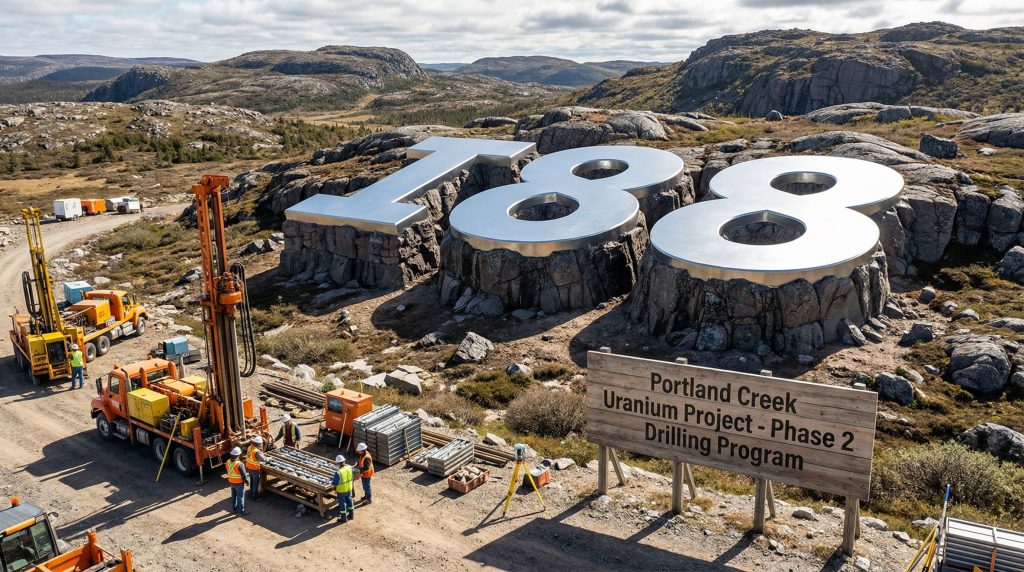
Infini Resources (ASX: I88) has delivered compelling first-batch assay results from its Phase 2 drilling program at the flagship Portland Creek uranium project by Infini Resources Ltd in Newfoundland, Canada. The announcement confirms uranium mineralisation up to 347 ppm U3O8 across multiple drillholes spanning a 2+ kilometre strike length, validating the company's exploration model of a structurally controlled, shear-hosted uranium system.
The assays covered drillholes PCDD25-007 to PCDD25-018 and identified anomalous uranium in five adjacent drillholes (PCDD25-010, 012, 014, 016, and 017), defining a mineralised zone trending NE-SW with maximum downhole thickness of 300 metres. This represents only the first batch of results from the completed 17-hole Phase 2 program, with additional assays pending in Q2 2026.
When big ASX news breaks, our subscribers know first
Structural Controls Validate Exploration Strategy
The Phase 2 results have provided crucial validation of Infini's exploration approach at Portland Creek. Laboratory assays confirm a direct correlation between uranium levels and fracturing intensity in the host rock, consistent with the company's targeted exploration model.
Key geological observations include:
• Uranium mineralisation hosted within fractures, joints, breccias and cavity zones in granitic rocks
• Coincident with zones of enhanced brittle deformation, supporting structurally focused fluid flow
• Association with hematite-rich alteration zones, particularly along reactivated shear planes
• Polymetallic signatures including molybdenum (up to 321 ppm), zinc (up to 676 ppm), and copper (up to 479 ppm)
One standout interval in hole PCDD25-009A returned 5.11 metres averaging 303 ppm copper, 166 ppm molybdenum and 202 ppm zinc, reinforcing the presence of a fertile hydrothermal system capable of concentrating multiple metals.
Furthermore, these results demonstrate the effectiveness of targeting structural corridors for uranium exploration across the project area. The clear association between deformation zones and mineralisation provides a robust framework for future drilling campaigns.
CEO Rohan Bone commented: "The first batch of assays from Phase 2 drilling provides strong validation of our exploration model at Portland Creek, confirming uranium mineralisation across multiple holes and targets within a structurally controlled hydrothermal system."
Understanding Hydrothermal Uranium Systems
Hydrothermal uranium deposits form when uranium-bearing fluids circulate through fractured rock systems, depositing minerals in areas of enhanced permeability. Unlike sedimentary uranium deposits that follow geological layers, these systems are structurally controlled – meaning the uranium follows fault zones, fractures, and shear structures.
For investors, this deposit style is significant because:
- Structural controls can extend mineralisation over large areas and to significant depths
- Multiple metal associations (uranium + copper + molybdenum + zinc) indicate a robust mineralising system
- Fracture-hosted mineralisation can create high-grade shoots within broader mineralised zones
The presence of widespread alteration assemblages dominated by sodic alteration (albite ± quartz) with hematite overprinting supports the interpretation of a large-scale hydrothermal event that affected the entire district. However, these characteristics align with understanding uranium deposit types that can host significant resources over extensive areas.
Phase 2 Results by the Numbers
| Drillhole | Peak U3O8 (ppm) | Key Intervals | Associated Metals |
|---|---|---|---|
| PCDD25-012 | 347 | Multiple intervals 100-347 ppm | Mo, Zn, Cu present |
| PCDD25-016 | 297 | 113-114m: 297 ppm | Elevated base metals |
| PCDD25-010 | 176 | Several 100+ ppm intervals | Mo up to 240 ppm |
| PCDD25-008 | 229 | 143-143.3m: 229 ppm | Base metal associations |
| PCDD25-014 | 124 | Broad structural corridor | Significant faulting zone |
The results demonstrate consistent uranium mineralisation across a 2+ kilometre trend, with individual holes containing multiple mineralised intervals. Importantly, the 300-metre maximum downhole thickness in the mineralised zone suggests substantial vertical extent to the system.
Moreover, these findings complement broader Newfoundland uranium exploration projects that have demonstrated the region's potential for hosting significant uranium discoveries.
Exceptional Soil Anomalies Remain Untested
While Phase 2 drilling has successfully identified bedrock uranium mineralisation, the source of extreme soil anomalies up to 74,997 ppm U3O8 at Falls Lake remains unresolved. This represents a critical exploration target, as soil anomalies of this magnitude typically indicate proximity to significant bedrock mineralisation.
The disconnect between the moderate bedrock grades encountered to date (25-347 ppm) and the exceptional soil results (up to 7.5% U3O8) suggests that primary high-grade sources remain to be discovered. This creates substantial exploration upside within the existing project area.
In addition, the Portland Creek uranium project by Infini Resources Ltd continues to demonstrate characteristics that align with world-class uranium systems, particularly given the extensive alteration footprint and polymetallic signatures observed.
Upcoming Catalysts Timeline
Q1 2026:
- Airborne geophysics survey results (EM-magnetic-radiometric)
- Integration with existing geological and structural data
Q2 2026:
- Final batch of Phase 2 assay results
- Field program commencement (geological mapping, structural measurements)
- Target refinement and prioritisation
H2 2026:
- Expanded exploration and drilling program design
- Testing of principal fluid pathways and structural traps
Investment Thesis Strengthened
The Phase 2 results significantly de-risk the Portland Creek project by confirming the presence of a coherent uranium mineralising system across multiple targets. Key investment highlights include:
✓ District-Scale Potential: Uranium mineralisation confirmed across 2+ kilometre strike length with numerous untested targets remaining
✓ Robust Geological Model: Direct correlation between structure and mineralisation provides clear targeting criteria for future exploration
✓ Polymetallic System: Multi-metal associations indicate a fertile hydrothermal system with potential for multiple commodities
✓ Substantial Exploration Upside: Extreme soil anomalies remain untested, suggesting proximity to higher-grade bedrock sources
✓ Strategic Location: Newfoundland jurisdiction with established mining infrastructure and favourable regulatory environment
The confirmation of widespread hydrothermal alteration and structurally controlled mineralisation establishes Portland Creek as a legitimate uranium exploration target with significant discovery potential. The presence of untested structural corridors and secondary fault splays beyond current drill coverage represents important opportunities for resource expansion.
Consequently, investors seeking uranium exploration opportunities should consider the systematic approach and proven methodology that Infini has demonstrated throughout its exploration program.
What Makes Portland Creek Unique?
The Portland Creek project stands out among Canadian uranium prospects due to its combination of geological characteristics and exploration potential. Furthermore, the project benefits from Canadian uranium mining regulations that provide a stable and predictable operating environment for exploration companies.
The distinctive features include:
- Large-scale hydrothermal system with confirmed uranium mineralisation
- Polymetallic associations indicating a robust mineralising environment
- Exceptional soil anomalies suggesting high-grade bedrock sources nearby
- Systematic exploration approach with validated geological model
The next major ASX story will hit our subscribers first
Why Investors Should Follow Infini Resources
Infini Resources has methodically advanced Portland Creek from early-stage soil sampling to systematic drill testing, successfully validating its exploration model with each phase of work. The company's integrated approach combining geological interpretation, geophysical data, and targeted drilling has proven effective in identifying mineralised zones.
With 328 km² of prospective ground and only a fraction tested to date, the Portland Creek uranium project by Infini Resources Ltd offers substantial blue-sky potential within a proven mineralising system. The upcoming high-resolution airborne survey results and final Phase 2 assays will provide critical data for designing a more focused, higher-impact exploration program in 2026.
The combination of confirmed uranium mineralisation, exceptional untested soil anomalies, and a validated geological model positions Infini for potential discovery success in one of Canada's most prospective uranium districts. For instance, the company's methodical approach to exploring for uranium deposits has consistently delivered results that support continued investment in the project.
Key Takeaway: Infini Resources has successfully confirmed a district-scale uranium system at Portland Creek, with exceptional soil anomalies still requiring drill testing. The validated structural controls and polymetallic associations support continued systematic exploration, making I88 a compelling uranium exploration play with significant discovery upside.
Could Portland Creek Become Your Next Strategic Uranium Investment?
With confirmed uranium mineralisation across a 2+ kilometre strike length and exceptional soil anomalies still awaiting drill testing, Infini Resources presents a compelling exploration story in one of Canada's most prospective uranium districts. The company's systematic approach has successfully validated its geological model, setting the stage for expanded exploration programs in 2026. To explore how Portland Creek's district-scale potential and upcoming catalysts could position I88 in your uranium portfolio, discover more about Infini Resources and their strategic exploration approach.