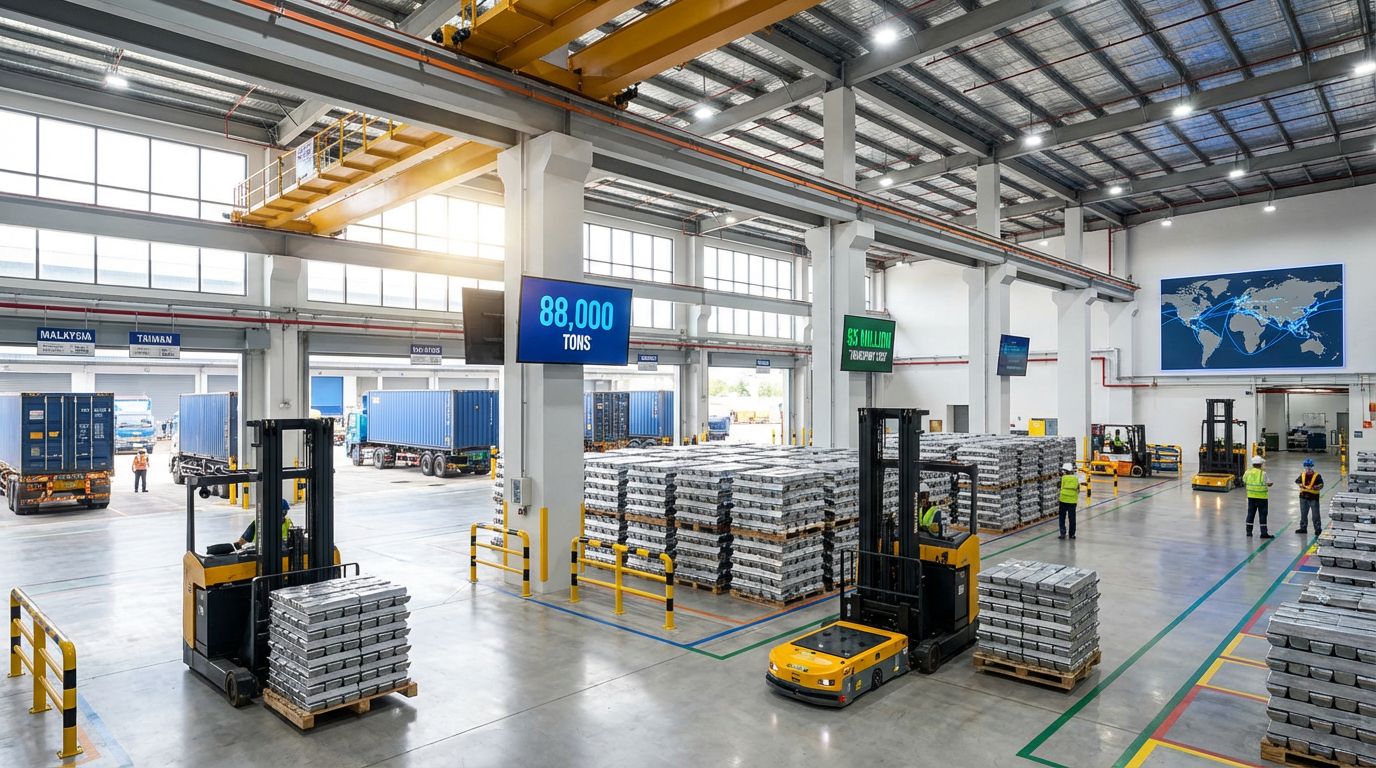
The September US base oil production data reveals fundamental shifts in industrial capacity economics that extend beyond traditional supply-demand mechanics. Furthermore, these changes coincide with oil price easing trends that have influenced market dynamics. Total production declined to 156,700 b/d in September 2025, marking an 8% year-over-year decrease from comparable periods. This decline occurred alongside a substantial 29% surge in base oil products supplied, creating an unusual market dynamic where consumption accelerated during constrained production periods.
Understanding Industrial Base Oil Economics
Production Capacity Utilization Metrics Across Refining Sectors
| Production Category | September 2025 (b/d) | Year-over-Year Change | Month-over-Month Change |
|---|---|---|---|
| Total Base Oil Output | 156,700 | -8% | -12% |
| Paraffinic Production | 144,830 | -0.2% | -5.7% |
| Naphthenic Production | 11,480 | -53% | -54% |
Regional Manufacturing Concentration Patterns
The geographic distribution of production reveals critical vulnerability patterns across specialized processing regions. Gulf Coast operations, representing 70.6% of total national output at 110,670 b/d, experienced an 8% monthly decline from August levels. Moreover, this decline aligns with broader oil price crash analysis trends affecting regional production strategies.
Texas Gulf Coast facilities specifically contracted 16% month-over-month, while Louisiana operations demonstrated 4% growth, indicating divergent regional capacity utilization strategies. Additionally, these regional variations reflect the impact of US oil production decline patterns across different sectors.
Capital Allocation Patterns in Petroleum Processing Infrastructure
Facility-level investment decisions increasingly favour high-value Group II and Group III base oil production over traditional Group I operations. This strategic shift reflects emissions legislation requirements that prioritise CO2 reduction over previous focus areas of SO2 and particulate matter control. Consequently, the transition creates technological barriers between processing configurations, limiting operational flexibility during maintenance cycles.
Supply Chain Vulnerability Assessment Framework
Critical Facility Dependency Mapping
The 53% year-over-year decline in naphthenic base oil production exemplifies single-point-of-failure risks within specialised petroleum processing. When Ergon's 25,000 b/d Vicksburg facility entered scheduled maintenance during September 2025, naphthenic output contracted from 24,970 b/d in August to 11,480 b/d. This demonstrates acute supply chain fragility that reflects broader industry challenges.
Critical Supply Chain Insight: Naphthenic base oils require specialised processing equipment and feedstock configurations that cannot be rapidly substituted through alternative production facilities during maintenance windows.
Infrastructure Resilience Gaps in Specialised Processing
The Smitty's Supply facility fire in late August 2025 at the Roseland, Louisiana blending operation created cascading effects throughout September production metrics. This single incident contributed to a 12% monthly production decline, illustrating how concentrated processing capacity creates systemic vulnerabilities. Furthermore, these vulnerabilities are compounded by oil prices amid trade war uncertainties affecting investment decisions.
Economic Impact Multipliers from Single-Facility Dependencies
Strategic inventory building patterns emerged as market participants anticipated coordinated maintenance schedules. Excel Paralubes' 22,200 b/d Westlake facility scheduled maintenance for early October 2025, prompting advance inventory accumulation during September. This forward-looking demand surge contributed to the 29% year-over-year increase in products supplied despite constrained production capacity.
Economic Indicators Signaling Base Oil Market Tightening
Demand-Supply Imbalance Metrics
The simultaneous occurrence of declining production and accelerating consumption creates quantifiable market tightening indicators. September US base oil production falls coincided with elevated demand patterns, generating a 37 percentage point divergence between supply contraction and demand acceleration. However, these domestic trends must be viewed alongside OPEC market influence on global supply chains.
Inventory-to-Consumption Ratios as Leading Economic Indicators
• Products supplied increased 29% year-over-year during September 2025
• Production declined 8% year-over-year during the same period
• Month-over-month consumption rose 5.6% from August baseline levels
• Working inventory depletion accelerated across downstream blending operations
What drives regional production shortfall patterns?
| Region | September 2025 | August 2025 | Monthly Change |
|---|---|---|---|
| US Midcontinent | 7,270 b/d | 8,840 b/d | -18% |
| Texas Gulf Coast | 44,870 b/d | 53,580 b/d | -16% |
| Louisiana Gulf Coast | 60,830 b/d | 58,550 b/d | +4% |
| US Atlantic Coast | 5,670 b/d | 5,230 b/d | +8% |
Maintenance Cycle Coordination Failures and Market Disruption Costs
The temporal overlap between Ergon Vicksburg's September turnaround and Excel Paralubes' early October maintenance created cumulative supply constraints exceeding normal seasonal adjustments. Consequently, market participants responded by advancing purchase schedules, creating artificial demand spikes that compound underlying supply limitations.
Regional Production Clusters and Economic Vulnerabilities
Gulf Coast Industrial Cluster Dependency Analysis
Concentrated production geography creates amplified economic risks when maintenance schedules overlap or unplanned disruptions occur. The Louisiana-Texas corridor processes 110,670 b/d of the national 156,700 b/d total, representing 70.6% of domestic capacity within a geographically constrained area. This concentration pattern reflects similar trends in US base oil production reported by major industry sources.
Production Rebalancing Economics Between Regions
Atlantic Coast facilities demonstrated 8% monthly growth while Midcontinent operations contracted 18%, suggesting inter-regional capacity optimisation challenges. Transportation costs and logistics constraints limit the ability to redirect supply flows during localised disruptions, creating regional pricing differentials.
Specialised Processing Requirements Creating Technological Barriers
Naphthenic base oil production requires different hydroprocessing configurations compared to paraffinic alternatives. These technological specifications prevent rapid capacity substitution between competing facilities, creating supply bottlenecks when primary producers enter maintenance cycles.
Market Structure Warning: The current concentration of naphthenic processing capacity in single facilities creates unavoidable supply disruptions during planned maintenance, with limited alternative sourcing options available to downstream consumers.
Investment Patterns Driving Base Oil Infrastructure Development
Refinery Turnaround Investment Cycles
Planned maintenance represents strategic capital allocation decisions that balance production continuity against equipment reliability. The coordination challenges evident in September 2025 suggest inadequate industry-wide planning mechanisms to stagger facility downtime and minimise cumulative market disruption. Additionally, investment patterns reflect weekly petroleum data trends that influence strategic planning.
How do technology upgrades affect investment priorities?
Engine oil specifications increasingly emphasise CO2 emission reduction over traditional pollutant control, driving investment toward Group II and Group III base oil production capabilities. This technological evolution creates compatibility barriers between different processing configurations, limiting operational flexibility during supply constraints.
Strategic Inventory Management as Working Capital Optimisation
• Hurricane inventory reserves provided buffer capacity for some producers
• Advance inventory building ahead of scheduled maintenance became standard practice
• Working capital costs increased as inventory holding periods extended
• Supply security premiums emerged in forward contracting arrangements
Demand Dynamics Reshaping Production Economics
Industrial Consumption Pattern Evolution
The 29% year-over-year increase in base oil products supplied reflects structural demand changes beyond seasonal variations. Automotive lubricant requirements and industrial machinery maintenance cycles create baseline consumption levels that persist despite supply constraints. Consequently, this forces inventory depletion rather than demand destruction.
How does price discovery function during supply tightening?
Regional pricing differentials reflect transportation costs and logistics constraints when primary production facilities enter maintenance. Naphthenic grades experienced particular pricing pressure due to the limited alternative supply sources during Ergon Vicksburg's September turnaround.
Export Market Opportunities Versus Domestic Supply Obligations
International base oil trade patterns suggest potential alternative sourcing pathways during domestic supply constraints. India imported 316,050 tonnes of base oils in September 2025, indicating established supply chains that could potentially serve US markets during production shortfalls.
Strategic Implications of Production Volatility
Supply Chain Resilience Building Requirements
The September US base oil production falls demonstrate critical gaps in supply chain diversification for specialised petroleum products. Naphthenic base oil supply depends heavily on single-facility operations, creating unavoidable disruptions during maintenance cycles. These cannot be mitigated through conventional inventory management.
Alternative Sourcing Development Constraints
Technological barriers between different base oil processing configurations limit the ability to develop rapid alternative sourcing relationships. Specialised equipment requirements for naphthenic production create long lead times for capacity development and qualification processes.
What economic forecasting frameworks apply to base oil markets?
Leading indicators for market tightening include:
• Maintenance schedule coordination analysis across major production facilities
• Inventory-to-consumption ratio trends during seasonal demand periods
• Regional production concentration metrics and geographic risk assessment
• Import substitution feasibility during domestic supply constraints
Economic Scenario Projection: Continued coordination failures in maintenance scheduling could create recurring supply disruptions, particularly affecting naphthenic grades where alternative sourcing remains limited and technologically constrained.
Broader Energy Economics Integration
Industrial Capacity Utilisation Trends
Petroleum refining sector efficiency metrics reveal structural shifts toward higher-value product categories. Group II and Group III base oil production receives investment priority over Group I operations. This reflects emissions legislation requirements and margin optimisation strategies across the refining complex.
Market Structure Evolution and Barriers to Entry
Specialised base oil production requires substantial capital investment in hydroprocessing equipment and feedstock handling systems. These barriers to entry create concentrated market structures where single facilities serve large geographic areas. Furthermore, this amplifies disruption risks during maintenance cycles.
Why do coordination incentives remain misaligned?
Current market structures provide insufficient incentives for coordinated maintenance scheduling across competing facilities. Individual producers optimise their own turnaround timing without considering cumulative industry impacts. Consequently, this creates periodic supply disruptions that affect entire downstream markets.
The September US base oil production falls of 8% year-over-year, combined with 29% demand growth, illustrate fundamental market structure challenges requiring coordinated industry responses. These production dynamics reflect broader vulnerabilities in specialised petroleum processing that extend beyond traditional supply-demand economics.
Disclaimer: This analysis is based on Energy Information Administration data and market observations as of December 2025. Production figures and market dynamics are subject to revision and ongoing operational changes. Investment and sourcing decisions should consider additional factors beyond historical production trends.
Ready to capitalise on commodity market opportunities in Australia's resources sector?
Discovery Alert's proprietary Discovery IQ model delivers instant notifications on significant ASX mineral discoveries, enabling subscribers to identify actionable investment opportunities ahead of broader market movements. Start your 30-day free trial today and secure your competitive advantage in Australia's dynamic resources market.