The mineral diplomacy landscape undergoes fundamental transformation as superpowers recognise that technological supremacy increasingly depends on secure access to critical resources. Unlike traditional commodity markets driven primarily by price discovery, today's strategic minerals function as instruments of geopolitical leverage, where supply chain control translates directly into national security advantages. This shift creates new frameworks for international partnerships, where resource access becomes conditional on broader diplomatic objectives, particularly evident in the emerging US Congo minerals pact.
Strategic mineral partnerships now incorporate peace-building mechanisms, economic development incentives, and supply chain diversification goals into unified diplomatic instruments. The emergence of these multifaceted agreements represents a departure from conventional resource extraction models toward comprehensive regional development strategies.
What Makes the US-Congo Minerals Partnership a Geopolitical Game-Changer?
The convergence of technological dependency, supply chain vulnerability, and geopolitical competition has elevated mineral diplomacy to unprecedented strategic importance. Modern economies rely on specific materials for everything from renewable energy infrastructure to defence systems, creating chokepoints that single nations can exploit for geopolitical advantage.
Critical Minerals at the Heart of 21st Century Power Dynamics
Critical minerals have evolved beyond traditional commodity status to become strategic assets comparable to oil reserves during the 20th century. The concentration of these resources in specific geographic regions creates natural leverage points in international relations, where access agreements determine technological competitiveness.
Electric vehicle production, renewable energy systems, and advanced defence technologies all depend on reliable access to cobalt, lithium, copper, and rare earth elements. Nations controlling these resources can influence global supply chains, affect pricing mechanisms, and shape technological development trajectories through supply decisions.
The semiconductor industry provides a parallel example, where Taiwan's dominance in advanced chip manufacturing creates similar strategic vulnerabilities for nations dependent on these components. Critical minerals represent an even more fundamental dependency, as they constitute the raw material foundation for multiple technology sectors simultaneously.
Why Congo's Resource Endowment Commands Global Attention
The Democratic Republic of Congo possesses what geologists characterise as one of the world's most concentrated strategic mineral endowments. This concentration creates what economists call "resource curse" potential but also tremendous leverage in international negotiations.
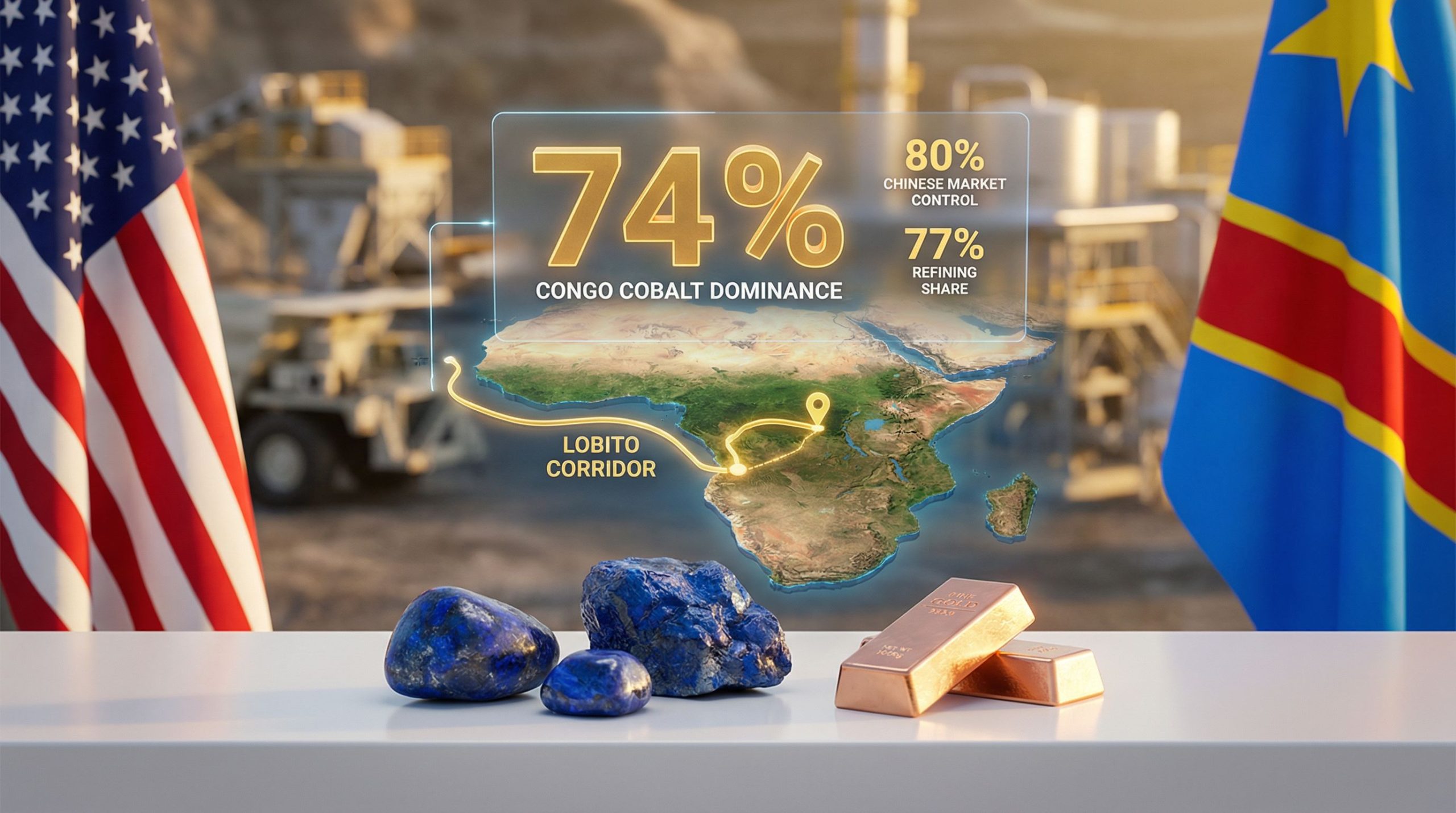
Congo's cobalt reserves account for approximately 74% of global supply, a concentration that exceeds even Saudi Arabia's peak oil market share. This dominance extends beyond cobalt to include significant copper, tantalum, lithium, and gold deposits, creating a diversified strategic minerals portfolio unmatched by any single nation.
The geographic scale compounds this advantage. As the largest nation by landmass in sub-Saharan Africa, Congo's mineral wealth spans multiple geological formations across different provinces, reducing the risk of supply disruption from localised conflicts or natural disasters that might affect smaller mining jurisdictions.
Modern mining techniques and geological surveys continue revealing new deposits within Congo's borders, suggesting current reserve estimates may understate long-term potential. This exploration upside provides additional negotiating leverage in partnership discussions with developed nations seeking supply security.
Strategic Timing: Trump Administration's Resource Diplomacy Approach
The Trump administration has explicitly identified critical mineral supply chain diversification as a national security priority, departing from previous approaches that relied primarily on market mechanisms for resource access. Furthermore, the administration's Trump mining permits initiative demonstrates this strategic shift, reflecting recognition that strategic competitors can weaponise supply chain dependencies during geopolitical tensions.
Recent supply chain disruptions in various sectors have demonstrated how concentrated production creates systemic vulnerabilities. The administration's approach involves direct government participation in resource diplomacy, offering infrastructure development, security guarantees, and preferential trade terms to secure alternative supply sources.
This timing coincides with increased global competition for mineral access, as China, European Union, and other developed economies simultaneously pursue supply chain diversification strategies. Congo benefits from this competitive environment by negotiating more favourable partnership terms than would be possible during periods of lower strategic interest.
How Does Congo's Mineral Wealth Compare to Global Competitors?
Comparative analysis of global mineral reserves reveals Congo's exceptional position across multiple critical materials simultaneously. While other nations may dominate specific commodities, few possess Congo's diversified portfolio combined with high-grade ore deposits.
Cobalt Dominance: Congo's 74% Global Reserve Control
Congo's cobalt supremacy represents one of the most concentrated resource monopolies in modern commodity markets. This dominance creates unique pricing power and supply chain influence that extends far beyond typical mining industry evolution dynamics.
| Country | Percentage of Global Cobalt Reserves | Strategic Implications |
|---|---|---|
| Congo (DRC) | 74% | Near-monopoly control, pricing power |
| Australia | 8% | Secondary supplier, limited influence |
| Philippines | 5% | Marginal contributor |
| Russia | 4% | Geopolitically constrained |
| Other Nations | 9% | Fragmented, minimal individual impact |
Current production data indicates Congo's actual market influence exceeds even its reserve dominance. Recent analysis shows Congo accounted for 70% of global cobalt mine production, demonstrating extraction efficiency that maximises its resource advantage.
The concentration creates what economists term "market power" – the ability to influence prices through supply decisions. Recent supply adjustments by Congolese producers have generated measurable price impacts across global cobalt markets, confirming this theoretical advantage in practical terms.
Cobalt's critical role in lithium-ion battery production means Congo's dominance directly affects electric vehicle costs, renewable energy storage pricing, and portable electronics manufacturing. This technological dependency amplifies the strategic value of Congo's reserves beyond their raw commodity worth.
Copper Grade Advantages: Why Congo Outperforms Traditional Producers
Congo's copper deposits exhibit geological characteristics that provide operational advantages over many established mining regions. Higher-grade ores require less processing infrastructure and generate lower production costs per unit of refined metal.
The Katanga region contains some of the world's richest copper deposits, with ore grades significantly exceeding global averages. These deposits also contain associated cobalt mineralisation, allowing producers to extract multiple strategic minerals from single operations and improving overall project economics.
Transportation infrastructure development through the Lobito Corridor project will further enhance Congo's competitive position by reducing shipping costs to Atlantic markets. This logistical improvement addresses one of the primary disadvantages that landlocked African mining operations face relative to coastal competitors.
Processing technology advances specifically designed for Congo's ore characteristics continue improving recovery rates and reducing environmental impacts. These innovations create additional operational advantages that compound the inherent geological benefits of the resource base.
Lithium and Tantalum: Emerging Strategic Assets in Congo's Portfolio
While cobalt and copper dominate current discussions, Congo's lithium and tantalum resources represent significant future value drivers as demand patterns evolve. Lithium's role in battery technology continues expanding beyond current applications into grid storage and emerging energy systems.
Tantalum's unique properties make it irreplaceable in high-performance electronics, aerospace applications, and medical devices. Congo's tantalum reserves provide diversification within the strategic minerals complex, reducing dependency on any single commodity market.
The synergistic nature of these mineral deposits allows integrated extraction and processing operations that improve overall project economics. Multi-mineral mining reduces infrastructure costs, shares transportation networks, and provides revenue diversification that enhances investment stability.
Gold deposits throughout Congo add another dimension to the strategic minerals portfolio, providing a traditional store of value alongside the modern technology-critical materials. This combination appeals to different investor categories and provides additional negotiating flexibility in partnership structures.
What Security Challenges Threaten Mineral Supply Chain Stability?
Armed conflict in eastern Congo creates the primary obstacle to realising the region's mineral potential through foreign partnership agreements. Current security challenges directly impact mining operations, transportation infrastructure, and investor confidence in project development timelines.
M23 Rebel Activity and Its Impact on Mining Operations
The M23 rebel group currently controls two major cities in Congo's eastern region, creating direct threats to mineral extraction and transportation networks. This territorial control affects not only active mining operations but also exploration activities and infrastructure development projects.
Recent military clashes between M23 forces and the Congolese army in South Kivu province demonstrate the ongoing nature of security threats despite peace negotiation efforts. These conflicts create unpredictable disruptions to mining operations and increase security costs for international companies.
Mining companies operating in conflict zones must implement extensive security protocols including private security forces, armoured transportation, and emergency evacuation procedures. These additional costs significantly impact project economics and create barriers to new investment in affected regions.
The unpredictability of conflict escalation creates planning challenges for long-term mining projects that require multi-year development timelines. Investment decisions become contingent on security assessments that must account for rapidly changing conflict dynamics.
Regional Conflict Dynamics: Rwanda-Congo Tensions Explained
The three-decade-long conflict between Congo and Rwanda reflects complex ethnic, territorial, and resource-related disputes that extend beyond simple border disagreements. Understanding these dynamics is essential for assessing long-term stability prospects for mining investments.
Rwanda's alleged support for M23 rebels creates direct linkage between regional diplomatic relations and mining sector security. Congolese officials explicitly state that peace requires "withdrawal of Rwandan troops," indicating that bilateral negotiations must address military presence before economic partnerships can proceed.
The cycle of accusations and denials between the two governments complicates diplomatic resolution efforts. Rwanda denies backing M23 while claiming defensive positioning along its border, creating divergent narratives that obstruct straightforward peace implementation.
Resource competition likely underlies some regional tensions, as mineral wealth creates economic incentives for territorial control or proxy influence. Resolving these underlying economic motivations requires addressing benefit-sharing arrangements and cross-border trade frameworks.
Infrastructure Vulnerability: Transportation and Processing Bottlenecks
Congo's landlocked geography creates inherent transportation vulnerabilities that conflict situations exacerbate. Mineral exports must transit multiple countries or traverse conflict-affected regions before reaching international ports.
Current transportation routes through eastern Africa face disruption risks from political instability in transit countries and border closure possibilities during regional tensions. These vulnerabilities create supply chain fragility that affects international buyer confidence.
Processing infrastructure within Congo remains limited, requiring mineral exports in raw form that generates lower value-added revenue. Developing domestic processing capabilities could reduce transportation vulnerabilities while increasing local economic benefits.
Power generation limitations restrict both mining operations and potential processing facility development. The proposed Grand Inga Dam project addresses this constraint but requires massive infrastructure investment and regional stability for successful implementation.
How Will the $1.8 Billion Lobito Corridor Transform African Mining?
The Lobito Corridor development represents a fundamental shift in African mining logistics, creating direct Atlantic Ocean access that bypasses traditional Asian-oriented supply chains. This infrastructure project establishes an alternative export route that reduces transportation costs and shipping times to North American and European markets.
Atlantic Ocean Access: Breaking China's Processing Monopoly
Direct Atlantic shipping routes enable Congo to redirect mineral exports toward Western processing facilities, reducing dependence on Chinese refining operations. This geographic reorientation supports broader US and European supply chain diversification objectives while potentially improving terms for Congolese mineral sales.
Current global processing patterns show concentrated control in Chinese facilities:
- Rare earth processing: 80% Chinese market control
- Lithium battery cell capacity: 77% Chinese dominance
- Cobalt refining operations: 60% Chinese processing share
The Lobito Corridor creates infrastructure conditions necessary for alternative processing centre development, whether in Congo itself or in Atlantic-accessible facilities in the Americas or Europe. This optionality breaks the geographic constraint that currently channels African minerals toward Asian processing networks.
Shipping cost reductions through shorter Atlantic routes improve the economics of Western processing operations, making them competitive with Asian alternatives. These improved economics support development of alternative processing capacity that reduces global dependency on Chinese facilities.
Grand Inga Dam Project: Powering Continental Mining Operations
The Grand Inga Dam project, described as potentially the world's largest hydropower installation, addresses the fundamental energy constraint limiting African mining development. Reliable, low-cost electricity enables both large-scale extraction operations and domestic mineral processing facilities.
Power generation capacity at Grand Inga scale could support energy-intensive processing operations including aluminium smelting, copper refining, and battery precursor chemical production. These capabilities would allow Congo to capture higher value-added revenue from its mineral resources rather than exporting raw materials.
Continental electricity integration through Grand Inga could power mining operations across multiple African countries, creating regional economic integration around mineral processing activities. This integration reduces individual country infrastructure costs while building economies of scale for processing operations.
The project's continental scale requires international financing and technical expertise that the US partnership could provide. Successful implementation demonstrates the type of large-scale infrastructure development that resource partnerships can enable when supported by adequate financial and technical resources.
Regional Economic Integration Through Infrastructure Development
The Lobito Corridor extends beyond bilateral US-Congo cooperation to encompass regional African integration around mineral transportation and processing. Angola's railway connection creates three-nation cooperation framework that could expand to include additional African countries.
Regional infrastructure networks reduce individual country development costs while creating redundancy that improves overall system reliability. Multiple transportation routes provide alternatives during maintenance periods or temporary disruptions, improving supply chain stability.
Cross-border infrastructure projects require diplomatic coordination and shared governance structures that build institutional capacity for regional cooperation. These governance improvements support additional economic integration beyond the specific transportation and energy projects.
Economic integration through infrastructure creates employment opportunities across multiple countries and skill levels, from construction and maintenance work to logistics and technical operations. This broad-based benefit distribution helps build political support for continued cooperation across different national constituencies.
What Does This Partnership Mean for US Supply Chain Independence?
The US Congo minerals pact represents a strategic pivot toward supply chain diversification that reduces dependence on adversarial or unreliable suppliers. This approach prioritises long-term security over short-term cost optimisation, reflecting lessons learned from recent supply chain disruptions across various sectors, particularly in the context of US‑China trade war impacts.
Reducing Chinese Dominance in Critical Mineral Processing
Chinese control over critical mineral processing creates strategic vulnerabilities that extend far beyond traditional commodity market dynamics. Current Chinese dominance encompasses not just processing capacity but also technical expertise, equipment manufacturing, and downstream product development.
China's integrated approach to critical minerals spans from raw material sourcing through finished product manufacturing, creating comprehensive supply chain control that competitors struggle to replicate through market mechanisms alone.
The US Congo partnership addresses this challenge by securing raw material access while simultaneously developing alternative processing capacity. This dual approach prevents Chinese processors from leveraging raw material scarcity to maintain downstream market control.
Alternative processing development requires significant capital investment and technical expertise transfer. The partnership framework provides both financial resources and technology sharing arrangements necessary to establish competitive processing operations outside Chinese control.
Success in processing diversification creates demonstration effects that encourage additional private sector investment in alternative supply chains. Government partnership reduces initial investment risks while proving technical and economic feasibility of non-Chinese processing alternatives.
Technology and Defence Sector Implications
Defence applications for critical minerals create national security imperatives that transcend normal commercial considerations. Advanced weapons systems, communications equipment, and electronic warfare capabilities all depend on reliable access to specific materials with limited substitution possibilities.
Supply disruptions in defence-critical materials could compromise military readiness and operational capabilities. The partnership provides supply security that enables long-term defence planning without contingency stockpiling requirements that tie up significant financial resources.
Technology sector applications extend beyond current commercial products to emerging technologies including quantum computing, advanced artificial intelligence systems, and next-generation communications networks. In addition, securing mineral inputs for these developing technologies positions the US advantageously for future technological competition, aligning with broader critical minerals energy security objectives.
Dual-use technology applications create synergies between civilian and defence sector demand, supporting larger-scale processing operations with improved economics. This dual-market approach provides demand stability that justifies major infrastructure investments in alternative supply chains.
Electric Vehicle Industry Supply Security
Electric vehicle production requires consistent access to cobalt, lithium, copper, and other materials in quantities that scale with anticipated market growth. Projected EV adoption rates create mineral demand growth that existing supply chains may struggle to accommodate.
Battery manufacturing represents the highest value-added segment of EV supply chains, requiring reliable mineral inputs and sophisticated processing capabilities. The partnership supports development of vertically integrated supply chains that improve cost control and quality consistency.
Automotive industry planning cycles require supply certainty across multi-year production planning horizons. Partnership agreements provide the long-term supply visibility necessary for automotive manufacturers to make capacity expansion investments and model development commitments.
Domestic EV supply chain development reduces transportation costs and lead times while improving responsiveness to market demand changes. These operational advantages support US EV industry competitiveness against established Asian manufacturers.
Which Investment Opportunities Emerge from US-Congo Cooperation?
The partnership framework creates multiple investment pathways across different risk profiles and capital requirements. Direct mining investment represents the highest potential returns but also the greatest exposure to operational and political risks, while infrastructure and processing investments offer more stable returns with government participation.
Direct Foreign Investment Frameworks Under the New Agreement
The partnership establishes preferential investment terms for US companies in Congo's mineral sector, including regulatory streamlining, dispute resolution mechanisms, and government cooperation in project development. These frameworks reduce investment uncertainty and improve project economics through reduced regulatory and administrative costs.
Investment protection provisions include international arbitration clauses and sovereign guarantee arrangements that provide recourse in case of contract disputes or policy changes. These protections are essential for long-term mining projects that require substantial upfront capital investment with extended payback periods.
Tax arrangements and royalty structures within the partnership provide clarity on government revenue sharing while ensuring competitive returns for private investors. Predictable fiscal terms enable accurate financial modelling and support debt financing for major projects.
Local content requirements create opportunities for US service providers, equipment manufacturers, and technology companies to participate in Congo's mining development. These requirements support broader US economic benefits beyond direct mineral extraction activities.
Public-Private Partnership Models for Infrastructure Projects
The $1.8 billion Lobito Corridor and Grand Inga Dam projects require financing structures that combine government guarantees with private sector efficiency and expertise. Public-private partnerships provide frameworks for sharing risks and returns appropriately between different participant categories.
Infrastructure projects generate returns through user fees, government payments, and economic development spillovers that benefit multiple stakeholders. Partnership structures must allocate these diverse revenue streams equitably while ensuring project financial viability.
Construction and operational risks require different management approaches and risk tolerance levels. Partnership agreements typically allocate construction risks to experienced contractors while assigning operational risks to entities with relevant management expertise.
Long-term infrastructure projects provide stable returns over extended periods, appealing to pension funds, insurance companies, and other institutional investors seeking predictable income streams. Government participation reduces political risks while private sector involvement ensures operational efficiency.
Risk Assessment: Political Stability vs. Resource Access Trade-offs
Investment decisions must balance exceptional resource quality and quantity against meaningful political and security risks. Traditional risk assessment models may inadequately capture the unique combination of high potential returns and complex risk factors present in Congo's minerals sector.
Political risk insurance and multilateral development bank participation can mitigate some investment risks while preserving most potential returns. These risk management tools allow investors to participate in high-potential projects while limiting downside exposure to acceptable levels.
Diversification across multiple projects and minerals reduces concentration risk while maintaining exposure to Congo's exceptional resource endowment. Portfolio approaches can balance higher-risk, higher-return direct mining investments with lower-risk infrastructure and processing investments.
Scenario analysis and contingency planning enable investors to prepare for different political and security developments while maintaining operational flexibility. These approaches allow continued project development while retaining ability to adjust investment levels based on changing conditions.
How Do Peace Negotiations Impact Mining Investment Decisions?
The explicit linkage between peace implementation and infrastructure investment creates conditional investment frameworks that align economic development incentives with conflict resolution objectives. This approach represents innovative application of economic leverage to promote political stability in resource-rich regions.
Conditional Investment: Linking Security to Economic Development
Investment conditionality creates economic incentives for all parties to prioritise conflict resolution over continued fighting. Rwanda faces potential exclusion from regional economic benefits if it continues supporting rebel groups, while Congo gains access to development capital only through demonstrated peace implementation.
The conditionality mechanism requires verifiable metrics for peace implementation, including territorial control changes, refugee return rates, and violence reduction indicators. These metrics must be objectively measurable to avoid disputes over compliance that could derail both peace and investment processes.
Economic development benefits from peace extend beyond direct mining investments to include improved transportation networks, power generation capacity, and regional trade facilitation. These broader benefits create constituencies for peace across different economic sectors and geographic regions.
Conditional investment timelines must align with realistic peace implementation schedules while maintaining sufficient flexibility to accommodate inevitable setbacks and delays. Overly rigid conditionality could undermine peace processes while excessively flexible arrangements might reduce economic incentive effects.
Timeline Scenarios: Best Case vs. Worst Case Conflict Resolution
Best Case Scenario (18-24 months):
- M23 withdrawal from occupied territories within 6 months
- Refugee return and resettlement programmes initiated within 12 months
- Infrastructure project construction beginning within 18 months
- Initial mineral production increases within 24 months
Moderate Scenario (2-4 years):
- Gradual territorial transfer over 12-18 month period
- Ongoing security incidents but declining frequency
- Phased infrastructure development beginning after 24 months
- Limited mineral production increases pending full security normalisation
Worst Case Scenario (indefinite delay):
- Continued territorial occupation and conflict escalation
- Infrastructure investment suspension pending security improvement
- Alternative supply chain development without Congo participation
- Long-term regional instability affecting multiple mining jurisdictions
Investment strategies must account for all scenario possibilities while positioning for rapid deployment when conditions improve. This requires maintaining technical and financial readiness while avoiding premature commitment in unstable conditions.
Insurance and Risk Mitigation Strategies for Mining Companies
Political risk insurance products specifically designed for conflict-affected regions provide protection against investment losses from war, civil unrest, and government actions. These insurance arrangements enable companies to invest in high-potential projects while limiting exposure to unacceptable loss levels.
Multilateral development bank participation provides additional risk mitigation through institutional relationships and diplomatic influence that can help resolve disputes and maintain project continuity. Development bank involvement also improves access to longer-term financing at favourable rates.
Operational risk management includes diversified supply chains, flexible production scheduling, and emergency response procedures that maintain business continuity during temporary disruptions. These measures reduce the impact of security incidents while preserving long-term investment value.
Local partnership arrangements with experienced operators can provide cultural knowledge, government relationships, and operational expertise that reduce various categories of investment risk. Joint venture structures allow risk sharing while accessing specialised capabilities.
What Are the Long-Term Implications for Global Mineral Markets?
The US Congo minerals pact establishes precedents for resource diplomacy that other nations will likely replicate, creating competition for access agreements and potentially fragmenting global mineral markets along geopolitical lines. This trend toward bilateral resource relationships represents a departure from multilateral trade frameworks that have governed commodity markets for decades.
Price Stability Through Diversified Supply Sources
Supply source diversification reduces market volatility by preventing any single nation or region from exercising excessive pricing power through production manipulation. Multiple producing regions create competitive dynamics that moderate price swings while ensuring adequate supply availability.
Geographic diversification also reduces supply disruption risks from natural disasters, infrastructure failures, or regional conflicts that might affect individual production areas. This enhanced supply security justifies lower risk premiums in commodity pricing models.
Market competition between different supply sources encourages technological improvement and cost reduction as producers compete for market share. These efficiency improvements benefit end users through lower costs and more reliable supply availability.
Reserve development in multiple jurisdictions creates redundancy that ensures continued production even if some sources become temporarily unavailable. This redundancy is particularly valuable for defence and technology applications where supply security outweighs cost considerations.
Competition Response: How China and Russia May React
Chinese responses to US supply chain diversification likely include increased investment in alternative African mineral projects, development of synthetic substitutes for critical minerals, and acceleration of recycling technology development. These competitive responses could intensify competition for remaining available resources while driving technological innovation.
Russian mineral resources remain significant despite geopolitical constraints, potentially creating opportunities for non-Western partnerships or serving as alternative suppliers for countries seeking to avoid dependency on US-aligned supply chains. This dynamic could lead to parallel supply chain networks serving different geopolitical blocs.
Technology competition around mineral processing and recycling could intensify as nations seek to reduce raw material dependencies through improved efficiency and resource reuse. These technological developments might ultimately reduce the strategic importance of primary mineral access.
Regional bloc formation around resource access could create fragmented global markets with different pricing mechanisms, quality standards, and trading relationships. This fragmentation might reduce overall market efficiency while providing political advantages for resource-controlling nations.
African Continental Integration: Beyond Bilateral Agreements
The US-Congo partnership creates demonstration effects that could encourage similar agreements between other African nations and developed countries, accelerating African mineral sector development while potentially creating competitive dynamics between different partnership arrangements.
Regional integration through infrastructure projects like the Lobito Corridor establishes precedents for continent-wide transportation and energy networks that could transform African economic development patterns. These networks might eventually reduce African dependence on external partners for market access.
African Union initiatives around mineral beneficiation and value addition could align with partnership frameworks to create continent-wide processing capabilities. This development would position Africa as a minerals processing centre rather than just a raw material exporter.
Institutional development through resource partnerships builds governmental and regulatory capacity that supports broader economic development beyond the mineral sector. These institutional improvements create foundations for sustained economic growth and political stability.
Frequently Asked Questions About US-Congo Minerals Partnership
When Will the Agreement Take Full Effect?
The partnership agreement signing was scheduled for December 4, 2025, with implementation timelines contingent on peace agreement fulfilment between Congo and Rwanda. Infrastructure investments including the Lobito Corridor and Grand Inga Dam will commence only after verified withdrawal of Rwandan support for rebel groups in eastern Congo.
Full operational capacity for new mining projects typically requires 3-5 years from investment commencement, meaning significant production increases would not materialise until 2028-2030 under optimal scenarios. Initial infrastructure development and exploration activities could begin sooner if security conditions permit.
What Specific Minerals Are Covered Under the Partnership?
The partnership encompasses cobalt, copper, tantalum, lithium, and gold, representing Congo's most strategically significant mineral endowments. These materials serve critical roles in technology manufacturing, renewable energy systems, electric vehicle production, and defence applications.
Additional minerals may be included as market demands evolve and geological exploration reveals new economically viable deposits. The partnership framework provides flexibility to accommodate changing strategic priorities and technological requirements.
How Will Environmental and Social Standards Be Enforced?
Environmental and social standards enforcement requires international monitoring mechanisms, local community participation, and regular compliance auditing by independent organisations. These standards must address artisanal mining practices, community displacement, and environmental remediation requirements.
International finance institution participation typically mandates compliance with established environmental and social performance standards. These requirements ensure that development benefits local communities while minimising environmental damage from mining operations.
What Role Do International Development Banks Play?
Development banks provide project financing, technical expertise, and risk mitigation services that enable large-scale infrastructure development. Their participation reduces political risks while ensuring adherence to international standards for environmental protection and social development.
Bank involvement also facilitates coordination between multiple funding sources and provides institutional continuity that outlasts individual government administrations. This institutional stability is essential for long-term projects requiring sustained political support.
Strategic Scenarios: Modelling Future Outcomes
Scenario modelling enables stakeholders to prepare for different potential developments while maintaining strategic flexibility across varying political, economic, and technological conditions. These analytical frameworks support decision-making under uncertainty while identifying key variables that determine outcomes.
Scenario 1: Successful Peace Implementation and Rapid Development
Under optimal conditions, peace implementation enables full infrastructure development and mining capacity expansion within projected timelines. This scenario assumes effective conflict resolution, sustained political stability, and adequate international financing availability.
Projected Production Increases by Mineral (2025-2030):
| Mineral | 2025 Baseline | 2030 Projection | Percentage Increase |
|---|---|---|---|
| Cobalt | 140,000 tonnes | 220,000 tonnes | 57% |
| Copper | 1.8 million tonnes | 2.8 million tonnes | 56% |
| Lithium | 15,000 tonnes | 45,000 tonnes | 200% |
| Tantalum | 350 tonnes | 650 tonnes | 86% |
| Gold | 35 tonnes | 55 tonnes | 57% |
This scenario generates maximum economic benefits for all partnership participants while establishing Congo as a leading global mineral supplier. Infrastructure development creates regional economic integration effects that extend benefits beyond direct mining activities.
Scenario 2: Continued Conflict and Limited Progress
Persistent security challenges delay infrastructure development and limit mining expansion, creating suboptimal outcomes for all stakeholders. This scenario assumes ongoing territorial disputes, periodic violence, and reduced investor confidence.
Limited progress scenarios still generate some benefits through smaller-scale projects in secure areas, but fail to realise the full potential of Congo's mineral endowments. International partners may redirect resources toward alternative suppliers with better security conditions.
Partial implementation creates demonstration effects that could support eventual full partnership realisation while maintaining international engagement with Congo's mineral sector. These incremental approaches preserve future opportunities while managing current risks.
Scenario 3: Regional Expansion of the Partnership Model
Successful implementation could encourage similar partnerships between the US and other African mineral-rich nations, creating continent-wide supply chain diversification networks. This expansion would transform African mineral sector development patterns while reducing Chinese market dominance.
Regional expansion scenarios create economies of scale for infrastructure development and processing operations, improving economic viability for multiple individual country partnerships. However, coordinated development reduces overall costs while maximising strategic benefits as part of a broader critical minerals strategy.
Continental-scale partnerships might eventually challenge existing global mineral market structures by creating alternative trading relationships and processing networks. These changes could fundamentally alter international commodity market dynamics over decade-long timeframes.
Investment and Policy Recommendations for Stakeholders
Stakeholder strategies must balance exceptional opportunity recognition with appropriate risk management, considering both immediate investment potential and long-term strategic positioning. Different stakeholder categories require tailored approaches reflecting their specific capabilities, risk tolerances, and strategic objectives.
For Mining Companies: Due Diligence and Entry Strategies
Mining companies should prioritise comprehensive political risk assessment while maintaining operational flexibility to capitalise on opportunity windows. Entry strategies might emphasise joint ventures with experienced local operators, phased investment approaches, and diversified project portfolios.
Due diligence requirements extend beyond traditional geological and technical assessments to encompass security analysis, community relations evaluation, and regulatory compliance verification. Political risk insurance and development bank participation can mitigate identified risks while preserving investment potential.
Operational planning must account for security requirements, infrastructure constraints, and potential production disruptions while maintaining cost competitiveness with alternative suppliers. Flexible operational models enable continued production during temporary disruptions while preserving long-term asset value.
Technology and processing investments should consider integration opportunities across multiple Congolese mineral deposits, creating operational synergies that improve overall project economics. Value-added processing capabilities reduce transportation costs while capturing higher margins from mineral sales.
For Policymakers: Balancing Security and Economic Interests
Government policymakers must coordinate diplomatic, security, and economic objectives to maximise partnership benefits while managing potential risks. This coordination requires interagency collaboration and long-term strategic planning that transcends electoral cycles.
Security assistance and diplomatic engagement should support economic development objectives while avoiding excessive military involvement that might compromise partnership sustainability. Economic incentives for peace provide alternatives to military solutions while creating positive-sum outcomes for all participants.
Trade and investment policy frameworks should complement bilateral partnership agreements while maintaining compatibility with multilateral trade obligations. Regulatory harmonisation reduces transaction costs while ensuring appropriate standards compliance.
Congressional oversight and public communications should emphasise strategic benefits and risk management measures while building domestic political support for long-term engagement. Transparent reporting on partnership progress helps maintain public confidence while managing expectations about timeline and outcomes.
For Investors: Portfolio Diversification Through African Minerals
Investment portfolios should balance direct mineral exposure with infrastructure and processing investments, creating diversified participation in African mineral development while managing concentration risks. Different investment vehicles serve varying risk tolerance and return objectives.
Private equity approaches might emphasise direct mining project investments with higher return potential but greater risk exposure, while infrastructure debt investments provide lower but more predictable returns with government guarantees and development bank participation.
Public equity investments in established mining companies with Congo operations offer liquidity and professional management while providing exposure to mineral price appreciation and production growth. These investments require careful evaluation of specific company risk management and operational capabilities.
Commodity-linked investments including futures contracts, ETFs, and structured products provide alternative approaches to mineral price exposure without direct operational risks. These instruments enable tactical allocation adjustments based on market conditions and geopolitical developments.
Ready to Capitalise on the Next Major Strategic Mineral Discovery?
Discovery Alert's proprietary Discovery IQ model delivers real-time alerts on significant mineral discoveries across the ASX, empowering subscribers to identify actionable opportunities ahead of the broader market. With strategic partnerships like the US-Congo minerals pact reshaping global supply chains and creating unprecedented opportunities in critical minerals, Discovery Alert's discoveries page showcases how major finds can generate substantial returns for early investors. Begin your 30-day free trial today to position yourself ahead of the market and secure your strategic advantage in tomorrow's mineral economy.