
July 21, 2026
Understanding the Strategic Energy Exemption Framework
Global energy markets operate within complex webs of policy frameworks where sanctions waivers represent critical stabilisation mechanisms during periods of acute supply disruption. These temporary authorisations allow governments to balance competing priorities: maintaining foreign policy pressure through economic sanctions while preventing catastrophic domestic energy price increases that could destabilise entire economies.
The US Treasury Department's Russian oil waiver operates through a sophisticated legal architecture that distinguishes between different categories of sanctioned energy commerce. Under this framework, the US oil waiver extension permits international purchases of Russian petroleum products available through maritime transactions while maintaining restrictions on new production facility development or direct infrastructure investment.
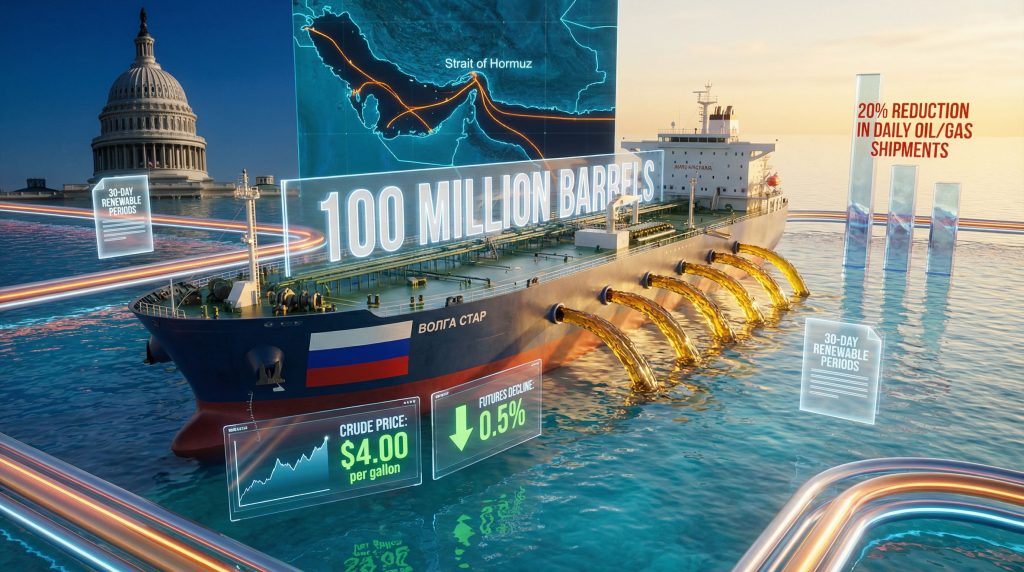
This technical distinction proves essential for understanding the limited scope of such authorisations. The waiver covers approximately 100 million barrels of crude oil—equivalent to roughly one day of global oil output—available through existing maritime inventory rather than expanding Russia's production capacity. The 30-day renewable structure creates periodic review opportunities while providing sufficient duration for market participants to execute complex international energy transactions.
Current Waiver Scope and Market Impact
The waiver's market significance extends beyond its physical volume impact through futures price psychology and supply chain confidence indicators. When Treasury Department authorisations reduce perceived supply constraints, commodity markets respond through immediate price adjustments that occur prior to physical oil deliveries.
Key Authorisation Parameters:
- Duration Structure: 30-day renewable periods since mid-March 2026
- Geographic Coverage: International waters and maritime transactions exclusively
- Volume Authorisation: 100 million barrels of Russian crude and petroleum products
- Legal Framework: Executive Branch waiver authority for comprehensive sectoral sanctions
- Market Response: 0.5% crude futures decline following extension announcements
The authorisation mechanism operates through Treasury Department coordination with White House policy priorities, requiring Presidential approval for each renewal period. This centralised decision-making process enables rapid policy adjustments in response to evolving geopolitical and economic conditions while maintaining executive oversight of sanctions regime modifications.
When big ASX news breaks, our subscribers know first
Geopolitical Conflict Dynamics and Energy Security Calculations
Contemporary energy security frameworks must navigate unprecedented combinations of supply disruption, sanctions pressure, and domestic political considerations. The Iran-Israel conflict has fundamentally altered global energy logistics through its impact on critical maritime chokepoints, creating supply elasticity challenges that traditional market mechanisms cannot easily resolve. These developments intersect with broader energy security dynamics affecting global markets.
The Strait of Hormuz serves as a critical vulnerability point for global energy commerce, with approximately 20% of worldwide oil and gas shipments flowing through this narrow maritime passage daily. When regional conflicts disrupt this chokepoint, alternative routing capacity proves insufficient to maintain normal supply flows, creating immediate price pressures across international markets.
The Iran-Israel War's Energy Market Disruption
According to the International Energy Agency's assessment, the current conflict represents the largest oil supply disruption in recorded history, exceeding previous crisis periods including the 1973 OPEC market influence embargo and 1990-1991 Gulf War supply interruptions. This characterisation reflects both the scale of supply infrastructure affected and the limited alternative routing capacity available for displaced energy flows.
Critical Supply Chain Vulnerabilities:
- Chokepoint Dependency: Single maritime passage handles one-fifth of global petroleum commerce
- Infrastructure Fragility: Limited alternative routing for crude oil and liquefied natural gas
- Regional Escalation Risk: Conflict expansion could further reduce available supply corridors
- Transportation Bottlenecks: Tanker capacity constraints for alternative route utilisation
The conflict's timing coincides with already elevated global energy demand and reduced strategic petroleum reserve levels in major consuming countries. This combination creates acute policy dilemmas where traditional crisis response mechanisms—strategic reserve releases, emergency production increases, and demand management programmes—prove insufficient to prevent significant price increases.
Strategic Energy Security vs. Sanctions Integrity
The simultaneous authorisation of both Russian and Iranian oil waivers on March 20, 2026 demonstrates coordinated energy supply augmentation strategy rather than isolated policy adjustments. This dual waiver approach reflects recognition that single-source supply additions cannot adequately address the scale of current market disruption.
However, this coordination creates significant transatlantic policy tensions. European Commission President Ursula von der Leyen's explicit opposition emphasises timing sensitivity: the EU position prioritises maximum sanctions pressure on Russia during active Ukraine conflict operations, while US calculations prioritise immediate domestic energy price stabilisation for electoral and economic reasons.
Policy Coordination Challenges:
- Sanctions Enforcement Complexity: Dual waivers create monitoring difficulties for international trading compliance
- Transatlantic Divergence: EU maintains maximum pressure approach while US implements temporary relaxations
- Market Confidence: Policy uncertainty reduces investment in alternative supply development
- Congressional Opposition: Bipartisan criticism challenges administration's sanctions regime consistency
Economic Analysis of US Oil Waiver Extension
Domestic Energy Price Management
Current US gasoline prices averaging $4.00 per gallon represent the highest levels since 2022, creating acute political pressure for the Trump Administration leading into November 2026 midterm elections. This price level reflects direct transmission of crude oil cost increases through refining and distribution systems, typically occurring with a 5-7 day lag from crude price movements.
The waiver's price stabilisation mechanism operates through multiple channels simultaneously. Futures markets respond to supply authorisation signals before physical oil enters refineries, creating immediate downward pressure on commodity prices. This psychological effect proves particularly important during crisis periods when market sentiment amplifies price volatility beyond fundamental supply-demand relationships.
Domestic Price Impact Analysis:
| Metric | Current Level | Impact Assessment |
|---|---|---|
| Average US Gasoline Price | $4.00/gallon | Highest since 2022 crisis |
| Crude Oil Futures Response | 0.5% decline | Immediate market reaction |
| Regional Price Variation | Varies by state | Coastal areas experience higher increases |
| Electoral Timing Sensitivity | 7 months to midterms | Critical political consideration |
Treasury Secretary Scott Bessent's direct White House engagement on waiver extension indicates executive-level prioritisation of energy price management as a core governance responsibility. Furthermore, this coordination suggests the administration views fuel price stability as essential for maintaining public confidence during the ongoing regional conflict.
Global Market Stabilisation Effects
International energy markets demonstrate significant confidence sensitivity to US policy signals, particularly regarding sanctions waiver authorisations. The 0.5% crude futures decline following waiver extension reports illustrates how policy uncertainty reduction creates immediate market effects even before physical oil deliveries occur.
This stabilisation mechanism operates through supply security perceptions rather than immediate inventory increases. When traders recognise that additional supply sources remain available through policy authorisations, speculation-driven price premiums decline, reducing overall market volatility during crisis periods.
Market Confidence Indicators:
- WTI and Brent Crude Spreads: Narrowed following waiver announcement
- Gasoline Futures: Declined more significantly than crude futures
- International Trading Volume: Increased as uncertainty reduced
- Volatility Measures: Decreased from crisis-level extremes
Congressional Opposition and Policy Resistance
Bipartisan Congressional Criticism
Congressional opposition to the US oil waiver extension spans both political parties, indicating concerns that transcend partisan electoral considerations. Republican Senator Jerry Moran articulated strategic vulnerability concerns, emphasising that waiver authorisations directly reduce sanctions pressure on nations actively collaborating against US interests.
According to Trump tariff implications analysis, Moran's assessment highlighted the Iran-Russia coordination dynamic, noting that both countries are actively working together to place Americans and other innocent lives at risk. This perspective frames the waiver not merely as energy policy but as national security decision-making that directly affects adversarial nation revenue streams during active conflict periods.
Democratic leadership opposition, represented by Senate Minority Leader Chuck Schumer and Senator Jeanne Shaheen, focuses on sanctions regime integrity as a fundamental foreign policy tool. Their criticism emphasises consistency in maintaining economic pressure on Russia during the Ukraine conflict, arguing that revenue increases from oil exports directly fund military operations against Ukrainian positions.
Congressional Opposition Analysis:
| Political Affiliation | Key Representatives | Primary Concern |
|---|---|---|
| Republican | Senator Jerry Moran (Kansas) | Strategic advantage to adversaries |
| Democratic | Chuck Schumer, Jeanne Shaheen | Ukraine war revenue denial |
| Bipartisan Consensus | Multiple committees | Sanctions effectiveness measurement |
European Union Alignment Challenges
The European Union's institutional opposition through Commission President von der Leyen creates significant transatlantic coordination difficulties for comprehensive sanctions policy. EU member states operate under union-wide sanctions directives that emphasise maximum economic pressure maintenance, while US Treasury Department waivers represent unilateral policy adjustments.
This divergence reflects fundamentally different strategic calculations: European nations prioritise sustained sanctions pressure for Ukraine conflict support, while US domestic political considerations require immediate energy price stabilisation. The timing sensitivity proves particularly acute, as von der Leyen emphasised that current conditions do not support sanctions relaxation while active military operations continue.
EU Coordination Complexities:
- Legal Framework Differences: EU-wide directives vs. US Treasury waivers
- Strategic Priority Divergence: Maximum pressure vs. price stabilisation
- Economic Impact Variation: Different energy import dependencies
- Political Timeline Misalignment: EU institutional cycles vs. US electoral considerations
Ukraine War Revenue Impact and Strategic Calculations
Revenue Flow Analysis
The 100 million barrel waiver allocation represents substantial revenue potential for Russian state-controlled energy companies, with current crude prices translating to approximately $7.5-8.5 billion in export proceeds per allocation tranche. This revenue flows directly to Russian government budgets through state-controlled entities including Gazprom and Rosneft, funding military expenditures during the ongoing Ukraine conflict.
Congressional criticism explicitly connects waiver authorisations to sanctions objectives, arguing that increased Russian export revenues directly complicate Western efforts to deny funding for military operations. At current production levels of approximately 3-4 million barrels daily, the waiver represents roughly 25-33 days of full Russian production capacity, indicating significant revenue impact relative to total export capabilities.
Revenue Impact Assessment:
| Calculation Component | Volume/Value | Strategic Significance |
|---|---|---|
| Waiver Volume | 100 million barrels | ~25-33 days production capacity |
| Estimated Revenue | $7.5-8.5 billion | Direct government budget impact |
| Daily Export Capacity | 3-4 million barrels | Pre-conflict production levels |
| Military Funding Impact | Substantial portion | Direct conflict support capability |
Alternative Revenue Sources and Strategic Context
Russian energy export revenue represents a critical component of government financing for military operations, making sanctions effectiveness measurement essential for policy evaluation. The waiver authorisation creates direct tension between domestic US energy price management and Ukrainian military support objectives through reduced sanctions pressure.
This trade-off illustrates the complex calculations involved in crisis-period energy policy: accepting increased adversarial nation revenues to achieve immediate domestic political and economic stability. Alternative policy approaches—strategic petroleum reserve releases, emergency production increases, and demand management programmes—prove insufficient to address the scale of current supply disruption without international cooperation.
Electoral Politics and Energy Policy Timing
Midterm Election Considerations
Rising fuel prices represent a critical political vulnerability for the Trump Administration and Republican Party heading into November 2026 midterm elections. Gasoline price levels directly influence voter perceptions of economic management competency, making energy policy decisions essential for electoral strategy during crisis periods.
Historical precedent demonstrates significant correlation between fuel price increases and incumbent party electoral performance in midterm cycles. The seven-month timeline between current price levels and election dates creates sustained political pressure for policy interventions that demonstrate responsive governance to immediate economic concerns.
Electoral Impact Factors:
- Voter Sensitivity: Direct consumer impact through gasoline purchases
- Regional Variation: Higher prices in competitive electoral districts
- Timeline Pressure: Sustained high prices through election period
- Party Vulnerability: Republican responsibility for energy policy outcomes
- Opposition Messaging: Democratic criticism of sanctions inconsistency
The administration's calculation prioritises immediate price relief over long-term sanctions regime consistency, reflecting electoral timeline pressures that require tangible policy results within specific timeframes. In addition, this approach indicates executive branch prioritisation of domestic political considerations during international crisis management, similar to US economic pressures observed in other policy areas.
The next major ASX story will hit our subscribers first
Alternative Energy Security Strategies and Policy Options
Strategic Petroleum Reserve Utilisation
Strategic Petroleum Reserve releases represent an alternative approach to waiver authorisations, providing domestic supply augmentation without sanctions regime complications. Current SPR capacity allows for significant emergency releases, though sustained drawdowns create long-term supply security vulnerabilities that must be balanced against immediate crisis response needs.
Historical precedent for emergency SPR releases includes various crisis periods, though the scale of current supply disruption may exceed traditional reserve management capabilities. Coordination with International Energy Agency member nations could amplify release effectiveness through synchronised global strategic reserve utilisation.
SPR vs. Waiver Comparison:
| Policy Tool | Supply Impact | Political Considerations | Long-term Effects |
|---|---|---|---|
| SPR Releases | 50-100 million barrels available | Domestic policy control | Reduced strategic reserves |
| Russian Oil Waiver | 100 million barrels authorised | International coordination required | Sanctions regime impact |
| Combined Approach | 150-200 million barrels potential | Complex policy messaging | Mixed strategic outcomes |
Accelerated Domestic Production Options
US shale oil production expansion represents a medium-term alternative to international waiver policies, though regulatory framework modifications and infrastructure development require extended implementation timelines. Current drilling capacity could support increased production with appropriate regulatory streamlining and infrastructure investment coordination, particularly as countries like Canada face similar Canada energy transition challenges.
Domestic Production Enhancement Factors:
- Shale Field Capacity: Significant expansion potential with regulatory support
- Infrastructure Bottlenecks: Pipeline and refining capacity constraints
- Environmental Review Acceleration: Expedited permitting for strategic projects
- Investment Coordination: Public-private partnership development for rapid deployment
International Partnership Development and Energy Diplomacy
Non-Russian Supplier Relationships
Strengthening partnerships with alternative energy suppliers requires comprehensive diplomatic engagement and long-term supply agreement development. Norway and Canada represent particularly important partnership opportunities due to their substantial production capabilities and political alignment with US strategic objectives.
Middle East stability investment priorities must balance regional security concerns with energy supply diversification needs. While the current Iran-Israel conflict disrupts traditional supply sources, other regional producers could expand output with appropriate security guarantees and infrastructure investment.
Partnership Development Priorities:
- Norwegian Supply Expansion: North Sea production increase coordination
- Canadian Pipeline Capacity: Cross-border infrastructure enhancement
- Alternative Middle East Sources: Saudi Arabia and UAE production coordination
- African Supply Development: Nigeria and Angola partnership expansion
- South American Options: Brazil and Guyana supply relationship building
Future Policy Scenarios and Strategic Planning
Conflict Resolution Timeline Projections
Short-term scenarios (3-6 months) suggest continued waiver extensions remain likely given ongoing Iran-Israel conflict and limited alternative supply development. Treasury Department decision-making will likely prioritise immediate market stabilisation over sanctions regime consistency during active conflict periods.
Medium-term scenarios (6-18 months) could enable gradual waiver phase-out if regional stability improves and alternative supply sources achieve expanded production. Strait of Hormuz reopening would significantly reduce supply pressure, enabling policy transition toward normal sanctions enforcement.
Long-term scenarios (18+ months) anticipate full sanctions restoration once crisis conditions resolve and alternative supply infrastructure achieves operational capacity. This timeline assumes successful conflict resolution and comprehensive energy security framework development.
Strategic Scenario Planning Matrix:
| Timeline | Conflict Status | Policy Trajectory | Market Impact |
|---|---|---|---|
| 3-6 Months | Ongoing regional conflict | Continued extensions likely | Price stabilisation focus |
| 6-18 Months | Potential de-escalation | Gradual phase-out possible | Alternative supply development |
| 18+ Months | Resolution achieved | Full sanctions restoration | Normal market operations |
Global Energy Architecture Evolution
The current crisis accelerates structural transformations in global energy architecture, including expedited renewable energy transition investments and strategic mineral supply chain diversification. These changes will fundamentally alter international energy security calculations and reduce dependence on geopolitically sensitive supply sources.
According to recent US Treasury Department guidance, the US oil waiver extension represents a temporary measure while longer-term energy security strategies develop. These structural transformations require comprehensive coordination across multiple sectors.
Structural Transformation Drivers:
- Renewable Energy Investment: Accelerated clean energy capital deployment
- Strategic Mineral Security: Critical mineral supply chain development
- Energy Storage Technology: Grid-scale storage infrastructure expansion
- Alternative Fuel Development: Hydrogen and synthetic fuel investment priorities
- International Coordination: Enhanced energy security partnership frameworks
This transformation requires comprehensive policy coordination across multiple governmental agencies and international partnerships to ensure energy security during transition periods while maintaining foreign policy flexibility for crisis response scenarios.
Investment Disclaimer: This analysis contains forward-looking statements and speculative assessments regarding energy policy developments, market conditions, and geopolitical scenarios. Readers should conduct independent research and consult qualified financial advisors before making investment decisions. Energy market investments carry substantial risks including price volatility, regulatory changes, and geopolitical disruption impacts.
Looking to Capitalise on Energy Market Volatility?
Discovery Alert's proprietary Discovery IQ model delivers real-time alerts on significant ASX mineral discoveries, instantly empowering subscribers to identify actionable opportunities ahead of the broader market during periods of heightened energy sector activity. Understand why historic discoveries can generate substantial returns by exploring major mineral finds that have delivered exceptional market outcomes, then begin your 14-day free trial today to position yourself ahead of market movements.