July 21, 2026
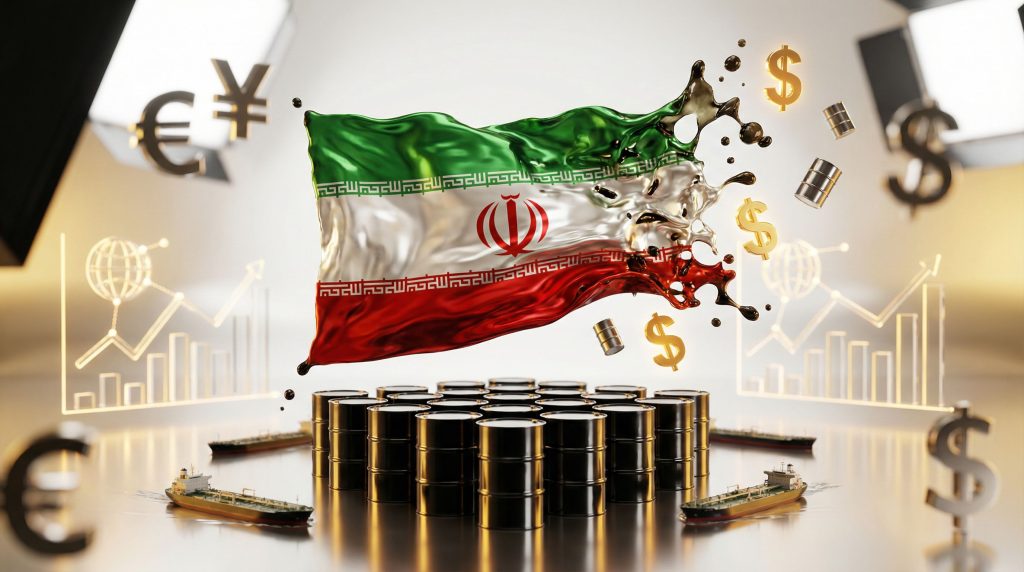
Global energy markets operate through intricate webs of supply chains, financial networks, and geopolitical relationships that can fracture rapidly when major producing nations face comprehensive economic restrictions. The petroleum industry's vulnerability to regulatory intervention creates cascading effects that extend far beyond the targeted country's borders, reshaping trade flows, pricing mechanisms, and strategic relationships across continents. When examining how the US sanctions Iran oil industry, understanding these dynamics requires examining how modern sanctions regimes function as both economic weapons and market disruption tools in an interconnected global economy.
How Do US Sanctions on Iran's Energy Sector Impact Global Oil Markets?
The petroleum market's response to supply disruptions follows predictable yet complex patterns that amplify initial shocks through multiple transmission channels. When major producing nations face comprehensive economic restrictions, the immediate effect involves direct volume removal from global markets, but secondary impacts often prove more significant than the initial supply loss.
Furthermore, oil price rally insights demonstrate how market psychology can amplify physical supply concerns through speculative trading activities.
The Economic Mechanics of Energy Sanctions
Iran's historical production capacity reached approximately 3.7-4.1 million barrels per day before comprehensive sanctions implementation in 2012, representing roughly 5% of global crude oil production at peak output levels. Following the 2015 Joint Comprehensive Plan of Action (JCPOA) implementation, production recovered to approximately 3.8 million barrels per day by 2016, demonstrating the sector's resilience when restrictions lift.
However, post-2018 sanctions following US withdrawal from the nuclear agreement reduced Iranian output to approximately 2.4-2.7 million barrels per day by 2019, illustrating how modern financial restrictions can constrain production more effectively than physical blockades. This decline occurred not merely through direct export prohibition but through systematic dismantling of the commercial infrastructure supporting Iranian petroleum operations.
The market transmission mechanism operates through three distinct channels. The direct channel removes Iranian crude from available supplies, forcing consumers to seek alternative sources at potentially higher costs. The financial channel increases transaction costs for remaining Iranian crude through insurance restrictions and banking limitations. The psychological channel creates market anxiety about potential escalation, driving precautionary inventory building that elevates spot prices beyond the actual supply shortage.
Global oil demand exhibits short-term price elasticity of -0.05 to -0.15, meaning a 10% supply reduction can produce 30-50% price increases within months before demand adjusts through consumption reduction or alternative supply activation. This inelasticity explains why relatively small supply disruptions can create disproportionate price volatility in petroleum markets.
In addition, oil price movements analysis reveals how trade tensions can amplify these effects through interconnected global supply chains.
Strategic Petroleum Reserve Dynamics
Emergency oil release mechanisms provide temporary market stabilisation during supply shocks, though their effectiveness depends on coordination timing and release volumes. The US Strategic Petroleum Reserve maintains approximately 714 million barrels in underground salt caverns, with emergency release capabilities reaching 4.4 million barrels per day at maximum drawdown rates.
These release volumes could theoretically offset 90% of Iranian production loss for approximately 165 days if fully deployed, though such extensive drawdowns rarely occur due to strategic security considerations. Historical precedent shows reserve releases typically involve smaller volumes over extended periods rather than maximum-rate emergency deployments.
International Energy Agency member countries coordinate reserve releases through established protocols, though political consensus requirements can delay response timing. The 2011 Libya crisis demonstrated effective coordination, while 2022 responses to Russian supply disruptions showed both capabilities and limitations of multilateral reserve deployment.
Buffer capacity limitations become critical during extended sanctions periods. Strategic reserves were designed for temporary disruptions lasting weeks or months, not sustained supply restrictions extending multiple years. Prolonged sanctions therefore require alternative supply sources rather than continued reserve drawdowns.
When big ASX news breaks, our subscribers know first
What Are the Primary Enforcement Mechanisms in Iran Oil Sanctions?
Modern sanctions architecture operates through sophisticated financial and technological systems that create enforcement capabilities extending far beyond traditional trade restrictions. These mechanisms target the commercial infrastructure supporting Iranian petroleum operations rather than attempting physical interdiction of oil movements.
Financial Infrastructure Targeting
SWIFT banking system exclusions represent the most powerful enforcement tool in contemporary sanctions regimes. The Society for Worldwide Interbank Financial Telecommunication connects approximately 11,000+ financial institutions globally, enabling real-time gross settlement for international transactions. Iranian bank disconnections from SWIFT, including the Central Bank of Iran, effectively quarantine targeted institutions from mainstream international commerce.
As of 2024, approximately 20+ Iranian banks remain disconnected from SWIFT, including Bank Mellat, Bank of Sepah, and other designated entities. This disconnection forces Iranian petroleum transactions through alternative mechanisms that prove costly, slow, and vulnerable to further restrictions.
Secondary sanctions enforcement creates compliance burdens exceeding many transactions' economic value. Multinational corporations with $10 billion+ in annual US commerce face potential blocking of American financial operations if caught transacting with Iranian entities, creating internal compliance costs that often exceed Iranian business opportunities.
Alternative payment methods emerge but face significant limitations. Hawala networks provide informal value transfer but cannot handle petroleum transaction volumes efficiently. Cryptocurrency intermediaries through Hong Kong, UAE, and Turkish exchanges facilitate some transactions, though estimated Iranian crypto flows of $5-10 billion annually represent a fraction of historical petroleum revenues. Barter arrangements avoid financial systems entirely but create logistical complexity and valuation disputes.
Moreover, according to US Treasury sanctions documentation, the comprehensive nature of these restrictions demonstrates the sophisticated targeting approach used against Iran's energy sector.
Shipping and Insurance Restrictions
Maritime enforcement combines technological surveillance with commercial pressure through insurance market restrictions. Automatic Identification System (AIS) tracking provides global vessel monitoring through approximately 2,000+ satellite and terrestrial receivers, though Iranian tankers often disable transponders in international waters to create tracking gaps.
Satellite Automatic Identification System (S-AIS) capabilities through approximately 15+ satellite constellations can detect disabled AIS signals, enabling enforcement agencies to identify vessels attempting to avoid monitoring. Physical interdictions in international waters involve US Navy operations coordinated with coalition partners including the United Kingdom, Israel, and UAE.
Lloyd's of London insurance market restrictions create powerful commercial deterrents through premium escalation. Lloyd's approximately 85+ syndicates provide global maritime insurance capacity, with Iranian energy sector classified as Tier 1 high-risk. Premium calculations multiply base rates (typically 2% of insured value) by risk factors of 5-10× for Iranian vessels plus compliance surcharges of 20-50%.
The practical result transforms a $500 million tanker's annual insurance costs from $10-15 million to $50-150 million, making Iranian petroleum transportation economically prohibitive for many operators. These insurance restrictions prove more effective than physical enforcement because they operate through commercial incentives rather than requiring costly naval operations.
Technology Transfer Prohibitions
US export controls through the Export Administration Regulations (EAR) and International Traffic in Arms Regulations (ITAR) restrict advanced petroleum extraction technology sales to Iran. Prohibited equipment includes horizontal drilling systems, enhanced oil recovery technologies, and refining catalysts essential for modern petroleum operations.
Iranian attempts to source alternative technology from Chinese and Russian suppliers face quality and capacity limitations. Substitute equipment typically operates at 30-50% capacity efficiency compared to Western standards, forcing Iranian facilities to operate at reduced optimisation levels.
Iran's refining capacity of approximately 1.8-1.9 million barrels per day consists largely of facilities built during the 1970s-1990s requiring modernisation for competitive efficiency. Sanctions prohibit purchase of advanced hydrocracking and fluid catalytic cracking (FCC) units essential for modern refining operations.
Operational efficiency consequences prove significant over time. Iranian refineries currently operate at approximately 70-75% utilisation compared to global averages exceeding 85%, reflecting both technology limitations and maintenance challenges under sanctions restrictions.
Which Countries and Companies Face Secondary Sanctions Risk?
Secondary sanctions create compliance dilemmas for countries and corporations maintaining commercial relationships with both Iranian and American markets. These entities must choose between Iranian energy access and American market participation, with most selecting continued US engagement due to larger economic stakes.
However, OPEC tariff effects illustrate how trade policy decisions can complicate these relationships further through multilayered economic pressures.
Asian Market Exposure Analysis
China's petroleum import portfolio demonstrates how major consumers adapt to sanctions pressure while maintaining strategic flexibility. China imports approximately 10.4-10.6 million barrels per day of crude oil, with Iranian supplies representing approximately 6-7% of total imports before 2018 sanctions implementation.
Post-2018 restrictions reduced Chinese Iranian imports to approximately 200,000-400,000 barrels per day, representing 2-4% of total Chinese crude imports. Major Chinese importers including China National Petroleum Corporation (CNPC), China Sinopec Group, and China National Offshore Oil Corporation (CNOOC) reduced Iranian purchases significantly while increasing supplies from Saudi Arabia, Russia, and other producers.
India's refining sector faced similar pressures with total crude oil imports of approximately 4.0-4.3 million barrels per day. Iranian imports declined from approximately 500,000+ barrels per day in 2015 to 200,000-300,000 barrels per day by 2024. Key Indian refiners including Indian Oil Corporation (IOC), Hindustan Petroleum Corporation Limited (HPCL), and Bharat Petroleum Corporation Limited (BPCL) reduced Iranian crude processing while expanding relationships with Middle Eastern and African suppliers.
Indian financial institutions faced compliance scrutiny, with Axis Bank and ICICI Bank implementing enhanced screening procedures for Iranian-related transactions. These banks' exposure to US correspondent banking relationships created powerful incentives for sanctions compliance despite India's historical energy relationship with Iran.
European Energy Company Compliance
European energy companies executed comprehensive Iranian divestments following sanctions reimposition, demonstrating how secondary sanctions pressure shapes corporate strategy. Total (France) withdrew from Iranian operations by 2019, abandoning significant upstream projects including the South Pars gas field development.
Shell (Netherlands) completed Iranian asset divestments by 2019, exiting both upstream and downstream operations in Iranian territory. BP (United Kingdom) maintained no current Iranian operations, having exited before 2012 sanctions implementation. Eni (Italy) completed full Iranian divestment by 2019, canceling planned natural gas projects.
These divestments occurred not due to project unprofitability but because companies' broader international operations created vulnerability to US financial system restrictions. European energy companies typically maintain $50-100 billion+ in annual revenues with significant American market exposure, making Iranian projects economically irrational despite potential profitability.
Legal framework differences between EU and US sanctions regimes created compliance complexity for European companies. While EU sanctions permitted certain Iranian transactions under specific conditions, US secondary sanctions threatened to penalise European companies for activities legal under European law but prohibited under American regulations.
How Do Sanctions Waivers Function in Practice?
Sanctions waiver mechanisms provide administrative flexibility for addressing humanitarian needs, market stability concerns, and diplomatic objectives while maintaining overall pressure on targeted regimes. These temporary relief mechanisms operate through established legal frameworks that balance sanctions effectiveness with practical considerations.
Temporary Relief Mechanisms
Presidential waiver authority under the International Emergency Economic Powers Act (IEEPA) and other statutes enables case-by-case sanctions relief for specific transactions or time periods. These waivers require detailed justification demonstrating that relief serves US national interests while maintaining sanctions pressure on targeted activities.
Congressional oversight mechanisms include reporting requirements detailing waiver utilisation, economic impacts, and strategic rationale. The Treasury Department must provide regular updates on waiver frequency, duration, and economic value to ensure legislative branch awareness of executive sanctions implementation.
Humanitarian exemption categories typically cover medical supplies, food products, and other essential goods for civilian populations. These exemptions require complex verification procedures to prevent dual-use goods from reaching restricted entities while ensuring legitimate humanitarian access.
Strategic Timing and Market Conditions
Oil price threshold triggers inform waiver consideration timing, though specific numerical targets remain classified for strategic flexibility. Historical precedent suggests waivers become more likely when crude oil prices exceed $100+ per barrel for sustained periods, indicating market stress requiring intervention.
Geopolitical leverage calculations factor into waiver decisions, balancing immediate market relief against long-term sanctions effectiveness. Waivers granted during periods of diplomatic engagement may serve different strategic purposes than those addressing pure market stabilisation needs.
Coordination with allied nations becomes essential for effective waiver implementation. Unilateral US waivers prove less effective than coordinated international relief that maintains unified pressure while addressing specific market or humanitarian concerns.
What Are the Long-Term Economic Consequences for Iran's Energy Sector?
Extended sanctions periods create cumulative infrastructure degradation that persists beyond restrictions removal, fundamentally altering targeted countries' petroleum sector capabilities. These long-term consequences often prove more significant than immediate export revenue losses because they affect future production capacity.
Understanding how the US sanctions Iran oil industry requires recognising these persistent effects that shape Iran's energy sector competitiveness for decades.
Infrastructure Degradation Patterns
Deferred maintenance on ageing oil field equipment creates exponential degradation over extended periods. Iranian petroleum infrastructure built primarily during the 1970s-1980s requires continuous technological updates to maintain competitive production rates. Sanctions restrictions on advanced equipment procurement force Iranian operators to rely on inferior substitutes or cannibalise existing equipment.
Brain drain from petroleum engineering workforce represents another cumulative consequence as skilled professionals emigrate to countries offering better career opportunities. Iranian petroleum engineers, geologists, and technical specialists increasingly seek employment with international companies operating in unrestricted markets.
Foreign investment flight eliminates access to advanced extraction technologies and operational expertise essential for modern petroleum development. International companies' exodus removes not just capital but also knowledge transfer opportunities that enable technological advancement.
Joint venture cancellations affect future development projects more than current production levels. These partnerships typically involve technology transfer agreements, operational training, and infrastructure development that create lasting capabilities beyond immediate project scope.
Revenue Stream Diversification Attempts
Iranian diversification efforts focus on petrochemical industry development as sanctions workarounds, converting crude oil into higher-value chemical products that prove easier to market despite restrictions. This strategy faces limitations due to technology restrictions affecting advanced petrochemical processing equipment.
Regional pipeline projects enable direct sales to neighbouring countries while avoiding international financial systems and maritime transport restrictions. Iran's pipeline connections to Turkey, Pakistan, and Central Asian markets provide limited but sanctions-resistant export channels.
Domestic consumption growth versus export capacity decline creates internal market pressures as Iran burns more petroleum products domestically rather than exporting for foreign currency. This consumption increase reduces export availability while providing limited economic benefit compared to international sales.
How Do Energy Sanctions Affect Regional Geopolitical Dynamics?
Energy sanctions reshape regional power balances by redistributing petroleum market share, altering revenue flows, and creating new strategic relationships among producers and consumers. These geopolitical consequences often prove more durable than the sanctions themselves.
Furthermore, tariffs and market impact studies reveal how trade restrictions can amplify regional energy market disruptions.
Middle East Energy Balance Shifts
Saudi Arabia and UAE production capacity responses to Iranian supply restrictions create opportunity for market share expansion among Gulf producers. Both countries maintain spare production capacity enabling rapid output increases when Iranian exports decline.
Saudi spare production capacity of approximately 2-3 million barrels per day provides flexibility to offset Iranian export reductions while benefiting from higher prices caused by supply uncertainty. This capacity enables Saudi Arabia to influence global petroleum markets while supporting sanctions implementation.
Iraq's position as Iran's neighbour creates complex dynamics as Iraq benefits from reduced Iranian competition while facing pressure to limit Iranian transit activities. Iraqi petroleum exports of approximately 3.5-4.0 million barrels per day compete directly with potential Iranian output in similar crude quality categories.
Qatar's role in natural gas markets becomes more significant during petroleum supply disruptions as consumers seek alternative energy sources. Qatar's liquefied natural gas (LNG) exports provide some substitution for petroleum products in power generation and industrial applications.
Strategic Waterway Control Implications
Strait of Hormuz closure scenarios create economic modelling challenges due to the waterway's critical importance for global petroleum transport. Approximately 20-21% of global petroleum trade transits through Hormuz, representing 21-25 million barrels per day under normal conditions.
Alternative shipping routes through the Suez Canal and Cape of Good Hope add significant transportation costs and time delays. Cape route diversions add approximately 2-3 weeks to Asian delivery schedules while increasing per-barrel transportation costs by $2-5.
Naval force deployment costs for maintaining waterway security create substantial military expenses for intervening powers. US Fifth Fleet operations in the Persian Gulf require continuous carrier strike group presence costing approximately $1-2 billion annually during normal operations, with costs escalating during crisis periods.
Insurance premium impacts affect all regional petroleum transport, not just Iranian shipments. Lloyd's of London war risk premiums increase 50-200% for all Persian Gulf transits during periods of heightened tension, affecting global petroleum transportation costs.
The next major ASX story will hit our subscribers first
What Metrics Indicate Sanctions Effectiveness?
Sanctions effectiveness measurement requires comprehensive analysis of production capacity, export volumes, government revenues, and economic adaptation patterns. These metrics provide objective assessment of sanctions impact while identifying circumvention activities and market responses.
Production and Export Volume Analysis
Baseline production capacity versus current output levels reveal sanctions' direct impact on petroleum sector operations. Iran's pre-sanctions baseline capacity of approximately 4+ million barrels per day compared to current production levels of 2.4-2.7 million barrels per day indicates approximately 35-40% capacity utilisation under restrictions.
Export destination tracking through satellite monitoring, customs data, and vessel movement analysis enables verification of actual trade flows versus official statistics. These tracking methods reveal circumvention attempts and identify countries maintaining Iranian petroleum imports despite restrictions.
Black market pricing differentials indicate sanctions pressure intensity through discount rates required to attract buyers despite legal risks. Iranian crude typically trades at $5-15 per barrel discounts compared to similar quality crude from unrestricted sources, reflecting buyers' risk premiums for sanctions violations.
Government Revenue Impact Assessment
Oil revenue as percentage of total government income demonstrates fiscal pressure from sanctions implementation. Iranian government petroleum revenues historically represented 60-70% of total budget income, making export restrictions particularly damaging to state finances.
Budget deficit expansion and currency devaluation patterns provide secondary indicators of sanctions economic impact. Iranian rial depreciation of 70-80% against major currencies since 2018 reflects both sanctions pressure and reduced petroleum export revenues.
Social spending cuts and economic hardship indicators reveal sanctions' broader economic consequences beyond petroleum sector impacts. Iranian government reductions in subsidies, infrastructure investment, and public services reflect fiscal pressure from reduced petroleum revenues.
How Do Market Participants Adapt to Sanctions Regimes?
Market adaptation mechanisms enable continued petroleum trade despite sanctions restrictions through pricing adjustments, supply chain modifications, and risk management strategies. These adaptations often reduce sanctions effectiveness over time as market participants develop circumvention capabilities.
In particular, global market disruption patterns show how traders adjust to regulatory changes through innovative financial instruments.
Trading Strategy Modifications
Spot market versus long-term contract adjustments reflect traders' risk preferences during sanctions periods. Long-term contracts become more difficult to arrange due to sanctions uncertainty, forcing greater reliance on spot transactions with higher price volatility.
Price hedging instruments and derivatives market responses enable risk management for sanctions-affected petroleum trades. These financial tools help market participants manage price volatility and sanctions-related supply uncertainty through forward contracts and options strategies.
Alternative crude grade substitution patterns emerge as refiners adjust input mixes to replace restricted Iranian supplies. Refineries modify processing units to handle different crude qualities, though these adjustments often increase operational costs and reduce efficiency.
Supply Chain Reconfiguration
Refinery input mix adjustments for sanctions-affected crude require technical modifications and operational changes that create lasting infrastructure impacts. These adjustments often prove irreversible even after sanctions removal due to equipment optimisation and supplier relationship changes.
Transportation route optimisation involves developing alternative shipping lanes, storage facilities, and logistics networks that bypass sanctions restrictions. These route changes often increase transportation costs while reducing delivery reliability.
Storage facility utilisation and inventory management strategies help market participants maintain supply security during sanctions-related uncertainty. Increased inventory levels provide protection against supply disruptions but require significant capital investment and storage capacity.
What Are the Compliance Challenges for International Businesses?
Corporate compliance frameworks for sanctions regimes require sophisticated risk management systems, legal expertise, and operational procedures that create substantial administrative burdens. These compliance costs often exceed the economic value of restricted business opportunities.
Due Diligence Requirements
Know Your Customer (KYC) protocols for energy transactions require verification of ultimate beneficial ownership, transaction purposes, and end-use destinations to ensure sanctions compliance. These procedures involve extensive documentation and verification processes that can delay transactions significantly.
Beneficial ownership verification in complex corporate structures proves particularly challenging when dealing with entities from sanctions-affected countries. Shell companies, trust arrangements, and multi-jurisdictional ownership structures can obscure actual control relationships.
Real-time sanctions screening technology implementation requires automated systems capable of monitoring transactions against frequently updated sanctions lists. These systems must process thousands of names, entities, and vessels while minimising false positives that disrupt legitimate business.
Legal Risk Management Frameworks
Civil and criminal penalty exposure assessment requires comprehensive legal analysis of potential sanctions violations and their consequences. Civil penalties typically range from $20,000-$100,000+ per violation, while criminal penalties can include up to $1 million per count and 20 years imprisonment for knowing violations.
Insurance coverage for sanctions violations faces limitations as most commercial policies exclude coverage for illegal activities. Companies must therefore assume full financial responsibility for sanctions compliance failures without insurance protection.
Internal compliance programme best practices include regular training, automated screening systems, transaction monitoring, and legal oversight to minimise violation risks. These programmes require significant ongoing investment in personnel, technology, and procedures.
Frequently Asked Questions About Iran Oil Sanctions
How quickly can sanctions impact global oil prices?
Petroleum markets typically respond to major sanctions announcements within 24-48 hours through futures contract trading, though physical supply impacts may take 2-4 weeks to materialise as existing inventory depletes. Price volatility often peaks during the initial announcement period before stabilising as market participants assess actual supply impacts.
What happens to existing contracts when new sanctions are imposed?
Existing contracts face force majeure provisions that may excuse performance when sanctions make compliance illegal. Companies typically have 30-90 days to wind down existing Iranian transactions after new restrictions take effect, though emergency measures may eliminate grace periods entirely.
Can companies request specific licences for Iran-related activities?
The Treasury Department's Office of Foreign Assets Control (OFAC) accepts specific licence applications for humanitarian activities, safety-related transactions, and certain commercial activities deemed consistent with sanctions objectives. Licence approval rates vary significantly by transaction type and geopolitical circumstances.
How do sanctions affect humanitarian goods and medical supplies?
Humanitarian exemptions typically cover medical equipment, pharmaceuticals, and food products, though complex verification requirements often delay or prevent legitimate humanitarian trade. Banking restrictions can make payments for exempt goods impossible even when the underlying transaction remains legal.
Recent developments in sanctions enforcement demonstrate the evolving nature of these restrictions, as detailed in Reuters reporting on Iranian oil transportation infrastructure sanctions. These comprehensive measures show how the US sanctions Iran oil industry through multifaceted approaches targeting both production and distribution networks.
Disclaimer: This analysis is based on publicly available information and should not be considered investment advice or legal guidance. Sanctions regimes change frequently and readers should consult current Treasury Department guidance for specific compliance requirements. The events described in portions of this analysis reflect a hypothetical scenario set in 2026 and do not represent confirmed future developments.
Ready to Invest in the Next Major Mineral Discovery?
Discovery Alert instantly alerts investors to significant ASX mineral discoveries using its proprietary Discovery IQ model, turning complex mineral data into actionable insights. Understand why major mineral discoveries can lead to significant market returns by exploring Discovery Alert's dedicated discoveries page, showcasing historic examples of exceptional outcomes, and begin your 14-day free trial today to position yourself ahead of the market.