Vale's Iron Ore Output Strategy: Conservative Growth in a Shifting Market Landscape
Global iron ore markets face unprecedented structural shifts as traditional demand patterns evolve and new supply sources emerge. The sector's dynamics have transformed significantly since the infrastructure boom cycles of the early 2000s, with steel consumption patterns becoming increasingly complex across developed and emerging economies. Mining companies must now navigate between maintaining market share and optimizing profitability margins in an environment where volume-driven strategies no longer guarantee sustainable returns.
Brazilian mining giant Vale's recent production forecasts reflect this strategic recalibration. The company's measured approach to capacity expansion signals a broader industry trend toward disciplined growth rather than aggressive market share competition. Furthermore, this shift represents a fundamental departure from the commodity super-cycle mentality that previously dominated mining industry evolution.
What Does Vale's 2026 Iron Ore Production Forecast Signal for Global Markets?
Production Volume Projections and Strategic Rationale
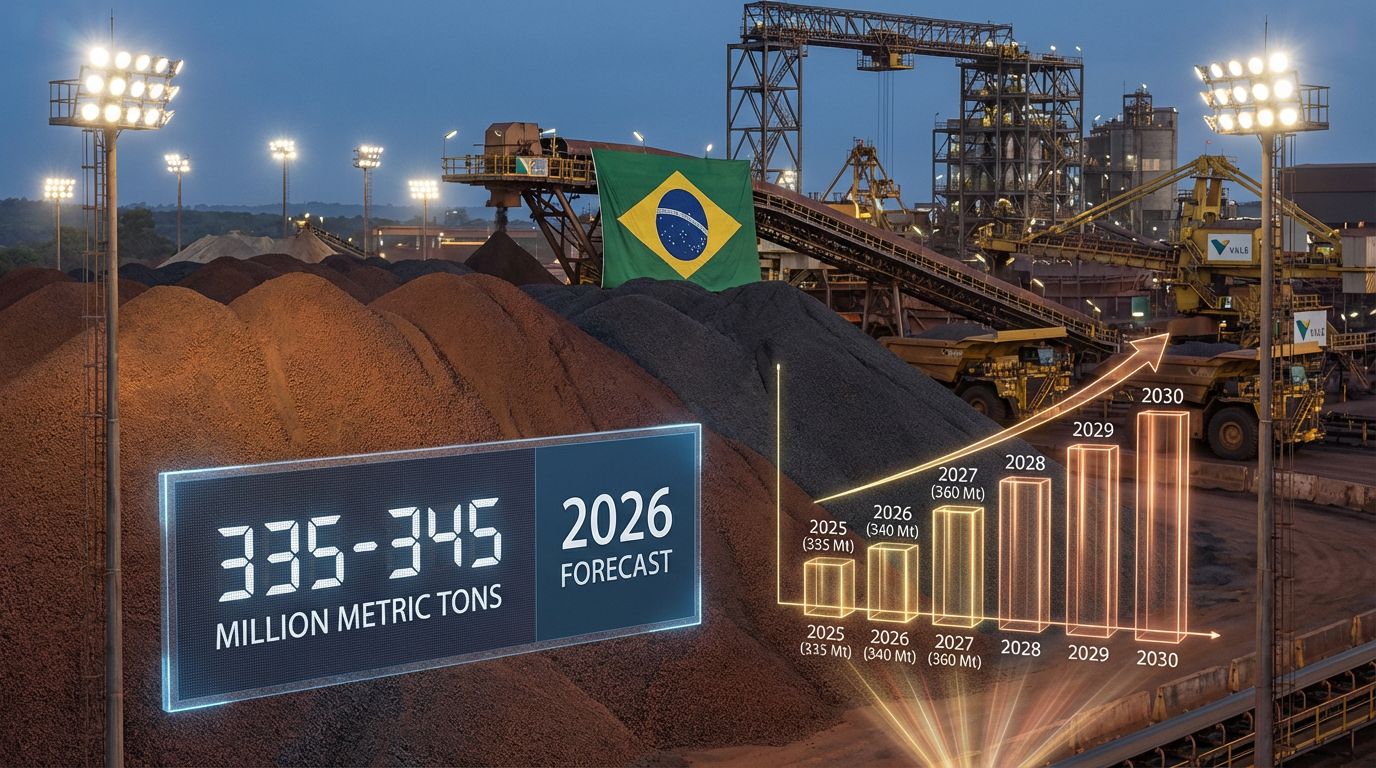
Vale's 2026 iron ore production target of 335-345 million metric tons represents a carefully calibrated expansion strategy. According to Reuters reporting from December 2025, this range indicates a maximum 3% increase from the company's 2025 baseline of approximately 335 million tons. The modest growth trajectory contrasts sharply with the aggressive expansion programs that characterized the previous commodity boom.
This conservative approach reflects several strategic considerations. Market saturation concerns drive focus on value over volume, whilst infrastructure optimization takes priority over greenfield development. Capital allocation efficiency prioritizing brownfield expansions and risk mitigation through controlled capacity additions further influence these decisions.
The production target maintains Vale's position as a global iron ore leader while avoiding the oversupply risks that have historically pressured commodity prices during expansion cycles.
Market Position Recovery Following Brumadinho Impact
Vale's production recovery trajectory since the devastating 2019 Brumadinho dam disaster demonstrates the company's operational resilience. The tragedy, which killed 270 people and devastated local communities, forced significant capacity reductions and operational changes across Vale's Brazilian mining operations.
The company has systematically restored production capacity through enhanced safety protocols and dam stability monitoring. Infrastructure rehabilitation investments exceeding $2 billion, operational process improvements incorporating advanced monitoring technologies, and community engagement programmes addressing environmental and social impacts have contributed to this recovery.
Vale aims to reclaim its position as the world's largest iron ore producer, currently competing with Rio Tinto for global market leadership. In addition, this recovery represents not just operational restoration but a fundamental shift toward more sustainable mining practices.
How Do Vale's Base Metals Projections Compare to Iron Ore Strategy?
Copper Output Targets and Market Dynamics
Vale's 2026 copper production forecast of 350,000-380,000 tons indicates a slight decline from 2025's approximately 370,000 tons, according to company filings. This reduction reflects strategic market positioning rather than operational constraints, as global copper markets experience demand uncertainty amid economic transitions.
The company's copper strategy emphasises quality over quantity approaches to production. Strategic partnerships for risk sharing and expertise pooling, technology integration for operational efficiency improvements, and market timing considerations for optimal pricing realisation further support this approach.
Vale's partnership with Glencore in Canada's Sudbury Basin represents a significant strategic development. The joint venture targets 880,000 tons of copper production over 21 years, with estimated capital costs between $1.6-2 billion. Consequently, this brownfield development approach minimises exploration risks while leveraging existing infrastructure and geological knowledge.
Nickel Production Stability Analysis
The company's 2026 nickel production projection of 175,000-200,000 tons maintains current output levels despite volatile market conditions. This stability reflects Vale's established nickel operations and the metal's critical importance for battery technology and stainless steel production.
Nickel market dynamics present unique challenges. Supply chain diversification pressures from automotive sector growth, geopolitical tensions affecting global trade flows, technology transitions impacting demand patterns, and environmental regulations increasing production costs all influence market conditions.
Vale's nickel portfolio provides revenue diversification benefits, reducing dependence on iron ore price volatility while positioning the company for electric vehicle battery material demand growth.
What Market Forces Are Driving Vale's Conservative Growth Approach?
Global Iron Ore Demand Cooling Trends
Steel production patterns across major consuming markets indicate structural demand shifts affecting iron ore requirements. China's construction sector slowdown has reduced raw material intensity, while infrastructure spending in emerging economies hasn't compensated for this demand reduction.
Key demand factors include urbanisation completion in developed markets reducing construction steel demand. Infrastructure replacement cycles requiring different steel grades and quantities, manufacturing sector transitions toward higher-value, lower-volume production, and environmental regulations promoting steel recycling over primary production all contribute to these trends.
These developments suggest that traditional volume-driven mining strategies may no longer align with long-term market fundamentals. For instance, understanding iron ore demand insights becomes crucial for strategic planning.
Competitive Landscape Transformation
The global iron ore market has experienced significant structural changes with African producers' market entry and supply chain diversification initiatives by steel manufacturers. These developments challenge the traditional Australia-Brazil duopoly that previously dominated global trade flows.
Competitive pressures include lower-cost African operations offering alternative supply sources. Transportation cost advantages for regional suppliers, technology adoption reducing operational cost disparities, and political risk diversification driving customer sourcing strategies further intensify competition.
Vale's conservative growth approach acknowledges these competitive realities while maintaining market position through operational excellence rather than volume competition. However, monitoring iron ore market trends remains essential for strategic adaptation.
How Does Vale's 2030 Vision Align with Current Market Realities?
Long-term Production Target Analysis
Vale's 2030 iron ore production target of 360 million tons annually represents a measured expansion from current levels, requiring significant infrastructure development and technology integration. This long-term goal balances growth ambitions with market sustainability considerations.
The 2030 vision encompasses operational efficiency improvements through automation and digitalisation. Environmental compliance investments meeting evolving regulatory standards, community engagement programmes ensuring social licence to operate, and technology adoption for cost reduction and productivity enhancement support this vision.
This timeline allows Vale to phase expansion investments while monitoring market development and demand patterns. Furthermore, examining the operations of the largest iron ore mines provides valuable benchmarking opportunities.
Capital Allocation Strategy Assessment
Vale's capital allocation priorities favour brownfield development over greenfield projects, reflecting risk management and return optimisation considerations. This approach leverages existing infrastructure while minimising exploration and development uncertainties.
Investment priorities include infrastructure modernisation for existing operations. Technology integration across production systems, environmental compliance upgrades and monitoring systems, and joint venture partnerships for risk sharing and expertise access guide these investments.
The $1.6-2 billion Sudbury Basin investment exemplifies this strategic approach, combining Vale's operational expertise with Glencore's technical capabilities for optimised resource development. Additionally, maintaining focus on iron haulage safety update standards remains paramount.
What Are the Strategic Implications for Iron Ore Market Dynamics?
Supply Management vs. Volume Competition
Vale's production strategy represents a fundamental shift from traditional "race to the bottom" pricing strategies that previously characterised commodity markets. By controlling output increases and focusing on operational efficiency, the company aims to support price stability while maintaining market share.
This approach benefits the broader iron ore sector by preventing oversupply situations that depress commodity prices. Encouraging disciplined expansion across industry participants, supporting margin optimisation over volume maximisation, and maintaining supply-demand balance for sustainable pricing further support market stability.
Vale's conservative 2026 production increase reflects a mature market approach, prioritising margin sustainability over volume growth—a strategy that could support stronger commodity pricing for the broader iron ore sector.
Regional Production Rebalancing Effects
The evolution of global iron ore supply sources creates new competitive dynamics between traditional producers and emerging suppliers. Vale's strategy must account for African competition, Australian market position, and Brazilian sector coordination in maintaining global market relevance.
Regional considerations include transportation cost optimisation for competitive positioning. Quality premium realisation for high-grade ore products, customer relationship management across diverse geographic markets, and logistical infrastructure development supporting efficient distribution influence market dynamics.
These factors influence Vale's production planning and market positioning strategies.
How Should Investors Interpret Vale's Production Strategy?
Revenue Diversification Risk Assessment
Vale's production strategy demonstrates efforts to reduce iron ore dependency through base metals portfolio development. The company's copper and nickel operations provide revenue diversification benefits while exposure to different commodity cycles and demand drivers.
Investment considerations include commodity price correlation analysis across Vale's portfolio. Market cycle timing for different metals and minerals, geographic exposure distribution across operations, and currency risk management for international operations further influence investment decisions.
The Glencore partnership enhances Vale's copper exposure while sharing development risks and capital requirements.
Operational Efficiency Metrics
Vale's focus on production cost optimisation and technology adoption positions the company for improved margins regardless of commodity price fluctuations. These operational improvements support long-term competitiveness and return generation.
Key performance indicators include cost per ton reductions through automation and process improvement. Recovery rate optimisation maximising resource extraction efficiency, energy consumption reduction supporting environmental goals and cost management, and safety performance metrics ensuring operational sustainability drive performance measurement.
These factors influence Vale's investment attractiveness and operational risk profile.
What External Factors Could Impact Vale's 2026 Targets?
Regulatory and Environmental Considerations
Brazilian mining regulations continue evolving following the Brumadinho disaster, with enhanced safety requirements and environmental compliance standards affecting operational costs and procedures. Vale must navigate these regulatory changes while maintaining production targets.
Regulatory factors include dam safety monitoring requirements and associated costs. Environmental impact assessments for expansion projects, community consultation processes affecting project timelines, and international sustainability standards influencing operational practices shape regulatory compliance.
These regulatory developments may affect Vale's ability to achieve production targets within projected timelines and budgets. For instance, safety improvements as seen in recent operations updates demonstrate the importance of regulatory compliance.
Global Economic Variables
Steel demand fluctuations in major consuming regions directly impact iron ore requirements and pricing. Economic uncertainties in China, infrastructure spending patterns in emerging markets, and manufacturing sector transitions affect Vale's market environment.
Economic considerations include GDP growth patterns in steel-consuming economies. Infrastructure investment levels driving construction steel demand, manufacturing sector transitions affecting steel consumption intensity, and trade policy changes influencing international market access impact market conditions.
Vale's production planning must account for these macroeconomic variables and their impact on commodity demand patterns.
Frequently Asked Questions About Vale's Iron Ore Strategy
Why isn't Vale pursuing aggressive expansion like competitors?
Vale's measured approach reflects market saturation concerns and pricing pressure mitigation strategies. Rather than competing purely on volume, the company focuses on sustainable growth and margin optimisation to maintain long-term market leadership.
This strategy addresses oversupply risks from aggressive capacity additions. Price stability through disciplined production increases, capital efficiency prioritising high-return investments, and market positioning for sustained competitive advantage support this approach.
How does the Glencore partnership affect Vale's copper strategy?
The Sudbury Basin joint venture provides Vale with risk sharing opportunities and technical expertise access while reducing capital investment requirements. This partnership model allows Vale to expand copper exposure without fully bearing development costs and operational risks.
Partnership benefits include shared capital requirements reducing individual company exposure. Combined technical expertise optimising resource development, risk distribution across partnership structure, and market position enhancement in North American copper production strengthen the strategic alliance.
| Production Category | 2025 Output | 2026 Forecast | 2030 Target |
|---|---|---|---|
| Iron Ore (Mt) | ~335 | 335-345 | 360 |
| Copper (tons) | ~370,000 | 350,000-380,000 | TBD |
| Nickel (tons) | ~175,000 | 175,000-200,000 | TBD |
Vale's strategic approach to Vale iron ore output increase 2026 represents a calculated response to evolving market conditions rather than aggressive expansion. This measured growth strategy positions the company for sustained profitability while maintaining global market leadership in an increasingly competitive landscape.
Investment Implications:
Vale's conservative production strategy may support stronger commodity pricing across the iron ore sector by preventing oversupply situations. Investors should consider the company's diversification efforts through base metals development and strategic partnerships as risk mitigation measures. The focus on operational efficiency and margin optimisation over volume growth suggests a mature approach to commodity market participation that could generate superior long-term returns.
Disclaimer: This analysis is for informational purposes only and should not be considered as investment advice. Commodity markets are subject to significant volatility and risk. Investors should conduct their own research and consult with financial professionals before making investment decisions.
Ready to Capitalise on the Next Iron Ore Discovery?
Discovery Alert's proprietary Discovery IQ model delivers real-time alerts on significant ASX mineral discoveries, instantly empowering subscribers to identify actionable opportunities ahead of the broader market. Begin your 30-day free trial today and secure your market-leading advantage.