June 18, 2026
Venezuelan Energy Investment Renaissance
The global energy landscape stands at a pivotal juncture where geopolitical shifts create seismic opportunities for resource extraction and market positioning. When traditional supply chains face disruption and regulatory frameworks undergo transformation, multinational energy corporations must rapidly recalibrate their strategic portfolios to capitalise on emerging opportunities. The interplay between political stability, sanctions regimes, and resource access creates investment scenarios that can fundamentally reshape corporate production profiles and market dynamics. Consequently, Repsol expansion in Venezuela oil production represents a strategic response to unprecedented market developments following Venezuela's recent political transformation.
When big ASX news breaks, our subscribers know first
Understanding the Venezuelan Energy Investment Opportunity
Venezuela's political transformation in early 2026 has unleashed unprecedented potential for international energy companies seeking to diversify their production portfolios. The departure of Nicolas Maduro marked not just a regime change, but a fundamental recalibration of how global markets view Venezuelan energy assets. This shift coincides with substantial regulatory modifications that enable international capital deployment in previously restricted sectors.
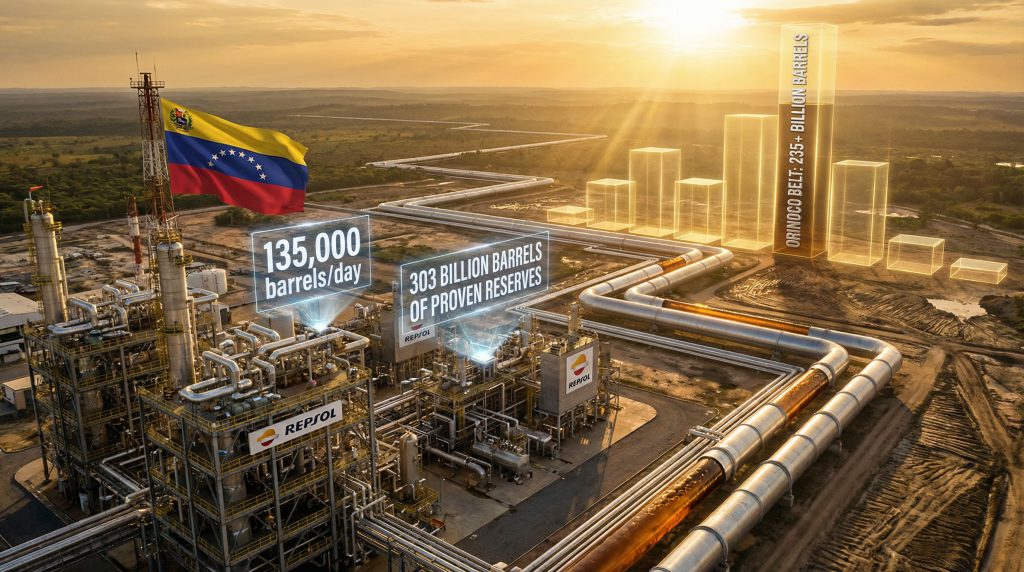
The magnitude of Venezuela's hydrocarbon endowment positions it as one of the world's most significant untapped energy resources. With approximately 303 billion barrels of proven reserves concentrated primarily in the Orinoco Heavy Oil Belt, the country represents the largest accumulation of extra-heavy crude oil globally. These geological formations present both extraordinary opportunities and complex technical challenges that require specialised extraction methodologies.
Reserve Distribution Analysis:
| Formation | Proven Reserves | Crude Type | Technical Complexity |
|---|---|---|---|
| Orinoco Belt | 235+ billion barrels | Extra-heavy crude (8-16° API) | High viscosity, thermal recovery required |
| Maracaibo Basin | 45+ billion barrels | Light/medium crude | Conventional extraction methods |
| Eastern Formations | 23+ billion barrels | Medium crude | Standard development approaches |
The strategic value extends beyond mere reserve quantities. Venezuelan heavy crude possesses unique characteristics that make it particularly valuable for specialised refineries, especially those along the U.S. Gulf Coast that have invested heavily in coking and hydrotreating infrastructure designed specifically for processing 8-16 API gravity feedstocks.
Repsol's Strategic Production Expansion Framework
Spanish energy giant Repsol has positioned itself at the forefront of this emerging opportunity through an ambitious three-phase expansion strategy that leverages its continuous operational presence since 1993. Unlike many international operators who reduced or eliminated Venezuelan operations during sanctions periods, Repsol expansion in Venezuela oil production maintained joint venture partnerships with Petróleos de Venezuela S.A. (PDVSA), providing critical operational continuity and technical expertise.
Phase 1: Immediate Scale-Up (2026)
- Current baseline production: 45,000 barrels per day across multiple joint ventures
- Target increase: 67,500 barrels per day representing a 50% production enhancement
- Strategic focus: Reactivation of existing well stock and optimisation of current gathering systems
- Timeline: 12-month execution window for rapid production gains
Phase 2: Infrastructure Development (2027-2028)
- Production objective: 100,000+ barrels per day
- Investment scope: Enhanced oil recovery systems and pipeline infrastructure modernisation
- Partnership expansion: Deepened technical collaboration with PDVSA and international service contractors
- Technology deployment: Advanced thermal recovery methods for heavy crude optimisation
Phase 3: Full-Scale Operations (2029)
- Ultimate target: 135,000 barrels per day (300% increase from 2025 baseline)
- Geographic expansion: Additional exploration block acquisition within Orinoco region
- Technical advancement: Implementation of cutting-edge extraction technologies for extra-heavy crude processing
This phased approach reflects sophisticated risk management, allowing Repsol to validate operational assumptions and regulatory stability before committing maximum capital. Furthermore, the strategy enables real-time adjustment based on market conditions and infrastructure restoration progress, reflecting broader energy transition challenges faced across global markets.
Current Asset Portfolio Breakdown
- Petroquiriquire: Terrestrial operations focusing on medium/heavy crude with 40% Repsol participation through PDVSA joint venture
- Cardón IV/Crata: Offshore gas assets with 50% participation (joint venture with Eni), currently producing 580 million cubic feet per day
- Petrocarabobo: Orinoco extra-heavy crude access through 11% consortium participation
- Quiriquire Profundo: Non-associated gas exploration with 60% Repsol participation in Monagas region
Regulatory Environment and Investment Authorisation
The transformation of Venezuela's regulatory landscape represents perhaps the most significant factor enabling this massive production expansion. The issuance of General License 49 by the U.S. Treasury's Office of Foreign Assets Control creates a comprehensive framework for international energy companies to engage in previously restricted activities.
Key Authorisation Parameters:
- Direct equity participation in Venezuelan oil projects
- Technology transfer and specialised equipment importation
- Revenue-sharing contractual arrangements with state entities
- Export authorisation for processed petroleum products
- International service contractor engagement
The Trump administration's public commitment to unleashing Venezuelan petroleum potential signals policy intention to integrate these resources into Western Hemisphere energy security architecture. This regulatory shift addresses historical concerns about asset protection and contract enforcement that previously deterred major international investment, similar to other market stabilisation efforts examined in current trade war market impact analysis.
Investment Protection Framework
Enhanced bilateral investment treaty provisions provide comprehensive protections through international arbitration dispute resolution mechanisms and asset protection guarantees against unilateral contract modifications. Additionally, fair and equitable treatment standards under international law create a robust legal framework for sustained investment.
These protections address fundamental investor concerns about political risk and regulatory consistency that have historically complicated Venezuelan energy investments. Consequently, the combination of sanctions relief and enhanced legal frameworks creates what industry analysts describe as the most favourable investment environment in over a decade.
Technical Challenges in Heavy Crude Production
Venezuelan heavy oil production presents unique technical challenges that require specialised expertise and substantial infrastructure investment. The extra-heavy crude characteristics of Orinoco Belt deposits create operational complexities that limit participation to companies with proven heavy oil technical capabilities.
Heavy Crude Technical Specifications:
- API Gravity: 8-16 degrees (extremely heavy classification)
- Sulfur Content: 2.5-5.5% (high sulfur category requiring specialised processing)
- Viscosity Profile: Exceeding 10,000 centipoise at reservoir temperature
- Transportation Requirements: Thermal treatment and diluent introduction necessary
These characteristics necessitate sophisticated extraction methodologies including steam injection for viscosity reduction, horizontal drilling for maximum reservoir contact, and specialised surface facilities for heavy crude handling. The infrastructure requirements represent significant capital commitments that must be evaluated against long-term production economics, particularly within the exploration licensing framework established in other emerging markets.
Infrastructure Restoration Requirements
Industry experts, including analysis from UC Berkeley, estimate infrastructure restoration requirements between $50-150 billion for comprehensive sector recovery. This massive investment scope reflects decades of underinvestment and maintenance deferrals that have degraded critical production infrastructure.
Key Investment Categories:
- Wellhead and gathering system rehabilitation
- Pipeline network modernisation and capacity expansion
- Processing facility upgrades for heavy crude specifications
- Export terminal enhancement for international market access
- Environmental compliance and emission control systems
The scale of required investment creates both challenges and opportunities. While substantial capital commitments are necessary, companies with early access and proven technical capabilities can establish dominant market positions as infrastructure recovery progresses.
Competitive Landscape and Market Positioning
Repsol expansion in Venezuela oil production occurs within a competitive environment where major international operators are reassessing Venezuelan opportunities. Chevron currently leads international production with 240,000-250,000 barrels per day through four joint ventures with PDVSA, focusing primarily on heavy crude output demanded by specialised U.S. Gulf Coast refineries.
Major International Operators Comparison:
| Company | Current Production | Investment Scale | Strategic Focus |
|---|---|---|---|
| Chevron | 240,000-250,000 bpd | $3+ billion | Heavy crude optimisation |
| Repsol | 45,000 bpd (expanding to 135,000) | $2+ billion | Integrated upstream development |
| Eni | Joint venture participation | $1.5+ billion | Gas and offshore development |
| Shell | Exploration discussions | Undetermined | Natural gas projects (Dragon field) |
Repsol's competitive advantages stem from its continuous operational presence, diversified asset portfolio, and technical specialisation in heavy crude extraction. The company's moderate investment scale relative to larger competitors provides operational agility and faster decision-making capabilities.
Strategic Differentiation Factors
- Operational Continuity: Maintained joint ventures throughout sanctions periods
- Technical Expertise: Proven capabilities in heavy crude extraction and processing
- Geographic Diversification: Balanced global portfolio reducing single-market dependency
- Financial Flexibility: Manageable investment commitments enabling responsive strategy adjustment
Chinese national oil companies, including CNPC and Sinopec, maintain significant Venezuelan presence through long-term supply agreements and infrastructure investments. However, their strategic focus emphasises crude oil purchase agreements rather than upstream production expansion.
The next major ASX story will hit our subscribers first
Economic Impact Assessment and Market Dynamics
The Venezuelan oil sector reopening creates substantial implications for global energy supply chains and pricing dynamics. Industry analysis suggests that comprehensive sector recovery could add 1-2 million barrels per day to global supply by 2028-2030, representing an 18% increase in Venezuelan production capacity.
Short-term Market Effects (2026-2027)
Additional 500,000-750,000 barrels per day from all international operators combined will create heavy crude price differential adjustments based on increased supply. U.S. Gulf Coast refining capacity utilisation changes will influence regional markets, whilst potential OPEC production impact may include quota recalibrations to maintain price stability.
Medium-term Structural Changes (2028-2030)
Venezuelan production potentially reaching 2.5-3 million barrels per day will reduce Western Hemisphere dependency on Middle Eastern heavy crude imports. Enhanced regional energy security through diversified supply sources creates competitive pressure on global oil pricing from increased supply availability, contributing to broader oil price rally analysis considerations.
The investment capital flow implications extend beyond petroleum production. Comprehensive sector recovery could attract $50-150 billion in international investment, creating substantial opportunities for equipment manufacturers, service providers, and regional economic development.
Investment Flow Analysis
- Equipment and service provider revenue expansion
- Regional employment generation and skills development
- Venezuelan government fiscal revenue enhancement
- International energy company portfolio diversification benefits
Risk Assessment and Mitigation Strategies
Despite significant opportunities, Repsol expansion in Venezuela oil production faces multifaceted risk exposures that require comprehensive mitigation strategies. These risks encompass geopolitical, operational, and financial dimensions that could impact project economics and execution timelines.
Geopolitical Risk Factors
- Regulatory Reversal Potential: Future U.S. policy changes under different administrations
- Venezuelan Domestic Stability: Political transition sustainability and governance effectiveness
- International Sanctions Evolution: Possible modifications to sanctions regimes based on geopolitical developments
- Regional Security Concerns: Operational safety and security infrastructure requirements
Operational Risk Categories
Infrastructure degradation presents extensive maintenance and restoration requirements for ageing facilities. Technical workforce availability challenges include skilled personnel recruitment and training for heavy crude operations. Environmental compliance requires modern regulatory standards implementation and community relations management. Currency and payment mechanisms involve financial transaction processing and foreign exchange volatility.
Repsol's risk mitigation approach emphasises staged investment commitments tied to specific production milestones, political risk insurance coverage, and geographic portfolio diversification that limits Venezuelan concentration exposure.
Financial Risk Management Framework
- Phased capital deployment reducing upfront exposure
- International arbitration protections and political risk insurance
- Conservative financial modelling incorporating operational uncertainties
- Global portfolio balancing preventing over-concentration in single markets
Integration with Global Energy Transition Strategy
Repsol's Venezuelan expansion occurs within the broader context of the company's energy transition commitments and renewable energy investment strategy. The additional cash flow generation from Venezuelan operations provides financial flexibility to fund long-term renewable energy initiatives whilst maintaining competitive returns for shareholders.
Strategic Portfolio Balance
Short-term cash generation from traditional energy assets funds renewable investments through geographic diversification reducing regulatory and market risk concentration. Technology development capabilities apply across multiple energy sectors, with enhanced financial stability supporting long-term strategic transformation.
The Venezuelan investment represents a calculated approach to utilising traditional energy profits as bridge financing for renewable energy portfolio development. This strategy enables Repsol to maintain competitive positioning in evolving energy markets whilst generating returns necessary for sustained capital allocation to emerging energy technologies.
According to Repsol's official Venezuela operations page, the company maintains a commitment to technological innovation and sustainable development practices across all operations.
Performance Metrics and Success Indicators
- Production Milestones: Quarterly output increases meeting or exceeding phased targets
- Cost Optimisation: Per-barrel production cost reductions through operational efficiency
- Reserve Replacement: Maintaining long-term sustainability through continued reserve additions
- Financial Returns: Internal rates of return exceeding corporate hurdle rates and supporting dividend policies
The ultimate success of this expansion strategy depends on executing complex technical operations within an evolving regulatory and political environment whilst generating returns that support broader corporate strategic objectives. The combination of substantial resource potential, improved regulatory frameworks, and proven operational capabilities creates a compelling investment opportunity with appropriate risk management protocols.
Recent industry reports from Reuters on Venezuela's strategic deals highlight the significance of international partnerships in developing the country's energy sector potential.
Investment Horizon Considerations
The Venezuelan opportunity represents a medium to long-term investment commitment requiring sustained capital deployment over multiple years. Success metrics extend beyond immediate production gains to include infrastructure development, reserve replacement ratios, and contribution to overall corporate portfolio optimisation.
Market participants and industry observers will closely monitor execution progress as an indicator of broader Venezuelan energy sector recovery potential and international investment climate stabilisation. The outcomes from early-mover strategies like Repsol's expansion will likely influence future international energy company participation in Venezuelan hydrocarbon development.
Looking to Capitalise on Global Energy Market Opportunities?
Discovery Alert's proprietary Discovery IQ model delivers real-time alerts on significant ASX mineral discoveries, including critical energy transition metals and commodities that drive global energy transformation. Whilst international energy companies position themselves in emerging markets, Australian exploration companies continue making breakthrough discoveries that can generate substantial returns for early investors. Begin your 14-day free trial at Discovery Alert today to secure your market-leading advantage in identifying actionable opportunities ahead of the broader market.