
July 28, 2026
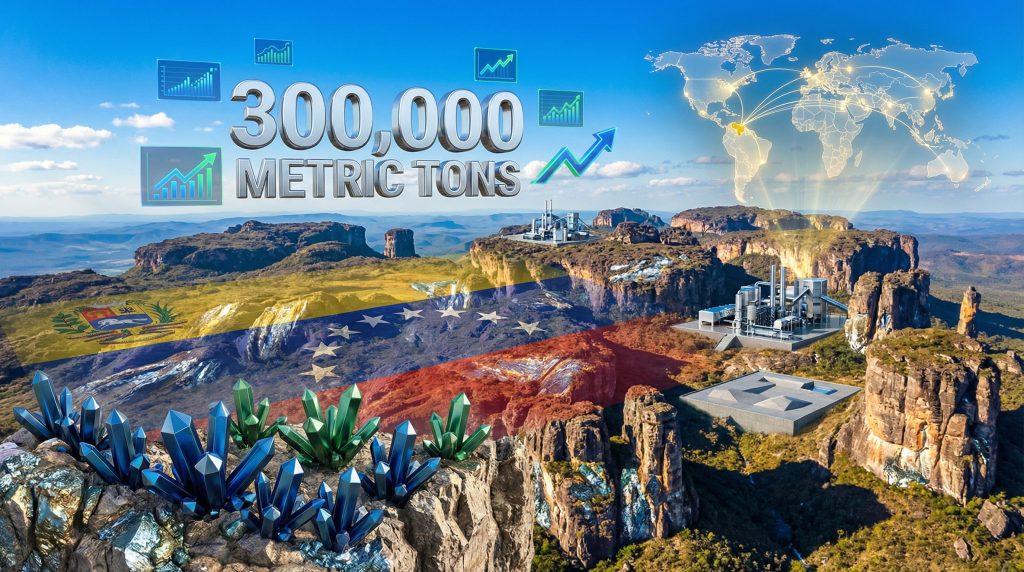
Venezuelan heavy rare earth potential represents a strategic inflection point in global critical minerals supply chain diversification, yet significant implementation barriers constrain near-term development opportunities. Current geological estimates suggest mineral potential within Venezuela's Guayana Shield formations, but systematic resource verification and processing infrastructure development remain prerequisites for commercial viability.
What Makes Venezuelan Heavy Rare Earth Deposits Strategically Significant?
The Geopolitical Chess Game Behind Critical Minerals
China maintains approximately 70% of global rare earth mining capacity, creating systemic supply chain vulnerabilities for Western technology manufacturers. This concentration becomes particularly acute for heavy rare earth elements like dysprosium and terbium, which represent critical inputs for permanent magnet motors in electric vehicles and renewable energy systems.
The Venezuelan heavy rare earth potential represents more than geological opportunity. It symbolises a strategic pivot point where Western supply chains seek alternatives to Chinese processing dominance. However, this narrative often oversimplifies the complex interplay between resource availability and operational capability.
Furthermore, current supply chain analysis reveals that processing bottlenecks, rather than mining constraints, drive heavy rare earth scarcity. Even if Venezuelan deposits prove commercially viable, extraction represents only the initial step in a multi-stage value chain that requires sophisticated separation technology, waste management systems, and regulatory compliance frameworks.
The growing importance of energy transition minerals in global supply chains amplifies the strategic significance of alternative sources. Consequently, geopolitical mining trends increasingly shape investment decisions and policy frameworks governing critical mineral development.
Heavy REE Scarcity vs. Light REE Abundance in Global Markets
Heavy rare earth elements occupy a fundamentally different market position compared to their light rare earth counterparts. Dysprosium and terbium concentrations in carbonatite formations typically range from 3-7% of total rare earth content, compared to cerium and lanthanum which can comprise 40-60% of light rare earth deposits.
This scarcity profile creates price volatility and supply security concerns that extend throughout the permanent magnet manufacturing sector. Electric vehicle motors require 5-10% heavy rare earth content for high-temperature stability, making dysprosium and terbium essential rather than substitutable inputs.
Venezuelan formations, based on preliminary geological surveys, appear to follow traditional carbonatite patterns with light rare earth dominance. The Cerro Impacto formation in Bolívar State shows enrichment in cerium, lanthanum, and neodymium alongside niobium and thorium, but heavy rare earth concentrations remain unquantified through modern exploration techniques.
Why Western Supply Chains Need Alternatives to Chinese Dominance
Processing dependency represents the most significant strategic vulnerability in rare earth supply chains. Australian ore from Mount Weld and American ore from Mountain Pass both require Asian processing facilities for separation into individual rare earth oxides, highlighting how geographical mining diversification alone fails to address supply security concerns.
Western governments increasingly recognise that rare earth supply chain resilience requires both mining capacity and domestic processing infrastructure. The U.S. Department of Energy's Critical Materials Institute emphasises that separation technology development and waste management capabilities determine long-term supply security more than resource availability.
In addition, recent developments such as Trump's critical minerals order demonstrate how policy frameworks can accelerate alternative supply source development. Similarly, initiatives like the planned European CRM facility reflect Western efforts to reduce processing dependencies.
Venezuelan heavy rare earth potential enters this strategic context as a potential component of supply chain diversification, but faces significant implementation barriers that extend beyond geological characteristics.
When big ASX news breaks, our subscribers know first
Where Are Venezuela's Most Promising Heavy Rare Earth Formations Located?
The Guayana Shield's Geological Treasure Trove
The Guayana Shield encompasses some of South America's most geologically diverse mineral formations, spanning portions of Venezuela, Guyana, Suriname, and northern Brazil. Within Venezuelan territory, this Precambrian formation hosts carbonatite complexes and alkaline intrusions that show rare earth element potential.
Geological surveys conducted by the U.S. Geological Survey during the 1970s and 1980s identified scattered rare earth occurrences throughout Bolívar State, but these assessments predate modern resource definition standards. Contemporary mining operations require systematic drilling campaigns, metallurgical testing, and economic feasibility studies that do not exist for Venezuelan heavy rare earth prospects.
The Guayana Shield's mineral potential extends beyond rare earth elements to include gold, diamond, iron ore, and bauxite deposits. This geological diversity creates both opportunity and complexity for rare earth development, as competing land use priorities and informal mining activities complicate systematic exploration efforts.
Orinoco Mining Arc: Infrastructure vs. Resource Potential
Venezuela's Orinoco Mining Arc covers approximately 111,000 square kilometres of the Guayana Shield, representing one of the world's largest designated mining development zones. Government estimates suggest significant mineral potential, but infrastructure limitations and regulatory uncertainty constrain systematic exploration activities.
Transportation infrastructure within the Orinoco Mining Arc relies primarily on river systems and deteriorated road networks. Large-scale rare earth operations would require substantial capital investment in power generation, processing facilities, and export logistics that currently do not exist in the region.
Environmental considerations add complexity to Orinoco Mining Arc development. The region encompasses protected biodiversity areas and indigenous territories, creating potential conflicts between mining development and conservation objectives that require careful regulatory navigation.
Carbonatite and Monazite Deposits Across Bolívar State
Carbonatite formations represent the primary geological host for rare earth mineralisation in Venezuelan territory. The Cerro Impacto complex shows carbonatite characteristics with documented rare earth enrichment, though specific grade distributions and heavy rare earth concentrations remain unverified through modern exploration techniques.
Monazite-bearing sands occur throughout the Guayana Shield's alluvial systems, suggesting upstream heavy rare earth sources. However, monazite processing requires specialised technology for thorium separation and radioactive waste management, creating technical and regulatory challenges for commercial development.
Venezuelan REE Deposit Types and Locations
| Formation Type | Primary Location | Heavy REE Indicators | Infrastructure Status |
|---|---|---|---|
| Carbonatite complexes | Cerro Impacto, Bolívar | Dy, Tb potential | Undeveloped |
| Monazite-bearing sands | Guayana Shield | Thorium-associated HREEs | Limited access |
| Alkaline pegmatites | Parguaza region | Variable REE content | No modern surveys |
Pegmatite formations near Parguaza show variable rare earth content but lack systematic characterisation. These formations could host heavy rare earth concentrations, but exploration activities remain constrained by access limitations and political uncertainties.
How Do Venezuela's Estimated 300,000 Metric Tons Compare Globally?
Resource Estimates vs. Proven Reserves: The Critical Distinction
Venezuelan rare earth estimates of 300,000 metric tons represent geological speculation rather than proven reserves under international mining standards. This distinction carries critical implications for investment decisions and supply chain planning, as geological estimates can vary by orders of magnitude from economically extractable resources.
Modern resource definition requires compliance with National Instrument 43-101 standards or equivalent frameworks that mandate systematic drilling, assay verification, metallurgical testing, and economic feasibility analysis. Venezuelan heavy rare earth deposits lack these fundamental requirements, making direct comparisons with established operations misleading.
Resource classification follows a hierarchy from inferred resources through indicated and measured resources to probable and proven reserves. Venezuelan estimates appear to fall within the inferred category, representing the lowest confidence level for mineral resource assessment.
Venezuelan figures represent geological estimates, not NI 43-101 compliant reserves. Modern resource definition requires systematic drilling, metallurgical testing, and economic feasibility studies—none currently exist for Venezuelan heavy REE deposits.
China's 70% Mining Dominance Creates Strategic Vulnerability
China's rare earth dominance extends beyond mining to encompass the entire value chain from extraction through separation to finished product manufacturing. This vertical integration creates strategic dependencies that affect global technology supply chains regardless of alternative mining sources.
Global rare earth reserves outside China total approximately 50-60 million metric tons, suggesting adequate geological availability for projected demand growth. However, processing capacity constraints and technology transfer limitations maintain Chinese market control despite resource diversification efforts.
Venezuelan potential, even if fully realised, would represent approximately 0.5-1% of global rare earth reserves. This scale suggests limited impact on Chinese market dominance unless combined with substantial processing infrastructure development and technology capability building.
Timeline Reality Check: 3-6 Years Minimum for Production
Rare earth development timelines consistently exceed initial projections due to technical complexity, regulatory requirements, and capital intensity. Established projects like Mountain Pass and Mount Weld required decades from discovery to commercial production, highlighting the extended development cycles characteristic of rare earth operations.
Venezuelan heavy rare earth development would require minimum 3-6 years for meaningful production under optimal political and regulatory conditions. This timeline assumes favourable geology, streamlined permitting, adequate infrastructure investment, and resolution of sanctions-related constraints.
International precedents suggest longer development timelines for complex projects. For instance, Greenland critical minerals development faces similar challenges, with Kvanefjeld project remaining in development for over 15 years despite favourable geology and established mining codes, demonstrating how regulatory and environmental considerations can extend project timelines significantly.
Global REE Resource Comparison
| Region | Estimated REE Resource (Million Tonnes) | HREE % of Total | Verification Status |
|---|---|---|---|
| China | 37-40 | 15-20% | NI 43-101 compliant; operational |
| USA (Mountain Pass) | 2.3 | 3-5% | NI 43-101 compliant; operational |
| Australia (Mount Weld) | 23 | 5-7% | NI 43-101 compliant; operational |
| Brazil | 22 | 8-12% | Partly developed; historical data |
| Venezuela | 0.3-1.0 (speculative) | Unknown | Not compliant; unverified |
What Are the Primary Barriers Preventing Venezuelan Heavy REE Development?
Sanctions Framework and Political Risk Assessment
U.S. sanctions on Venezuela create substantial legal barriers for Western mining companies considering heavy rare earth development projects. The Office of Foreign Assets Control maintains comprehensive restrictions on investment, technology transfer, and financial transactions involving Venezuelan government entities.
These sanctions extend beyond direct prohibitions to include compliance risks for international companies operating in Venezuelan territory. Financial institutions, equipment suppliers, and technical service providers face potential penalties for supporting Venezuelan mineral development, creating systemic barriers to project financing and implementation.
Political risk assessment for Venezuelan operations incorporates regime stability, security challenges, and potential policy changes that could affect long-term investment viability. Rating agencies consistently classify Venezuela among the highest political risk jurisdictions globally, reflected in elevated insurance costs and limited financing options.
Illegal Mining Networks Controlling Extraction Zones
Informal and illegal mining activities affect large portions of the Orinoco Mining Arc, creating security challenges and environmental degradation that complicate formal mineral development. These operations often involve armed groups and lack environmental controls, resulting in mercury contamination and habitat destruction.
Control of mining areas by non-state actors creates additional risks for legitimate mining operations, including extortion, theft, and violence. International mining companies require stable security conditions and legal framework clarity that do not currently exist in many Venezuelan mining regions.
Environmental remediation costs associated with illegal mining damage add significant expense to future development projects. Heavy rare earth processing requires clean water supplies and waste management systems that may be compromised by existing contamination.
Infrastructure Decay and Capital Investment Requirements
Venezuela's electrical grid operates at approximately 60-70% of demand, creating power supply constraints that affect industrial operations. Heavy rare earth processing requires substantial electricity for separation technology and environmental controls, making grid reliability essential for commercial viability.
Transportation infrastructure within the Orinoco Mining Arc requires substantial rehabilitation and expansion to support large-scale mineral operations. Road networks, port facilities, and rail connections necessary for rare earth export do not meet contemporary mining industry standards.
Water treatment and waste management infrastructure requires development from baseline conditions. Heavy rare earth processing generates significant liquid and solid waste streams that require sophisticated treatment systems to meet environmental compliance standards.
ESG Compliance Challenges for Western Mining Companies
Environmental, social, and governance considerations create additional complexity for Venezuelan heavy rare earth development. International mining companies face stakeholder pressure regarding operations in jurisdictions with human rights concerns and environmental degradation.
Indigenous territory recognition and community consultation requirements add time and complexity to project development. The Orinoco Mining Arc encompasses traditional territories of multiple indigenous groups whose consent may be required for mineral development activities.
Development Barriers by Category
| Barrier Type | Specific Challenges | Timeline Impact | Mitigation Difficulty |
|---|---|---|---|
| Political | Sanctions, regime stability | 2-5 years | High |
| Infrastructure | Power, transport, processing | 3-6 years | Very High |
| Environmental | Illegal mining damage, permits | 1-3 years | Medium |
| Technical | Resource definition, metallurgy | 2-4 years | Medium |
Which Heavy Rare Earth Elements Could Venezuela Potentially Supply?
Dysprosium and Terbium: The Magnet Manufacturing Essentials
Dysprosium and terbium represent the most strategically significant heavy rare earth elements due to their essential role in permanent magnet manufacturing. These elements enhance magnetic strength and thermal stability at elevated temperatures, making them irreplaceable for electric vehicle motor applications and wind turbine generators.
Current global dysprosium production totals approximately 2,000-3,000 metric tons annually, with terbium production around 400-500 metric tons annually. These volumes reflect the extreme scarcity of heavy rare earth production capacity outside Chinese operations.
Venezuelan carbonatite formations could potentially host dysprosium and terbium concentrations, but specific grade distributions remain unverified. Carbonatite deposits typically show 0.1-0.5% dysprosium and 0.05-0.2% terbium content, though values vary significantly between formations and require systematic exploration to quantify.
Market prices for dysprosium and terbium fluctuate substantially based on supply availability and technological demand. Recent price ranges of $300-500 per kilogram for dysprosium oxide and $1,000-2,000 per kilogram for terbium oxide reflect the premium associated with heavy rare earth scarcity.
Thorium-Associated Minerals and Processing Complexity
Monazite minerals within Venezuelan deposits contain thorium concentrations that complicate processing and waste management. Thorium separation requires specialised technology and produces radioactive waste streams that must be managed according to International Atomic Energy Agency guidelines.
Thorium content in monazite typically ranges from 4-12% by weight, creating substantial waste management requirements for commercial rare earth processing. Countries without established nuclear regulatory frameworks may lack appropriate licensing and disposal capabilities for thorium-bearing waste.
Heavy rare earth extraction from thorium-bearing minerals requires pyrohydrolytic separation technology that generates gaseous emissions and solid waste requiring specialised containment. These technical requirements increase capital costs and operational complexity compared to thorium-free rare earth sources.
Processing thorium-associated rare earth minerals also creates potential proliferation concerns that may affect international cooperation and technology transfer opportunities. Nuclear material handling requirements could limit foreign investment and technical assistance availability.
Separation Technology Requirements for Commercial Viability
Heavy rare earth separation requires sophisticated solvent extraction technology using tributyl phosphate or similar organic solvents. These processes generate substantial liquid waste streams and require multiple separation stages to achieve commercial purity standards.
Individual heavy rare earth elements show similar chemical properties that complicate separation processes. Achieving 99.9% purity standards required for magnet manufacturing may require 20-30 separation stages, significantly increasing processing costs and infrastructure requirements.
Separation technology typically requires licensing from established technology providers, most of whom maintain proprietary processes. Technology transfer restrictions and intellectual property considerations could limit Venezuelan access to optimal separation methods.
Environmental controls for heavy rare earth separation include acid recovery systems, wastewater treatment, and air emission controls. These systems require substantial capital investment and ongoing operational expertise that may not be readily available in Venezuelan operating environments.
How Would Venezuelan Heavy REEs Impact Global Supply Chain Dynamics?
Scenario 1: Successful Development Under Political Stability
Optimal Venezuelan heavy rare earth development assumes political stabilisation, sanctions resolution, and substantial foreign investment in processing infrastructure. Under these conditions, Venezuelan production could potentially reach 1,000-2,000 metric tons annually of mixed heavy rare earth concentrates within 6-8 years.
This production level would represent approximately 15-25% of global heavy rare earth demand, creating meaningful supply chain diversification opportunities. However, achieving this scale requires infrastructure investment estimated at $2-4 billion for mining, processing, and transportation capabilities.
Successful development would also require technology transfer partnerships with established rare earth processors, likely involving Chinese or Asian companies that control separation technology. This dependency could limit strategic benefits even under optimal development scenarios.
Market impact from successful Venezuelan development would include price stabilisation for dysprosium and terbium, reduced supply security premiums, and increased competition in permanent magnet manufacturing. These benefits assume sustained production and reliable export logistics.
Scenario 2: Limited Production Through Joint Ventures
Moderate development scenarios involve joint ventures between Venezuelan entities and international mining companies operating under special licensing arrangements. These structures could circumvent some sanctions constraints while providing technical expertise and capital access.
Limited production operations might achieve 200-500 metric tons annually of heavy rare earth concentrates through selective mining and basic processing operations. This scale would provide modest supply chain diversification without significantly affecting global market dynamics.
Joint venture structures require careful legal structuring to address sanctions compliance, technology transfer restrictions, and profit repatriation limitations. These arrangements often prove unstable due to changing political conditions and regulatory environments.
Export logistics under limited production scenarios would likely involve intermediary countries or offshore processing arrangements that add cost and complexity to supply chain management.
Scenario 3: Continued Chinese Processing Dominance
Even under successful Venezuelan mining development, processing dominance by Chinese facilities could perpetuate supply chain dependencies. Venezuelan concentrates might require export to Asian separation plants, limiting strategic benefits for Western supply chains.
Processing contracts with Chinese companies could provide market access but maintain dependency relationships that limit supply security benefits. Technology transfer restrictions and intellectual property concerns could constrain domestic processing development.
Chinese companies might pursue direct investment in Venezuelan operations through offshore entities or joint ventures that maintain processing control while accessing geological resources. These arrangements could limit competition benefits while providing Chinese entities with additional resource control.
Alternative processing development in third countries could provide intermediate solutions, but requires substantial capital investment and technology development that extends development timelines significantly.
Venezuelan heavy rare earth development faces three critical scenarios: full-scale production requiring 6+ years and political stability, limited joint venture operations with 3-5 year timelines, or continued reliance on Chinese processing networks regardless of extraction location.
The next major ASX story will hit our subscribers first
What Investment Considerations Should Guide Heavy REE Strategy?
Risk-Adjusted Returns vs. Strategic Supply Security
Heavy rare earth investment decisions must balance financial returns against strategic supply security objectives. Traditional investment metrics may undervalue supply chain resilience benefits while overemphasising short-term financial performance indicators.
Risk-adjusted return calculations for Venezuelan heavy rare earth development incorporate political risk premiums of 15-25% annually, significantly affecting project economics. These premiums reflect sanctions uncertainty, regime stability concerns, and infrastructure development requirements.
Strategic value considerations include supply chain diversification benefits, technology development opportunities, and geopolitical positioning that may justify investment despite elevated risk profiles. Government backing or strategic partnerships could reduce effective risk premiums through risk sharing arrangements.
Portfolio approaches to heavy rare earth investment might include multiple projects across different jurisdictions to manage country-specific risks while achieving supply diversification objectives. This strategy requires substantial capital commitments and extended development timelines.
Alternative Heavy REE Sources: Australia, Canada, and Greenland
Australian heavy rare earth development focuses on ionic clay deposits and carbonatite formations that show lower political risk profiles compared to Venezuelan operations. Projects like Browns Range in Western Australia target dysprosium-rich deposits with established regulatory frameworks.
Canadian heavy rare earth potential includes the Strange Lake project in Quebec and Newfoundland, which hosts significant HREE-rich resources within stable political and regulatory environments. Development timelines remain extended due to environmental permitting and infrastructure requirements.
Furthermore, the competitive landscape extends beyond traditional mining jurisdictions. According to Reuters analysis, Venezuela's broader resource sector faces systemic challenges that affect all mineral development activities, creating additional uncertainty for heavy rare earth prospects.
Comparative analysis suggests that alternative sources offer more predictable development pathways despite potentially higher operating costs, making them preferred options for supply security planning despite geological advantages that Venezuelan deposits might offer.
Technology Development for REE Recycling and Substitution
Recycling technology for permanent magnets could reduce heavy rare earth demand growth by 20-30% over the next decade, affecting long-term market dynamics and investment returns. Advanced recycling methods show improving economics as magnet waste volumes increase.
Substitution research focuses on reducing heavy rare earth content in permanent magnets through optimised microstructures and alternative alloy compositions. Breakthrough developments could significantly affect demand projections and market pricing.
Technology investment in recycling and substitution might provide more predictable returns than primary mining development, particularly for applications requiring supply security rather than volume growth. These technologies also offer lower environmental impact and reduced geopolitical dependency.
Patent landscapes for advanced permanent magnet technology remain dominated by Asian companies, creating potential barriers to Western technology development and manufacturing competitiveness regardless of raw material availability.
Why Do Market Reactions Often Exceed Fundamental Reality?
Narrative Trading vs. Operational Execution in REE Stocks
Rare earth equity markets show pronounced sensitivity to geopolitical narratives and supply security concerns that often exceed fundamental operational developments. Recent market movements reflect investor psychology rather than disclosed operational progress or contract announcements.
Stock price volatility in rare earth companies frequently correlates with political developments, sanctions announcements, and strategic mineral policy changes rather than production volumes, cost structures, or technological developments. This creates investment opportunities and risks for different investor types.
MP Materials' recent 11% price increase following Venezuelan speculation demonstrates how market sentiment responds to conceptual opportunities despite absence of operational developments, partnership announcements, or technical progress indicators.
Narrative-driven trading creates temporary pricing disconnects from fundamental valuations, but requires careful timing and risk management due to rapid sentiment changes and limited liquidity in rare earth equity markets.
The Gap Between Resource Potential and Production Capability
Geological resource potential frequently receives disproportionate market attention compared to processing capability, infrastructure requirements, and regulatory compliance factors that determine commercial viability. This creates systematic valuation errors in resource company assessments.
Processing bottlenecks and separation technology constraints receive inadequate investor attention despite representing the primary limitation for global heavy rare earth supply expansion. Market focus on mining capacity often ignores downstream value chain requirements.
Infrastructure development costs and timelines for remote mineral deposits consistently exceed initial projections, creating systematic underestimation of capital requirements and development schedules that affects investment returns.
Regulatory approval processes for rare earth operations involve environmental assessment, community consultation, and technology transfer considerations that extend beyond traditional mining permitting and create additional uncertainty for development timelines.
Due Diligence Framework for REE Investment Evaluation
Comprehensive due diligence for rare earth investments must incorporate geological verification, metallurgical testing, infrastructure assessment, and regulatory pathway analysis. Traditional financial metrics provide insufficient information for rare earth investment decisions.
Resource certification requires independent verification through NI 43-101 compliant studies or equivalent international standards. Unverified geological estimates should be heavily discounted in investment valuations due to historical overestimation patterns.
Processing technology assessment includes separation capability, waste management systems, and environmental compliance requirements. Technology licensing arrangements and intellectual property considerations affect operational viability and cost structures.
Investment Due Diligence Checklist
| Evaluation Criteria | Venezuelan Context | Risk Level | Verification Required |
|---|---|---|---|
| Resource certification | Unverified estimates | Very High | Independent geological audit |
| Political stability | Sanctions, regime change | Very High | Legal and diplomatic analysis |
| Infrastructure readiness | Significant gaps | High | Engineering feasibility study |
| Market access | Processing bottlenecks | High | Supply chain mapping |
What Does the Future Hold for Venezuelan Heavy Rare Earth Development?
Policy Changes Required for Western Investment
Venezuelan heavy rare earth development requires comprehensive sanctions relief and political stabilisation before Western mining companies can consider substantial investment commitments. Current U.S. Treasury restrictions effectively prohibit most forms of technical and financial cooperation.
Investment protection agreements and bilateral investment treaties would provide additional security for foreign capital, but require government-to-government negotiations and legislative ratification processes that extend beyond mining sector considerations.
Environmental regulatory frameworks require substantial development to meet international mining standards. Venezuelan environmental agencies lack capacity for complex rare earth permitting and oversight, creating regulatory uncertainty for potential operators.
Legal framework clarity regarding mineral rights, profit repatriation, and dispute resolution remains inadequate for large-scale foreign investment. Mining code reforms and judicial system improvements would be prerequisites for major project development.
Technology Transfer and Processing Capability Building
Domestic processing capability development requires substantial technology transfer from established rare earth producers, most of whom maintain proprietary separation processes. Technology licensing arrangements must navigate intellectual property protection and export control restrictions.
Workforce development for rare earth operations requires specialised training in metallurgy, hydrometallurgy, and environmental management. Venezuelan educational institutions lack programmes for rare earth processing technology, creating human resource constraints.
Research and development partnerships with international universities and technology companies could provide capability building opportunities, but require political stability and sanctions resolution to enable meaningful cooperation.
Processing infrastructure development represents the most capital-intensive component of rare earth supply chain building, requiring $500-1,000 million investment for commercial-scale separation facilities.
Regional Competition from Established Heavy REE Producers
Brazilian rare earth development provides competitive pressure for Venezuelan projects through similar geological potential within more stable regulatory environments. Brazilian companies maintain established processing capabilities and export infrastructure.
Australian heavy rare earth projects offer alternative supply sources with established mining codes, environmental standards, and political stability that attract international investment more effectively than Venezuelan opportunities.
Chinese rare earth companies continue capacity expansion and technology development that maintains processing dominance regardless of primary mining location diversification efforts.
African rare earth development in countries like Tanzania and Madagascar provides additional alternatives with potentially lower political risk and established mining sector frameworks.
Moreover, security concerns compound development challenges. Recent Guardian reporting highlights how illegal mining networks and security issues create additional barriers to legitimate mineral development in Venezuelan territories.
Even under optimal political conditions, Venezuelan heavy rare earth production would require minimum 3-6 years for meaningful output. Current market speculation significantly outpaces operational reality, creating investment risk for those expecting near-term supply chain impact.
Long-term Venezuelan heavy rare earth potential remains contingent on fundamental political and economic reforms that extend beyond mining sector considerations. While geological potential may exist, operational reality requires comprehensive institutional development and international cooperation frameworks that currently do not exist.
Investment decisions regarding Venezuelan heavy rare earth potential should incorporate extended development timelines, substantial political risk premiums, and alternative development scenarios that may provide more predictable pathways to supply chain diversification objectives.
Ready to Discover the Next Big Mining Opportunity?
Don't let complex geological assessments and market speculation cloud your investment judgment. Discovery Alert's proprietary Discovery IQ model delivers instant notifications on significant ASX mineral discoveries, empowering you to identify actionable opportunities ahead of broader market movements and make informed decisions when critical minerals announcements create trading opportunities.