May 17, 2026
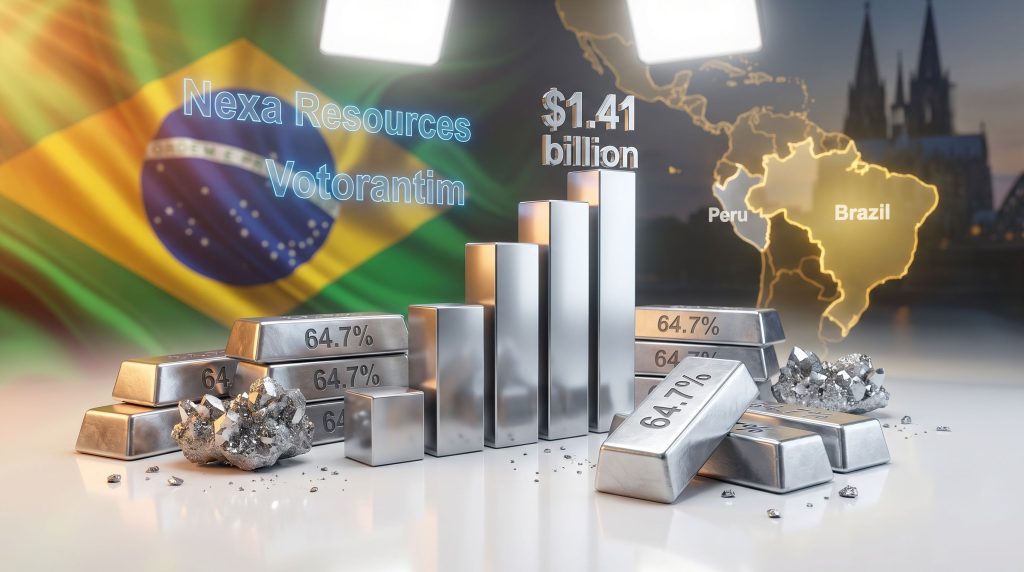
Industrial consolidation across Latin America has reached a pivotal juncture where century-old conglomerates face mounting pressure to streamline operations and unlock shareholder value. The traditional model of diversified holding companies spanning unrelated sectors from cement to mining increasingly conflicts with institutional investor preferences for focused, high-return business models. This transformation reflects broader mining industry evolution where operational complexity carries significant valuation penalties.
The Votorantim sale of Nexa controlling stake represents more than an isolated transaction. It signals a fundamental shift in how Brazilian industrial families approach portfolio optimization amid volatile commodity cycles and evolving investor expectations. Understanding this strategic pivot requires examining the forces reshaping conglomerate structures across emerging markets and the specific dynamics driving zinc market consolidation.
Strategic Forces Driving Brazilian Conglomerate Restructuring
The wave of portfolio rationalisation sweeping through Brazil's industrial sector stems from multiple converging pressures. Diversified conglomerates traditionally traded at substantial discounts to their sum-of-parts valuations, with holding company structures creating 15-40% value gaps due to perceived management inefficiencies and capital allocation challenges.
Vale S.A. exemplified this trend through its systematic divestiture of non-core coal assets, including the sale of Mozambique operations to Glencore subsidiary in 2018. This strategic pivot toward iron ore concentration demonstrated how focused business models command premium valuations compared to diversified commodity portfolios.
Similarly, CSN (Companhia Siderúrgica Nacional) pursued diversification reversals throughout the 2010s, reducing stakes in infrastructure cement units through equity offerings. These moves reflected institutional investor pressure for operational transparency and sector-specific expertise rather than conglomerate complexity.
The capital allocation efficiency framework driving these changes involves several key metrics:
• Return on Invested Capital (ROIC) comparisons across business segments
• Cash flow generation stability during commodity downturns
• Management attention allocation across unrelated industries
• Debt capacity optimisation through focused operations
Brazilian conglomerates face additional challenges from currency volatility and political risk, making streamlined operations essential for maintaining investment grade credit ratings. The holding company discount phenomenon particularly impacts family-controlled groups where succession planning intersects with portfolio complexity.
Portfolio rationalisation typically follows a systematic approach: identifying non-core divisions with limited synergies, executing divestitures to buyers offering strategic premiums, and redeploying capital toward segments with sustainable competitive advantages. This process becomes particularly urgent during commodity boom periods when asset valuations peak and divestiture proceeds maximise.
When big ASX news breaks, our subscribers know first
Votorantim's Systematic Mining Exit Strategy
Votorantim's approach to mining asset rotation demonstrates sophisticated portfolio management extending beyond the Nexa transaction. The conglomerate's CBA (Companhia Brasileira de Alumínio) divestiture to Rio Tinto and Chinalco joint venture, completed in 2019-2020 for approximately US$1.4-1.5 billion, established the template for systematic metals exposure reduction.
The aluminium sale proceeds enabled Votorantim to strengthen core cement and specialty chemicals segments while reducing cyclical commodity exposure. This capital redeployment strategy prioritises downstream materials processing where margins demonstrate greater stability and customer relationships provide competitive moats.
Timeline Analysis of Votorantim Mining Exits:
| Transaction | Timeline | Estimated Value | Strategic Rationale |
|---|---|---|---|
| CBA Aluminium Sale | 2019-2020 | US$1.4-1.5bn | Reduce aluminium price volatility |
| Nexa Stake Negotiation | 2026 (reported) | US$1.41bn | Exit zinc mining exposure |
| Total Mining Divestments | 5-year period | ~US$2.8-2.9bn | Focus on industrial materials |
The systematic nature of these exits suggests Votorantim views mining assets as non-core despite their substantial scale. The timing coincides with family succession planning considerations and institutional investor pressure for operational focus. Private equity and sovereign wealth funds increasingly target these divestiture opportunities, recognising the valuation gaps between conglomerate holding structures and focused mining operations.
Capital redeployment following mining exits typically targets:
• Cement and construction materials with regional market leadership
• Specialty chemicals serving industrial applications
• Energy infrastructure including renewable power generation
• Technology and innovation capabilities across retained segments
The asset rotation process reflects sophisticated understanding of commodity cycle timing, executing sales during favourable market conditions while retaining operations during downturns. Furthermore, this approach maximises proceeds available for reinvestment in higher-return, less cyclical business segments.
Nexa Resources: Global Zinc Market Positioning
Nexa Resources occupies a distinctive position within the global zinc industry through its integrated mining and processing operations across Brazil and Peru. The company ranks among the top 5 independent zinc mining companies globally with annual production capacity of approximately 480,000-520,000 tonnes per annum.
Global Zinc Market Context:
• Total refined zinc production: ~13 million tonnes annually (2023)
• Nexa's market share: Approximately 4% of global refined zinc supply
• Primary demand drivers: Galvanising (50%), brass and alloys (20%), battery technology (5-8%, growing)
• Projected demand growth: 2-3% annually through 2030
The company's Vazante Mine in Brazil represents the largest long-life zinc asset in the Americas, featuring high-grade ore with reserve life exceeding 15 years at current production rates. This contrasts favourably with many global zinc operations approaching depletion phases, providing Nexa with strategic advantages during supply tightening cycles.
Nexa's Operational Assets:
Brazil Operations:
- Vazante Mine: Primary zinc production with sub-$500/tonne operating costs
- Três Marias Mine: Secondary Brazilian zinc operation
- Processing facilities: Integrated smelting and refining capacity
Peru Operations:
- Cerro Lindo Mine: Polymetallic zinc-copper operation with integrated processing
- Export infrastructure: Access to Pacific shipping routes for Asian markets
The integrated mining-to-smelting model provides significant competitive advantages through reduced transportation costs and supply chain control. Nexa's recovery rates of 82-88% exceed industry standards of approximately 80%, demonstrating operational efficiency advantages over peer operations.
Cost Curve Positioning Analysis:
Nexa's cash costs position the company within the lower quartile (bottom 25%) of global zinc producers, with operating costs significantly below industry averages of $600-900 per tonne. However, this cost advantage stems from high-grade ore bodies, efficient processing technology, and integrated operations reducing external processing fees.
Environmental, social, and governance (ESG) compliance represents an increasingly important competitive factor. Nexa's operations meet international standards through tailings storage facilities aligned with ICMM (International Council on Mining and Metals) guidelines and community development programs supporting local economic development.
The company's geographic diversification across Brazil and Peru provides political risk mitigation while accessing different market dynamics. Brazilian operations serve domestic galvanising demand and export markets, while Peruvian production targets Asian zinc consumers through Pacific shipping routes.
How Does European Zinc Industry Consolidation Drive Strategic Acquisitions?
European zinc market dynamics create compelling strategic rationales for acquiring controlling stakes in Latin American zinc producers. The region demonstrates 65-75% import dependency for refined zinc consumption, creating supply chain vulnerabilities during geopolitical disruptions or commodity price volatility.
Major European Zinc Processors:
• Befesa (Spain): ~400,000 tpa recycling-focused capacity
• Henan Found (China): Operates European processing facilities
• Regional smelters: Secondary processors dependent on imported concentrates
The limited European mine ownership creates strategic acquisition opportunities for companies seeking vertical integration benefits. Unlike copper or iron ore sectors with extensive consolidation, zinc mining M&A activity remains relatively fragmented, presenting opportunities for acquiring high-quality assets at attractive valuations.
Strategic Buyer Categories and Motivations:
Integrated European Smelters (Upstream Integration):
- Current profile: Process imported concentrates with minimal mine ownership
- Strategic rationale: Secure long-term ore supply amid commodity volatility
- Synergy sources: Guaranteed feedstock, processing optimisation, cost reduction
- Financing approach: Mix of corporate debt (50-60%) and equity (40-50%)
Private Equity Infrastructure Funds:
- Assets under management: $45-65 billion sector-wide across Latin American mining
- Target returns: 15-20% IRR over 5-7 year holding periods
- Value creation approach: Operational efficiency programmes, cost reduction, eventual strategic sale
- Leverage targets: 2.5-3.5x debt/EBITDA entry ratios
Sovereign Wealth Funds:
- Investment horizon: 10+ years with patient capital approach
- Return expectations: 8-12% targeting stable, long-term commodity exposure
- Portfolio allocation: 3-8% commodities allocation typical for diversified SWFs
- Co-investment potential: Partnership with operational mining companies
The European strategic autonomy initiative following supply chain disruptions creates additional acquisition motivations. Industrial companies increasingly view Latin American hard rock mining as essential for reducing dependency on geopolitically sensitive regions including African copper/cobalt markets and Asian processing capacity.
Recent comparable transactions demonstrate market appetite for zinc consolidation. Teck Resources considered divesting non-core assets during 2021-2023, while Lundin Mining executed portfolio optimisation through copper asset sales and operational focus initiatives.
What's the Valuation Framework Behind the Deal?
The reported US$1.41 billion transaction value for Votorantim's 64.7% controlling stake in Nexa provides insights into zinc mining asset valuations and market dynamics. Analysis of this pricing against comparable transactions reveals several important considerations for evaluating deal attractiveness, particularly through investment strategy components that influence valuation methodologies.
Enterprise Value Analysis:
| Valuation Component | Estimated Range | Calculation Basis |
|---|---|---|
| Normalised EBITDA | $250-350 million | Current commodity prices, operational efficiency |
| Applied Multiple | 4.0-5.6x | Based on $1.41bn transaction value |
| Comparable Range | 7.5-9.5x | Recent zinc mining M&A transactions |
| Implied Discount | 25-40% | Below typical strategic acquisition multiples |
The transaction multiple of 4.0-5.6x EBITDA suggests several potential scenarios:
• Commodity cycle trough pricing: Zinc markets under pressure during negotiation period
• Emerging market risk premium: Political/regulatory risk adjustments for Brazil/Peru operations
• Distressed seller dynamics: Votorantim facing financing pressures or strategic imperatives
• Buyer negotiation leverage: Limited competing bidders creating pricing advantages
Control Premium Analysis
Acquiring controlling stakes in emerging market mining operations typically commands 15-30% premiums above public trading prices. The premium reflects several value sources:
- Board control and strategic decision authority
- Operational integration capabilities with buyer's existing operations
- Supply chain certainty value during commodity market volatility
- Long-term contract negotiation power with processing facilities
Deal Structure Scenarios:
Scenario A: Strategic Industrial Buyer
- Acquisition mechanics: Direct purchase of 64.7% stake
- Financing structure: Corporate debt and equity mix
- Synergy realisation: Ore supply contracts, smelting optimisation
- Integration timeline: 18-24 months for operational alignment
Scenario B: Private Equity Acquisition
- Value creation plan: 5-10% cost reduction through operational efficiency
- Exit strategy: Strategic sale or IPO within 5-7 years
- Management involvement: Retention of existing operational leadership
- Leverage optimisation: Target 2.5-3.5x debt/EBITDA
Scenario C: Sovereign Wealth Fund Investment
- Investment approach: Long-term holding with patient capital
- Co-investment structure: Potential partnership with mining operator
- Return expectations: Stable commodity exposure with 8-12% returns
- Portfolio integration: Part of broader natural resources allocation
The emerging market control premium of 20-25% typical for Peru/Brazil mining assets reflects compensation for currency volatility, regulatory and political risk factors, community relations and environmental compliance, and infrastructure and logistics considerations.
Comparable Transaction Analysis:
Recent zinc sector M&A demonstrates valuation ranges of 7-10x EBITDA for controlling stakes, suggesting the Votorantim sale of Nexa controlling stake occurs at significant discount to precedent deals. This pricing gap indicates either exceptional buyer negotiation success or underlying operational or market challenges affecting asset valuation.
Latin American Mining Investment Landscape
The broader Latin American mining sector presents evolving opportunities and risks for international investors seeking commodity exposure through direct asset ownership. Regional dynamics including resource nationalism, infrastructure development, and regulatory frameworks significantly impact investment returns and operational complexity.
Foreign Direct Investment Patterns:
• Brazilian mining FDI: $8-12 billion annually across all commodities
• Peruvian mining investment: $4-6 billion annual average
• Primary investor origins: Europe (35%), North America (30%), Asia (25%)
• Preferred structures: Joint ventures, minority stakes, offtake agreements
Resource nationalism trends across the region require careful political risk assessment. Recent policy changes in Chile, Peru, and Colombia demonstrate evolving government attitudes toward foreign mining investment, particularly regarding taxation, environmental standards, and community benefit requirements.
Regulatory Approval Considerations:
Brazilian Foreign Investment Framework:
- Approval authority: Administrative Council for Economic Defense (CADE)
- Review criteria: Competition impacts, strategic sector considerations
- Timeline: 6-12 months for complex transactions
- Approval probability: Generally favourable for mining sector investments
Peruvian Mining Oversight:
- Primary regulator: Ministry of Energy and Mines (MINEM)
- Community consultation: Required for operational changes
- Environmental compliance: Strict standards for new investments
- Political stability: Generally supportive of foreign mining investment
The European Union competition policy considerations for vertical integration require analysis when European smelters acquire upstream zinc mining assets. Concentration ratios and market share calculations determine regulatory approval likelihood and potential divestiture requirements.
Infrastructure and Logistics Advantages
Latin American mining operations benefit from established infrastructure networks supporting commodity exports. Brazilian mining assets access Atlantic shipping routes serving European and North American markets, while Peruvian operations utilise Pacific ports targeting Asian zinc consumers.
Transportation costs represent 8-15% of total zinc production expenses, making infrastructure access a critical competitive factor. Integrated logistics networks including rail, port, and processing facilities provide significant advantages over isolated mining operations requiring extensive transportation arrangements.
Community Development and ESG Considerations:
Modern mining investments increasingly require sophisticated community relations and environmental management programmes. Successful operators implement local employment and training initiatives, infrastructure development contributions, environmental monitoring and remediation programmes, and indigenous community consultation and benefit-sharing.
These requirements add operational complexity but provide social licence advantages supporting long-term operational stability. International investors must budget 3-5% of operational costs for comprehensive ESG compliance programmes.
The next major ASX story will hit our subscribers first
Global Zinc Market Supply and Demand Dynamics
Understanding zinc market fundamentals provides essential context for evaluating the strategic value of Nexa Resources and similar mining assets. Global zinc consumption patterns, supply constraints, and technological demand drivers create both opportunities and risks for mining asset valuations, particularly as commodity prices impact overall market performance.
Supply-Demand Balance Projections:
| Market Factor | Current Status | 2030 Projection | Impact Assessment |
|---|---|---|---|
| Global Production | 13 million tonnes | 14.5-15 million tonnes | Moderate growth |
| Mine Depletion | 15-20 operations | 25-30 operations | Supply tightening |
| Demand Growth | 2-3% annually | Sustained growth | Positive for prices |
| New Project Pipeline | Limited development | 3-5 major projects | Supply response |
Primary Demand Drivers:
Galvanising Applications (50% of demand):
- Steel corrosion protection for infrastructure projects
- Automotive industry zinc coating requirements
- Construction industry galvanised steel consumption
- Growth correlation with GDP and infrastructure spending
Brass and Alloy Applications (20% of demand):
- Industrial machinery and equipment manufacturing
- Plumbing and electrical component production
- Marine hardware and specialised applications
- Stable demand with limited substitution alternatives
Battery Technology and Energy Storage (5-8%, growing):
- Zinc-air battery development for grid storage
- Electric vehicle auxiliary battery applications
- Consumer electronics and portable power systems
- Potential for significant demand acceleration
Mine Depletion Schedule Analysis
Approximately 15-20 major zinc mines globally face depletion within the next decade, creating supply constraints absent new project development. The lead time for zinc mine development typically ranges 7-12 years from discovery through production, creating potential supply gaps during demand growth periods.
Key Depleting Operations:
- Century Mine (Australia): Closed 2016, removed 500,000 tonnes annual capacity
- Lisheen Mine (Ireland): Closed 2015, eliminated 160,000 tonnes capacity
- Multiple smaller operations: Ongoing closure schedule through 2030
New project development faces increasing challenges from environmental permitting, community opposition, and capital intensity requirements. Exploration expenditure for zinc projects remains below historical averages, suggesting limited pipeline development for replacing depleting capacity.
Price Volatility and Market Dynamics:
Zinc prices demonstrate cyclical behaviour driven by supply-demand imbalances and macroeconomic conditions. Price ranges of $1,100-3,200 per tonne over recent cycles reflect the commodity's sensitivity to industrial activity and mine supply disruptions.
Volatility Factors:
- Supply disruptions: Mine accidents, labour strikes, equipment failures
- Demand fluctuations: Economic cycles affecting construction and manufacturing
- Inventory levels: London Metal Exchange warehouse stock changes
- Currency movements: US dollar strength affecting commodity pricing
Ownership concentration within the zinc industry remains relatively low compared to other base metals, with the top 5 producers controlling approximately 40-45% of global supply. This fragmentation provides opportunities for consolidation and supply chain integration, particularly within the global mining landscape where strategic positioning becomes crucial.
Investment Implications
The zinc market structure creates several investment themes relevant to the Votorantim sale of Nexa controlling stake:
• Supply tightening potential supporting higher long-term prices
• Operational efficiency advantages for low-cost producers like Nexa
• Integration benefits for companies controlling mining and processing
• Geographic diversification value across multiple mining jurisdictions
Long-term zinc demand growth driven by infrastructure development and energy transition applications provides fundamental support for mining asset valuations, particularly for operations with long reserve life and cost advantages. Consequently, the Votorantim sale of Nexa controlling stake represents more than just portfolio rationalisation – it reflects broader mining industry consolidation trends that are reshaping the global commodities landscape.
The transaction demonstrates how strategic buyers can acquire high-quality zinc mining assets at attractive valuations while diversifying their supply chains and reducing operational risks. For instance, European smelters seeking upstream integration can secure long-term ore supplies, while private equity funds can implement operational improvements to generate attractive returns.
Furthermore, the deal highlights the importance of understanding regional market dynamics, regulatory frameworks, and community relations in Latin American mining investments. As resource nationalism trends continue to evolve, successful investors must navigate complex political and social considerations alongside traditional financial and operational factors.
Disclaimer: This analysis is for informational purposes only and does not constitute investment advice. Commodity investments involve significant risks including price volatility, operational challenges, and regulatory changes. Investors should conduct independent research and consult financial advisors before making investment decisions. All financial projections and market forecasts are speculative and subject to substantial uncertainty.
Evaluating Zinc Mining Investment Opportunities?
Discovery Alert's proprietary Discovery IQ model delivers real-time alerts on significant mineral discoveries across ASX markets, empowering subscribers to identify actionable opportunities ahead of broader market movements. Understand why major mineral discoveries can lead to substantial returns by exploring Discovery Alert's dedicated discoveries page, showcasing historic examples of exceptional outcomes, and begin your 14-day free trial today to position yourself ahead of market consolidation trends.