Vulcan Energy Resources Ltd
- ASX Code: VUL
- Market Cap: $1,239,731,309
Vulcan Energy Breaks Ground on Lionheart Geothermal Power Plant as Construction Advances in Landau
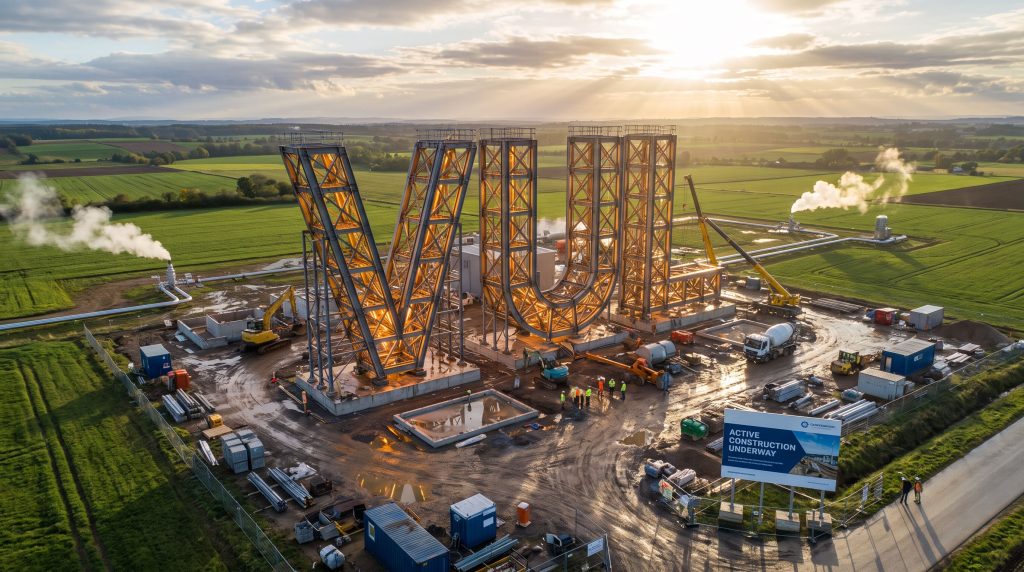
Vulcan Energy Resources (ASX: VUL) has reported the start of civil construction activities at its 30MW Lionheart geothermal power plant site in Landau, Germany, moving the project beyond early earthworks and into the next visible stage of development. According to the ASX announcement, the work now underway includes foundations, concrete structures and road infrastructure for a facility that forms part of Vulcan's first commercial integrated lithium and renewable energy project.
For investors, the update matters because it marks a shift from site preparation to physical plant construction at Lionheart, Vulcan's Phase One development in the Upper Rhine Valley Brine Field. The company has stated the project is progressing on time and on budget, whilst maintaining its production target of 24,000 tonnes per annum of lithium hydroxide monohydrate (LHM), alongside renewable electricity and heat co-products.
When big ASX news breaks, our subscribers know first
Civil Construction Begins at the Lionheart Site
In the announcement, Vulcan said civil construction activities have commenced at the Lionheart geothermal power plant site after the completion of early bulk earthworks. The site is located in the Messegelände Südost industrial park in Landau and spans approximately 10 hectares.
The current construction phase includes:
- Preparation and construction of key foundations
- Concrete works for power plant buildings and equipment
- Road infrastructure to support construction and future site operations
- Preparation for the next phase involving building erection and arrival of process equipment for assembly
The announcement also included images showing the first concrete layers being laid, which will serve as the base for foundations. Whilst this is still an early stage of the broader buildout, it provides a tangible sign that Lionheart has moved into active site construction.
What Did the Managing Director Say?
"We are delighted to move beyond preparatory bulk earthworks and into civil construction activities at our Lionheart geothermal power plant, an integral part of the Lionheart integrated lithium and geothermal project," said Cris Moreno, Managing Director and CEO of Vulcan Energy.
"It is encouraging to see Lionheart project execution progress on time, and on budget."
For a project of this scale, the move from earthworks to civil works is often watched closely, as it signals that planning and early site access activities have progressed to structural development.
What Is the Lionheart Project Designed to Produce?
According to the ASX release, Lionheart is Vulcan's first phase of production and combines geothermal energy generation with lithium extraction from deep geothermal brines. The project is located between Germany and France in the Upper Rhine Valley Brine Field, which the company describes as hosting lithium-enriched geothermal brines.
Vulcan's stated production targets and operating metrics are outlined below.
| Metric | Target |
|---|---|
| Lithium hydroxide monohydrate capacity | 24,000 tpa |
| Approximate EV batteries supported annually | 500,000 |
| Renewable power co-product | 275 GWh per annum |
| Heat co-product for local consumers | 560 GWh per annum |
| Estimated project life | 30 years |
| Geothermal power plant capacity | 30 MW |
| Commercial site area | 10 hectares |
The company said Lionheart's combined geothermal and lithium extraction facility has been designed to produce both renewable baseload geothermal energy and a high-quality lithium chloride intermediate product for downstream processing.
This is a key feature of the Lionheart design. Rather than operating as a standalone lithium processing asset reliant on third-party power, the project is intended to produce its own energy whilst also generating lithium chemicals for battery supply chains.
How Do the Plant and Well Network Connect?
The announcement states that the lithium extraction and geothermal energy plants will be linked through an inter-connected pipelines and power (ICPP) network. This network is designed to transport lithium brine and industrial water from well sites to the Landau facility and back again for underground re-injection.
In simple terms, hot brine is brought to surface from deep underground, processed for its heat and lithium content, and then returned underground. This closed-loop design is central to how geothermal-lithium projects operate.
Why Does Baseload Geothermal Power Matter in Lithium Production?
One of the more important aspects of the Lionheart project for investors is its use of baseload geothermal energy. This term can sound technical, but the underlying idea is straightforward.
Baseload power refers to electricity that can be produced continuously, rather than only when external conditions allow. Solar and wind depend on sunlight and wind speed. Geothermal energy uses heat from below the Earth's surface, which means it can typically operate around the clock.
That matters because lithium processing is energy intensive. If a producer depends heavily on external power markets, operating costs can rise when electricity prices increase. Furthermore, Vulcan's CEO said Lionheart is intended to provide "significant insulation from high energy prices now and in the future" by producing its own heat and power.
Key Terms Explained
For readers less familiar with the sector, the main project terms in the announcement can be summarised as follows:
- Lithium hydroxide monohydrate (LHM): A refined lithium chemical used in lithium-ion battery cathodes, especially for electric vehicles.
- Lithium chloride intermediate: A partially processed lithium product that can be further refined into battery-grade chemicals.
- Geothermal brine: Naturally occurring hot underground saltwater that can contain dissolved lithium.
- Direct lithium extraction (DLE): A process used to remove lithium from brine more directly than evaporation-based methods.
- Baseload power: Constant, reliable electricity supply available day and night.
- Re-injection: Returning processed brine underground after heat and lithium-related value have been extracted.
For investors, the significance of these terms lies in cost structure. A lithium project with on-site energy generation may have different operating cost exposure from conventional hard-rock or brine operations that rely more heavily on external fuel or electricity markets.
Construction Milestones to Watch From Here
The ASX announcement says civil works precede the next construction stage, which will include erection of buildings and arrival of process equipment for assembly. Whilst the company did not provide a detailed timeline in the text of the release, it referred to a sequence of key milestones to first production.
Based on the construction path outlined in the announcement, the next visible stages are likely to include:
- Completion of foundation and concrete works
- Structural building erection
- Delivery and assembly of plant equipment
- Integration with pipeline and power infrastructure
- Commissioning and operational testing
Each of these stages tends to reduce a different category of development uncertainty. Early in a project, the biggest questions often centre on design, procurement, site readiness and construction execution. As the project advances physically, investors gain more measurable indicators of progress.
This does not remove all uncertainty from a development story, but it changes the focus. The market can increasingly assess delivery against visible milestones rather than planning alone.
Why Does This Construction Update Matter to Investors?
The start of civil construction is important for several reasons beyond the headline itself.
First, it demonstrates project progression into a more advanced development phase. Bulk earthworks prepare the site, but foundations and concrete works begin the formation of permanent plant infrastructure. This makes construction progress more visible and easier to track.
Second, the integrated model remains central to the investment case. According to the announcement, Lionheart is designed to produce lithium chemicals whilst also generating 275 GWh per annum of renewable power and 560 GWh per annum of heat for local consumers. That means the project economics are intended to include more than one output stream.
Third, production scale is commercially relevant. Vulcan's target of 24,000 tpa LHM is described as enough for around 500,000 electric vehicle batteries per year, based on the company's referenced assumptions. If achieved, that would place Lionheart among more meaningful European lithium supply developments.
Fourth, project life is long-dated. The estimated 30-year project life suggests Lionheart is being developed as a long-term industrial asset rather than a shorter cycle production scheme.
In addition, there is a location advantage worth noting. Landau is in Germany, close to European industrial and automotive markets that are relevant to battery material demand. Geographic proximity can be relevant when assessing future downstream logistics and customer pathways.
The next major ASX story will hit our subscribers first
A Visible Shift From Development Story to Execution Story
The Lionheart update does not change Vulcan's published production target, but it does provide a new level of physical evidence that the project is advancing. According to management, execution is progressing on time and on budget, and the first concrete layers are already being put in place for the geothermal power plant foundations.
That is why this milestone is likely to attract attention. In early-stage resource and energy projects, permitting, studies and financing often dominate the narrative. However, once civil works commence, the basis for market assessment starts to broaden into construction delivery, equipment installation and readiness for commissioning.
For Vulcan shareholders and prospective investors, the next key question is straightforward: can the company continue converting engineering plans into completed operating infrastructure at the same pace it has outlined so far?
If future quarterly and project updates confirm continued progress through building erection, equipment assembly and network integration, Lionheart may increasingly be assessed on delivery against first production milestones rather than on concept alone.
At this stage, the ASX announcement provides a clear message. Civil construction has started, the Lionheart site in Landau is moving into structural development, and Vulcan's integrated geothermal-lithium model is beginning to take shape on the ground.
Want to Stay Ahead of the Next Major ASX Resource Discovery?
While Vulcan Energy's Lionheart project highlights the long-term potential of integrated resource development, rapid-move opportunities often emerge the moment a significant discovery hits the ASX — Discovery Alert's proprietary Discovery IQ model scans ASX announcements in real time, delivering instant alerts on high-potential mineral discoveries across more than 30 commodities. Start your 14-day free trial today and explore historic discovery returns on Discovery Alert's dedicated discoveries page to understand just how transformative early positioning can be.