May 11, 2026
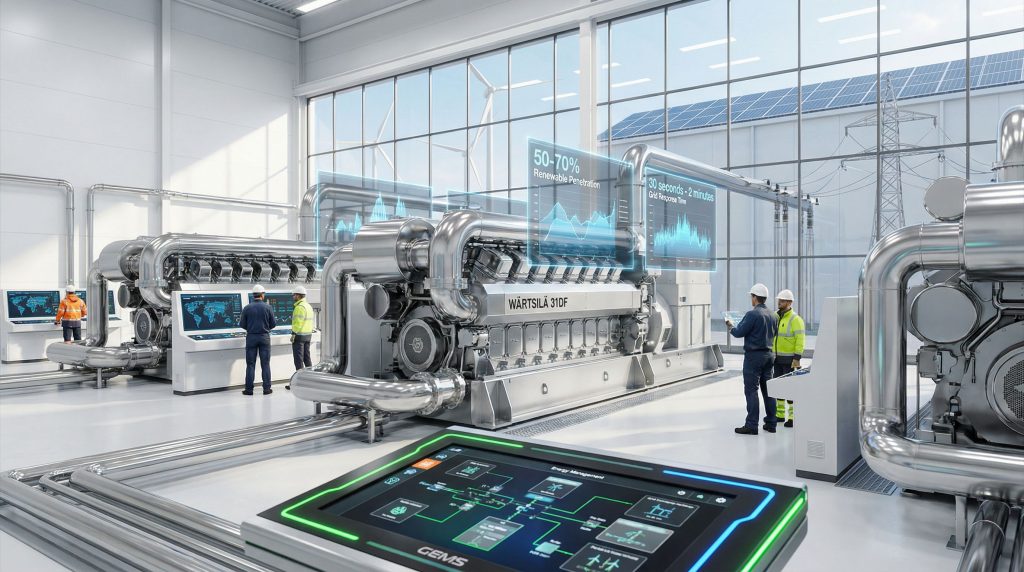
Industrial energy systems worldwide are undergoing a fundamental transformation as renewable power sources become increasingly prevalent. The challenge lies not in generating clean energy, but in managing the inherent variability of wind and solar resources while maintaining grid stability and meeting continuous power demands. This complexity becomes particularly acute in energy-intensive operations like mining, where power interruptions can result in significant operational and financial consequences. The integration of flexible power technologies represents a critical bridge between traditional thermal generation and fully renewable energy systems, enabling higher penetration rates of clean energy while preserving operational reliability. Furthermore, Wärtsilä renewable energy integration offers proven solutions for addressing these complex operational challenges.
Understanding Wärtsilä's Flexible Power Solutions for Renewable Integration
Flexible power generation systems function as intelligent energy buffers that respond dynamically to fluctuations in renewable energy output. Unlike conventional thermal plants that operate at steady-state conditions, these systems can rapidly adjust their output to compensate for the intermittent nature of wind and solar generation. The technology enables grid operators to maintain frequency and voltage stability even when renewable sources experience sudden changes due to weather conditions.
The cornerstone of Wärtsilä renewable energy integration lies in dual-fuel engine technology combined with advanced grid stabilisation features. These engines can switch between different fuel sources in real-time, allowing operators to optimise for cost, emissions, or grid requirements depending on operational conditions. The synchronous condenser capability represents a particularly innovative feature, enabling generators to provide reactive power support and grid inertia independently from the engines themselves.
Key Operational Characteristics:
- Rapid response capabilities enabling full load deployment within minutes
- Fuel flexibility accommodating natural gas, diesel, and future hydrogen compatibility
- Grid balancing mechanisms that automatically adjust to renewable fluctuations
- Reactive power provision supporting voltage stability across transmission networks
- Modular configuration allowing scalable deployment based on demand requirements
The recent 120 MW power plant deployment at Kalgoorlie Consolidated Gold Mines demonstrates practical implementation of these principles. This installation, featuring 10 Wärtsilä 31DF dual-fuel engines with synchronous condenser capability, was ordered in Q4 2024 with power production anticipated by mid-2027. The project supports Northern Star Resources Ltd's decarbonisation objectives while ensuring reliable power supply to one of Australia's largest gold mining operations.
According to Simon Jelly, Chief Technology Officer at Zenith Energy Operations, "The flexibility of Wärtsilä engines proves fundamental in enabling higher penetration of renewable energy while delivering substantial emission reductions and maintaining reliable power delivery." This approach addresses the critical challenge of balancing environmental objectives with operational requirements in energy-intensive industrial settings.
When big ASX news breaks, our subscribers know first
Technical Components of Wärtsilä's Renewable Integration Systems
The Wärtsilä 31DF dual-fuel engine serves as the primary component in renewable integration applications, offering exceptional efficiency and operational flexibility. These engines incorporate advanced combustion technology that allows seamless switching between liquid and gaseous fuels, providing operators with multiple pathways for emission reduction and cost optimisation. The engines feature sophisticated control systems that enable precise load following, making them ideally suited for compensating renewable energy variability.
Synchronous condenser functionality represents a breakthrough in grid stability technology. This capability enables the generator to operate independently from the engine, providing reactive power support and rotational inertia when thermal generation is not required. During periods of high renewable energy input, the synchronous condenser can maintain grid stability by supplying reactive power, improving voltage regulation, and enhancing short-circuit capacity without consuming fuel.
| Engine Technology | Power Rating | Key Features | Renewable Support Function |
|---|---|---|---|
| Wärtsilä 31DF | 8.7-11.4 MW | Dual-fuel, synchronous condenser | Grid balancing + reactive power support |
| Wärtsilä 34DF | 8.2-9.8 MW | Fast-start capability | Load following for renewables |
| Wärtsilä 34SG | 7.8-9.5 MW | Pure gas operation | Backup power for solar/wind |
Energy storage system integration through GridSolv Quantum technology provides additional flexibility for managing renewable variability. These battery energy storage systems work in conjunction with engine-based generation to provide millisecond response times for frequency regulation and short-term energy storage for smoothing renewable output fluctuations. The combination of engines and batteries creates a hybrid power plant capable of responding to both rapid transients and sustained load changes.
Kari Punnonen, Energy Business Director for Australasia at Wärtsilä Energy, emphasises that "The 31DF engine delivers the flexibility demanded by renewable integration applications while minimising emissions." The engine's high efficiency and reliability make it particularly suitable for applications requiring consistent performance under variable operating conditions.
The full scope of renewable integration systems extends beyond engines to include sophisticated control architectures, auxiliary modules, and operator interface systems. These components work together to create an integrated power platform capable of autonomous response to grid conditions and renewable energy fluctuations. The modular design approach enables customisation for specific site requirements while maintaining standardised performance characteristics. In addition, data-driven mining operations increasingly rely on these integrated platforms for optimal performance.
Digital Energy Management and Grid Optimisation
The GEMS Digital Energy Platform represents Wärtsilä's approach to intelligent energy management, providing real-time coordination between renewable sources, energy storage, and thermal generation. This sophisticated control system utilises advanced algorithms to optimise energy dispatch based on multiple variables including renewable forecasts, energy prices, grid requirements, and operational constraints. The platform's predictive capabilities enable proactive rather than reactive management of energy resources.
Grid optimisation through digital control systems addresses the fundamental challenge of renewable integration: maintaining system stability while maximising clean energy utilisation. The GEMS platform continuously monitors grid conditions and renewable energy output, automatically adjusting thermal generation and energy storage deployment to maintain frequency and voltage within acceptable parameters. This automated response capability reduces the need for manual intervention and minimises renewable energy curtailment.
Digital Energy Management Capabilities:
- Real-time renewable energy forecasting and dispatch optimisation
- Automated load balancing between thermal and renewable sources
- Predictive maintenance scheduling based on operational patterns
- Grid stability monitoring with autonomous corrective actions
- Energy trading optimisation for market participation
- Demand response coordination with industrial processes
The integration of artificial intelligence enables the platform to learn from historical patterns and continuously improve optimisation strategies. Machine learning algorithms analyse weather patterns, energy demand cycles, and equipment performance data to enhance forecasting accuracy and operational efficiency. This adaptive capability becomes increasingly valuable as renewable penetration levels increase and grid complexity grows.
Zenith Energy's implementation of the GEMS platform across multiple facilities, combined with Quantum energy storage modules, demonstrates the practical benefits of integrated digital control systems. The platform coordinates between different generation assets and storage systems to provide seamless power supply while maximising renewable energy utilisation and minimising operational costs. However, the mining industry evolution requires continuous adaptation to emerging technologies.
Industrial Applications and Case Study Analysis
Mining operations present ideal conditions for Wärtsilä renewable energy integration due to their unique operational characteristics. These facilities typically require substantial, continuous power loads that justify investment in sophisticated generation infrastructure. The remote locations of many mining operations also create opportunities for independent power systems that can be optimised for local conditions without external grid constraints.
The Kalgoorlie Consolidated Gold Mines project exemplifies successful renewable integration in mining applications. This 120 MW flexible power plant will support expansion of Northern Star Resources' operations while addressing the company's decarbonisation objectives. The installation features 10 Wärtsilä 31DF dual-fuel engines with synchronous condenser capability, providing both reliable baseload power and grid balancing services for renewable energy integration.
KCGM Project Specifications:
- Capacity: 120 MW flexible power generation
- Technology: 10 × Wärtsilä 31DF dual-fuel engines
- Timeline: Q4 2024 order booking, mid-2027 operational start
- Owner: Northern Star Resources Ltd
- Operator: Zenith Energy Operations
- Location: Kalgoorlie, Western Australia
The project's future potential for connection to the South West Interconnected System (SWIS) grid at Kalgoorlie demonstrates scalability beyond mining applications. This connectivity option would enable the facility to provide grid services to the broader Western Australian power system, supporting renewable integration across the regional network while maintaining its primary function of powering mining operations.
Zenith Energy's track record with Wärtsilä technology provides validation for the renewable integration approach. Previous installations including three Wärtsilä 34DF dual-fuel engines, two Wärtsilä 34SG pure gas engines, Quantum energy storage modules, and the GEMS Digital Energy Platform demonstrate successful multi-technology deployment across different operational contexts.
The mining industry's high energy intensity and operational continuity requirements make it particularly suitable for hybrid renewable-thermal systems. Unlike pure renewable installations, flexible power plants can guarantee power availability regardless of weather conditions while still enabling substantial carbon footprint reductions through renewable integration and fuel flexibility. Furthermore, mining decarbonisation benefits are increasingly recognised across the industry.
Economic and Operational Advantages
Flexible power generation systems provide economic advantages through multiple value streams that extend beyond simple energy generation. The ability to participate in grid services markets, optimise fuel consumption based on price signals, and reduce renewable energy curtailment creates revenue opportunities that improve overall project economics. These systems can generate income through frequency regulation, voltage support, and capacity payments while simultaneously reducing operational costs.
Fuel flexibility represents a significant operational advantage, particularly in volatile energy markets. Dual-fuel engines can switch between natural gas and liquid fuels based on availability and pricing, providing operators with supply security and cost optimisation opportunities. This flexibility becomes increasingly valuable as renewable fuels like green hydrogen become commercially available, enabling further emission reductions without requiring complete infrastructure replacement.
Economic Benefits of Flexible Power Systems:
- Multiple revenue streams from energy and grid services markets
- Fuel cost optimisation through dual-fuel capability
- Reduced renewable energy curtailment and associated revenue losses
- Lower capital costs compared to equivalent battery-only solutions
- Extended equipment life through optimised operating cycles
- Reduced transmission infrastructure requirements for remote applications
The modular nature of Wärtsilä's systems enables phased deployment strategies that align capital expenditure with operational requirements and cash flow generation. Mining operations can begin with smaller installations and expand capacity as production increases, avoiding over-investment in generation capacity during early project phases. This scalability reduces financial risk while maintaining future growth options.
Operational reliability improvements through redundant generation sources provide additional economic value. Unlike single-technology systems, hybrid renewable-thermal plants maintain full operational capability even during equipment maintenance or renewable energy shortfalls. This reliability translates directly into avoided production losses and reduced insurance costs for energy-intensive operations.
The 32-month implementation timeline for the KCGM project, from order placement in Q4 2024 to anticipated mid-2027 operation, demonstrates relatively rapid deployment compared to alternative power generation technologies. This timeline advantage reduces development costs and enables faster return on investment realisation. Moreover, energy transition insights suggest these timelines will continue improving.
Future-Proofing and Sustainability Considerations
Hydrogen compatibility represents a critical future-proofing feature in Wärtsilä renewable energy integration strategy. As green hydrogen production scales and costs decline, the ability to utilise hydrogen as a fuel source will enable near-zero emission operation while maintaining dispatchable power generation capabilities. Current dual-fuel engines can be modified to accommodate hydrogen blending, with future engine designs optimised for pure hydrogen operation.
The transition pathway toward fully renewable energy systems requires intermediate technologies that bridge current capabilities with future objectives. Flexible power plants provide this transition mechanism by enabling immediate carbon footprint reductions while preserving operational reliability. As renewable energy costs continue declining and storage technologies improve, the role of thermal generation will evolve from primary power source to grid balancing service provider.
Sustainability Pathway Elements:
- Immediate emission reductions through renewable integration
- Fuel flexibility enabling transition to renewable fuels
- Grid stability services supporting higher renewable penetration
- Modular design allowing incremental renewable additions
- Future hydrogen compatibility for zero-emission operation
- Reduced land use requirements compared to equivalent renewable-only systems
Long-term grid implications of flexible power technology extend beyond individual installations to system-wide renewable integration capabilities. By providing the stability services traditionally supplied by conventional thermal plants, flexible power systems enable renewable penetration levels that would otherwise destabilise grid operations. This capability becomes increasingly critical as power systems worldwide pursue ambitious renewable energy targets.
The evolution toward smart grid architectures will further enhance the value of flexible power systems. Advanced forecasting, automated dispatch, and real-time optimisation capabilities will enable these systems to provide increasingly sophisticated grid services while minimising environmental impact. Integration with demand response programmes and electric vehicle charging infrastructure will create additional optimisation opportunities. Consequently, battery recycling breakthrough technologies will complement these systems.
Technology advancement trajectories in engine efficiency, emission controls, and fuel flexibility continue improving the environmental profile of flexible power systems. Next-generation engines will achieve higher thermal efficiencies, lower emission rates, and expanded fuel compatibility, ensuring continued relevance in increasingly stringent environmental regulatory frameworks.
The next major ASX story will hit our subscribers first
Implementation Strategies for Different Industries
Successful renewable integration projects require comprehensive site assessment methodologies that evaluate renewable energy resources, load characteristics, grid connection options, and regulatory requirements. For mining applications, factors such as operational continuity requirements, expansion plans, and environmental permitting timelines must be incorporated into system design decisions. The assessment process should also consider fuel supply logistics, maintenance accessibility, and skilled operator availability.
Regulatory approval processes for industrial renewable integration projects vary significantly by jurisdiction but typically involve environmental impact assessments, grid connection studies, and construction permits. The KCGM project's mid-2027 operational target reflects the time required for environmental and regulatory approvals in Western Australia's mining regulatory framework. Early engagement with regulatory authorities can significantly reduce approval timelines and project risk.
Key Implementation Success Factors:
- Comprehensive feasibility studies incorporating all stakeholder requirements
- Early regulatory engagement and environmental impact assessment
- Skilled project management with renewable integration experience
- Local content requirements and community engagement strategies
- Financial structuring optimised for multiple revenue streams
- Long-term service and maintenance planning with qualified providers
Stakeholder engagement strategies must address community concerns about industrial development while highlighting benefits such as local employment, reduced emissions, and potential grid infrastructure improvements. For mining projects, engagement with indigenous communities, environmental groups, and local governments requires careful coordination and transparent communication about project benefits and impact mitigation measures.
Financial structuring for hybrid power projects can utilise various approaches including power purchase agreements, energy service contracts, and direct ownership models. The multiple value streams from energy generation, grid services, and carbon credit programmes enable innovative financing structures that optimise returns for different investor types. Project financing may also benefit from renewable energy incentives and carbon reduction programmes.
Technical requirements for grid connection and stability must be evaluated early in project development to ensure system compatibility and optimise design specifications. Grid code compliance, protection system coordination, and stability study requirements can significantly influence equipment selection and system configuration. For standalone systems, microgrid stability and islanding capabilities become primary design considerations.
The industrial energy landscape continues evolving toward integrated renewable solutions that combine multiple technologies for optimal performance. Wärtsilä renewable energy integration represents a proven approach for achieving immediate emission reductions while maintaining operational reliability and preserving future expansion options. Success in these applications requires careful attention to site-specific requirements, stakeholder engagement, and long-term sustainability objectives.
As renewable energy costs continue declining and storage technologies mature, flexible power systems will play an increasingly important role in enabling the transition to clean energy systems. The combination of immediate emission benefits, operational reliability, and future technology compatibility makes these systems particularly attractive for energy-intensive industrial applications seeking to balance environmental objectives with operational requirements.
Want to Invest in the Next Major Mining Discovery?
Discovery Alert instantly alerts investors to significant ASX mineral discoveries using its proprietary Discovery IQ model, turning complex mineral data into actionable insights. Understand why historic discoveries can generate substantial returns by exploring Discovery Alert's dedicated discoveries page, showcasing historic examples of exceptional outcomes.