West African Lithium Development and Market Integration
The Bougouni Project first lithium spodumene shipment represents a significant milestone in West African mining development, demonstrating successful integration into global lithium supply chains. While established mining regions have historically controlled global spodumene concentrate flows, new geological discoveries and strategic partnerships are reshaping market access patterns. West African mineral deposits present unique opportunities for diversifying lithium supply sources, particularly as electric vehicle demand creates unprecedented pressure on existing production capacity.
Understanding how emerging mining jurisdictions integrate into global commodity flows requires examining infrastructure development, processing technologies, and strategic partnerships that enable market entry. Furthermore, the global mining landscape continues evolving as new producers challenge traditional supply chain dominance through innovative operational approaches.
Geological Advantages of West African Spodumene Deposits
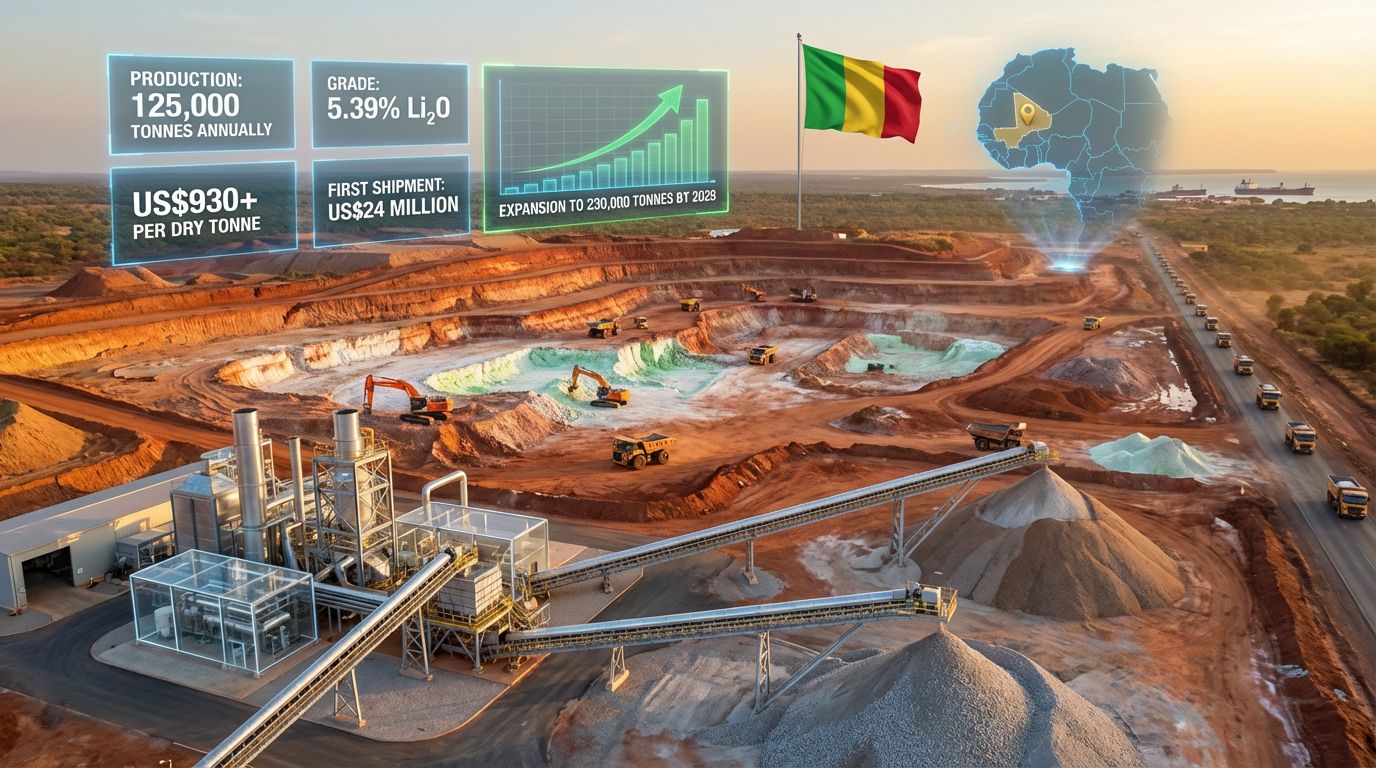
West African lithium deposits demonstrate distinct geological characteristics that position them competitively within global spodumene markets. The Bougouni Project in Mali has achieved an average lithium oxide content of 5.39%, placing it within the upper tier of global spodumene producers.
This grade quality exceeds many established operations and commands premium pricing in concentrate markets. Dense Media Separation technology has proven particularly effective for West African ore bodies, with the Stage 1 DMS processing plant at Bougouni producing over 45,000 tonnes of lithium spodumene product.
This processing approach offers several advantages:
- Lower capital expenditure requirements compared to flotation-only operations
- Reduced operational complexity during initial production phases
- Effective separation of spodumene from gangue minerals
- Scalable technology platform for future expansion
The geological formation hosting these deposits allows for relatively straightforward beneficiation processes. Consequently, spodumene crystals within the ore body respond well to gravity separation techniques, enabling efficient concentrate production without complex chemical treatments.
Strategic Partnership Models and Risk Distribution
International mining ventures in West Africa increasingly rely on sophisticated partnership structures that distribute operational, financial, and political risks across multiple stakeholders. The Bougouni Project first lithium spodumene shipment was made possible through Les Mines de Lithium de Bougouni, where Kodal Minerals holds a 49% stake while Hainan Mining Co. Ltd maintains 51% controlling interest.
This partnership model provides several strategic advantages across different benefit categories. Kodal Minerals contributes African mining expertise and regulatory compliance experience, whilst Hainan Mining provides established Chinese lithium networks and processing technology transfer.
The combined advantage creates direct supply chain integration and optimised operational efficiency. The Malian government's 35% state participation model creates additional complexity while ensuring local stakeholder alignment through balanced stakeholder approaches.
Partnership Structure Benefits
However, this three-tier partnership structure reflects broader trends in African mineral development. International expertise combines with domestic participation and strategic market access, creating sustainable operational frameworks for long-term success.
In addition, the partnership enables access to lithium industry innovations that enhance processing efficiency and product quality standards across the operation.
Transport Infrastructure and Logistics Analysis
West African lithium projects face unique logistical challenges that directly impact project economics. The Bougouni Project demonstrates successful navigation of these challenges through its 880-kilometre road transport route from the mining operation to the Port of San Pedro in Côte d'Ivoire.
Recent transport operations have moved over 30,000 tonnes of lithium spodumene concentrate from the mine site to dedicated port facilities. This logistics achievement highlights several critical success factors for regional mining operations.
Road Network Reliability
Cross-border transport between Mali and Côte d'Ivoire requires careful coordination of customs procedures, vehicle specifications, and seasonal route conditions. The successful completion of initial transport campaigns demonstrates infrastructure adequacy for sustained commercial operations.
Furthermore, the Port of San Pedro has developed specialised handling capabilities for mineral concentrates, including dedicated stockpile facilities that enable efficient vessel loading operations. The maiden shipment of 28,950 tonnes loaded onto a dedicated bulk cargo vessel demonstrates port infrastructure readiness.
Transport Economics Comparison
Transport costs significantly impact project economics in emerging mining jurisdictions. The 880-kilometre journey adds approximately US$50-75 per tonne to production costs, remaining competitive compared to longer Australian transport distances where some operations face transport costs exceeding US$100 per tonne.
Production Capacity Scaling and Technology Evolution
Emerging lithium producers must balance initial production targets with long-term capacity expansion requirements. The Bougouni Project first lithium spodumene shipment demonstrates strategic scaling methodologies that minimise initial capital requirements whilst preserving expansion optionality through proven processing technologies.
Dense Media Separation Plant Performance
The Stage 1 DMS plant represents proven technology for spodumene concentrate production with consistent performance indicators:
- Production capacity: 125,000 tonnes annually at full operation
- Product quality: Consistent 5.39% lithium oxide content
- Recovery efficiency: Optimised through operational refinements
- Processing flexibility: Adaptable to varying ore characteristics
Future Flotation Plant Integration
Planned Stage 2 flotation plant development targets 2028 completion, potentially doubling production capacity to 230,000 tonnes annually. This combined processing approach offers enhanced recovery rates through complementary separation techniques.
For instance, operational risk reduction occurs through processing technology diversification, whilst market flexibility enables multiple product specifications that align with global lithium market trends and customer requirements.
Market Entry Timing and Pricing Dynamics
Recent lithium market improvements create favourable conditions for new producers entering commercial operations. Spodumene concentrate pricing has recovered significantly, with recent transactions exceeding US$930 per dry tonne for high-grade material.
The Bougouni Project first lithium spodumene shipment demonstrates strategic market timing, with the initial US$24 million revenue representing 95% of cargo value upon loading completion. This payment structure reduces counterparty risk whilst accelerating cash flow generation for emerging producers.
Pricing Mechanism Components
Spodumene concentrate pricing incorporates several adjustment factors:
- Grade adjustments based on actual lithium oxide content
- Quality premiums for consistent chemical specifications
- Market timing reflecting current supply-demand dynamics
- Transport cost deductions for sea freight to final destinations
The final sale price adjustment process accounts for delivered product quality whilst deducting transportation costs. Consequently, this ensures transparent pricing mechanisms between producers and offtake partners in global markets.
Chinese Investment Strategy and Supply Chain Security
Chinese lithium sector investments in Africa reflect broader strategic objectives regarding raw material supply security and industrial integration. Hainan Mining's majority stake in the Bougouni Project represents direct vertical integration between lithium production and downstream processing capacity.
This investment pattern demonstrates strategic considerations for supply chain diversification away from Australian supply dominance. West African production provides alternative supply sources whilst maintaining direct ownership and operational control over mining assets.
Technology Transfer Benefits
Chinese partners contribute processing expertise and market access whilst benefiting from African mining experience and regulatory compliance capabilities. This knowledge sharing accelerates operational efficiency improvements and quality standardisation across operations.
Moreover, direct shipping from West African ports to Hainan Province creates dedicated supply chains serving Chinese lithium processing facilities. This vertical integration model reduces market intermediation whilst ensuring consistent raw material access for battery-grade lithium refinery operations.
Regulatory Framework and Government Participation
West African mining jurisdictions continue developing regulatory frameworks that balance foreign investment attraction with domestic participation requirements. Mali's approach includes mandatory government equity participation alongside transparent taxation structures and community development obligations.
Malian Mining Policy Environment
The 35% state participation requirement in the Bougouni Project reflects Mali's approach to natural resource development. This framework provides government revenue generation through direct project participation and local employment creation with 650 personnel at the Bougouni site.
Infrastructure development benefits broader regional communities through technology transfer supporting domestic capacity building. Investment protection mechanisms include fiscal stability protecting against retroactive taxation changes and foreign exchange flexibility enabling international transactions.
However, mining agreements also incorporate dispute resolution through established arbitration mechanisms and environmental compliance meeting international standards for sustainable operations.
Regional Infrastructure Development and Economic Impact
Large-scale mining operations create significant economic multiplier effects beyond direct project employment and revenue generation. The Bougouni Project first lithium spodumene shipment demonstrates broader development impacts through infrastructure improvements and local capacity building initiatives.
Port Facility Enhancement
Côte d'Ivoire's Port of San Pedro has developed specialised mineral handling capabilities serving multiple West African mining operations. These infrastructure investments create regional competitive advantages for future mineral export projects across the region.
The 880-kilometre transport corridor connecting Mali to Ivorian ports serves broader regional trade flows beyond lithium exports. Road network improvements and cross-border procedures developed for mining operations benefit agricultural and manufactured goods transport significantly.
Skills Development Programs
International mining operations introduce advanced technologies and training programs that develop local technical capabilities. The 650-person workforce at Bougouni includes significant local employment with skills training supporting broader regional development objectives.
Furthermore, technology transfer from lithium brine market insights and established processing techniques enhances regional expertise in mineral processing and operational management.
Investment Risk Assessment and Portfolio Strategy
West African lithium investments present distinct risk-return profiles compared to established mining jurisdictions. Investment analysis must consider political stability, infrastructure adequacy, currency exposure, and market access factors alongside traditional mining project risks.
Risk Mitigation Approaches
Successful West African mining investments typically incorporate strategic partnerships with local and international stakeholders. Government engagement ensures regulatory compliance and community support, whilst infrastructure development reduces operational dependencies.
Market diversification through established offtake agreements provides revenue stability and reduces market exposure risks. Geographic diversification across multiple lithium-producing regions reduces concentration risk whilst capturing different market dynamics effectively.
Portfolio Diversification Benefits
West African operations provide currency exposure diversification away from traditional mining currencies and political risk distribution across multiple jurisdictions. Production timeline diversification enables continuous market supply whilst cost structure variation reduces systematic operational risks.
For instance, competitive positioning factors include cost competitiveness through lower labour and operational expenses, combined with grade quality meeting premium market specifications through strategic partnerships enabling direct market access.
Future Market Positioning and Strategic Outlook
The successful completion of the Bougouni Project first lithium spodumene shipment establishes West Africa as a viable alternative lithium supply region. This milestone demonstrates infrastructure adequacy, operational capability, and market access integration necessary for sustained commercial operations.
Competitive Advantages
West African lithium producers compete based on several key advantages including cost competitiveness and grade quality meeting premium market specifications. Strategic partnerships enable direct market access whilst infrastructure development supports regional mining hub emergence.
Long-term strategic implications include contributions to global supply chain resilience whilst creating new investment opportunities in emerging markets. Successful project development demonstrates the viability of alternative supply sources outside traditional mining jurisdictions.
Regional infrastructure development, combined with proven processing technologies and established market access, positions West Africa for continued growth within global lithium supply chains. The Bougouni Project's achievement validates this strategic positioning whilst creating precedents for future regional development.
According to Mining Weekly, the successful departure of the first lithium concentrate shipment marks a significant milestone for West African mining development. Additionally, Mining.com reports that this achievement demonstrates the viability of West African lithium operations in serving global markets.
Furthermore, market conditions remain volatile and subject to rapid changes based on electric vehicle adoption rates, battery technology developments, and global economic conditions. Investment decisions should consider multiple risk factors and seek appropriate professional advice for optimal portfolio positioning.
This analysis examines publicly available information regarding West African lithium development and should not be considered investment advice. Market conditions and project outcomes may vary significantly from current expectations.
Are You Looking to Capitalise on Emerging Lithium Market Opportunities?
Discovery Alert's proprietary Discovery IQ model delivers real-time alerts on significant lithium and mineral discoveries across global markets, instantly empowering subscribers to identify actionable opportunities ahead of the broader market. Explore how major mineral discoveries can generate substantial returns by examining historic examples, then begin your 30-day free trial today to position yourself ahead of the market.