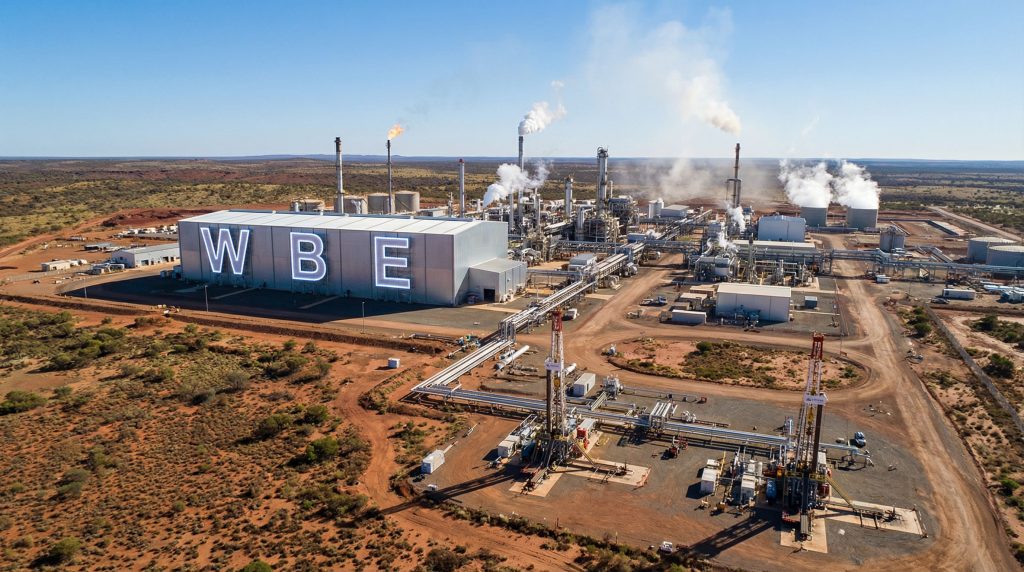
Whitebark Energy Ltd
- ASX Code: WBE
- Market Cap: $5,974,589
Understanding the Whitebark Energy Warro Gas Field Technical Breakthrough
Whitebark Energy Limited (ASX:WBE) has announced a breakthrough technical reinterpretation of its Warro Gas Field that could dramatically reshape the project's commercial prospects. The latest Whitebark Energy Warro Gas Field insights reveal how specialist analysis conducted by Dr. Andrew Wilson challenges previous assumptions about water production issues and reveals a clear pathway to commercial gas development in Western Australia's tightening energy market.
The reinterpretation of the Warro 3 image log contradicts earlier operator assessments that blamed pervasive natural fracturing for water production problems. Instead, the new analysis identifies specific discrete fault zones as the primary water conduits, while confirming that large sections of the reservoir remain gas-bearing and water-free.
When big ASX news breaks, our subscribers know first
Water Issues Redefined: From Complex Problem to Manageable Solution
The breakthrough centres on a fundamental shift in understanding Warro's reservoir characteristics. Previous operators believed water was entering the well through an extensive network of natural fractures throughout the reservoir—a scenario that would have made commercial development extremely challenging.
Dr. Wilson's detailed analysis reveals a very different picture. Large sections show little to no natural fracturing, disproving the pervasive fracture theory reported by earlier assessments. Where fractures are present, the majority are resistive and cemented, meaning they wouldn't naturally transmit water prior to stimulation activities.
Furthermore, the analysis indicates water entry is limited to one or two fault zones towards total depth, which aligns with historical production logging data. This reframing transforms Warro from a complex, water-affected reservoir into a targeted development opportunity with solvable technical challenges.
Water management is now viewed as achievable by isolating these specific zones, rather than attempting to address reservoir-wide fracturing issues that the new interpretation suggests do not exist. Consequently, these Whitebark Energy Warro Gas Field insights provide a clear technical pathway forward.
Strategic Location Advantage in Tightening Gas Market
Warro's positioning becomes increasingly valuable as Western Australia faces domestic gas supply constraints. The 7,000-hectare gas field sits just 30 kilometres from the Dampier-to-Bunbury Natural Gas Pipeline, offering immediate tie-in potential without extensive infrastructure development.
Previous operators invested over $100 million in 3D seismic and four vertical wells, confirming substantial gas resources with test flows of 1-2 MMscf/d despite limited reservoir stimulation. With modern completion techniques and the new technical understanding, CEO Nik Sykiotis believes this "could be a game changer for the Warro field."
| Asset Highlights | Details |
|---|---|
| Field Size | 7,000 hectares |
| Pipeline Distance | 30 km to Dampier-Bunbury pipeline |
| Previous Investment | $100+ million by former operators |
| Test Flow Rates | 1-2 MMscf/d (with limited stimulation) |
| Market Position | Prime location for WA domestic gas supply |
The company reports that evidence of drilling-induced fracturing suggests some formation damage from overbalanced drilling occurred during previous operations. This highlights further upside potential from modern drilling and completion practices.
Understanding Image Log Analysis: The Technical Foundation
Image log analysis involves detailed examination of high-resolution borehole imagery to identify geological features like fractures, faults, and rock properties. The technology provides detailed pictures of wellbore walls thousands of metres underground, similar to taking an X-ray of the rock formation.
For instance, in gas field development, this analysis is crucial because it reveals:
- Natural fracture networks that could enhance or compromise production capabilities
- Fault zones that might allow unwanted water entry into gas-bearing formations
- Rock quality variations that affect gas storage and flow characteristics
- Completion opportunities for optimal well design and stimulation strategies
Dr. Wilson's reinterpretation used previously unanalysed data and modern interpretation techniques, providing research-grade analysis that previous operators may have lacked access to or prioritised differently. The work forms part of Whitebark's broader re-evaluation of the Warro legacy dataset, which the company announced on 24 November 2025.
Dr. Wilson is Director of ImageStrat Pty Ltd, specialising in borehole image log and core description projects for the energy sector. He holds geology degrees from the University of Cambridge and founded ImageStrat in 2018 to provide research-grade geoscience analysis to the Australian oil and gas industry.
What Makes This Analysis Different?
The Whitebark Energy Warro Gas Field insights stand apart because they represent a fresh perspective on existing data using modern analytical techniques. Previous interpretations may have been constrained by technological limitations or different analytical priorities at the time of initial development.
Modern image log interpretation benefits from advances in computational analysis and pattern recognition. Additionally, the independent nature of Dr. Wilson's assessment provides an unbiased review of the technical data.
Next Steps: Engineering Evaluation and Re-Entry Planning
The company will immediately commence detailed engineering evaluation to formulate the optimal approach for re-entering and testing the identified gas-bearing zones. This represents a significant milestone, as Whitebark now has specific technical targets rather than attempting to solve a perceived reservoir-wide fracturing problem.
The engineering phase will likely focus on:
• Zone isolation techniques to manage water entry from discrete fault areas
• Modern completion designs optimised for the newly understood reservoir characteristics
• Stimulation strategies tailored to enhance gas flow while avoiding water zones
• Production optimisation to maximise dry gas recovery rates
However, the engineering evaluation must consider multiple technical variables to optimise the development approach. The company's technical team will need to balance completion costs against expected production improvements.
"This new interpretation is critical in improving our understanding of the Warro reservoir and in identifying areas where sustainable rates of dry gas could potentially flow. I am encouraged that the water seems to be located in one or two areas of the wellbore, leaving the majority of the reservoir free of these high permeability water pathways. This could be a game changer for the Warro field," said CEO Nik Sykiotis.
With renewed regulatory support for fracture stimulation and modern drilling techniques, Whitebark reports having multiple technological advantages unavailable to previous operators when the field was initially developed.
Investment Implications and Market Timing
The Warro reinterpretation represents the type of value-unlocking opportunity that can transform junior energy companies. Whitebark has inherited a $100+ million legacy dataset and is applying modern analytical techniques to extract maximum value from previous investments.
The company's strategic implications framework suggests these results de-risk Warro by reframing it from a complex water-affected reservoir into a targeted gas development opportunity with solvable water issues. Furthermore, the revised interpretation supports the view that Warro's gas resource remains intact and potentially commercial under an optimised development approach.
| Investment Catalyst | Significance |
|---|---|
| Asset Inheritance | Acquired proven gas resource with extensive prior investment |
| Technical Breakthrough | New interpretation provides clear development pathway |
| Market Timing | WA domestic gas shortages create premium pricing opportunity |
| Infrastructure Access | Immediate pipeline tie-in capability reduces development risk |
| Regulatory Environment | Renewed support for fracture stimulation enables modern completion techniques |
The company's broader portfolio includes extensive Officer Basin acreage for natural hydrogen and helium exploration, plus geothermal applications in Queensland, providing multiple pathways for value creation during the energy transition.
Risk Assessment and Technical Validation
While the Whitebark Energy Warro Gas Field insights provide encouraging technical direction, the company must validate these interpretations through practical field testing. Engineering studies will need to confirm that proposed zone isolation techniques can effectively manage water entry whilst maintaining commercial gas flow rates.
Market conditions in Western Australia's domestic gas sector remain favourable for new supply sources. However, development economics will ultimately depend on successful implementation of the revised technical approach.
The next major ASX story will hit our subscribers first
Why This Technical Breakthrough Matters
Previous interpretations that attributed water production to pervasive natural fracturing throughout the reservoir would have presented significant technical and economic challenges for commercial development. The discovery that water entry appears limited to specific discrete fault zones fundamentally changes the technical approach required.
Modern completion and stimulation techniques, combined with zone isolation capabilities, provide tools that weren't available or weren't economically viable when previous operators worked the field. Consequently, the ability to isolate problematic water zones whilst maintaining access to gas-bearing reservoir sections could significantly improve project economics.
Western Australia's tightening domestic gas supply situation also enhances the strategic value of having a gas resource with immediate pipeline access. The 30-kilometre distance to existing infrastructure eliminates the substantial capital requirements typically associated with remote gas field development.
The technical analysis was completed by Dr. Wilson using previously unanalysed data, highlighting how modern interpretation techniques can extract additional value from historical datasets. In addition, this approach demonstrates how junior companies can leverage technological advances to reassess legacy assets effectively.
Glossary of Terms:
Image Log: High-resolution borehole imaging technology that provides detailed pictures of wellbore walls and geological features
Resistive Fractures: Closed or cemented fractures that don't allow fluid flow through the rock formation
Total Depth (TD): The deepest point reached during drilling operations
Production Logging Tool (PLT): Equipment used to measure fluid flow characteristics and identify water or gas entry points in wells
MMscf/d: Million standard cubic feet per day, a standard measurement for natural gas flow rates
Fault Zones: Geological structures where rock formations have fractured and moved, potentially creating pathways for fluid movement
Could This Technical Breakthrough Transform Whitebark Energy's Warro Gas Field?
With Dr. Wilson's groundbreaking reinterpretation revealing specific water entry points rather than pervasive fracturing issues, Whitebark Energy has identified a clear pathway to commercial gas development at Warro. The company's engineering evaluation phase is now underway, targeting the optimal approach for re-entering these newly understood gas-bearing zones. To discover how this technical breakthrough could reshape the project's commercial prospects and access detailed engineering updates as they develop, visit Whitebark Energy's investor announcements for comprehensive project developments and strategic insights.