August 6, 2026
Africa's lithium sector development has accelerated beyond mineral extraction into sophisticated value-addition frameworks that reshape global battery supply chain dynamics. Processing infrastructure deployment across southern African jurisdictions demonstrates technical capacity building patterns that distinguish raw commodity exports from integrated production systems. This operational transformation reflects systematic approaches to industrial policy implementation within emerging market mineral resource development, with Zimbabwe lithium exports local processing emerging as a cornerstone of regional industrial strategy.
What Drives Zimbabwe's Lithium Processing Infrastructure Transformation?
Processing capacity expansion in Zimbabwe lithium exports represents calculated infrastructure investments targeting battery-grade chemical production capabilities. Technical specifications for lithium sulphate facilities demonstrate industrial sophistication levels that support domestic value retention strategies while addressing international market quality requirements.
Processing Capacity Expansion Framework
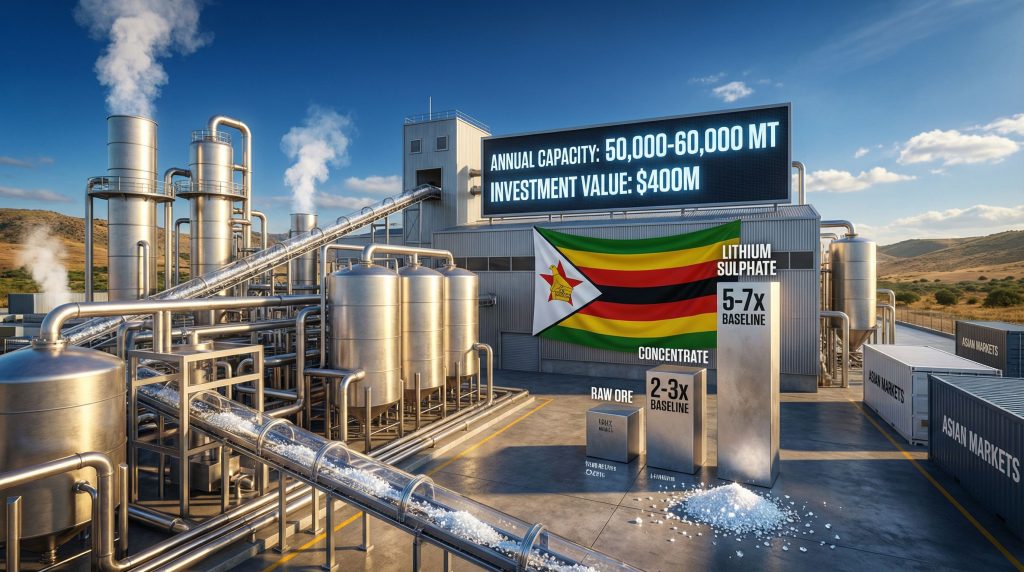
Infrastructure development patterns across Zimbabwe's lithium sector indicate systematic capacity building through substantial capital deployment. Huayou Cobalt's processing facility represents a $400 million investment targeting 50,000-60,000 metric tons annual production capacity, with operational commencement projected for early 2026. Similarly, Sinomine's Bikita operations involve $500 million in processing infrastructure development, though production timelines await final technical commissioning phases.
These investments demonstrate processing technology deployment strategies that emphasise sulphate production capabilities over traditional concentrate export models. Technical infrastructure specifications include advanced chemical processing systems capable of converting spodumene concentrate into battery-grade lithium compounds through controlled precipitation and purification processes. Furthermore, these developments align with broader critical minerals strategy initiatives across the region.
| Facility | Annual Capacity (MT) | Investment Value | Production Start | Technology Type |
|---|---|---|---|---|
| Huayou Cobalt Plant | 50,000-60,000 | $400M | Q1 2026 | Sulphate Processing |
| Sinomine Bikita | Under Development | $500M | TBD | Sulphate Processing |
Operational Efficiency Metrics in Local Processing
Conversion rates from spodumene concentrate to lithium sulphate require precise technical control systems that optimise raw material utilisation while maintaining product quality standards. Processing facilities implement multi-stage chemical treatment processes that achieve approximately 75-80% conversion efficiency from concentrate feedstock to refined lithium compounds.
Production capacity utilisation across processing facilities depends on consistent raw material supply chains and stable energy infrastructure. Technical challenges in scaling processing operations include power supply reliability, water resource management for chemical processing requirements, and skilled workforce development for complex industrial operations.
Processing technology deployment focuses on hydrometallurgical extraction methods that separate lithium compounds from spodumene through controlled acid leaching, followed by precipitation and crystallisation processes. These technical specifications require precise temperature control systems, chemical reagent management protocols, and environmental compliance frameworks for industrial waste treatment. Additionally, these approaches benefit from broader mining evolution trends in process optimisation and environmental standards.
When big ASX news breaks, our subscribers know first
How Do Export Volume Trends Reflect Processing Policy Implementation?
Export performance analysis reveals significant volume expansion patterns that correlate with domestic processing policy implementation across Zimbabwe's lithium sector. Spodumene concentrate exports reached 586,197 tons during the first half of 2025, representing a 29.7% increase compared to 451,824 tons exported during the corresponding period in 2024.
Export Performance Analysis by Processing Stage
Volume growth patterns demonstrate accelerated concentrate production capabilities while processing facilities undergo construction and commissioning phases. Export classification systems distinguish between various processing stages, with concentrate shipments representing intermediate value-addition compared to raw ore exports but remaining below refined chemical product valuations.
Revenue optimisation through value-added processing indicates potential earnings multiplication as facilities transition from concentrate to lithium sulphate production. Market intelligence suggests processed lithium compounds command premium pricing structures that substantially exceed concentrate export revenues per ton of raw material processed. Consequently, the Zimbabwe export ban policy aims to capture these value-addition opportunities domestically.
Processing stage differentiation creates tiered export value structures that reflect increasing technical sophistication:
• Raw ore exports generate baseline revenue levels with minimal processing requirements
• Concentrate production involves initial beneficiation and creates moderate value addition
• Lithium sulphate manufacturing represents advanced chemical processing with substantial revenue premiums
Global Market Integration Patterns
Asian market demand dynamics for processed lithium products continue expanding through electric vehicle manufacturing growth and battery storage system deployment. Supply chain positioning within battery material networks requires consistent product quality standards and reliable delivery schedules that support just-in-time manufacturing processes.
Price volatility impact on processing economics creates risk management challenges for facility operators who must balance long-term capital investments against commodity price fluctuations. Processing facilities typically implement forward sales contracts and hedging strategies to stabilise revenue projections and support operational planning requirements. Moreover, understanding lithium brine insights from other major producing regions helps inform competitive positioning strategies.
Zimbabwe's transition from raw ore exports to concentrate processing represents the first phase of a three-stage value addition strategy, with lithium sulphate production marking the critical intermediate processing capability that bridges mineral extraction and battery material supply chains.
Which Technical Challenges Shape Local Processing Development?
Infrastructure constraints significantly influence processing facility development timelines and operational efficiency across Zimbabwe's lithium sector. Power supply requirements for processing operations demand consistent electricity availability that supports continuous chemical processing systems operating under precise temperature and pressure specifications.
Infrastructure Constraints and Solutions
Energy infrastructure limitations create operational bottlenecks for processing facilities requiring uninterrupted power supply for complex chemical processes. Lithium sulphate production typically requires 15-20 megawatts of continuous power supply per facility, representing substantial demand on regional electricity generation capacity.
Water resource management in lithium processing involves significant freshwater consumption for chemical treatment processes, equipment cooling, and waste treatment operations. Processing facilities typically consume 8-12 cubic metres of water per ton of lithium sulphate produced, creating resource allocation challenges in water-constrained regions.
Transportation logistics for processed products require specialised handling capabilities for chemical products that differ from bulk mineral transport requirements. Processed lithium compounds demand containerised shipping systems, moisture protection protocols, and temperature-controlled storage facilities that exceed infrastructure requirements for concentrate exports.
Skills Development and Technology Transfer
Technical expertise requirements for processing operations encompass specialised chemical engineering knowledge, process control systems management, and environmental compliance protocols. Workforce development programmes must address skill gaps in:
• Chemical process engineering and plant operations management
• Quality control laboratory techniques for battery-grade product specifications
• Environmental monitoring and waste treatment system operations
• Maintenance protocols for sophisticated processing equipment
Technology transfer mechanisms from international partners typically involve comprehensive training programmes, technical advisory services, and equipment supplier support systems. These arrangements often include multi-year technical assistance agreements that ensure knowledge transfer and operational optimisation during facility startup phases. Similarly, lithium industry innovations in Australia provide valuable benchmarks for technical development pathways.
What Economic Models Drive Processing Investment Decisions?
Investment return analysis for processing facilities demonstrates substantial capital expenditure requirements balanced against enhanced revenue generation potential through value-added product sales. Economic modelling indicates processing infrastructure generates 5-7 times baseline revenue compared to raw ore exports while creating significant employment and fiscal contributions.
Investment Return Analysis for Processing Facilities
Capital expenditure requirements for processing infrastructure typically range from $300-600 million per facility, depending on annual production capacity and technological sophistication levels. These investments encompass processing equipment, chemical treatment systems, environmental control infrastructure, and supporting utilities installation.
Operating cost structures in local processing include fixed costs for facility maintenance, skilled workforce employment, and regulatory compliance systems. Variable costs encompass raw material procurement, chemical reagents, energy consumption, and transportation logistics for finished product distribution.
Revenue enhancement through value addition creates substantial profit margin improvements that justify significant capital investments despite extended payback periods. Processing facilities typically achieve internal rates of return exceeding 15-20% over project lifecycles when commodity pricing remains stable.
Fiscal Impact Assessment
Tax revenue generation from processed exports substantially exceeds collections from raw mineral shipments through enhanced corporate income tax contributions and value-added tax collections on processing activities. Royalty collection optimisation strategies often include graduated rate structures that incentivise domestic processing investment.
Foreign currency earnings from value-added products provide enhanced balance of payments support compared to equivalent tonnages of unprocessed mineral exports. Economic impact multipliers from processing facilities typically generate 3-4 times the fiscal contributions of equivalent raw material export operations.
| Processing Stage | Revenue per Ton | Employment Impact | Fiscal Contribution |
|---|---|---|---|
| Raw Ore | Baseline | Low | Minimal |
| Concentrate | 2-3x Baseline | Medium | Moderate |
| Lithium Sulphate | 5-7x Baseline | High | Substantial |
How Does Regional Supply Chain Integration Support Processing Goals?
Southern African lithium hub development demonstrates coordinated regional processing capacity that optimises supply chain efficiency and market access for battery material production. Regional integration strategies encompass cross-border transportation networks, shared technical expertise, and coordinated market development approaches.
Southern African Lithium Hub Development
Regional processing capacity coordination involves strategic facility placement that leverages comparative advantages across multiple jurisdictions while avoiding destructive competition between neighbouring operations. Cross-border supply chain optimisation creates opportunities for specialised facility roles within integrated regional production networks.
Regional market development strategies focus on establishing Southern Africa as a reliable battery material supplier that competes effectively with established production centres in South America and Asia. This positioning requires consistent product quality standards and coordinated marketing approaches that present regional capabilities to international battery manufacturers.
International Partnership Frameworks
Chinese investment patterns in processing infrastructure reflect strategic positioning within global battery supply chains that extend from mineral extraction through battery cell manufacturing. Technology transfer agreements and joint ventures typically involve long-term supply contracts that provide market security for processing facility investments.
Export market diversification strategies aim to reduce dependence on single-market concentration while developing relationships with battery manufacturers across multiple geographic regions. These approaches include:
• Direct supply agreements with Asian battery manufacturers
• European market development through strategic partnerships
• North American supply chain integration opportunities
• Regional African battery manufacturing support initiatives
Furthermore, establishing a battery-grade lithium refinery requires substantial technical expertise and international partnerships to ensure operational success.
What Operational Challenges Affect Processing Facility Performance?
Technical processing constraints encompass quality control standards for lithium sulphate production that must meet stringent battery manufacturer specifications for chemical purity, particle size distribution, and moisture content. Environmental compliance in processing operations requires sophisticated waste treatment systems and emissions control protocols.
Technical Processing Constraints
Quality control standards for battery-grade lithium sulphate typically require 99.5% minimum purity levels with strict limitations on metallic impurities that could affect battery performance. Processing facilities must implement comprehensive analytical testing protocols that monitor product specifications throughout production processes.
Environmental compliance in processing operations involves complex waste treatment systems that manage chemical process residuals, water treatment requirements, and air emissions control. Maintenance requirements for processing equipment include scheduled shutdowns, chemical system cleaning, and equipment replacement protocols that minimise production disruptions.
Supply Chain Optimisation Strategies
Raw material sourcing for processing facilities requires consistent concentrate supply arrangements that support continuous operations while maintaining feedstock quality specifications. Product quality standardisation across operations ensures processed materials meet international market requirements regardless of source facility.
Distribution network development for processed products encompasses specialised storage facilities, containerised shipping capabilities, and quality preservation systems that maintain product integrity during transportation and storage periods.
The next major ASX story will hit our subscribers first
Which Policy Mechanisms Support Processing Transformation?
Regulatory framework evolution includes systematic export restrictions on unprocessed minerals designed to encourage domestic value addition while maintaining market access for processed products. Export ban implementation timelines establish graduated restrictions that provide investment planning certainty for processing facility development.
Regulatory Framework Evolution
Processing facility licensing requirements establish technical standards, environmental compliance protocols, and operational oversight mechanisms that ensure processing operations meet international safety and quality standards. Environmental standards for processing operations encompass waste management protocols, emissions limitations, and resource consumption monitoring requirements.
Policy implementation recognises transition period requirements that allow existing operations to adapt while encouraging new processing investment through regulatory certainty and technical support programmes. However, Zimbabwe's lithium export challenges include ensuring benefits flow to the local economy rather than just international partners.
Investment Incentive Structures
Tax incentives for processing facility development typically include:
• Reduced corporate income tax rates during initial operational periods
• Capital allowance accelerations for processing equipment investments
• Import duty exemptions for specialised processing technology
• Value-added tax deferrals on capital equipment purchases
Infrastructure support for processing operations encompasses power supply prioritisation, water resource allocation, and transportation network development that facilitates processing facility operations. Skills development programme funding supports workforce training initiatives that address technical expertise requirements for sophisticated processing operations.
Future Processing Capacity and Market Positioning
Expansion planning and capacity forecasting indicate Zimbabwe lithium exports could reach 110,000-120,000 metric tons annually of processed products through major facilities currently under development. Market demand projections for processed products suggest sustained growth driven by electric vehicle adoption and energy storage system deployment globally.
Expansion Planning and Capacity Forecasting
Processing facility expansion timelines depend on successful commissioning of initial production lines, market validation of product quality, and securing long-term supply agreements with battery manufacturers. Technology upgrade requirements for competitive positioning include continuous improvement in processing efficiency, product quality enhancement, and environmental performance optimisation.
Investment patterns indicate additional processing capacity development beyond currently announced projects, with potential facility additions dependent on mineral resource expansion, market demand growth, and investment climate stability.
Strategic Market Development
Product diversification beyond lithium sulphate may encompass lithium hydroxide production, lithium carbonate manufacturing, and specialised battery-grade chemicals that command premium pricing. Customer base development for processed products requires establishing relationships with battery manufacturers, chemical companies, and industrial end-users across global markets.
Long-term supply agreement strategies provide revenue stability for processing facility operations while ensuring battery manufacturers maintain reliable raw material access. These agreements typically involve 5-10 year contract terms with pricing mechanisms that balance market volatility protection against profit participation opportunities.
Zimbabwe's lithium processing transformation represents systematic industrial policy implementation that demonstrates emerging market capabilities in sophisticated value addition strategies. Technical infrastructure development, operational capacity expansion, and supply chain integration create foundations for sustained battery material sector growth that extends beyond traditional mineral extraction into integrated industrial production systems.
This analysis is provided for informational purposes and should not be considered as investment advice. Processing facility investments involve substantial risks including commodity price volatility, regulatory changes, and operational challenges that may affect project returns. Readers should conduct independent research and consult qualified advisors before making investment decisions.
Want to Capitalise on Zimbabwe's Lithium Processing Boom?
Discovery Alert's proprietary Discovery IQ model instantly identifies significant ASX mineral discoveries, helping investors spot the next major lithium breakthrough before the broader market reacts. Explore how major mineral discoveries can generate exceptional returns by visiting Discovery Alert's discoveries page, then begin your 14-day free trial to position yourself ahead of emerging opportunities in the rapidly evolving lithium sector.