August 24, 2026
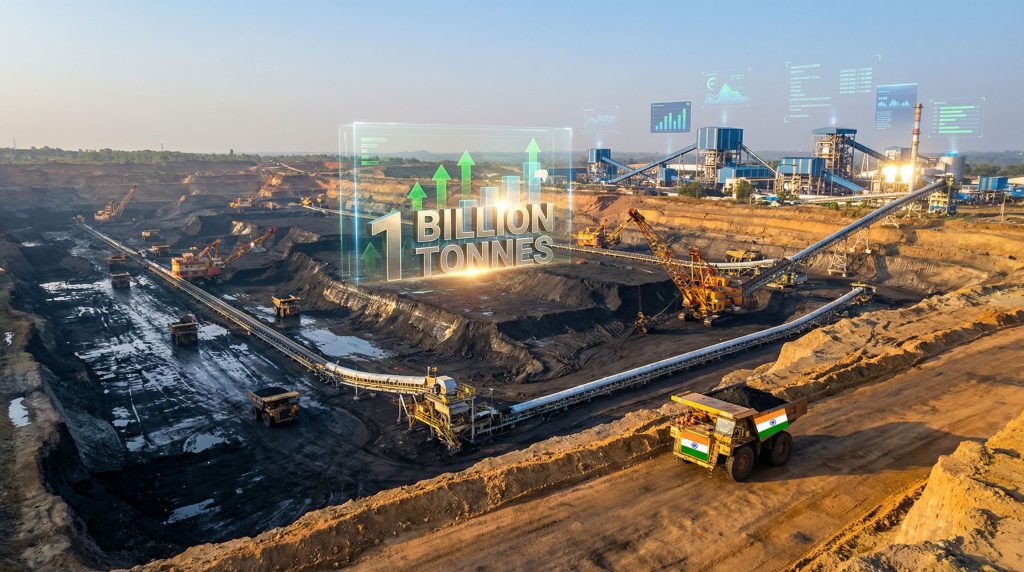
India's achievement of sustaining 1 billion tonne coal production for consecutive years represents a fundamental shift in the nation's energy security architecture. Global energy security foundations rest upon nations achieving substantial domestic production capabilities across critical fuel sources. The transformation of energy landscapes occurs through sustained production milestones that fundamentally alter import dependencies, economic structures, and geopolitical positioning. These shifts create cascading effects throughout industrial ecosystems, affecting everything from manufacturing competitiveness to currency stability.
When examining energy independence frameworks, the capacity to meet domestic demand through indigenous resources represents more than operational achievement. It signifies strategic autonomy in an interconnected world where energy supply disruptions can destabilise entire economic systems. The interplay between resource availability, production infrastructure, and market dynamics creates opportunities for nations to reshape their energy narratives.
Strategic Foundation of India's Production Milestone
This accomplishment, reached on March 20, 2026, for the second consecutive year, demonstrates coordinated efforts across the coal sector and reflects robust planning, efficient execution, and strengthened coordination across the coal value chain. The achievement comes at a crucial time when coal supply challenges continue to affect global markets and energy security considerations worldwide.
The magnitude of this production level creates several strategic advantages:
- Enhanced domestic energy security through reduced import vulnerability
- Industrial baseload reliability for manufacturing sectors
- Grid stability support during renewable energy transition periods
- Economic multiplier effects across coal-dependent industries
This sustained production capacity enables effective management of rising energy demands while supporting power sector requirements. Coal-based thermal power plants maintain record-high coal stock levels, providing essential grid stability during peak demand periods and renewable energy intermittency challenges.
Global Production Landscape Context
The international coal production hierarchy has experienced significant realignment as major producing nations face varying challenges. While China maintains the largest production volumes globally, India achieves 1 billion tonne coal production positioning the nation as a formidable presence in global energy markets.
Key global production dynamics include:
- China's production focuses increasingly on domestic consumption rather than export
- Australian thermal coal exports face shifting demand patterns from traditional Asian markets
- Indonesian production remains oriented toward seaborne trade markets
- Russian coal exports encounter logistics and sanctions-related constraints
Furthermore, initiatives like the India coal trading proposal demonstrate the nation's strategic approach to developing robust coal market mechanisms. India's production milestone reduces its position as a coal importer, fundamentally altering global trade flows and pricing dynamics in thermal coal markets.
When big ASX news breaks, our subscribers know first
Economic Architecture of Energy Self-Reliance
The transition toward energy self-reliance creates profound economic implications extending beyond the energy sector itself. Manufacturing industries dependent on reliable baseload power benefit from consistent fuel availability, while the broader economy gains from reduced foreign exchange outflows for energy imports.
Industrial Sector Transformation
Coal availability at this scale supports several critical industrial applications:
Steel Production Enhancement
- Coking coal requirements for blast furnace operations
- Captive power generation for integrated steel plants
- Raw material security for expansion planning
Cement Manufacturing Growth
- Thermal energy requirements for kiln operations
- Consistent fuel cost planning capabilities
- Capacity expansion feasibility improvements
Aluminum Smelting Advantages
- Stable power generation for energy-intensive smelting processes
- Cost competitiveness in global aluminium markets
- Domestic value addition opportunities
The coordinated coal supply system enables these industries to operate with greater predictability, supporting long-term investment decisions and capacity expansion plans.
Foreign Exchange and Trade Balance Impacts
Sustained domestic coal production creates measurable improvements in India's trade balance through import substitution effects. The Ministry of Coal emphasises that this achievement contributes meaningfully to the nation's economic growth trajectory, particularly through reduced dependency on international coal markets.
Key economic benefits include:
- Reduced import expenditure on thermal coal from international suppliers
- Currency stability enhancement through lower energy import requirements
- Trade balance improvement via reduced energy trade deficits
- Domestic value retention within the national economy
These effects compound over time, creating structural improvements in India's external sector performance.
Infrastructure and Technology Enablers
Achieving billion-tonne production levels requires sophisticated infrastructure systems supporting extraction, transportation, and distribution. The coal value chain encompasses mining operations, railway networks, port facilities, and inland distribution systems working in coordination.
Transportation Network Optimisation
Coal transportation infrastructure represents a critical bottleneck that required substantial enhancement:
| Infrastructure Component | Enhancement Areas | Impact on Production |
|---|---|---|
| Railway Networks | Dedicated freight corridors | Increased transport capacity |
| Port Facilities | Coal handling infrastructure | Domestic distribution efficiency |
| Inland Waterways | Bulk cargo transportation | Cost-effective movement |
| Road Networks | Last-mile connectivity | Mining area accessibility |
These infrastructure investments create cascading benefits beyond coal transportation, supporting broader economic development in coal-producing regions.
Mining Technology and Efficiency Gains
Production milestone achievement reflects technological improvements across mining operations:
- Mechanisation adoption in underground and surface mining operations
- Safety protocol enhancements reducing operational disruptions
- Environmental compliance technology integration
- Productivity optimisation through advanced equipment deployment
"The achievement reflects robust planning, efficient execution, and strengthened coordination across the coal value chain, demonstrating the effectiveness of technological and operational improvements implemented across India's mining sector."
Resource Sustainability and Long-Term Planning
Sustaining billion-tonne annual production raises critical questions about resource depletion timelines and environmental management. Coal reserves represent finite resources requiring careful management to ensure long-term energy security.
Reserve Management Framework
Key sustainability considerations include:
Proven Reserve Assessment
- Current reserves relative to production rates
- New exploration requirements for future supply
- Quality variations in accessible deposits
- Geographic distribution of resources
Exploration and Development Priorities
- Identification of new coal-bearing areas
- Technology requirements for deeper deposits
- Environmental impact assessments for new projects
- Infrastructure development needs for remote areas
Environmental Management Integration
Sustainable coal production requires comprehensive environmental management addressing:
- Carbon emission monitoring and mitigation strategies
- Air quality management in coal-producing regions
- Water resource protection during mining operations
- Land rehabilitation following mining completion
- Biodiversity conservation in mining area ecosystems
In addition to these environmental considerations, modern mine reclamation innovation plays a crucial role in ensuring responsible mining practices. The Ministry of Coal remains committed to fostering a stable, transparent, and performance-driven ecosystem through proactive policy interventions and rigorous performance monitoring.
Energy Transition Strategy Integration
India achieves 1 billion tonne coal production within the context of broader energy transition goals. Coal serves as bridge fuel during the scaling of renewable energy infrastructure, providing grid stability while solar and wind capacity expands.
Renewable Energy Complementarity
The relationship between coal production and renewable energy development includes:
- Grid stability support during renewable energy intermittency periods
- Baseload generation backup for industrial operations requiring consistent power
- Energy storage development time allowing gradual renewable integration
- Infrastructure transition planning coordinating coal and renewable systems
However, the broader energy transition in mining sector demonstrates how traditional industries are adapting to cleaner technologies. This approach enables orderly energy transition without compromising industrial operations or grid reliability.
Clean Coal Technology Development
Investment priorities for coal technology improvement focus on:
Carbon Capture and Storage
- Pilot project development for emission reduction
- Technology transfer and adaptation initiatives
- Integration with existing power generation facilities
Coal Gasification Applications
- Chemical feedstock production from coal
- Enhanced efficiency in coal utilisation
- Reduced environmental impact per unit of energy
Advanced Combustion Technologies
- Supercritical and ultra-supercritical power plants
- Fluidised bed combustion systems
- Integrated gasification combined cycle development
Global Climate Policy Implications
India's coal production milestone influences international climate negotiations through several channels. The achievement demonstrates domestic capability while raising questions about emission trajectories and development equity in global climate frameworks.
International Positioning Framework
Key negotiation considerations include:
Development Equity Arguments
- Per capita energy consumption comparisons with developed nations
- Historical emission responsibility frameworks
- Common but differentiated responsibilities principles
- Technology transfer requirements for clean alternatives
National Circumstances Recognition
- Domestic energy security priorities within climate commitments
- Economic development requirements aligned with "Viksit Bharat 2047" vision
- Gradual transition timelines balancing growth and environmental goals
The Government frames this achievement within national development objectives while maintaining engagement with international climate commitments.
The next major ASX story will hit our subscribers first
Investment and Market Opportunities
Sustained billion-tonne coal production creates multiple investment themes across downstream industries and supporting infrastructure. These opportunities span traditional coal-dependent sectors and emerging clean technology applications, reflecting the ongoing mining industry evolution toward more sophisticated and sustainable practices.
Downstream Value Addition Sectors
Investment opportunities emerge in:
Coal-to-Chemicals Industry
- Synthetic fuel production facilities
- Petrochemical feedstock development
- Specialty chemical manufacturing
Steel and Aluminium Expansion
- Integrated production facility development
- Captive power generation investments
- Value-added metal processing capabilities
Power Generation Equipment
- Advanced coal-fired power plant technology
- Emission control system manufacturing
- Grid integration and stability equipment
Supporting Infrastructure Investment Themes
Critical infrastructure investment areas include:
- Transportation and Logistics enhancements for coal movement efficiency
- Mining Equipment and Technology providers serving expanding operations
- Environmental Remediation Services supporting responsible mining practices
- Coal Processing and Beneficiation facilities improving coal quality
These investment themes create opportunities for both domestic and international investors in India's energy infrastructure development.
Regional Economic Development Impact
Coal production at billion-tonne levels generates substantial regional economic development, particularly in coal-bearing states. Employment creation, infrastructure development, and economic multiplier effects transform local economies.
Employment Generation Framework
Direct and indirect employment effects include:
- Mining operations requiring skilled and semi-skilled workers
- Transportation sector jobs in rail, road, and inland waterway transport
- Support services including maintenance, catering, and security
- Ancillary industries developing around mining operations
The coordinated stakeholder contribution enabling this milestone suggests widespread economic participation across the coal value chain.
Infrastructure Development Catalysis
Coal production drives infrastructure development in:
| Infrastructure Type | Development Areas | Regional Benefits |
|---|---|---|
| Transportation | Rail and road connectivity | Improved market access |
| Power Generation | Grid connectivity enhancement | Reliable electricity supply |
| Communication | Digital infrastructure | Enhanced connectivity |
| Social Infrastructure | Healthcare and education | Quality of life improvements |
These developments create lasting benefits extending beyond coal production timelines.
Risk Management and Scenario Planning
Billion-tonne production sustainability requires comprehensive risk management addressing operational, environmental, and market uncertainties. Scenario planning helps navigate potential challenges while maintaining production capabilities.
Operational Risk Factors
Key operational considerations include:
Resource Quality Management
- Coal quality variations in different deposits
- Beneficiation requirements for lower-grade coal
- Transportation cost implications for remote areas
Environmental Compliance Requirements
- Evolving environmental regulations and standards
- Community relations and social licence considerations
- Land acquisition and rehabilitation obligations
Technology and Infrastructure Dependencies
- Mining equipment availability and maintenance
- Transportation infrastructure capacity constraints
- Power and water supply requirements for operations
Market and Policy Risk Assessment
External risk factors affecting production sustainability:
- Global coal demand fluctuations affecting domestic pricing
- Climate policy evolution influencing coal utilisation policies
- Renewable energy cost reduction affecting coal competitiveness
- International trade dynamics impacting coal market structures
Effective risk management enables sustained production while adapting to changing market conditions.
Strategic Outlook and Future Pathways
India achieves 1 billion tonne coal production establishing a foundation for energy security while creating flexibility for future energy system evolution. The milestone provides strategic options for managing energy transition timelines and economic development priorities.
According to official government sources, the Ministry of Coal continues fostering a stable, transparent, and performance-driven ecosystem through proactive policy interventions, rigorous performance monitoring, and close stakeholder engagement. This approach ensures reliable coal availability and seamless operations across sectors while supporting national development objectives.
Aligned with the "Viksit Bharat 2047" vision, these efforts reinforce governmental resolve to build resilient energy frameworks, enhance domestic production capabilities, and drive sustainable economic development. The sustained production achievement demonstrates India's capacity to meet ambitious energy targets while maintaining operational excellence across complex industrial systems.
The path forward involves balancing immediate energy security requirements with long-term sustainability objectives, creating an energy system capable of supporting India's economic transformation while adapting to evolving global energy landscapes.
Disclaimer: This analysis is based on publicly available information and does not constitute investment advice. Energy sector investments involve significant risks, and readers should conduct independent research and consult qualified professionals before making investment decisions. Production targets and economic projections are subject to operational, market, and policy uncertainties that may affect actual outcomes.
Looking for Energy Sector Investment Opportunities?
Discovery Alert's proprietary Discovery IQ model delivers real-time alerts on significant energy and mining discoveries across the ASX, empowering subscribers to identify actionable opportunities ahead of the broader market. Start your 14-day free trial today and secure your market-leading advantage in energy sector investments.