August 26, 2026
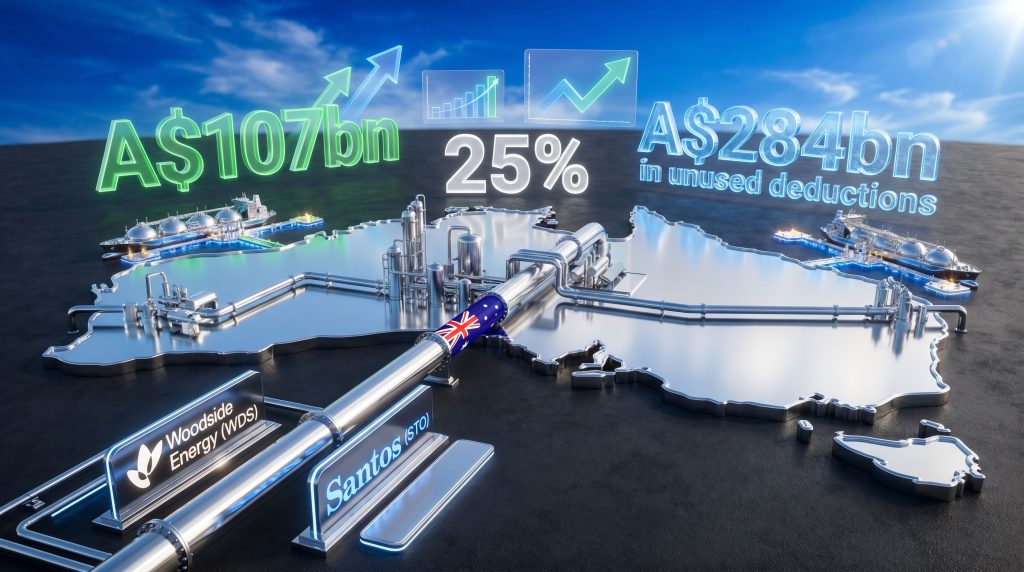
The resource sector faces unprecedented challenges as global energy dynamics create extraordinary profit opportunities alongside mounting pressure for fiscal reform. Understanding these intersecting forces requires moving beyond simplistic political narratives toward nuanced analysis of taxation design, market fundamentals, and investment economics. The 25% gas export tax Australia debate has emerged as a critical policy flashpoint that could fundamentally reshape the industry's fiscal framework.
Understanding Australia's Gas Export Tax Landscape: Current Framework vs. Proposed Changes
The Petroleum Resource Rent Tax Framework and Its Structural Limitations
Australia's existing petroleum taxation system centers on the Petroleum Resource Rent Tax (PRRT), a profit-based levy designed originally for oil projects rather than the large-scale LNG developments that now dominate the sector. This structural mismatch has created significant revenue collection challenges that extend far beyond normal policy fine-tuning.
The PRRT generates approximately A$1.5 billion annually despite Australia's position as a global LNG export leader, a figure that policy analysts across the political spectrum acknowledge as inadequate given the sector's scale. More concerning from a fiscal perspective, accumulated tax credits across the petroleum sector have reached an estimated A$284 billion, representing unused deductions that producers can apply against future tax liabilities indefinitely.
Current PRRT Performance vs. International Benchmarks:
| Jurisdiction | Profit Capture Rate | Tax Design | Investment Outcome |
|---|---|---|---|
| Australia | <30% | PRRT + State Royalties | High investment, low revenue |
| Norway | ~78% | Rent tax + State equity + Loss refundability | High investment, high revenue |
| UK | 40-50% | Petroleum Revenue Tax + Corporate tax | Moderate investment, moderate revenue |
| Canada | 25-35% | Provincial royalties + Federal tax | High investment, moderate revenue |
Revenue-Based vs. Rent-Based Taxation: Critical Design Differences
The economic theory underlying resource taxation distinguishes sharply between instruments that target economic rents versus those applied to gross revenues. Former Treasury Secretary Ken Henry's framework on this distinction remains foundational to understanding policy impacts: taxes applied to windfall gains or economic rents can theoretically reach 100% without affecting underlying investment activity, since such returns exceed what investors require to commit capital.
Key Economic Principle: Economic rent taxation targets returns above the opportunity cost of capital, preserving normal investment incentives while capturing extraordinary profits.
The Australian Council of Trade Unions has proposed a flat 25% levy on gross LNG export revenues, representing a revenue-based rather than rent-based approach. This design applies identical tax rates across projects regardless of their cost structures or profit margins, fundamentally altering investment economics for both high-return and marginal developments.
Comparison of Tax Design Impacts:
- Rent-based taxation: Applies only to above-normal returns; preserves investment incentives for projects earning normal profits
- Revenue-based taxation: Applies to all sales regardless of costs; affects investment decisions across all project types
- Hybrid approaches: Combine elements of both, potentially using different rates for different return thresholds
When big ASX news breaks, our subscribers know first
What Are the Economic Fundamentals Driving Gas Export Tax Discussions?
Australia's LNG Export Boom: Quantifying the Windfall
Current market conditions have generated an unprecedented windfall for Australian LNG producers, driven primarily by geopolitical supply disruptions affecting global energy markets. Gas export revenues are projected to reach A$107 billion in 2026, more than double the A$50 billion forecast prior to recent Middle East conflicts.
According to modelling by the Green Institute, this represents an estimated windfall ranging from A$28 billion to A$57 billion for producers. The Gladstone free-on-board price reached A$31.74 per gigajoule in March 2026, compared to domestic spot prices of A$11.05 per gigajoule, creating a price differential of 186%.
LNG Export Revenue Analysis:
| Timeframe | Projected Revenue | Key Drivers | Windfall Component |
|---|---|---|---|
| Pre-conflict baseline | A$50 billion | Normal supply/demand | N/A |
| Current projections (2026) | A$107 billion | Geopolitical disruptions | A$28-57 billion |
| Export price premium | 186% above domestic | Supply constraints | Extraordinary margins |
International Context: Australia's Strategic Position
Australia has emerged as one of the world's top two LNG exporters following output disruptions from Middle East conflicts, positioning the nation as a critical swing supplier in Asian energy markets. This strategic importance extends beyond commercial considerations to include diplomatic leverage regarding energy transition strategy relationships with regional partners.
The current pricing environment represents returns substantially above historical norms, with margins exceeding those required to incentivize ongoing investment. This creates what economists describe as a policy window for taxation reform, where governments can capture extraordinary profits without deterring normal investment activity.
Windfall Calculation Methodology:
- Baseline revenues: Historical projections under normal supply/demand conditions
- Current revenues: Actual export earnings at elevated pricing levels
- Windfall component: Difference attributable to temporary geopolitical conditions rather than operational efficiency
Which ASX Energy Companies Face Maximum Exposure Under Export Tax Scenarios?
Large-Cap LNG Producers: Primary Exposure Analysis
Woodside Energy (ASX: WDS) and Santos Limited (ASX: STO) represent the most directly exposed large-capitalisation stocks under any export taxation scenario. Both companies derive substantial portions of their revenue from LNG exports and have benefited materially from current market conditions.
Market performance during March 2026 demonstrated direct correlation between geopolitical events and stock valuations: Woodside surged 7.2% on 19 March 2026, while Santos reached a 52-week high of A$8.06 on the same date, as Middle East supply disruptions tightened global LNG markets.
Large-Cap Exposure Profile:
| Company | LNG Revenue Weight | Recent Performance | Tax Vulnerability |
|---|---|---|---|
| Woodside Energy (WDS) | High | +7.2% (single day) | Direct export exposure |
| Santos (STO) | High | 52-week high reached | Direct export exposure |
| Beach Energy (BPT) | Moderate | Domestic focus | Lower direct impact |
| Karoon Energy (KAR) | Low | International assets | Limited LNG exposure |
Mid-Tier and Domestic-Focused Operators
Beach Energy Limited (ASX: BPT) maintains a different risk profile through its domestic gas and oil portfolio concentrated on Australia's east coast. While a revenue-based export levy would affect Beach Energy less than major LNG exporters, broader PRRT reforms could still impact the company through onshore state royalty mechanisms.
Karoon Energy Limited (ASX: KAR) presents limited direct LNG exposure through its Brazilian oil production assets alongside Australian offshore operations. The company would face impact primarily through broader PRRT reform affecting deduction rules rather than export-specific taxation.
Junior Developers and Exploration Companies: Investment Attraction Risk
The exploration and junior development segment faces fundamentally different risks compared to established producers. Rather than immediate earnings impacts on existing production, these companies confront potential reductions in project development attractiveness if investors incorporate higher ongoing tax burdens into valuation models.
This represents the most credible foundation for industry arguments about investment deterrence, though the concern applies specifically to greenfield development rather than existing operational assets. The magnitude of this risk depends critically on tax design specifics and their interaction with project economics at various stages of development.
How Do Different Tax Design Models Affect Investment Decisions?
Revenue-Based vs. Profit-Based Taxation: Investment Economics
The fundamental distinction between taxation approaches creates divergent outcomes for investment attractiveness across different project types. Revenue-based taxation affects all projects regardless of profitability, while rent-based taxation specifically targets above-normal returns.
BP's assessment that a flat revenue levy would position Australia as the least fiscally attractive regime among peer oil and gas jurisdictions reflects rational capital allocation considerations. When multinational energy companies evaluate identical projects across jurisdictions, tariffs investment impact differentials directly influence investment flows and job creation outcomes.
Investment Decision Framework:
- Normal return projects (10% IRR): Unaffected by rent-based taxation; significantly impacted by revenue-based taxation
- High-return projects (15%+ IRR): Moderate impact from rent-based taxation; substantial impact from revenue-based taxation
- Marginal projects (8% IRR): Potentially rendered uneconomic under revenue-based taxation; preserved under well-designed rent taxation
International Capital Allocation: Australia's Competitive Position
Norway's integrated taxation model demonstrates that high resource taxation and robust investment remain compatible when system design maintains investment incentive structures. Norway captures approximately 78% of petroleum profits through combining rent taxes, state equity holdings, and loss refundability provisions, while sustaining substantial ongoing investment in new projects.
The Norwegian system includes loss refundability mechanisms, allowing producers to recover tax value of losses through cash refunds or credits. This reduces downside risk during market downturns, improving project risk-return calculations compared to systems offering only loss carryforward provisions.
Comparative Fiscal Attractiveness Analysis:
| Design Element | Australia (Current) | Norway | Australia (Revenue Tax) |
|---|---|---|---|
| Effective tax rate | <30% | ~78% | Variable |
| Investment incentive preservation | Moderate | High | Low |
| Revenue adequacy | Low | High | High |
| Administrative complexity | High | High | Low |
What Does Political Reality Mean for Gas Tax Implementation Timeline?
Senate Inquiry Process and Legislative Pathways
The Australian Senate agreed in late March 2026 to establish a select committee examining oil and gas taxation, with Labor senators supporting a Greens motion despite no formal government commitment to specific tax changes. This inquiry process adds political pressure while not guaranteeing legislative outcomes.
According to The Guardian, the Department of Prime Minister and Cabinet has requested Treasury modelling of new levy options ahead of the May 2026 federal budget, including potential PRRT reforms. However, no concrete changes have been legislated, and political debate has moved substantially ahead of detailed policy development.
Legislative Timeline and Key Pressure Points:
- March 2026: Senate inquiry established through Greens motion
- May 2026: Federal budget represents next major policy announcement opportunity
- Ongoing: Treasury modelling of various taxation scenarios
- Political reality: Full structural reform appears unlikely in near term
Government Balancing Act: Resources States vs. Climate Constituencies
Resources Minister Madeleine King has echoed industry concerns about investment certainty, particularly given Australia's simultaneous use of LNG reliability as diplomatic leverage in Southeast Asian energy security relationships. This reflects broader government tension between resource sector interests and climate policy constituencies.
Labor's internal dynamics between resources-state bases and urban climate constituencies historically produce incremental rather than structural shifts in resource taxation. The Australian Institute's gas tax proposal can propose policy changes but cannot legislate without Labor support, creating political constraints on radical reform approaches.
Political Feasibility Assessment:
- High probability (60%): Modest PRRT deduction tightening building on 2024 precedents
- Moderate probability (25%): Hybrid rent tax targeting windfall gains above normal returns
- Low probability (15%): Flat revenue levy as proposed by ACTU
Strategic Scenarios: Three Potential Outcomes for Gas Export Taxation
Scenario 1: Modest PRRT Tightening (60% Probability)
The most likely outcome involves incremental reform of existing PRRT deduction rules, building on the 2024 deductions cap precedent. This approach would generate additional revenue without fundamentally altering investment economics for existing operations or well-advanced projects.
Such reforms might include faster depreciation schedules, reduced uplift rates, or limits on loss carryforward periods. Furthermore, while generating moderate additional revenue, this scenario would preserve broadly familiar taxation frameworks and avoid major disruption to established project finance structures.
Estimated Impact Under Incremental Reform:
| Reform Type | Revenue Increase | Investment Impact | Implementation Timeline |
|---|---|---|---|
| Deduction cap expansion | A$2-4 billion annually | Minimal | 12-18 months |
| Uplift rate reductions | A$1-3 billion annually | Low | 6-12 months |
| Loss carryforward limits | A$3-5 billion annually | Moderate | 18-24 months |
Scenario 2: Hybrid Rent Tax Implementation (25% Probability)
A well-designed windfall gains tax targeting above-normal returns represents a theoretically sound approach that preserves normal investment economics while capturing extraordinary profits. This scenario would require sophisticated Treasury modelling to establish appropriate return thresholds and rate structures.
Implementation would involve determining baseline return rates (potentially 10-12% real returns), with progressive taxation applying to returns above these thresholds. Such a system maintains investment incentives for marginal projects while appropriating windfall components attributable to favourable market conditions.
Hybrid Tax Design Framework:
- Threshold 1 (0-10% returns): No additional taxation beyond current PRRT
- Threshold 2 (10-15% returns): Moderate additional taxation (20-30%)
- Threshold 3 (15%+ returns): Higher taxation targeting windfall components (40-60%)
Scenario 3: Flat Revenue Levy Introduction (15% Probability)
The ACTU's proposed 25% gross revenue tax represents the most structurally disruptive scenario, with significant implications for marginal project economics and international investment attractiveness. However, this approach would generate substantial immediate revenue but potentially deter future investment in lower-return developments.
Under this scenario, both high-margin and thin-margin projects face identical tax treatment, fundamentally altering project selection criteria and potentially reducing Australia's attractiveness for marginal resource developments that might otherwise proceed under current taxation arrangements.
Revenue Levy Impact Matrix:
| Company Category | Earnings Impact | Investment Response | Strategic Implications |
|---|---|---|---|
| Major producers | 15-25% reduction | Maintain existing assets | Focus on highest-margin projects |
| Mid-tier operators | 20-30% reduction | Selective development | Emphasis on domestic markets |
| Junior explorers | N/A (no current production) | Reduced exploration activity | Potential sector consolidation |
The next major ASX story will hit our subscribers first
Investment Strategy Implications: Positioning for Gas Tax Uncertainty
Portfolio Risk Management for Energy Sector Exposure
Investment positioning under taxation uncertainty requires scenario-based risk assessment rather than single-outcome projections. Diversification strategies should account for varying exposure levels across different company types and development stages.
Risk Management Considerations:
- Large-cap LNG producers: High current cash flow generation may offset moderate taxation increases
- Mid-tier domestic operators: Lower direct exposure to export taxation but vulnerable to PRRT reforms
- Junior developers: Greatest sensitivity to investment climate changes affecting development economics
- Service companies: Indirect exposure through reduced exploration and development activity
In addition, timing considerations become crucial when policy implementation remains uncertain. Companies generating substantial current cash flows from elevated pricing may continue delivering strong returns even under moderate taxation increases, while those dependent on future project developments face greater uncertainty.
Long-Term Sector Outlook: Beyond Tax Policy Uncertainty
Australia's strategic LNG position in Asian energy security provides fundamental demand support regardless of taxation arrangements. Regional partners increasingly view Australian gas as critical supply security, particularly given ongoing geopolitical instability in alternative supply regions.
Moreover, the industry evolution trends support long-term structural advantages despite short-term policy uncertainty. Companies with strong balance sheets and diversified asset bases may consequently benefit from potential consolidation opportunities if taxation changes create sector stress.
Forward-Looking Investment Framework:
- Demand fundamentals: Asian energy security requirements support long-term LNG demand
- Supply constraints: Limited alternative supply sources enhance Australia's strategic value
- Energy transition: Natural gas serves as transitional fuel during renewable energy deployment
- Geopolitical factors: Australia offers supply security advantages over alternative jurisdictions
Furthermore, global trade impacts continue reshaping regional energy security calculations, potentially strengthening Australia's position as a reliable supplier in an increasingly fragmented global market.
Frequently Asked Questions About Australia's Gas Export Tax Proposals
Would a 25% Tax Really End the Australian Gas Industry?
Industry continuation depends critically on tax design rather than tax rates alone. A well-structured rent tax targeting only windfall gains would preserve normal investment economics, while a flat revenue levy could genuinely discourage marginal projects. Norway's experience capturing 78% of profits while maintaining robust investment demonstrates that high taxation and industry viability can coexist under appropriate design frameworks.
How Does Australia's Current Gas Taxation Compare Internationally?
Australia currently captures less than 30% of petroleum profits compared to 75-90% in most comparable resource-exporting nations. This positions Australia at the lower end of international tax capture rates, providing potential justification for reform while highlighting the substantial gap that policy makers may seek to address.
Which Companies Would Be Most Affected by Different Tax Designs?
Woodside Energy and Santos face the greatest direct exposure through their substantial LNG export operations, while Beach Energy and Karoon Energy have lower direct exposure but remain vulnerable to broader PRRT reforms. Junior exploration companies face the greatest relative impact through reduced investment attractiveness for new project development.
What Timeline Should Investors Expect for Policy Implementation?
The May 2026 federal budget represents the next major policy announcement opportunity, though full structural reform appears unlikely given political constraints. More probable outcomes include incremental PRRT tightening over 12-18 month timeframes, with any major new taxation requiring extensive consultation and implementation periods.
Conclusion: Navigating Gas Export Tax Policy Through Strategic Analysis
The 25% gas export tax Australia debate reveals fundamental tensions between resource revenue capture and investment attraction that extend far beyond simple political positioning. Current extraordinary market conditions create genuine policy windows for taxation reform, while simultaneously demonstrating the sector's capacity to generate substantial returns even under increased tax burdens.
Furthermore, the debate intersects with broader considerations around industry tax reforms that are reshaping Australia's resource sector landscape across multiple commodities. These policy discussions reflect growing political pressure to ensure appropriate public benefit from extraordinary resource profits during global supply disruptions.
Key Strategic Takeaways:
- Tax design determines industry impact more than tax rates: Rent-based taxation preserves investment incentives while revenue-based taxation affects marginal project economics
- Current windfall conditions provide policy justification: Extraordinary profits above historical norms create political space for increased taxation without threatening normal investment returns
- Investment positioning requires scenario-based assessment: Multiple potential outcomes demand diversified risk management approaches rather than single-outcome strategies
- Political dynamics favour incremental over structural change: Labor's internal tensions suggest modest PRRT reforms more likely than radical new taxation frameworks
For investors, the critical insight involves distinguishing between taxation that captures windfall gains versus taxation that affects underlying investment economics. Companies generating substantial current cash flows may continue delivering strong returns under moderate taxation increases, while those dependent on future developments face greater sensitivity to policy changes.
Australia's strategic position as a critical LNG supplier in Asian energy markets provides fundamental demand support that transcends short-term taxation debates. Successful investment strategies will balance policy uncertainty against longer-term structural advantages, positioning for multiple scenarios while recognising that tax design specifics ultimately determine actual financial impacts.
Disclaimer: This analysis contains forward-looking statements and scenarios based on current market conditions and political dynamics. Actual policy outcomes may differ materially from those presented. Tax policy changes involve significant uncertainty, and investors should conduct independent research and seek professional advice before making investment decisions. Past performance and current market conditions do not guarantee future results.
Are You Ready to Capitalise on Energy Sector Policy Changes?
Discovery Alert's proprietary Discovery IQ model delivers real-time alerts on significant ASX mineral and energy discoveries, instantly empowering subscribers to identify actionable opportunities ahead of broader market movements during periods of policy uncertainty. Begin your 14-day free trial today and gain the market-leading advantage needed to navigate complex sector dynamics and position yourself strategically across Australia's evolving resource landscape.