
May 20, 2026
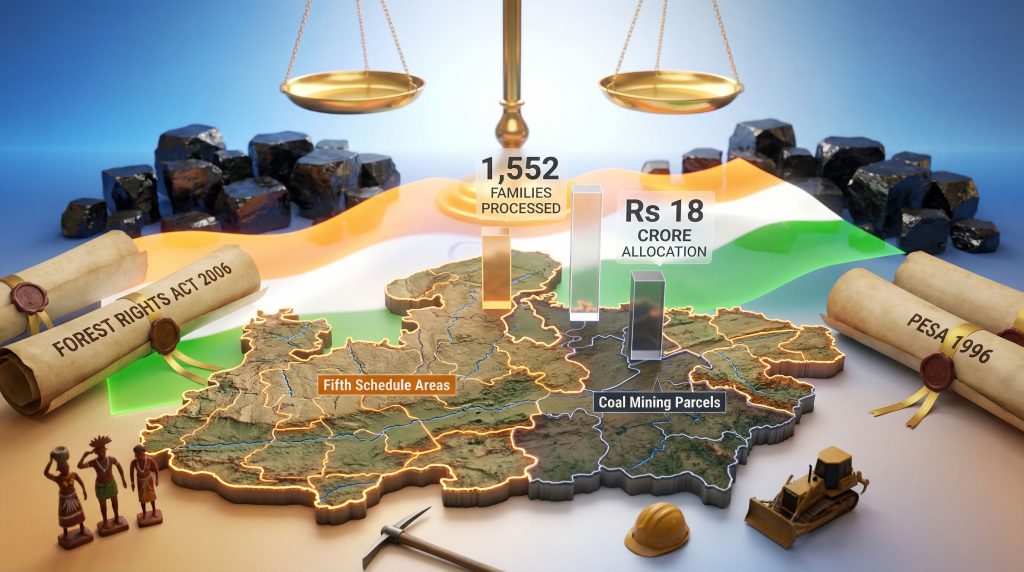
The complexity of mineral extraction in tribal territories across India reveals deep-seated tensions between constitutional protections and resource development imperatives. Within this framework, compensation mechanisms serve as critical junction points where regulatory compliance, corporate interests, and indigenous rights converge. Understanding these dynamics requires examining institutional safeguards, political accountability structures, and the systematic challenges that emerge when traditional governance frameworks encounter large-scale industrial projects. Furthermore, the Adani Group coal mines compensation controversy highlights the urgent need for enhanced oversight mechanisms in resource extraction operations.
Core Regulatory Violations in Mining Land Acquisition Cases
Forest Rights Act Compliance Gaps in Coal Project Approvals
The Scheduled Tribes and Other Traditional Forest Dwellers Act of 2006 establishes mandatory consultation protocols that must precede any resource extraction in forest-dependent communities. These requirements create a complex web of procedural obligations that mining permitting basics must navigate before obtaining operational clearance.
In the Singrauli district case, 12,998 families across eight villages faced displacement due to coal mining operations, yet only 1,552 families had received compensation processing by the time parliamentary questions were raised in the Madhya Pradesh Assembly. This processing rate of approximately 12% indicates potential systemic failures in implementing Forest Rights Act protocols.
The Act mandates several critical steps:
- Recognition of forest rights held by tribal communities before project approval
- Formal consultation with Gram Sabhas on matters affecting traditional territories
- Integration with PESA (Panchayats Extension to Scheduled Areas) Act 1996 framework
- Documentation of informed consent from forest-dependent populations
Supreme Court precedents have consistently reinforced that these consultations cannot be merely procedural but must constitute genuine engagement with affected communities. The compensation irregularities documented in Singrauli suggest these mandatory protocols may have been inadequately implemented or bypassed entirely during the approval process.
Compensation Policy Framework Discrepancies
Madhya Pradesh's land acquisition compensation standards operate within a complex regulatory environment that includes state-level policies, constitutional protections for tribal areas, and federal oversight mechanisms. The identification of outsider payments reveals systematic verification failures within this framework.
Documented irregularities include:
- Over Rs 15 lakh paid to a police station in-charge's wife despite non-eligibility status
- Approximately Rs 14 lakh distributed to a traffic police officer's spouse under similar circumstances
- Absence of cross-referencing mechanisms between compensation recipients and official land records
These payments to non-affected families indicate that beneficiary verification systems either failed to implement proper screening protocols or lacked adequate oversight mechanisms to prevent fraudulent claims. The fact that law enforcement personnel's family members received substantial compensation payments suggests potential collusion or documentation manipulation within the administrative process.
When big ASX news breaks, our subscribers know first
State-Level Political Dynamics Impact on Mining Compensation Disputes
Legislative Oversight Mechanisms and Opposition Challenges
Parliamentary accountability structures provide constitutional mechanisms for challenging government policy implementation, particularly in cases involving indigenous rights and resource extraction. The Madhya Pradesh Assembly proceedings demonstrate how these oversight tools function in practice when compensation controversies emerge.
The opposition's strategic approach included several key elements:
- Assembly Question Hour utilization for raising public accountability concerns
- Formal walkout staging to signal protest and escalate political pressure
- Joint committee investigation demands for independent oversight implementation
- Documentary evidence presentation of specific compensation irregularities
Leader of Opposition Umang Singhar's documentation of outsider payments represents standard parliamentary tactics for exposing administrative failures. The specific examples cited (police officers' family members receiving compensation) provided concrete evidence of policy violations that could not be easily dismissed through procedural responses.
The assembly disruption culminated in Speaker Narendra Singh Tomar adjourning proceedings for 10 minutes, indicating that opposition pressure tactics successfully forced acknowledgment of the controversy's severity.
Revenue Minister Response Patterns and Defensive Strategies
Government response strategies in compensation disputes typically follow predictable patterns designed to minimize political damage while avoiding independent oversight. Revenue Minister Karan Singh Verma's approach exemplifies these defensive mechanisms.
The ministerial response included four key components:
| Response Element | Specific Action | Political Function |
|---|---|---|
| Quantitative Reassurance | Cited 1,552 families processed | Demonstrate policy implementation |
| Policy Compliance Claims | Referenced established compensation framework | Assert regulatory adherence |
| Conditional Investigation Promise | Offered to investigate outsider payments | Appear responsive without commitment |
| Oversight Rejection | Declared joint committee unnecessary | Avoid independent verification |
Minister Verma's assertion that the opposition's allegations were "completely false" while simultaneously promising investigation of outsider payments reveals internal contradictions within the government's defensive posture. This pattern suggests awareness of irregularities despite public denials.
Rural Development and Panchayat Minister Prahlad Patel's conditional transparency offer to place compensation lists "if necessary" indicates reluctance for proactive disclosure, preferring reactive responses only when political pressure becomes unsustainable.
Institutional Safeguards for Tribal Land Rights Protection
Constitutional and Legal Framework Analysis
Fifth Schedule constitutional protections under Article 244(1) create enhanced governance arrangements specifically designed for tribal areas, yet implementation gaps persist across multiple regulatory layers. Singrauli district's designation as a Fifth Schedule area should have triggered additional procedural safeguards beyond standard land acquisition protocols.
The constitutional framework mandates:
- Enhanced state-level protections for indigenous land rights through specialized governance structures
- PESA 1996 integration requiring tribal self-governance consultation in resource extraction decisions
- Forest Rights Act 2006 compliance ensuring forest-dependent community consent before project approval
- Overlapping jurisdiction coordination between multiple protective regulatory frameworks
The opposition's characterization of the government as "anti-tribal" reflects concerns that these constitutional safeguards failed to protect affected communities effectively. The gap between 12,998 affected families and 1,552 compensated families suggests systematic implementation failures across multiple protective mechanisms.
Compensation Distribution Monitoring Systems
Effective beneficiary verification requires sophisticated cross-referencing systems that link compensation recipients to verified land ownership records, family status documentation, and occupational screening protocols. The Singrauli case reveals multiple failure points within these verification mechanisms.
Critical system failures include:
- Occupational eligibility screening absence: Police officers' families received payments despite presumably stable employment income
- Land ownership verification gaps: Non-affected families accessed compensation designed for displaced populations
- Documentation fraud detection failures: Administrative systems failed to identify ineligible recipients
- Oversight mechanism inadequacy: Supervisory protocols did not prevent or detect irregular payments
The detection of outsider payments only through political opposition research rather than administrative monitoring indicates that existing oversight systems lack proactive verification capabilities. With approximately 11,446 families (84.1% of affected population) still unprocessed, these verification failures could potentially affect thousands of additional cases.
Corporate Land Acquisition Practices in Regulatory Navigation
Private Sector Compliance Strategies in Sensitive Areas
Mining operations in Fifth Schedule tribal areas require navigation of multiple regulatory layers, each with distinct compliance requirements and approval timelines. Corporate strategies must address environmental clearances, community engagement protocols, and constitutional protections simultaneously while maintaining project viability.
The Adani Group coal mines compensation controversy illustrates tensions between private sector project timelines and indigenous safeguard implementation. Opposition assertions that "the government is benefiting the Adani Group in the name of coal mines" suggest concerns about whether corporate compliance prioritized regulatory navigation efficiency over substantive community protection.
Furthermore, the mining claims framework demonstrates evolving standards for indigenous consultation that mining companies must consider. These developments reflect broader mining industry trends toward enhanced community engagement.
Standard corporate compliance strategies include:
- Environmental clearance procurement through statutory regulatory channels
- Formal community consultation protocols to demonstrate engagement compliance
- Benefit-sharing agreement negotiation with state and local authorities
- Government liaison coordination for project facilitation and approval acceleration
The compensation distribution irregularities suggest that these compliance strategies may have focused on procedural completion rather than substantive protection of affected communities.
Government-Industry Coordination Mechanisms
State facilitation of private mining projects creates potential conflicts between regulatory oversight responsibilities and economic development objectives. The Madhya Pradesh government's response patterns indicate coordination mechanisms that may prioritize project advancement over independent community protection verification.
Key coordination indicators include:
The government's categorical rejection of independent oversight proposals while maintaining policy compliance claims suggests state-industry alignment that prioritizes project facilitation over transparent accountability mechanisms.
Revenue Minister Verma's emphasis on compensation policy adherence without accepting independent verification reflects coordination frameworks designed to minimize external scrutiny. The conditional nature of transparency offers (providing compensation lists only "if necessary") indicates government-industry coordination structures that prefer controlled information disclosure.
The substantial gap between affected families (12,998) and compensated families (1,552) combined with documented outsider payment irregularities suggests coordination mechanisms lack effective grievance verification and corruption prevention protocols.
Precedents for Mining Compensation Dispute Resolution
Historical Coal Allocation Controversies and Reform Lessons
The Coalgate scandal of 2012 established critical precedents for transparency requirements and oversight mechanisms in coal allocation processes. Post-2014 regulatory reforms implemented systematic changes designed to prevent irregular allocations and improve accountability structures.
Key reform elements included:
- Transparent allocation processes replacing discretionary approval mechanisms
- Independent oversight integration through multiple regulatory agencies
- Compensation framework standardization across different mining projects
- Community consultation mandatory protocols before project approval
However, the Adani Group coal mines compensation controversy suggests that these reforms may not have adequately addressed compensation distribution verification systems or beneficiary screening protocols. The persistence of outsider payment irregularities indicates ongoing vulnerabilities within post-Coalgate regulatory frameworks. Consequently, industry consolidation practices must incorporate stronger governance mechanisms.
Comparative Analysis of Tribal Compensation Models
Mining compensation frameworks across different Indian states reveal varying approaches to tribal rights protection and community benefit-sharing. States like Jharkhand, Chhattisgarh, and Odisha have implemented different verification mechanisms and oversight structures with varying success rates.
Best practice elements from other jurisdictions include:
- Real-time beneficiary verification systems using digital identity verification
- Community participation integration in oversight and monitoring processes
- Independent third-party verification of compensation distribution accuracy
- Transparent grievance mechanisms with accessible complaint processes
International standards from ILO conventions and World Bank safeguard policies provide additional frameworks for indigenous community protection that could enhance domestic compensation models. These standards emphasise free, prior, and informed consent protocols that go beyond current Indian regulatory requirements.
The next major ASX story will hit our subscribers first
Accountability Mechanisms for Compensation Irregularities
Independent Investigation Framework Options
Parliamentary oversight mechanisms provide several structural options for investigating compensation irregularities, each with distinct advantages and limitations. The opposition's demand for a joint assembly committee represents one approach within a broader range of accountability tools.
Available investigation frameworks include:
- Joint Parliamentary Committee Structure: Multi-party composition with formal investigative powers
- Judicial Inquiry Commission: Independent judicial oversight with subpoena authority
- Civil Society Monitoring Integration: Third-party verification through transparent community participation
- Administrative Audit Enhancement: Strengthened internal verification protocols with external reporting
The government's rejection of joint committee investigation reflects standard political resistance to independent oversight, particularly when compensation irregularities could implicate broader policy implementation failures. Moreover, the mineral governance lawsuit demonstrates increasing legal scrutiny of mining sector governance practices.
Systemic Reform Recommendations for Prevention
Preventing future compensation irregularities requires comprehensive system redesign addressing verification protocols, oversight mechanisms, and accountability structures. Current failures suggest need for technological integration and enhanced transparency measures.
Priority reform areas include:
| Reform Category | Specific Intervention | Implementation Timeline |
|---|---|---|
| Beneficiary Verification | Digital identity cross-referencing systems | 6-12 months |
| Real-time Monitoring | Compensation tracking technology platform | 12-18 months |
| Community Participation | Enhanced oversight role integration | 3-6 months |
| Transparency Mechanisms | Public compensation database establishment | 6-9 months |
These reforms require coordination across multiple government levels and integration with existing constitutional protections for tribal communities. The technical complexity of verification system enhancement suggests implementation challenges that must be addressed through phased rollout strategies.
In addition, the Adani Group coal mines compensation controversy underscores the importance of implementing robust oversight mechanisms before compensation irregularities escalate into broader governance crises.
Disclaimer: This analysis is based on publicly available information regarding the Adani Group coal mines compensation controversy and political proceedings in the Madhya Pradesh Assembly. Compensation dispute outcomes may vary based on ongoing investigations and policy changes. Investors and stakeholders should conduct independent research and consult qualified advisors before making decisions related to mining sector investments or land acquisition matters.
Are You Seeking Investment Opportunities in Mining and Resource Development?
Discovery Alert's proprietary Discovery IQ model delivers instant notifications on significant ASX mineral discoveries, helping investors identify actionable opportunities ahead of the broader market. Stay informed about major mining discoveries and begin your 14-day free trial today to position yourself at the forefront of the Australian mining sector.