
June 30, 2026
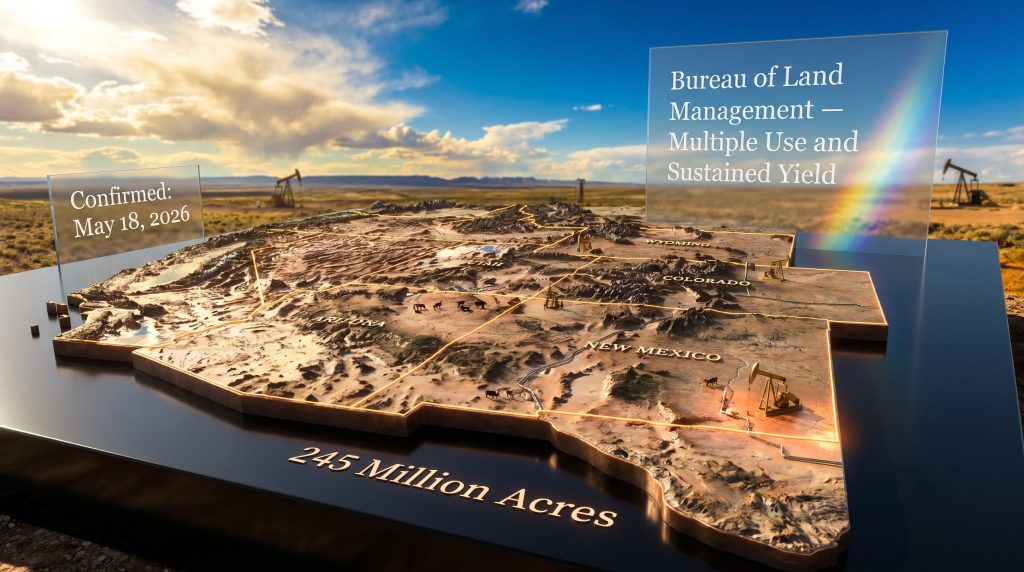
The Institutional Architecture of Federal Land Authority
Few regulatory positions in the American government carry the quiet, compounding influence of the Bureau of Land Management directorship. While cabinet secretaries attract headlines and agency administrators testify before Congress, the BLM director operates at the precise intersection where statutory mandate meets operational reality, translating broad legislative language into decisions that shape trillions of dollars in natural resource value across the western United States. Understanding the Steve Pearce BLM director confirmation requires stepping back from the event itself and examining the institutional machinery he now commands.
The BLM is not simply a land-management bureaucracy. It is the regulatory gateway through which a significant portion of domestic energy production, agricultural activity, and conservation outcomes flow. When the Senate confirmed Pearce on May 19, 2026, as reported by World Oil, it did more than fill an administrative vacancy. It established the philosophical orientation of an agency whose decisions ripple outward into commodity markets, rural economies, and environmental systems for years beyond any single directorship.
When big ASX news breaks, our subscribers know first
What the BLM Actually Controls: A Jurisdictional Overview
The Bureau of Land Management administers approximately 245 million acres of federally managed public land, a figure that represents roughly 10% of the total U.S. land area and is concentrated overwhelmingly across twelve western states. This jurisdictional footprint is not uniform in its significance. Consequently, certain zones, particularly those overlapping with active hydrocarbon basins, carry disproportionate economic weight relative to their acreage.
The agency's core regulatory functions span multiple distinct domains that are often treated as separate policy conversations but are legally integrated under a single statutory framework:
- Onshore oil, gas, and mineral leasing and competitive lease sale administration
- Livestock grazing permit issuance and renewal across approximately 155 million acres of public rangeland
- Pipeline and energy infrastructure rights-of-way approvals for projects crossing federal land
- Processing of Applications for Permits to Drill (APDs) for onshore energy operations
- Conservation and habitat protection designations affecting sensitive ecological areas
- National monument management planning and boundary administration under the Antiquities Act
The economic scale of these functions is substantial. Federal onshore oil and gas operations generate billions annually in royalties, bonuses, and rental payments that flow to the U.S. Treasury and, through revenue-sharing formulas, to the states where production occurs. For states like New Mexico, Wyoming, and Colorado, federal mineral royalties represent a foundational pillar of state budget revenue, making BLM policy decisions directly consequential for state fiscal planning.
Furthermore, the U.S. critical minerals strategy under the current administration has elevated the strategic importance of BLM-managed land beyond conventional energy production. The BLM director position carries what analysts describe as cabinet-adjacent influence over land-use decisions. The director does not set national energy policy, but controls the operational levers that determine whether that policy translates into actual production activity on the ground.
The legal foundation for all of this authority rests on the Federal Land Policy and Management Act (FLPMA) of 1976, which replaced the patchwork of older public land statutes and established the "multiple use and sustained yield" mandate as the agency's governing philosophy. Critically, FLPMA does not establish a hierarchy of uses. It requires the BLM to manage lands for energy development, grazing, recreation, and conservation simultaneously, without explicitly prioritising any single purpose. This creates the fundamental tension that every BLM director must navigate.
Steve Pearce: Legislative History and Policy Positioning
Congressional Record and Regional Context
Steve Pearce represented New Mexico's 2nd Congressional District for multiple terms spanning from 2003 to 2019, a district that encompasses the eastern portion of New Mexico including territory overlapping the Permian Basin, which accounts for approximately 40% of all U.S. onshore oil production. This geographic context is not incidental. A director who spent years representing communities economically dependent on federal leasing activity arrives at the BLM with operational familiarity that purely administrative appointees often lack.
Throughout his congressional tenure, Pearce maintained a consistent record of supporting expanded energy development on federal acreage:
- He served on the House Natural Resources Committee, including on the Energy and Mineral Resources Subcommittee, where he engaged directly with permitting and leasing policy debates.
- He sponsored and co-sponsored legislation aimed at reducing regulatory friction in the federal permitting process for energy infrastructure.
- He supported measures to modify environmental review timelines under the National Environmental Policy Act (NEPA) for energy-related projects on public lands.
His district contained an estimated 11.3 million acres of BLM-managed land, representing a majority of the district's total land area. This scale of federal land presence in his home constituency gave Pearce direct political exposure to the operational realities faced by energy producers, ranchers, and other public land users navigating BLM regulatory processes.
The Senate Confirmation: A Divided Vote
The U.S. Senate confirmed Pearce as BLM Director on May 19, 2026, in a vote that reflected the polarised nature of contemporary public lands politics. Notably, Senator Martin Heinrich voted against the confirmation, centering his opposition on concerns about national monument boundary protections, historical positions regarding public land sales, and the relationship between industry advocacy and the conservation obligations embedded in FLPMA.
The stakeholder landscape surrounding the Steve Pearce BLM director confirmation divided along predictable but instructive lines:
| Stakeholder Group | Confirmation Stance | Core Concern |
|---|---|---|
| Independent Petroleum Association of America (IPAA) | Strongly supportive | Restoring multiple-use mandate, faster permitting throughput |
| National Cattlemen's Beef Association | Supportive | Directorship stability, grazing policy certainty |
| League of Conservation Voters | Opposed | Public land sell-off risk, conservation rollback |
| NRDC | Opposed | Conflict-of-interest concerns regarding industry relationships |
| Senate Democrats (select members) | Opposed | National monument protections, land-use prioritisation |
The ranching community's support deserves particular analytical attention. The National Cattlemen's Beef Association's endorsement of Pearce signals that the confirmation is not simply an oil-and-gas industry story. It reflects a broader coalition of public-land-dependent industries that view development-aligned BLM leadership as providing operational stability across multiple sectors simultaneously. Approximately 22,000 ranching operations depend on BLM grazing permits, and extended periods of directorship vacancy or policy uncertainty create real administrative bottlenecks for permit renewals and range management planning.
Decoding the Multiple Use Mandate: Legal Framework and Operational Implications
How FLPMA's Language Shapes Every BLM Decision
The genius and the limitation of FLPMA's multiple-use mandate lies in its deliberate ambiguity. The statute requires the BLM to manage public lands for a combination of uses that will best meet present and future needs, but it does not define the weighting of those uses. This creates a framework where the philosophical orientation of the sitting director has an outsized influence on how the agency interprets its own mandate.
Under development-oriented leadership, the balance historically shifts in measurable operational ways:
- Environmental review timelines under NEPA are compressed through procedural modifications and categorical exclusions.
- Competitive lease sale frequency and acreage availability expands, offering operators more regular access to federal parcels.
- APD processing times decrease through staffing prioritisation and streamlined review protocols.
- Rights-of-way approvals for pipelines and energy infrastructure crossing federal land are expedited.
- Conservation stipulations on existing leases may be reinterpreted or reduced through resource management plan revisions.
The IPAA's post-confirmation statement, as reported by World Oil, described the Pearce appointment as enabling the BLM to move toward operating at its highest capacity and carrying out its vital mission. This framing signals industry expectation that permitting throughput and lease sale velocity will increase under his directorship, reflecting a concrete operational theory about what maximum-capacity BLM operations look like from an upstream energy perspective.
Resource Management Plans: The Long-Term Policy Instrument
One aspect of BLM policy that rarely receives adequate public attention is the Resource Management Plan (RMP) system. RMPs are land-use planning documents that establish allocation frameworks for specific geographic areas, determining which lands are available for energy leasing, which are designated for conservation, and how competing uses are balanced within a given planning area. These documents are developed through a multi-year process involving NEPA compliance, scientific analysis, and public participation.
RMPs developed under a given directorship can govern land-use decisions for a decade or more beyond that director's tenure. This institutional permanence makes the director confirmation one of the most consequential regulatory appointments in U.S. natural resource governance, despite receiving comparatively limited public scrutiny.
The practical implication is that the policy direction established under Pearce's leadership will be embedded in administrative documents that outlast his tenure, shaping public land access and conservation outcomes well into the 2030s.
Competing Interests: Mapping the Stakeholder Landscape
The Industry Case for Development-Oriented Leadership
Upstream energy producers operating on federal acreage across the Permian Basin, Powder River Basin, and broader Western U.S. have articulated a consistent regulatory frustration: the gap between statutory authorisation for energy development and the operational reality of navigating BLM permitting processes. In addition, the broader mining permit reforms pursued by the Trump administration have added further momentum to industry expectations of a more permissive regulatory environment. Key friction points include:
- APD processing delays that extend project timelines and increase capital carrying costs
- Inconsistent lease sale scheduling that complicates multi-year drilling programme planning
- Administrative litigation risk on approved permits that creates uncertainty even after regulatory clearance
- Conservation stipulations attached to leases that restrict operational flexibility in sensitive habitat areas
The IPAA's framing of the confirmation as a restoration of the multiple-use mandate reflects this frustration. From the industry perspective, prior administrations tilted the FLPMA balance too far toward conservation, effectively narrowing the statutory mandate's practical application.
The Conservation Counterargument
Organisations opposing the confirmation raised concerns that extend beyond ideological disagreement over development priorities. However, their specific objections centred on several concrete policy risks:
- Potential modification or reduced enforcement of national monument management plans, affecting ecologically sensitive areas established under prior administrations
- Weakened habitat protection stipulations on existing and new energy leases
- Reduced conservation area designations through revised RMPs that favour development allocations
- Long-term and potentially irreversible impacts to public land ecosystems resulting from accelerated extraction activity
These concerns reflect a deeper structural argument: that the irreversibility of certain environmental impacts means the cost of a wrong policy direction is asymmetric. A delayed drilling permit can be approved later. A degraded aquifer or extirpated wildlife population cannot be easily restored. The NRDC's response to the confirmation highlighted these risks in detail, emphasising Pearce's record on public land management as grounds for opposition.
The Agricultural Dimension
The ranching community occupies a distinct position in the public lands debate that is often collapsed into the broader development coalition but operates with its own specific interests. Grazing permit holders depend on stable, predictable BLM administration for their operational planning. Extended directorship vacancies or radical policy shifts in either direction create administrative uncertainty that affects permit renewals, fee structures, and range management planning timelines. The National Cattlemen's Beef Association's support for Pearce reflects this demand for institutional stability as much as ideological alignment with development priorities.
Federal Energy Leasing Under the Trump Administration Framework
Permian Basin Federal Acreage: The Highest-Stakes Jurisdiction
Pearce's New Mexico congressional background positions him with direct regional knowledge of what may be the single most commercially significant federal leasing environment under BLM jurisdiction. The Permian Basin straddles southeastern New Mexico and western Texas, and the federal acreage within New Mexico's portion of the basin represents a substantial share of the basin's total productive capacity.
Accelerated permitting activity in this region could produce measurable near-term effects across several dimensions:
- Increased onshore drilling activity on federal parcels currently subject to permitting backlogs
- Higher federal royalty revenue generation flowing to both the Treasury and New Mexico's state government
- Expanded midstream infrastructure approvals for pipelines crossing BLM-managed land
- Broader state-level economic output through employment in drilling, completion, and production services
The Administration's Domestic Energy Production Framework
The confirmation aligns with the Trump administration's broader policy agenda of maximising domestic oil, gas, and critical mineral production by reducing federal regulatory barriers to resource extraction. For instance, the mineral production executive order signed earlier in 2025 signalled the administration's intent to use every available lever to accelerate domestic resource development. The BLM director role functions as a critical operational lever within this framework, controlling the permitting gateway through which a substantial share of U.S. onshore production must pass before reaching the wellhead.
This alignment creates both opportunity and constraint for the new director. The political tailwinds supporting accelerated development are significant, but they exist within a statutory framework, FLPMA, that legally requires conservation and recreation interests to be considered alongside energy priorities. Any policy acceleration that visibly abandons this balance creates legal exposure to litigation from conservation organisations that have well-established legal standing to challenge BLM decisions.
Furthermore, the U.S. mineral production order framed domestic extraction as a matter of national security, adding a further policy rationale for expedited permitting activity across BLM-managed land.
The next major ASX story will hit our subscribers first
Policy Scenarios Under Director Pearce
Four plausible trajectories emerge from the current policy environment, each with distinct probability assessments:
Scenario 1: Accelerated Leasing and Permitting (High Probability)
Consistent with both administration priorities and industry stakeholder expectations. Likely indicators include increased APD approval rates, expanded quarterly lease sale acreage, and reduced average NEPA review timelines. This scenario represents the path of least institutional resistance given the current political configuration.
Scenario 2: National Monument Management Plan Revisions (Moderate Probability)
Pearce's congressional record on monument designations creates a documented policy pathway for revisiting management boundaries established under prior administrations. Legal challenges from conservation organisations would be anticipated and should be factored into any timeline assessment.
Scenario 3: Grazing and Multi-Use Policy Rebalancing (Moderate Probability)
The ranching coalition's active support suggests grazing policy stabilisation or favourable reform as a secondary priority, potentially including revised fee structures, extended permit terms, or modified range management planning timelines.
Scenario 4: Sustained Legal and Political Opposition (High Certainty)
Conservation groups have demonstrated both the intent and the legal capacity to challenge accelerated development decisions through litigation. Congressional Democratic opposition will likely translate into oversight activity and legislative resistance, creating ongoing friction regardless of administrative direction.
The Institutional Stakes Beyond the Headlines
Why Directorship Vacancies Have Real Operational Costs
Extended periods without a confirmed BLM director create decision-making bottlenecks that affect all public land users, not only energy producers. Permit backlogs accumulate. Lease sale schedules become uncertain. Resource management plan revisions stall. The institutional case for a confirmed, permanent director transcends ideological preferences about the direction of policy.
The National Cattlemen's Beef Association's explicit emphasis on the importance of filling the position permanently reflects this operational reality. Policy ambiguity at the leadership level cascades downward through an agency of approximately 8,000 full-time equivalent employees managing an extraordinarily complex regulatory portfolio, creating inefficiencies that compound over time.
The Long Institutional Shadow of Each Directorship
The Steve Pearce BLM director confirmation establishes a directional tone for BLM operations that will outlast his tenure through the RMPs, environmental review frameworks, and leasing policy documents developed during his time as director. This is the aspect of BLM leadership transitions that receives the least public attention but carries the greatest long-term consequence.
Land-use planning documents completed under a given director shape public land access and conservation outcomes for years, sometimes a decade beyond the directorship itself. Energy leases issued during a period of expanded leasing activity carry production terms that extend for years into the future. Conservation designations modified or removed are difficult to restore through subsequent administrations.
However, it is worth noting that the Trump mining policy impact extends well beyond a single directorship, embedding policy changes into frameworks that future administrations will need to actively work to reverse. The decisions made at the BLM over the next several years will be embedded in administrative frameworks that shape western land management well into the next decade, affecting energy producers, ranchers, conservation interests, and recreational users across an agency footprint that spans nearly one-tenth of the entire United States.
FAQ: Steve Pearce BLM Director Confirmation
What is the Bureau of Land Management responsible for?
The BLM manages approximately 245 million acres of federally owned public land across the western United States, overseeing oil and gas leasing, mining permits, grazing authorisations, pipeline rights-of-way, and conservation designations under the multiple-use mandate of FLPMA.
When was Steve Pearce confirmed as BLM Director?
The U.S. Senate confirmed Steve Pearce as BLM Director on May 19, 2026, as reported by World Oil.
Why did conservation groups oppose Steve Pearce's confirmation?
Conservation organisations raised concerns about Pearce's historical support for expanded energy development on federal lands, positions regarding national monument boundaries, and the relationship between his industry relationships and the BLM's conservation obligations.
What is the BLM's multiple use mandate?
Established under the Federal Land Policy and Management Act of 1976, the multiple use mandate requires the BLM to manage public lands for a combination of purposes including energy development, grazing, recreation, and conservation simultaneously, without establishing a statutory hierarchy of priorities among these uses.
How does the BLM director role affect oil and gas operators?
The BLM director directly influences the pace and availability of federal oil and gas leasing, the processing speed of Applications for Permits to Drill, and the regulatory conditions attached to energy operations on public land. Leadership philosophy has a measurable impact on permitting timelines and lease sale frequency.
What regions are most affected by BLM leadership changes?
The western United States, particularly New Mexico, Wyoming, Colorado, Utah, Nevada, and Montana, contains the highest concentrations of BLM-managed land and is most directly affected by shifts in agency policy direction.
Disclaimer: This article contains forward-looking analysis regarding potential policy directions under the new BLM directorship. Such scenario assessments involve inherent uncertainty and should not be construed as definitive predictions of regulatory outcomes. Readers with interests in federal energy leasing or public land policy should consult qualified legal and regulatory professionals. Further coverage of upstream regulatory developments and federal leasing activity is available from World Oil at worldoil.com.
Want to Stay Ahead of the Next Major Mineral Discovery Linked to Shifting U.S. Resource Policy?
As federal land policy evolves under the new BLM directorship — opening potential pathways for expanded onshore energy and mineral extraction — Discovery Alert's proprietary Discovery IQ model delivers real-time alerts on significant ASX mineral discoveries, turning complex resource data into actionable investment insights the moment they hit the market. Explore historic discoveries and the returns they generated, then start your 14-day free trial at Discovery Alert to position yourself ahead of the broader market.