June 10, 2026
The Race to Lock In Long-Life Hydrocarbon Assets Before the Window Closes
Sovereign energy investors are operating under a quiet urgency that rarely surfaces in public announcements. The core thesis driving capital allocation decisions at the world's largest state-controlled oil companies is straightforward but rarely stated directly: the global energy transition will eventually compress the premium placed on long-life hydrocarbon assets, and the most strategically advantageous positions will belong to those who secured them early. This logic is reshaping where Gulf national oil companies deploy capital, and Canada has emerged as one of the most consequential destinations in that reallocation.
Understanding why Abu Dhabi National Oil Company is actively exploring ADNOC Canada upstream and LNG opportunities through its international investment vehicle XRG requires more than reading a single executive statement at an energy conference. It demands a multi-dimensional analysis of resource economics, geopolitical repositioning, LNG market structure, and the rare convergence of two nations simultaneously seeking to deepen energy trade ties.
When big ASX news breaks, our subscribers know first
What XRG Actually Is and Why Its Structure Matters
XRG is not simply a subsidiary of ADNOC. It functions as a purpose-designed commercial vehicle built to pursue international energy opportunities with the kind of transactional agility that a state-owned parent entity cannot easily replicate. Traditional national oil company international expansions have historically been characterised by slow internal approvals, political considerations overriding commercial logic, and a preference for bilateral government-to-government deal structures.
XRG is architecturally different. By establishing it as a semi-autonomous investment arm, ADNOC has created an entity that can engage with Canadian energy companies, private equity partners, and LNG project developers using the commercial language and deal structures those counterparties prefer. This is not a trivial distinction. Many previous attempts by Gulf state entities to acquire Western energy assets stalled not because of valuation disagreements but because of structural incompatibility between a state entity's decision-making framework and the pace demanded by competitive asset markets.
The table below contrasts XRG's operating model with conventional NOC international expansion approaches:
| Feature | Conventional NOC Expansion | XRG Model |
|---|---|---|
| Decision Speed | Government-approval dependent | Commercially structured, faster execution |
| Investment Scope | Primarily upstream equity | Upstream, midstream, LNG value chain |
| Geographic Logic | Resource security focus | Revenue diversification and market access |
| Risk Appetite | Conservative | Moderate-to-high for strategic assets |
| Counterparty Legibility | State-entity framing | Private-sector compatible structure |
This structural design choice is itself a strategic signal. It communicates that ADNOC's international ambitions in markets like Canada are commercially serious, not merely diplomatic relationship-building exercises.
Canada's Resource Base: The Numbers That Make It a Tier-One Target
Canada holds a resource position that very few countries can match across both crude oil and natural gas simultaneously. It ranks as the world's fourth-largest crude oil producer and fifth-largest natural gas producer, according to publicly available production data. What makes this combination particularly valuable from a sovereign investment perspective is the co-location of those resources with one of the most stable and transparent investment jurisdictions globally.
Alberta's oil sands represent the world's third-largest proven crude oil reserve base, a fact that tends to be overshadowed by the operational complexity and carbon intensity debates surrounding bitumen extraction. For a long-horizon investor like XRG, however, the reserve life profile of oil sands assets is highly attractive. Unlike conventional reservoirs that decline rapidly after peak production, oil sands operations exhibit very gradual production decline curves, meaning capital deployed today continues generating returns across decades.
On the natural gas side, British Columbia's Montney Formation and Alberta's Deep Basin plays are among the most prolific tight gas resource accumulations in the Western Hemisphere. These formations provide the feedstock base that any serious Pacific-facing LNG export industry requires. The Montney in particular has been characterised by resource assessments indicating hundreds of trillions of cubic feet of marketable gas in place, with well economics that improve consistently as drilling and completion technology advances.
Furthermore, Canada's energy transition dynamics create an interesting paradox: while decarbonisation pressures are real, the country's vast natural gas reserves position it as a critical bridge fuel supplier during the multi-decade transition period, making upstream gas assets particularly attractive to long-horizon sovereign investors.
Canada's Pacific Coast geography fundamentally changes the LNG shipping calculus for Asian buyers. A vessel loaded at a British Columbia LNG terminal reaches key Northeast Asian demand centres in roughly half the transit time required from the US Gulf Coast, translating directly into lower shipping costs and greater supply security for buyers in Japan, South Korea, and China.
The LNG Export Equation: Why Shipping Geography Is a Structural Advantage
Does Geography Give Canada a Decisive Edge?
One aspect of Canada's LNG positioning that receives insufficient analytical attention is the pure maritime logistics advantage. Pacific Coast LNG exports to Japan, South Korea, and China involve transit times of approximately 8 to 10 days, compared to 20 to 25 days for equivalent cargoes originating from the US Gulf Coast via the Panama Canal. For buyers seeking to minimise shipping costs and cargo insurance exposure, this routing differential is commercially meaningful at scale.
This geography has not gone unnoticed by international buyers. Germany's SEFE and Uniper have both engaged with Canadian LNG supply discussions, signalling that the sector's commercial credibility extends well beyond the Asia-Pacific demand centres that were originally assumed to be the primary offtake market. The involvement of European buyers also provides important pricing diversity, reducing Canadian LNG projects' dependence on any single regional pricing benchmark.
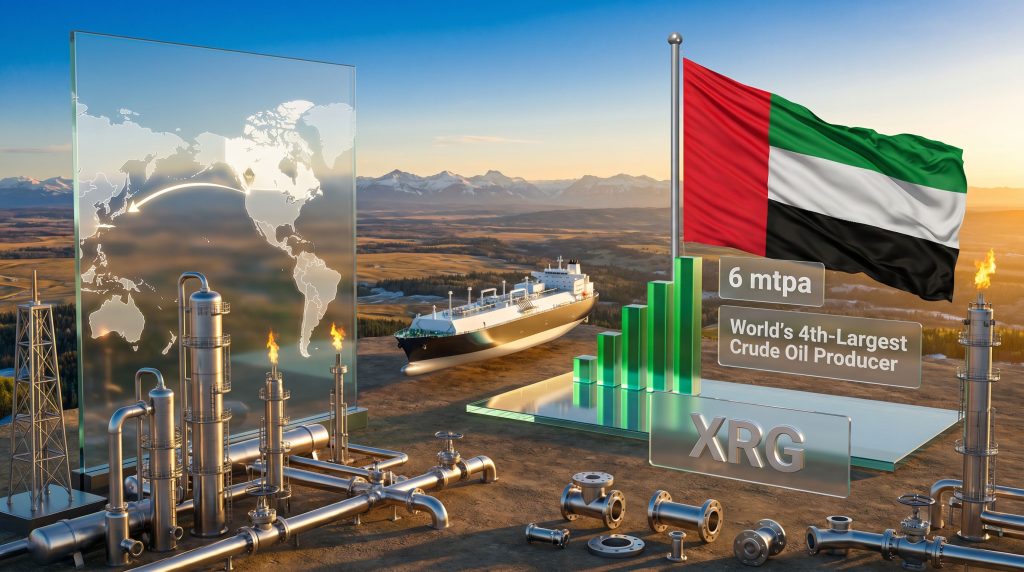
For ADNOC, which currently operates an LNG export system through ADNOC Gas with a capacity of 6 million tonnes per annum (mtpa), Canadian LNG access represents a meaningful expansion pathway. The company has publicly indicated intentions to grow both its domestic LNG capacity and its broader global LNG market presence. Securing upstream feedstock access, equity in liquefaction capacity, or long-term offtake arrangements in Canada would extend ADNOC's commercial reach directly into Pacific Basin supply chains in a way that organic growth from Abu Dhabi alone cannot replicate.
Moreover, the broader LNG supply outlook for 2025 and beyond suggests that new sources of competitive Pacific-facing supply will command a structural premium, further reinforcing the strategic rationale for early entry into Canadian LNG infrastructure.
Nova Chemicals: The Overlooked Strategic Bridgehead
A detail that tends to be underweighted in analysis of ADNOC's Canadian ambitions is the company's existing operational presence in the country. ADNOC acquired Nova Chemicals, an Alberta-based petrochemical manufacturer, as part of its broader international portfolio strategy. This gives ADNOC something most foreign energy investors entering Canada for the first time do not possess: an established operational track record within Canadian regulatory and legal frameworks.
This matters for several practical reasons:
- ADNOC has already navigated Canada's Investment Canada Act review processes through the Nova Chemicals acquisition
- The company has demonstrated capacity to operate within provincial environmental compliance frameworks in Alberta
- Existing relationships with Canadian provincial and federal regulatory bodies reduce the due diligence burden on potential new counterparties
- Nova Chemicals' Alberta presence provides a credible operational platform from which upstream and LNG-focused conversations can be initiated with greater institutional legitimacy
In investment terms, this pre-existing footprint functions as a form of real-options value. It lowers the entry cost of subsequent investments by eliminating the relationship-building and regulatory-familiarisation phase that a genuinely first-time entrant would need to undertake.
Three Plausible XRG Entry Structures in Canada's Energy Sector
Analysing ADNOC's Canadian interest as a single transaction possibility misses the strategic complexity of how sophisticated sovereign energy investors structure multi-jurisdictional expansion. Three distinct entry pathways are analytically plausible, each with different risk-return profiles:
| Entry Structure | Description | Strategic Benefit | Risk Profile |
|---|---|---|---|
| Minority Upstream Equity | Non-operating stake in oil sands or Montney gas assets | Reserve addition, long-life cash flow | Commodity price exposure, ESG scrutiny |
| LNG Project Equity | Development-stage stake in BC liquefaction capacity | Pacific Basin positioning, offtake control | Timeline risk, capital intensity |
| Offtake-Only Agreement | Contracted LNG volumes without asset ownership | Capital-light, immediate supply access | No upstream upside, counterparty dependency |
A sophisticated entrant like XRG might pursue a hybrid approach, combining a minority upstream equity position in Montney gas assets with an offtake agreement from an LNG export project, thereby capturing both reserve value and supply chain exposure without committing to the full capital burden of a development-stage liquefaction project.
The next major ASX story will hit our subscribers first
The Diplomatic Architecture Enabling Commercial Progress
How Has Political Engagement Shaped the Investment Landscape?
State-level diplomatic engagement between the UAE and Canada has created an enabling environment for commercial energy negotiations that would otherwise take considerably longer to mature. Mark Carney's energy strategy and his official visit to the UAE in late 2025 established a bilateral framework that ADNOC's upstream leadership has subsequently referenced as providing a constructive foundation for expanded collaboration.
Musabbeh Al Kaabi, ADNOC's CEO of upstream, reinforced this view at the Global Energy Show in Calgary in June 2026, describing the visit as having set a positive tone for deeper cooperation across energy and investment sectors. The choice of the Global Energy Show as the venue for this public signalling deserves attention. Calgary's premier annual energy conference is precisely the forum where Canadian upstream operators, LNG project developers, provincial government officials, and institutional investors congregate.
By articulating XRG's Canadian interest at this event, ADNOC communicated simultaneously to every relevant stakeholder category, compressing the time typically required to generate market awareness of a sovereign investor's intentions.
Canada's own strategic posture has contributed to this receptive environment. Facing sustained pressure related to Canadian energy export tariffs on its dominant export market, Canada's Natural Resources Minister Tim Hodgson has emphasised the country's ambition to position itself as a reliable supplier of secure energy during a period of global uncertainty. This export diversification imperative creates structural alignment with ADNOC's supply diversification objectives, generating what investors would recognise as a bilateral opportunity window of unusual quality.
Regulatory and ESG Complexity: The Risks XRG Cannot Ignore
Any credible analysis of ADNOC's Canadian ambitions must account for the structural challenges that have historically extended and complicated energy project development in Canada. These are not peripheral risks but central considerations that will shape the timing, structure, and cost profile of any XRG investment.
Key risk categories include:
- Multi-jurisdictional approvals: Major LNG export projects require federal environmental assessments, provincial regulatory approvals, and National Energy Board processes that have historically added years to project timelines
- Indigenous consultation obligations: Canadian law mandates meaningful consultation with First Nations groups whose traditional territories overlap with proposed energy infrastructure, a process that is both legally required and commercially material
- Carbon pricing frameworks: Canada's federal carbon pricing mechanism adds to operating cost structures, particularly for oil sands operations with relatively higher emissions intensities
- ESG investor scrutiny: Western institutional investors applying ESG screening frameworks view Canadian oil sands assets with particular caution, which could affect ADNOC's ability to co-invest with certain categories of international capital partners
The carbon intensity question is especially relevant for a sovereign investor whose own government faces international scrutiny on climate commitments. XRG may strategically prioritise natural gas and LNG assets over oil sands heavy crude, given that gas-to-LNG value chains carry meaningfully lower emissions profiles and are more defensible under international ESG frameworks.
Signals to Watch: How Deal Progression Would Manifest
For those tracking whether ADNOC's stated interest in ADNOC Canada upstream and LNG opportunities translates into binding commercial commitments, the following indicators represent the most reliable progression signals:
- Formal MOU announcements between XRG and named Canadian upstream or LNG project operators
- Investment Canada Act filings indicating foreign acquisition activity by UAE-linked entities in the energy sector
- Offtake agreement disclosures from Canadian LNG project developers naming Middle Eastern counterparties
- Nova Chemicals capital expansion announcements in Alberta suggesting broader ADNOC investment appetite in the province
- Follow-up diplomatic engagements at ministerial level between UAE and Canadian energy officials
The absence of these signals beyond the exploratory stage should not be interpreted as strategic retreat. Sovereign energy investments of this scale routinely require 12 to 36 months of negotiation before binding commitments are reached. The public signalling at Calgary's Global Energy Show represents stage one of a multi-stage process.
Why the Timing Logic Is Structurally Sound
The convergence of forces driving ADNOC's Canadian interest is not coincidental. It reflects the intersection of three independent trajectories that happen to align unusually well in the mid-2020s: ADNOC's strategic need to grow its international LNG footprint before Pacific Basin supply competition intensifies; Canada's imperative to develop export infrastructure and attract non-US foreign capital; and the bilateral diplomatic groundwork that has reduced political friction for investment discussions.
Consequently, the broader effects of the trade war on oil markets have only accelerated Canada's urgency to cultivate alternative investment partners, further reinforcing ADNOC's leverage as a credible non-US capital source. Long-life resource assets in stable jurisdictions have historically attracted the highest sovereign energy capital premiums precisely because they are rare.
Canada's combination of scale, stability, and Pacific export optionality places it in a very small group of jurisdictions capable of satisfying all three criteria simultaneously. As industry analysts have noted, ADNOC's interest in Canadian upstream and LNG assets via XRG reflects a deliberate and commercially sophisticated expansion strategy rather than opportunistic positioning. Whether XRG ultimately proceeds through equity acquisition, offtake structuring, or a hybrid approach, the strategic logic of deepening UAE-Canada energy ties is durable across multiple commodity price scenarios and energy transition trajectories.
Disclaimer: This article is analytical and informational in nature. It does not constitute financial or investment advice. Readers should conduct independent research and consult qualified financial advisers before making investment decisions. All forecasts, scenario analyses, and projections discussed in this article represent analytical perspectives and not confirmed outcomes.
Want to Stay Ahead of the Next Major Resource Discovery?
Discovery Alert's proprietary Discovery IQ model delivers real-time alerts on significant ASX mineral discoveries, transforming complex resource data into actionable investment insights for both short-term traders and long-horizon investors — explore historic examples of exceptional discovery returns to understand the scale of opportunity, then begin your 14-day free trial at Discovery Alert to position yourself ahead of the broader market.