
June 29, 2026
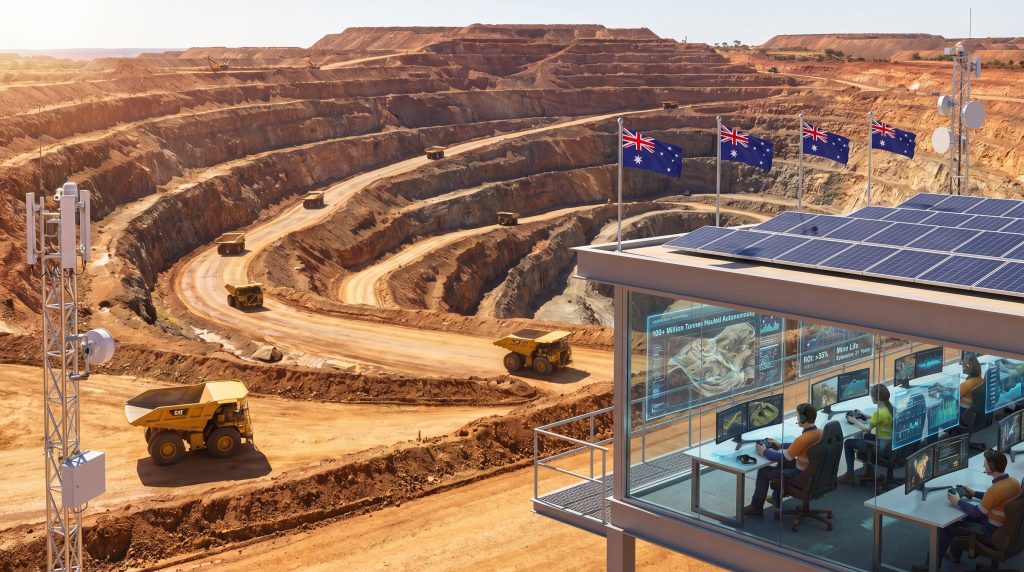
Advanced Mining Technology Revolutionizing Operations at Scale
Mining operations worldwide are undergoing fundamental transformation as sophisticated autonomous systems replace traditional human-operated equipment across vast extraction sites. This technological evolution represents more than simple mechanization, involving complex integration of AI in mining automation alongside precision navigation and real-time control systems that fundamentally alter how minerals are extracted from the earth.
The implementation of autonomous mining technology requires intricate coordination between multiple technological layers, from satellite-guided positioning systems to advanced sensor arrays that enable equipment to operate safely without direct human intervention. These systems must function reliably in harsh environments while maintaining productivity levels that justify substantial capital investments.
Australia's mining sector has emerged as a global testing ground for these advanced technologies, with major operations implementing autonomous fleets that demonstrate the practical viability of remotely controlled extraction processes. The automation in Boddington gold mine represents a significant milestone in this technological progression, showcasing how integrated systems can transform traditional mining workflows.
When big ASX news breaks, our subscribers know first
What Makes Advanced Autonomous Mining Systems Technically Superior?
Fleet Management Architecture and Control Integration
Modern autonomous mining operations rely on sophisticated fleet management systems that coordinate dozens of vehicles simultaneously across expansive mine sites. The Cat 793F haul trucks utilized in advanced operations represent the latest generation of autonomous-capable heavy equipment, featuring integrated GPS systems, collision avoidance technology, and real-time communication capabilities.
These trucks operate within a comprehensive MineStar Command system architecture that provides centralized coordination for all autonomous vehicles. The system processes vast amounts of real-time data, including vehicle positioning, load weights, route optimization, and environmental conditions, to ensure optimal productivity and safety performance.
- Real-time telemetry monitoring across all fleet vehicles
- Precision GPS positioning with centimeter-level accuracy
- Integrated collision avoidance systems using multiple sensor types
- Centralized traffic management for complex route coordination
The technical complexity of managing 36 autonomous vehicles simultaneously requires sophisticated software algorithms that can process thousands of data points per second while making split-second decisions about route optimization, traffic management, and safety protocols.
Control Room Infrastructure and Human-Machine Interface Design
The nerve center of autonomous mining operations consists of advanced control rooms where operators manage equipment from significant distances using specialized interfaces. These facilities feature multi-screen monitoring stations equipped with gaming-controller-style interfaces that provide intuitive control over complex machinery.
Furthermore, modern control rooms integrate data from 200+ connected mining assets, creating a comprehensive digital representation of the entire operation. This integration allows operators to monitor equipment performance, predict maintenance requirements, and coordinate complex logistics operations from a single location.
The human-machine interface design draws heavily from gaming technology, recognizing that operators can achieve higher performance levels when control systems feel familiar and responsive. This approach has proven particularly effective in attracting younger workers who possess natural familiarity with digital control systems.
What Are the Measurable Productivity Gains from Mining Automation?
Production Volume Optimization and Efficiency Metrics
Autonomous mining systems have demonstrated capability to move substantial material volumes with unprecedented consistency. Operations implementing comprehensive automation report hauling millions of tonnes of material with reduced variability in productivity rates compared to traditional human-operated equipment.
The elimination of human factors such as fatigue, shift changes, and varying operator skill levels enables autonomous systems to maintain consistent productivity throughout 24-hour operational cycles. In addition, this consistency translates into predictable production schedules that enhance overall mine planning effectiveness.
Key productivity improvements include:
- Consistent operational speed without human fatigue factors
- Optimized route planning reducing empty-haul distances
- Predictive maintenance scheduling minimizing unplanned downtime
- 24/7 operational capability without shift change interruptions
Operational Cost Structure Transformation
The implementation of autonomous systems fundamentally alters mine operational cost structures by shifting expenses from ongoing labor costs to upfront technology investments and specialized maintenance requirements. However, while initial capital investments are substantial, the long-term operational benefits typically justify these expenditures.
Workforce transformation strategies focus on redeploying existing employees rather than wholesale replacement. Many traditional equipment operators transition to control room positions, maintenance roles, or specialized technical positions supporting autonomous systems.
According to industry evolution trends, successful automation implementations often retain the majority of existing workforce through strategic redeployment. However, some positions become redundant, requiring careful workforce management to maintain community relations and operational expertise.
How Does Autonomous Technology Address Critical Mining Safety Challenges?
Risk Mitigation Through Physical Separation Strategies
The primary safety advantage of autonomous mining systems lies in reducing human exposure to high-risk operational environments. By removing operators from large mobile equipment, mines eliminate numerous potential accident scenarios involving vehicle-pedestrian interactions and equipment-related injuries.
Modern autonomous systems implement multi-layered safety protocols that include:
- Geofenced operational zones restricting human access during autonomous operations
- Real-time obstacle detection using LIDAR and camera systems
- Emergency stop protocols enabling immediate system shutdown
- Redundant communication systems maintaining constant equipment monitoring
Consequently, the implementation of "no entry, autonomous operating zones" creates clear physical boundaries that separate human workers from automated equipment operations. This approach requires comprehensive site redesign but provides substantial risk reduction benefits.
Safety System Architecture and Redundancy Planning
Advanced autonomous systems incorporate multiple redundant safety mechanisms to address potential system failures or unexpected operational conditions. These systems must demonstrate near-perfect reliability given the scale and weight of autonomous equipment operating in proximity to human workers.
Equipment operating autonomously in environments where humans are present requires absolute safety reliability, as the consequences of system failures can be catastrophic.
Critical safety considerations include sensor system reliability in adverse weather conditions, communication system backup protocols, and manual override capabilities for emergency situations. The complexity of ensuring 100% safety reliability remains one of the most challenging aspects of automation implementation at Boddington gold mine.
What Workforce Transformation Strategies Enable Successful Automation?
Skills Transition and Career Development Programs
Successful automation implementation requires comprehensive workforce transition strategies that address both technical training needs and employee concerns about job security. Many mining companies have developed internal training programs that enable traditional equipment operators to transition into control room positions or specialized maintenance roles.
The transition from physical equipment operation to remote control requires different skill sets, including:
- Computer interface proficiency for operating control systems
- Multi-tasking capabilities for monitoring multiple vehicles simultaneously
- Technical troubleshooting skills for addressing system malfunctions
- Data interpretation abilities for optimizing operational parameters
Career progression opportunities in automated environments often focus on technical specialization rather than traditional hierarchical advancement. For instance, this shift requires companies to redesign performance evaluation and advancement criteria.
Organizational Change Management and Communication
The implementation of automation technology creates significant organizational disruption that requires careful management to maintain workforce morale and operational effectiveness. Transparent communication about automation plans, workforce impact assessments, and retraining opportunities helps address employee concerns.
Union representatives emphasize the importance of meaningful consultation during automation planning processes. The Mining and Energy Union advocates for comprehensive workforce transition support and community impact assessments before implementing major automation projects.
Regional community impacts represent a critical consideration, as automation can reduce employment in remote mining towns that depend heavily on mine-related jobs. Furthermore, some operations address this challenge by maintaining local control facilities rather than centralizing operations in major cities.
Which Technical Challenges Must Be Overcome in Autonomous Mining?
System Integration and Interoperability Challenges
Implementing autonomous mining systems requires integration of technology from multiple vendors, creating complex interoperability challenges. Different equipment manufacturers may use incompatible communication protocols, data formats, or control systems that require custom integration solutions.
Network infrastructure represents a critical bottleneck, as autonomous systems require robust, low-latency communication capabilities to function safely. Remote mine locations often lack adequate telecommunications infrastructure, requiring substantial investment in communication systems.
Cybersecurity considerations become paramount when mining operations depend on connected systems. Therefore, the potential for cyberattacks to disrupt operations or compromise safety systems requires comprehensive security protocols and continuous monitoring.
Environmental and Operational Variable Management
Autonomous systems must function reliably across diverse environmental conditions that can significantly impact sensor performance and equipment reliability. Dust, rain, extreme temperatures, and variable lighting conditions all present challenges for autonomous navigation systems.
The complexity of mining environments, including varying terrain conditions, obstacles, and dynamic operational zones, requires sophisticated path planning algorithms capable of real-time adaptation. Unlike controlled factory environments, mines present constantly changing conditions that challenge autonomous system reliability.
AI mill drive optimization becomes more complex when equipment operates autonomously in remote areas. Service technicians must coordinate with autonomous systems to safely access equipment for routine maintenance or repairs.
The next major ASX story will hit our subscribers first
How Do Economic Factors Drive Automation Adoption Decisions?
Capital Investment Analysis and Return Calculations
The decision to implement mining automation involves substantial upfront capital investments that must be justified through long-term operational benefits. Initial costs include equipment modifications, control system infrastructure, communication networks, and workforce training programs.
Investment considerations include:
| Category | Investment Focus | Timeline Impact |
|---|---|---|
| Equipment Conversion | $150+ million for major operations | 12-18 months implementation |
| Control Infrastructure | Advanced monitoring and communication systems | 6-12 months installation |
| Workforce Training | Comprehensive skills development programs | Ongoing 2-3 years |
| System Integration | Custom software and hardware coordination | 12-24 months optimization |
Return on investment calculations must account for productivity gains, safety improvements, reduced labor costs, and potential mine life extensions through more efficient resource extraction. Consequently, many operations report positive returns within 3-5 years of full implementation.
Global Competitiveness and Technology Adoption Pressure
Mining companies face increasing pressure to adopt automation technologies to remain competitive in global commodity markets. Companies that fail to implement efficiency improvements risk losing market position to more technologically advanced competitors.
The iron ore mining sector has led automation adoption, with major producers implementing autonomous haul truck fleets and remote operations centers. This trend creates competitive pressure across the mining industry as operational cost advantages become apparent.
International mining operations in countries with lower labor costs may have different automation incentives compared to operations in high-wage countries like Australia. However, safety improvements and productivity gains provide universal benefits regardless of labor cost considerations.
What Implementation Methodologies Ensure Successful Automation Deployment?
Phased Rollout Strategies and Risk Management
Successful automation implementation typically follows carefully planned phases that minimize operational disruption while building internal expertise. Initial phases often focus on specific operational areas or equipment types before expanding to full-site automation.
Typical implementation phases include:
- Pilot testing with limited equipment in controlled conditions
- Gradual fleet expansion adding autonomous vehicles incrementally
- System optimization refining operational parameters and procedures
- Full integration coordinating all autonomous systems comprehensively
Risk management during implementation requires comprehensive contingency planning for system failures, weather-related disruptions, and workforce adjustment challenges. Furthermore, maintaining parallel traditional operations during initial phases provides operational backup capabilities.
Technology Partnership and Support Service Models
Mining companies typically partner with equipment manufacturers and technology providers to implement and maintain autonomous systems. These partnerships often include comprehensive training programs, ongoing technical support, and system upgrade pathways.
Long-term maintenance agreements address the reality that mining companies may lack internal expertise to maintain sophisticated autonomous systems. Technology providers often establish local service capabilities to support remote mining operations effectively.
The rapid pace of technological development requires flexible upgrade pathways that allow mining operations to incorporate new capabilities without complete system replacement. This consideration influences initial technology selection decisions significantly.
How Does Automation Impact Regional Mining Communities?
Employment Distribution and Geographic Considerations
Mining automation affects regional communities differently depending on the specific implementation approach. Operations that maintain local control facilities may preserve more regional employment than those that centralize operations in major cities.
The Pilbara region exemplifies how remote operations can be controlled from distant locations, with equipment operated from thousands of kilometers away. This approach reduces local employment while centralizing technical expertise in urban areas.
Community investment strategies during automation transitions often focus on:
- Economic diversification supporting alternative local industries
- Infrastructure development improving regional capabilities
- Education programs preparing local workforce for technological changes
- Service industry support maintaining viable local business communities
Social License and Community Relations
Mining companies must carefully manage community relations during automation implementation to maintain social license to operate. Community consultation processes help address concerns about employment impacts and long-term economic sustainability.
Government investment in remote mining communities represents substantial public expenditure that automation may undermine if employment levels decline significantly. This consideration influences policy discussions about automation regulation and community support requirements.
Corporate social responsibility strategies often expand during automation implementation to demonstrate continued commitment to regional communities. In addition, these programs may include enhanced community investment, local business support, or alternative employment creation initiatives.
What Future Developments Will Shape Mining Automation Evolution?
Emerging Technologies and Integration Opportunities
The evolution of mining automation continues accelerating with developments in artificial intelligence, machine learning, and advanced sensor technologies. Predictive maintenance systems using AI algorithms can identify equipment problems before failures occur, reducing downtime and maintenance costs.
Fortescue's solar panel installation automation demonstrates how mining companies expand automation beyond traditional extraction activities. This approach suggests broader automation applications across mining support infrastructure and renewable energy integration.
Internet of Things (IoT) sensor networks enable comprehensive monitoring of equipment performance, environmental conditions, and operational efficiency across entire mining operations. This data collection capability supports continuous optimization of autonomous systems.
Moreover, 5G communication networks promise to enhance real-time control capabilities and enable more sophisticated autonomous coordination. Improved communication reliability and reduced latency support more complex autonomous behaviors and better integration between multiple systems.
Industry-Wide Adoption Trends and Standardization
Major mining companies including Rio Tinto, BHP, and Fortescue have implemented various automation technologies, creating industry momentum toward comprehensive autonomous operations. This widespread adoption drives technology standardization and cost reduction through economies of scale.
Regulatory framework development lags behind technological capability, creating uncertainty about safety standards, operational requirements, and liability considerations for autonomous mining operations. However, industry collaboration on safety standards helps address regulatory concerns and accelerate approval processes.
Investment trends indicate sustained growth in mining automation research and development, with focus areas including:
- Advanced AI decision-making for complex operational scenarios
- Integrated renewable energy systems through sustainable automation shift
- Autonomous maintenance robots using advanced sorting technology
- Predictive geological modeling for optimized extraction planning
The convergence of multiple technological trends suggests that current automation in Boddington gold mine implementations represent early stages of much more comprehensive operational transformation across the mining industry.
Disclaimer: This analysis presents industry trends and technological developments based on publicly available information. Specific operational details, financial performance metrics, and future projections should be verified through official company announcements and regulatory filings. Mining automation involves significant risks and uncertainties that may affect actual outcomes.
Want to Stay Ahead of ASX Mining Technology Breakthroughs?
Discovery Alert's proprietary Discovery IQ model delivers instant notifications on significant ASX mineral discoveries in the mining automation and technology sectors, empowering investors to identify actionable opportunities before the broader market responds. Explore historic examples of exceptional returns from major mineral discoveries and begin your 14-day free trial today to position yourself ahead of rapidly evolving mining technology investments.