May 31, 2026
Advanced Technologies Driving Mature North Sea Field Economics
The Norwegian Continental Shelf represents one of the world's most technically sophisticated offshore hydrocarbon provinces, where cutting-edge engineering solutions continue unlocking value from previously depleted reservoirs. Contemporary subsea development strategies now enable economic recovery from gas condensate accumulations that remained stranded during the initial development phases of major field complexes decades ago. The ConocoPhillips Greater Ekofisk redevelopment exemplifies this technological evolution, demonstrating how industry evolution trends enable substantial resource additions without the capital intensity traditionally associated with greenfield exploration programs.
Horizontal drilling technology has fundamentally transformed the economics of mature field redevelopment across the North Sea basin. Enhanced reservoir characterisation capabilities, combined with precision well placement techniques, allow operators to access previously uneconomical hydrocarbon volumes within existing field boundaries. This technological evolution creates opportunities for substantial resource additions while supporting ongoing oil price rally analysis considerations.
The integration of advanced subsea systems with legacy processing infrastructure represents a particularly compelling development model for mature provinces. By leveraging existing platform capacity and pipeline networks, operators can achieve attractive project economics while extending the productive life of established field centres. This approach has become increasingly prevalent across the Norwegian Continental Shelf, where regulatory frameworks encourage efficient resource utilisation and infrastructure optimisation.
When big ASX news breaks, our subscribers know first
ConocoPhillips Greater Ekofisk Redevelopment: Project Structure and Resource Base
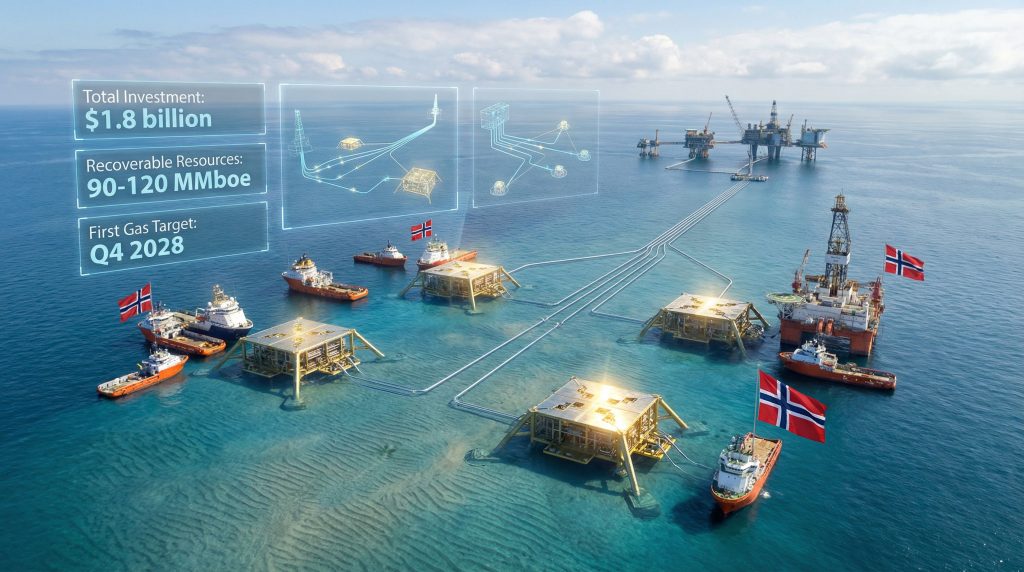
The Previously Produced Fields (PPF) Project encompasses three distinct gas condensate accumulations within the Greater Ekofisk Area: Albuskjell, Vest Ekofisk, and Tommeliten Gamma fields. These formations contain an estimated 90-120 million barrels of oil equivalent (MMboe) in recoverable gas condensate resources, representing a significant hydrocarbon prize approximately 290 kilometres southwest of Stavanger, Norway.
The project operates under a dual licence structure that reflects the complex ownership patterns typical of mature North Sea developments. Licence PL018B/F encompasses both Albuskjell and Vest Ekofisk fields, while Tommeliten Gamma falls under the separate PL044/D licence. This regulatory framework requires coordinated development planning across multiple stakeholder groups while maintaining operational efficiency through unified project management.
ConocoPhillips Skandinavia AS serves as operator for both licences despite holding varying ownership percentages across the licence areas. The company maintains a 35.1% interest in PL018B/F and a 28.3% interest in PL044/D, demonstrating the technical leadership role that often transcends simple ownership mathematics in complex North Sea joint ventures.
Partnership Composition and Strategic Dynamics
The ownership structure reveals the international character of contemporary North Sea development:
Licence PL018B/F Partners:
- Vår Energi AS: 52.3% (majority stakeholder)
- ConocoPhillips: 35.1% (operator)
- Orlen Upstream Norway AS: 7.6%
- Petoro: 5.0% (Norwegian state participation)
Licence PL044/D Partners:
- Orlen Upstream Norway AS: 62.6% (controlling interest)
- ConocoPhillips: 28.3% (operator)
- Vår Energi AS: 9.1%
This partnership composition reflects strategic positioning by major North Sea independents alongside international energy companies seeking Norwegian Continental Shelf exposure. Furthermore, the complex ownership patterns demonstrate how global trade market impact influences energy sector partnerships in mature basins.
Technical Innovation Enabling Economic Recovery
The PPF Project demonstrates how technological advancement can resurrect previously marginal resources. Original field development programmes in the 1990s relied primarily on vertical well technology, which limited contact with productive reservoir intervals and constrained ultimate recovery factors. Contemporary horizontal drilling capabilities enable optimised well placement that maximises reservoir contact while minimising the total well count required for efficient drainage.
Key Technical Parameters:
- Production Wells: 11 total across three fields
- Subsea Templates: 4 new installations
- Well Technology: Horizontal drilling with enhanced placement
- Target Production: Fourth quarter 2028 first gas
The horizontal well design allows operators to intersect multiple productive zones within individual wellbores, significantly improving per-well productivity compared to historical vertical completions. This approach proves particularly effective in gas condensate systems, where maintaining reservoir pressure and optimising phase behaviour requires careful well spacing and production management.
Subsea Infrastructure Architecture and Integration Strategy
The PPF Project employs a centralised tie-back configuration that maximises infrastructure efficiency while minimising capital expenditure. Four subsea templates will support the 11-well development programme across the three field locations, with all production flowing through a shared multiphase pipeline to the existing Ekofisk Complex for processing and export.
This integration strategy eliminates the need for standalone processing facilities, compression systems, or separation equipment at the field locations. The existing Ekofisk Complex provides established processing capacity, utilities, and export infrastructure, allowing the PPF Project to focus capital allocation on subsea production systems rather than duplicative surface facilities. However, declining oil production factors globally emphasise the importance of maximising recovery from existing infrastructure.
Multiphase Pipeline Engineering Considerations
Gas condensate transport through subsea pipelines requires sophisticated flow assurance engineering to manage the complex phase behaviour of hydrocarbon mixtures under varying temperature and pressure conditions. The multiphase design accommodates simultaneous transport of gas, condensate, and produced water through a single pipeline system, reducing installation costs compared to separate gas and liquid export lines.
Critical Flow Assurance Factors:
- Hydrate formation prevention through chemical injection or heating systems
- Slug flow management to prevent operational upsets during production variations
- Pressure drop optimisation across the approximately 290-kilometre pipeline length
- Temperature control to maintain optimal phase behaviour during transport
The subsea template design must accommodate varying production rates and reservoir pressures across the three field locations while maintaining system operability throughout the project lifecycle. Each template serves as a manifold centre, collecting production from multiple wells and providing pressure regulation before entering the shared export system.
Reservoir Management and Production Optimisation
Gas condensate reservoirs present unique technical challenges related to phase behaviour and recovery optimisation. As reservoir pressure declines during production, valuable liquid hydrocarbons can condense within the reservoir rock, becoming difficult to recover through conventional production methods. The ConocoPhillips Greater Ekofisk redevelopment's horizontal well design helps maintain reservoir pressure communication and optimise fluid recovery throughout the production cycle.
Enhanced Recovery Mechanisms:
- Horizontal wells provide increased reservoir contact area
- Optimised well spacing prevents premature pressure depletion
- Advanced completion design enables selective production control
- Real-time monitoring systems optimise production rates and pressure management
The 90-120 MMboe resource range reflects geological uncertainty typical of mature field redevelopment projects. The lower bound represents proven reserves accessible through established well locations, while the upper estimate incorporates potential resource additions from optimised well placement and enhanced recovery techniques.
Regulatory Framework and Development Timeline
The PPF Project operates within Norway's comprehensive offshore regulatory environment, which requires detailed technical and environmental documentation before development approval. The Plan for Development and Operation (PDO) submission represents the critical regulatory milestone that triggers formal government review and approval processes.
Following PDO submission, the project requires final regulatory approvals from multiple Norwegian authorities, including the Norwegian Petroleum Directorate (NPD) for resource management oversight and the Norwegian Environment Agency for environmental compliance verification. This approval process typically requires 6-12 months, depending on project complexity and stakeholder consultation requirements.
Strategic Timeline and Milestone Dependencies
Critical Project Milestones:
- Q1 2026: PDO submission target (estimated)
- Q3 2026: Regulatory approval completion (projected)
- 2027-2028: Subsea installation and commissioning phase
- Q4 2028: First gas production target
The Q4 2028 first gas target provides approximately four years from current development status to initial production, reflecting the complexity of subsea system installation and commissioning in North Sea operating conditions. Weather windows for major subsea installation campaigns typically occur during summer months, requiring careful coordination of equipment delivery and installation vessel availability.
Contract award timing for major equipment packages, including subsea templates, wellhead systems, and pipeline installation, will largely determine adherence to the projected development schedule. For instance, Subsea7 recently secured the EPCI contract for the project, indicating progress towards the development timeline. Long lead times for specialised subsea equipment often represent critical path constraints in complex offshore development programmes.
Economic Drivers and Market Positioning
The PPF Project benefits from favourable market conditions for European gas supply, particularly given ongoing energy security concerns following geopolitical disruptions in regional energy markets. Norwegian gas production plays an increasingly strategic role in European energy independence, supporting premium pricing for North Sea gas condensate production.
Current European gas prices provide robust economic support for mature field redevelopment projects that might have appeared marginal under previous market conditions. The proximity to established pipeline infrastructure connecting Norwegian production to European markets enhances the project's strategic value beyond simple commodity price exposure.
Cost Structure Optimisation Through Infrastructure Reuse
The tie-back development model significantly reduces per-barrel development costs compared to standalone platform developments. By utilising existing Ekofisk Complex processing capacity, the PPF Project avoids major capital expenditures associated with:
- Dedicated processing platform construction and installation
- Standalone power generation and utilities systems
- Independent export pipeline infrastructure
- Separate maintenance and logistics support facilities
This capital efficiency enables economic development of the 90-120 MMboe resource base at lower commodity price breakeven points than would be achievable with greenfield development approaches. The shared infrastructure model also provides operational synergies through coordinated maintenance scheduling and integrated production optimisation.
Technology Cost Reduction Trends
Subsea equipment costs have declined substantially from peak levels experienced during the previous commodity cycle, creating favourable conditions for marginally economic field development. Standardisation of subsea tree designs, template configurations, and installation methodologies has reduced both equipment costs and installation timeframes across the North Sea basin.
The project benefits from established supply chain relationships and proven technology solutions, reducing both technical and commercial risks compared to frontier development projects. Equipment standardisation also facilitates faster installation schedules and more predictable commissioning timelines, particularly when integrated with data‐driven operations approaches.
Risk Assessment and Mitigation Strategies
Offshore development projects face multiple risk categories that require comprehensive management strategies throughout the project lifecycle. The PPF Project's technical approach addresses key risk areas through proven technology selection and conservative design margins.
Technical and Operational Risk Factors
Reservoir Performance Uncertainties:
- Gas condensate recovery factor variations based on reservoir pressure behaviour
- Production rate optimisation across multiple reservoir intervals
- Long-term facility integrity in mature field environments
- Integration complexity with existing Ekofisk Complex operations
Installation and Commissioning Risks:
- North Sea weather window constraints for subsea installation campaigns
- Interface management between new subsea systems and legacy infrastructure
- Potential installation delays affecting first production timing
- Equipment delivery scheduling and vendor performance coordination
The horizontal well technology selection provides operational flexibility to optimise production performance based on actual reservoir behaviour during development drilling. Multiple well locations across four subsea templates allow operators to adjust development intensity based on early production performance and reservoir response.
Financial and Commercial Risk Management
Market price volatility represents a fundamental risk factor for any commodity-dependent development project. The PPF Project's gas condensate production provides some price diversification compared to pure crude oil projects, as gas condensate typically commands premium pricing relative to heavy crude oils in European markets.
The project's tie-back development approach reduces capital intensity compared to standalone platform developments, providing more favourable economics under various commodity price scenarios. Lower absolute capital requirements also reduce financing risks and improve overall project returns sensitivity.
"Investment Disclaimer: This analysis contains forward-looking statements regarding project development timelines, production estimates, and economic projections. Actual results may vary significantly due to technical, commercial, regulatory, and market factors beyond current expectations. Offshore development projects involve substantial technical and financial risks that may impact project economics and development schedules."
The next major ASX story will hit our subscribers first
Strategic Implications for North Sea Operations
The PPF Project represents broader strategic trends in mature North Sea development, where technological innovation and infrastructure optimisation enable continued resource extraction from previously depleted formations. This development model provides a template for similar redevelopment opportunities across the Norwegian Continental Shelf and other mature offshore basins.
ConocoPhillips' operator role across both licence areas demonstrates the company's continued commitment to North Sea operations and technical expertise in complex subsea development programmes. The project enhances the company's Norwegian portfolio while providing additional production volumes to support European market supply objectives.
Portfolio Integration and Synergy Development
The Greater Ekofisk Area represents one of the North Sea's most established production centres, with decades of operational history and proven infrastructure capability. The ConocoPhillips Greater Ekofisk redevelopment extends the productive life of this strategic asset base while providing operational synergies with existing field development programmes in the area.
Integration with ongoing Greater Ekofisk Area operations provides opportunities for shared logistics, maintenance coordination, and production optimisation across multiple field developments. This operational integration enhances overall area economics while reducing per-barrel operating costs through scale efficiencies.
The project's success could catalyse additional redevelopment opportunities within the Greater Ekofisk Area and similar mature field complexes across the Norwegian Continental Shelf. Proven subsea technology applications and demonstrated economic returns from mature field redevelopment may encourage expanded exploration and appraisal programmes in previously overlooked reservoir intervals.
Future Development Opportunities and Technology Evolution
The PPF Project serves as a technology demonstration for advanced subsea development capabilities in mature North Sea environments. Successful implementation of horizontal drilling techniques and multiphase pipeline systems may enable similar redevelopment programmes across other depleted field complexes throughout the Norwegian Continental Shelf.
Continued advancement in subsea processing technology, including subsea separation and compression systems, could further enhance the economics of small-scale field developments by reducing dependence on existing platform infrastructure. These technological developments may unlock additional stranded resource accumulations that currently lack economic development pathways.
Emerging Technology Applications:
- Subsea processing systems for extended tie-back developments
- Digital monitoring and optimisation systems for remote field management
- Enhanced recovery techniques for improved gas condensate production
- Modular subsea development approaches for accelerated project delivery
The successful execution of the PPF Project through its targeted Q4 2028 first production timeline will provide valuable operational data and lessons learned for future North Sea redevelopment programmes. These insights may influence industry best practices for similar projects across mature offshore basins globally.
As European energy markets continue emphasising supply security and domestic production capabilities, projects like the ConocoPhillips Greater Ekofisk redevelopment play increasingly strategic roles in regional energy infrastructure. The project's contribution to Norwegian gas production capacity supports broader European energy independence objectives while generating attractive economic returns for participating companies and the Norwegian sovereign wealth fund through Petoro's ownership participation.
Considering Investment Opportunities in Energy Sector Developments?
Discovery Alert's proprietary Discovery IQ model delivers real-time alerts on significant ASX mineral discoveries, instantly empowering subscribers to identify actionable opportunities ahead of the broader market. Begin your 30-day free trial today and secure your market-leading advantage.