
June 30, 2026
Africa's geological endowment faces increasing global attention as investors and policymakers recognise the continent's potential for economic transformation. Contemporary monetary systems worldwide are experiencing unprecedented strain, with traditional reserve currencies encountering volatility amid heightened geopolitical tensions. Furthermore, the record‑high gold prices observed throughout 2025 have created favourable conditions for Africa's untapped gold reserves to play a central role in reshaping global financial architectures.
Central banks worldwide are reassessing portfolio compositions, seeking alternatives that provide stability independent of dominant fiat currencies. This transformation coincides with a fundamental shift in global economic power, where emerging economies challenge established financial systems through strategic asset accumulation strategies.
Continental Geological Wealth and Strategic Positioning
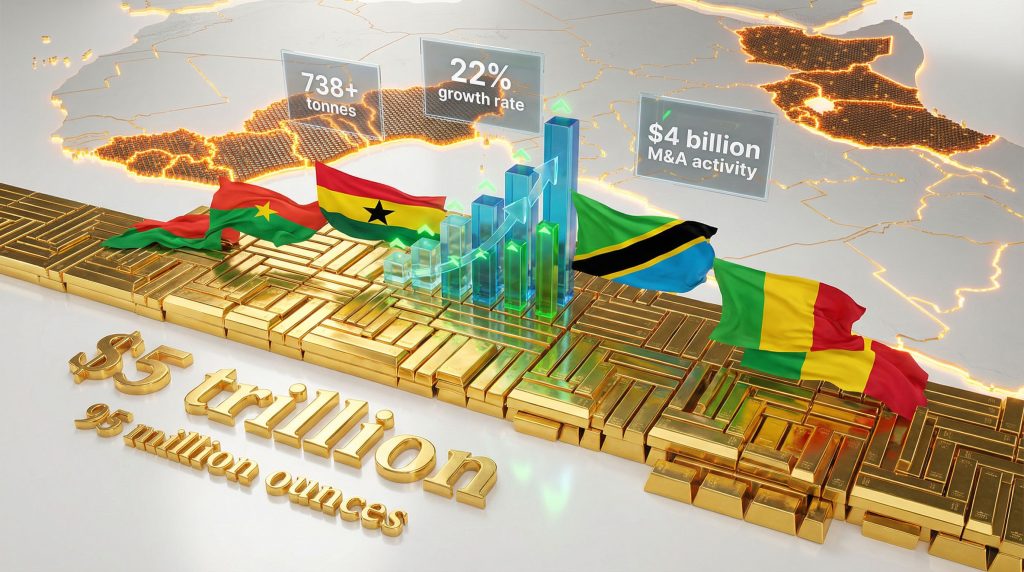
Africa's geological formations contain approximately $5 trillion worth of gold resources at current mine-site valuations, according to analysis by the Africa Finance Corporation. This massive endowment includes more than $1 trillion in untapped reserves that remain undeveloped across multiple geological terrains, representing exceptional potential for economic transformation.
The continent's gold distribution spans diverse geological provinces, from ancient Archaean cratons to mineral-rich sedimentary basins. These formations have concentrated precious metal deposits through billions of years of crustal evolution, creating stratified mineralisation zones that remain largely underexplored.
Table: Africa's Geological Gold Endowment
| Category | Value (USD) | Development Status |
|---|---|---|
| Total Gold Resources | $5 trillion | Various stages |
| Undeveloped Reserves | $1+ trillion | Unexploited |
| Current Production Value | $70 billion annually | Active mining |
| Reserve Integration Potential | 85% untapped | Strategic opportunity |
Despite containing approximately 22% of global landmass, Africa receives only 10% of worldwide exploration spending. This disparity creates opportunities for strategic development initiatives that could fundamentally alter continental economic dynamics whilst supporting broader industrialisation objectives.
The West African Birimian Supergroup geological formation alone has yielded 95 million ounces of discovered gold over the past two decades. This productivity demonstrates the region's exceptional geological endowment and potential for sustained large-scale development that could rival established mining jurisdictions.
When big ASX news breaks, our subscribers know first
Monetary Policy Evolution Through Gold Integration
Central bank gold purchasing strategies have undergone significant transformation since 2021, with emerging market economies leading acquisition patterns. Furthermore, understanding central bank gold strategies has become essential for policymakers seeking monetary independence from traditional reserve systems.
African monetary authorities have increased official holdings from 605 tonnes in 2014 to over 738 tonnes by 2025, representing a 22% growth rate. This accumulation reflects growing institutional recognition of gold's monetary policy applications within developing economy frameworks.
This accumulation trend extends beyond traditional reserve management approaches. Countries implementing comprehensive gold strategies demonstrate enhanced ability to stabilise currencies, strengthen external buffers, and reduce dependence on volatile capital flows.
Central Bank Acquisition Mechanisms:
- Direct Production Purchasing – Domestic mining output acquired at competitive market rates through state-backed programmes
- Artisanal Sector Integration – Small-scale production formalised into traceable supply chains enabling official acquisition
- Strategic Market Operations – Conventional spot market purchases through international bullion markets
- Reserve Composition Rebalancing – Systematic portfolio adjustments favouring precious metals over traditional foreign exchange holdings
Gold's unique characteristics as a reserve asset provide monetary authorities with enhanced policy transmission mechanisms. Unlike conventional foreign exchange reserves, gold offers deep liquidity, transparent pricing, and universal acceptance across different monetary systems.
Countries with established refining capacity demonstrate improved reserve credibility and enhanced monetary policy effectiveness. Over 14 African countries now host formal gold refineries, representing a 75% increase in processing capacity since 2014.
West African Mining Corridor Excellence
The West African gold corridor continues demonstrating exceptional productivity, with current production reaching 11.83 million ounces annually. This output is concentrated across Ghana, Burkina Faso, and Mali, showcasing the region's capacity to sustain large-scale mining whilst supporting local economic development.
Ghana's position as the corridor's leading producer reflects decades of institutional development and regulatory framework evolution. The country's mining sector generates substantial foreign exchange earnings whilst simultaneously supporting artisanal mining formalisation programmes that integrate small-scale production into official supply chains.
Regional Production Dynamics:
- Industrial Mining Operations – Large-scale mechanised extraction dominating formal sector output
- Artisanal Production Integration – Small-scale mining contributing complementary volumes through formalised channels
- Underground Development Potential – Current operations represent only 30% underground mining versus 60% globally
- Exploration Pipeline Strength – Continued discovery success indicating substantial remaining geological upside
Mali maintains significant production capacity despite regional security challenges, demonstrating the resilience of West African mining infrastructure. Burkina Faso has emerged as a major contributor to regional output, with operations supporting both industrial development objectives and government revenue requirements.
The corridor's geological continuity suggests substantial mine-life extension potential at established operations. However, current gold market performance creates favourable economics for marginal deposits previously considered uneconomical, potentially expanding the region's production base.
Exploration investment has declined significantly in some areas, with Ghana experiencing a 73.7% reduction in exploration budgets between 2012-2024. This trend contrasts with $4 billion in merger and acquisition activity across West Africa during 2024, suggesting industry consolidation rather than grassroots exploration expansion.
East African Emerging Development
East Africa positions itself for expanded continental gold production through strategic project development and institutional framework evolution. Tanzania's Lake Victoria Goldfields region maintains central importance to East African mining development, supported by established operations and emerging project pipeline.
The Nyanzaga Gold Mine project represents Tanzania's commitment to mining sector expansion, with production scheduled to commence in 2027. This development occurs alongside continued exploration success, including the Imwelo project's identification of high-grade mineralisation extending to 250-metre depths.
Tanzania's Strategic Development Framework:
- Operating Mine Portfolio – Established production generating current foreign exchange earnings
- Advanced Development Projects – Nyanzaga and similar assets approaching production phase
- Exploration Stage Properties – Early-stage assets with significant upside potential
- Institutional Integration – Bank of Tanzania gold purchasing programme launched in 2023
Guinea's Daina prospect demonstrates East Africa's broader geological potential, with exploration identifying broad mineralised corridors suitable for large-scale development. These discoveries occur within geological formations that extend across multiple countries, suggesting regional development opportunities.
The Bank of Tanzania's gold purchasing programme launched in 2023 represents formal institutional recognition of precious metals' role in macroeconomic stabilisation. This approach enables direct conversion of domestic production into official reserves, supporting currency stability whilst retaining value within domestic economic systems.
Regional exploration activities continue expanding despite global trends toward reduced grassroots spending. In addition, the positive gold price outlook supports continued investment in East African geological formations that demonstrate characteristics similar to established producing regions.
Currency Stabilisation Through Institutional Reform
Ghana's comprehensive gold sector reform demonstrates how institutional framework development can transform monetary outcomes and economic stability. The establishment of the Gold Board (GoldBod) in 2025 created a comprehensive regulatory framework encompassing gold, diamonds, and other precious ores.
The programme's economic impact proved substantial and measurable. Ghana rebuilt official gold reserves after near-depletion in 2022, achieving the largest official stockpile in sub-Saharan Africa. Gross international reserves climbed above $10 billion, whilst the cedi appreciated 41% during 2025.
Ghana's Institutional Reform Components:
- Comprehensive Licensing Framework – GoldBod as sole authorised trading body for precious metals
- Artisanal Sector Formalisation – Integration of small-scale mining into official supply chains
- Smuggling Reduction Initiatives – Enhanced oversight mechanisms improving fiscal capture
- Direct Reserve Accumulation – Domestic production converted to official holdings
This model addresses multiple policy objectives simultaneously: improved fiscal oversight, reduced illicit trade, enhanced worker safety, and increased government revenues. The comprehensive approach creates stable operating environments for both small-scale and industrial mining operations.
Regulatory modernisation also enables enhanced environmental protection through improved monitoring and enforcement capabilities. Countries implementing comprehensive mining sector reforms demonstrate improved ability to attract international investment whilst maintaining sustainable development standards.
The success of Ghana's approach has attracted attention from other African countries considering similar institutional frameworks. The model's emphasis on formalisation rather than criminalisation of artisanal mining creates pathways for inclusive economic development.
Global Reserve Architecture Transformation
International monetary dynamics reflect fundamental shifts in central bank behaviour and reserve composition preferences. Advanced economies maintain majority official gold reserves, yet recent purchasing patterns favour emerging market central banks seeking alternatives to traditional reserve currencies.
Countries aligned with China and Russia have accelerated gold accumulation since late 2021, with intensity increasing after G7 sanctions froze Russian foreign exchange reserves. This trend reflects broader concerns about traditional reserve currency stability and the pursuit of monetary independence.
Geopolitical Purchasing Patterns:
- Emerging Market Leadership – Non-traditional reserve managers driving acquisition volumes
- Sanction Response Strategies – Countries reducing exposure to freezable foreign exchange holdings
- Monetary Independence Objectives – Reducing dependence on established reserve currency systems
- Safe Haven Recognition – Gold's role during periods of heightened global uncertainty
Africa's untapped gold reserves offer strategic advantages for countries with substantial production capacity within these global dynamics. Current gold prices have surged approximately two-thirds over the past year, peaking above $5,000 per ounce, creating favourable conditions for domestic reserve accumulation strategies.
The World Bank notes that renewed political uncertainty and broader global instability have further cemented gold's appeal as a safe-haven asset. This recognition supports elevated price levels whilst creating incentives for central banks to increase gold allocation percentages within reserve portfolios.
African official gold holdings currently account for approximately $70 billion of external reserves, representing about 15% of total foreign exchange holdings. This percentage indicates substantial opportunity for increased gold integration within continental monetary systems.
The next major ASX story will hit our subscribers first
Industrial Development Through Value Chain Integration
Refining capacity expansion across Africa enables greater value retention within domestic economies whilst supporting broader industrialisation objectives. The 75% increase in formal refining capacity since 2014 creates opportunities for downstream manufacturing development and technical skills advancement.
Modern gold processing facilities require sophisticated metallurgical expertise, creating opportunities for technology transfer and human capital development. These investments establish foundations for expanded mineral processing capabilities that support broader industrial diversification strategies.
Value Chain Integration Benefits:
- Technical Skills Development – Advanced metallurgical expertise requirements
- Technology Transfer Opportunities – Modern processing equipment and methodologies
- Employment Creation – Direct and indirect job generation throughout processing chains
- Industrial Ecosystem Support – Foundation for related manufacturing activities
Countries with established refining infrastructure demonstrate enhanced capacity to monetise gold production through direct reserve accumulation rather than export-dependent revenue models. This approach provides greater control over value capture whilst reducing exposure to international market volatility.
Refining infrastructure development also supports regional integration objectives through shared processing capacity and technical expertise exchange. Countries developing complementary capabilities can create regional value chains that enhance collective bargaining power.
The expansion of domestic processing capacity occurs alongside growing recognition of gold's strategic importance within macroeconomic frameworks. Consequently, countries investing in comprehensive value chain development demonstrate improved ability to implement monetary policies that leverage domestic mineral resources.
Risk Assessment and Investment Strategy Framework
Investment risks in African gold development require comprehensive assessment frameworks that account for geological, regulatory, operational, and macroeconomic factors. Government-led geological mapping initiatives aim to reduce exploration risks for private sector companies whilst providing comprehensive datasets supporting evidence-based investment decisions.
Public geological surveys create valuable information that enables more targeted exploration efforts and improved project economics. This approach has proven effective in established mining jurisdictions and offers significant potential for African mineral development through reduced early-stage exploration costs.
Risk Mitigation Strategies:
- Geological Data Enhancement – Comprehensive mapping reducing exploration uncertainty
- Regulatory Framework Modernisation – Stable operating environments improving investment confidence
- Infrastructure Development – Transportation and power systems supporting mining operations
- Political Risk Assessment – Stability indicators and policy continuity evaluation
Exploration risk reduction through public investment creates opportunities for strategic partnerships between government agencies and private sector exploration companies. These collaborations can accelerate discovery timelines whilst sharing costs and technical expertise across institutional boundaries.
Environmental and social governance considerations increasingly influence investment decisions within African mining sectors. Projects demonstrating comprehensive ESG compliance frameworks attract international capital whilst supporting sustainable development objectives and community engagement requirements.
Current underground mining development represents only 30% of African gold operations compared to 60% globally, indicating substantial expansion potential through existing mine deepening and new underground project development.
How Do Gold-Stock Market Dynamics Affect African Mining Investment?
Understanding gold‑stock market dynamics becomes crucial for investors considering African mining opportunities. These relationships influence capital allocation decisions and project valuation methodologies across continental mining sectors.
Future Development Scenarios and Strategic Implications
Successful implementation of comprehensive gold strategies could fundamentally transform African countries' external balance positions and monetary policy independence. Enhanced reserve accumulation through domestic production offers alternatives to traditional foreign exchange earning mechanisms whilst providing greater resilience to external economic shocks.
Emerging projects across multiple countries position the continent for sustained production increases coinciding with favourable gold price environments. These developments create opportunities for marginal deposits previously considered uneconomical whilst supporting expanded exploration activities and infrastructure development.
Production Growth Projections:
- Underground Expansion Potential – Existing operations deepening and new underground projects
- Marginal Deposit Development – High gold prices improving project economics
- Regional Integration Opportunities – Cross-border development and shared infrastructure
- Technology Advancement Applications – Modern extraction and processing methods
Countries achieving successful gold sector development demonstrate improved credit ratings, enhanced investor confidence, and greater resilience to external economic volatility. These benefits extend beyond mining sector revenues to encompass broader economic development objectives and financial system stability.
The macroeconomic impact of comprehensive gold strategies extends to regional economic integration through shared processing capacity, technical expertise exchange, and coordinated development initiatives. Continental approaches to Africa's untapped gold reserves development could create enhanced collective bargaining power whilst supporting broader African Union integration objectives.
Investment flow redirection toward African gold development reflects growing recognition of the continent's geological potential relative to exploration spending intensity. This trend creates opportunities for strategic partnerships and technology transfer initiatives that could accelerate development timelines.
However, successful development requires addressing multiple challenges simultaneously: infrastructure development, regulatory framework modernisation, environmental protection, and community engagement. Countries demonstrating comprehensive approaches to these requirements attract sustained international investment whilst maintaining social licence to operate.
Furthermore, the integration of Africa's untapped gold reserves into global supply chains requires sophisticated logistics and processing capabilities. Countries investing in comprehensive value chain development position themselves advantageously within evolving international trade patterns and monetary system transformations.
This analysis presents potential scenarios based on current geological assessments and economic trends. Actual outcomes depend on numerous factors including regulatory development, market conditions, political stability, and technological advancement. Investment decisions should incorporate comprehensive due diligence and professional consultation.
This content is provided for educational purposes. Readers seeking comprehensive analysis of African mineral resources and economic development strategies may explore additional perspectives from institutions such as the African Development Bank, Brookings Institution, and various geological survey organisations that provide detailed research on continental resource development and monetary policy frameworks.
Looking to Capitalise on Africa's Mining Boom?
Discovery Alert's proprietary Discovery IQ model delivers real-time notifications on significant ASX mineral discoveries, enabling subscribers to identify actionable opportunities before the broader market recognises their potential. With Africa's geological wealth increasingly capturing global attention and record gold prices creating exceptional market conditions, begin your 14-day free trial today to position yourself ahead of emerging opportunities in the mining sector.