
May 17, 2026
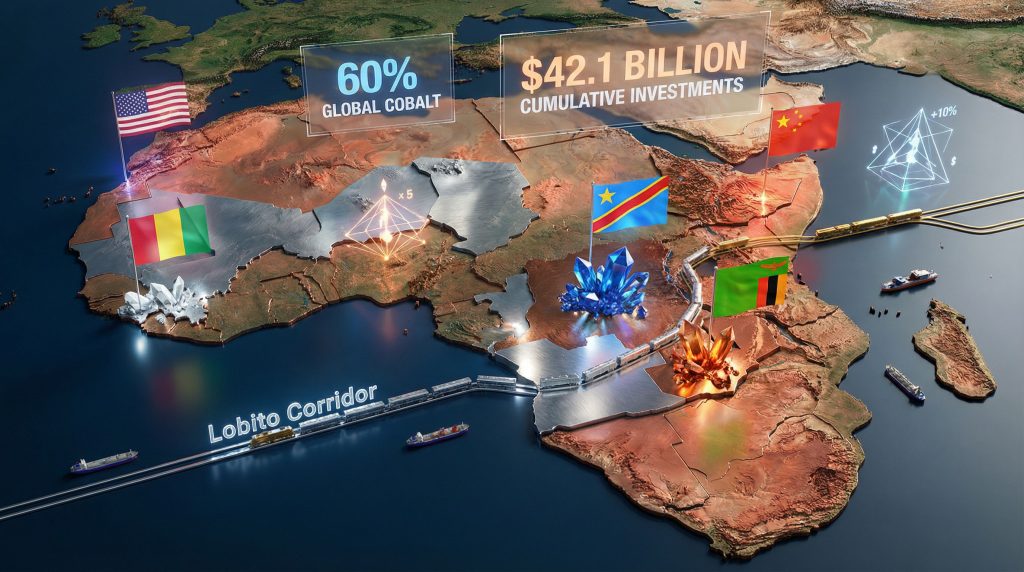
The acceleration of clean energy transitions and technological advancement has fundamentally altered the strategic calculus surrounding mineral resources. Industrial powers worldwide are recognizing that future economic competitiveness depends not merely on access to critical materials, but on control over their extraction, processing, and distribution networks. This realization has triggered unprecedented investment flows into resource-rich regions, with particular intensity focused on African mineral deposits that contain essential elements for battery production, renewable energy systems, and advanced manufacturing. The west and china mineral scramble in africa has become a defining feature of contemporary geopolitical competition.
The convergence of multiple factors has created a unique window of opportunity and risk. Supply chain vulnerabilities exposed during recent global disruptions have demonstrated the strategic importance of diversified sourcing arrangements. Simultaneously, the projected scale of mineral demand growth over the next decade requires massive infrastructure investments that will determine market access patterns for generations. Understanding these dynamics requires examining both the competing investment frameworks being deployed and the strategic responses of resource-holding nations.
The New Geopolitical Chess Game: Understanding Africa's Strategic Position
Continental Resource Concentration Creates Leverage Opportunities
Africa's mineral endowment represents one of the most significant concentrations of battery-critical elements globally. The Democratic Republic of the Congo dominates global cobalt production, while Zambia maintains substantial copper reserves essential for electrical infrastructure. Guinea's massive Simandou iron ore project, now operating at 120 million tons per year capacity, demonstrates how Chinese investment and technical expertise can transform previously stalled Western development efforts into operational mining complexes.
The geographic distribution of these resources across multiple nations creates distinct leverage opportunities for African governments. Unlike historical colonial extraction patterns, current mineral competition involves sophisticated diplomatic and economic positioning by resource-holding countries. Furthermore, the supply chain disruption experienced globally has elevated the strategic importance of diversified mineral sourcing arrangements. African nations now possess considerably greater choice in determining partnerships and investment structures, fundamentally altering the traditional dynamics of resource extraction agreements.
Infrastructure gaps simultaneously represent challenges and opportunities within this competitive landscape. The rehabilitation of colonial-era transport networks has become a central battleground, with competing powers proposing alternative corridor development strategies. These infrastructure investments carry implications far beyond immediate mining operations, potentially reshaping regional economic integration and market access patterns.
Economic Multiplier Effects Drive Strategic Interest
Mining sector investments generate cascading economic impacts through employment, infrastructure development, and secondary industry creation. The integration of extraction operations with transportation networks, processing facilities, and port infrastructure creates comprehensive economic development opportunities that extend well beyond direct mining activities.
The scale of required infrastructure investment reflects the long-term strategic nature of current mineral competition. Projects spanning decades require patient capital and sustained political commitment, characteristics that differentiate various competing investment models. However, the mining industry innovation occurring across technological, operational, and environmental dimensions is creating new opportunities for competitive advantage. These extended timelines create both opportunities for African nations to maximize benefits and risks related to changing global demand patterns or technological substitution.
When big ASX news breaks, our subscribers know first
Why 2025-2030 Represents a Pivotal Window for Resource Control
The current decade marks a critical inflection point in global mineral demand patterns. The expansion of electric vehicle production, renewable energy installations, and grid modernization projects is creating unprecedented requirements for battery minerals, rare earth elements, and industrial metals. Consequently, the west and china mineral scramble in africa has intensified as these demand projections are driving aggressive investment strategies from major industrial powers seeking to secure long-term supply arrangements.
Two major infrastructure projects exemplify the urgency surrounding mineral corridor development. The Lobito Corridor, planned for completion by 2030 with investment up to $6 billion, represents Western strategic positioning to direct copper and cobalt flows westward to Atlantic markets. Simultaneously, the TAZARA railway rehabilitation, backed by $1.4 billion in Chinese investment, aims to route minerals eastward through Indian Ocean ports to Asian markets.
Technology Transition Timelines Force Accelerated Decisions
The convergence of multiple technology transitions is compressing decision-making timelines for both investors and resource-holding nations. Battery chemistry evolution, renewable energy scaling requirements, and grid electrification programs are creating near-term demand pressures that require immediate infrastructure development commitments.
These accelerated timelines favor investment models capable of rapid project execution and integrated supply chain development. The ability to coordinate exploration, extraction, processing, and transportation activities within unified strategic frameworks becomes a critical competitive advantage during periods of compressed development schedules.
Moreover, the critical minerals energy transition requirements are driving unprecedented global investment in mineral exploration and development. Supply chain resilience considerations are also driving diversification strategies among major industrial consumers. The recognition that mineral supply disruptions can cascade through entire industrial sectors has elevated resource security to national security priority levels, intensifying competition for reliable long-term supply arrangements.
What Are the Competing Investment Models Transforming African Mining?
How Does China's Integrated Value Chain Strategy Work?
China's approach to African mineral development emphasizes comprehensive value chain control through vertically integrated investment structures. This model encompasses exploration, extraction, processing, transportation, and end-market distribution within coordinated frameworks that reduce multi-party coordination requirements and execution risks.
The Simandou iron ore project in Guinea illustrates this integrated approach in practice. After Western companies struggled for years to develop viable economic plans, Chinese investment and technical capabilities brought the project to operational status. The mine now produces 120 million tons annually, with ore flows directed almost entirely to Chinese markets through integrated shipping and processing arrangements.
Key characteristics of the Chinese model include:
• Long-term investment horizons spanning 15-25 years
• State-backed financing providing patient capital structures
• Integrated infrastructure development linking mines to processing facilities
• Technology transfer coupled with operational control mechanisms
• Belt and Road Initiative coordination reducing project financing risks
The TAZARA railway rehabilitation demonstrates this integrated approach to infrastructure development. The $1.4 billion investment program aims to achieve 2.4 million tons annual capacity, specifically designed to route minerals through Indian Ocean ports to Asian markets. This project leverages existing Chinese relationships and operational knowledge developed through decades of African engagement.
Chinese companies maintain first-mover advantages in many African markets, having established operational presence and government relationships over extended periods. This historical positioning provides competitive advantages in project development, regulatory navigation, and risk management that newer market entrants must overcome. Additionally, the zijin mining expansion strategy exemplifies how Chinese companies are leveraging these advantages to secure strategic mineral assets across multiple African jurisdictions.
What Alternative Framework Are Western Powers Proposing?
Western investment strategies emphasize private-public partnership structures, offering different risk-sharing mechanisms and governance frameworks compared to state-directed Chinese approaches. These models typically involve private operators coupled with public funding and policy support, creating alternative pathways for African nations seeking mining sector development.
The Lobito Corridor Project represents the flagship Western infrastructure initiative, demonstrating alternative development approaches:
| Project Characteristic | Details |
|---|---|
| Total Investment | Up to $6 billion by 2030 completion |
| Track Length | 1,700 kilometers (1,050 miles) |
| Annual Capacity Target | 4.6 million metric tons per year |
| Geographic Coverage | DRC-Zambia-Angola corridor |
| Primary Minerals | Copper and cobalt |
| Funding Partners | United States and European partnerships |
| Operational Model | Private operators with public funding support |
US strategic positioning has evolved significantly, with officials emphasizing investment capital availability and willingness to provide offtake guarantees and price protections for mining projects. This risk-mitigation approach offers African partners reduced buyer risk compared to traditional market-based arrangements.
The planned US strategic mineral stockpile initiative demonstrates long-term commitment to African resource partnerships. Recent diplomatic engagement involving more than 50 countries indicates systematic approach to building alternative supply chain arrangements that reduce dependence on single-source suppliers.
Western model advantages include:
• Enhanced environmental, social, and governance standards
• Access to international capital markets and financial instruments
• Technology leadership in automation and sustainable mining practices
• Transparency and accountability frameworks appealing to international investors
• Integration with Western renewable energy and technology supply chains
Implementation challenges include:
• Higher cost of capital compared to state-backed financing
• Complex multi-party coordination requirements
• Shorter investment horizons potentially conflicting with mining project timelines
• Political risk sensitivity affecting sustained investment commitment
In addition, the big pivot minerals strategy being deployed by Western powers represents a fundamental shift toward securing diverse supply chains and reducing strategic vulnerabilities.
Which Infrastructure Corridors Will Determine Future Mineral Flows?
The $6 Billion Lobito Corridor: Western Strategy in Action
The Lobito Corridor represents the most significant Western infrastructure investment in African mineral transportation, designed to create alternative routing for copper and cobalt exports from central African mining regions. The project involves upgrading existing colonial-era railway infrastructure and constructing new lines to achieve 4.6 million metric tons annual capacity by 2030.
Strategic elements of the corridor include:
• Route Optimization: 1,700-kilometer network connecting DRC and Zambian mining regions to Angola's Lobito port
• Capacity Expansion: Upgrading existing infrastructure and building new railway segments
• Multi-Country Coordination: Complex diplomatic and technical coordination across three nations
• Atlantic Market Access: Direct routing to European and North American markets
• Private-Public Structure: Western-backed funding with private operational management
The corridor's completion timeline aligns with projected peak demand growth for battery minerals, positioning Western partners to capture increased market share during the critical 2025-2030 development window. This timing advantage could prove decisive in establishing long-term supply relationships with major industrial consumers.
The TAZARA Revival: China's Counter-Corridor
The TAZARA railway rehabilitation represents China's strategic response to Western corridor development, leveraging historical relationships and existing infrastructure to maintain competitive positioning. The $1.4 billion investment program aims to modernize the 1,860-kilometer network linking central African mining regions to Tanzanian ports on the Indian Ocean.
Project specifications include:
• Capacity Target: 2.4 million tons annual throughput following rehabilitation
• Historical Advantage: Building upon existing operational relationships and infrastructure knowledge
• Asian Market Access: Shorter shipping distances to Chinese and broader Asian markets
• Integrated Approach: Coordination with Chinese mining operations and processing facilities
• Established Relationships: Leveraging decades of operational experience and government partnerships
The rehabilitation timeline positions the TAZARA corridor as a competitive alternative to the Lobito project, potentially creating parallel transportation options that increase African leverage in negotiating transportation terms and market access arrangements.
Infrastructure as Geopolitical Leverage
According to industry analysts, the Africa-China critical minerals relationship has evolved into a comprehensive framework encompassing not just resource extraction but entire value chain development. "The power that controls transportation corridors ultimately determines market access patterns for African mineral exports, making railway investments as strategically significant as the mining operations themselves."
Control over transportation infrastructure creates lasting competitive advantages that extend far beyond initial construction costs. The routing decisions embedded in corridor development determine which markets receive priority access to African minerals, influencing global supply chain patterns for decades.
Both corridor projects represent comprehensive strategic positioning rather than simple infrastructure development. The integration of transportation networks with processing facilities, port operations, and end-market distribution creates systemic advantages that are difficult for competitors to replicate once established.
How Are African Nations Maximizing Their Strategic Leverage?
Resource Diplomacy: Playing Competing Powers Against Each Other
African governments have developed sophisticated strategies for maximizing benefits from competing mineral investments. Rather than accepting single-partner arrangements, many nations now employ competitive bidding processes, infrastructure bundling requirements, and dual-sourcing strategies to optimize outcomes.
Policy tools being deployed include:
• Competitive Licensing: Auction-style processes for major mineral deposits
• Infrastructure Bundling: Requirements linking extraction rights to transportation and processing facility development
• Local Content Mandates: Employment and procurement requirements favoring domestic suppliers
• Processing Requirements: Mandating in-country beneficiation before export permits
• Technology Transfer Conditions: Requirements for knowledge sharing and technical capability development
These policy frameworks reflect growing African awareness of mineral asset values and bargaining power in current competitive environments. The ability to set rules and choose partners represents a fundamental shift from historical extraction arrangements dominated by external powers.
Strategic Decision-Making Frameworks
African governments are evaluating competing investment proposals against multiple criteria:
- Short-term Revenue Generation versus long-term industrialisation benefits
- Single-partner Dependency versus competitive leverage maintenance
- Infrastructure Quality Standards versus development speed requirements
- Environmental Protection versus immediate economic needs
- Technology Access versus operational control retention
The sophistication of these evaluation frameworks reflects improved governance capacity and enhanced understanding of global commodity markets. African nations increasingly recognise that mineral resources represent limited assets requiring careful management to maximise long-term national benefits.
Successful leverage strategies include:
• Diversified Partnership Approaches: Engaging multiple investors to maintain competitive pressure
• Regional Coordination: Working with neighbouring countries to optimise infrastructure sharing
• Market Intelligence: Developing internal expertise in commodity pricing and market analysis
• Legal Framework Modernisation: Updating mining codes to reflect current market conditions
What Are the Critical Success Factors for Each Competing Model?
Chinese Model Strengths and Vulnerabilities
Operational Advantages:
The Chinese approach demonstrates proven execution capability in challenging environments where Western companies have struggled to develop viable projects. The integrated value chain model reduces coordination complexity and accelerates project implementation timelines. State backing provides patient capital that can weather commodity price volatility and extended development periods.
The Simandou example illustrates these advantages clearly: where Western companies failed to create workable economic plans over years of effort, Chinese investment and technical capabilities brought the project to full operational status at 120 million tons annual capacity.
Emerging Challenges:
Growing African awareness of contract terms and benefit-sharing arrangements is creating pressure for renegotiation of existing agreements. Environmental and social governance concerns are attracting international scrutiny that complicates project development and operations. Debt sustainability questions in partner countries are generating political backlash that affects project continuity.
The concentration of mineral flows to Chinese markets also creates dependency concerns among African partners seeking to diversify export destinations and maximise pricing power through competitive marketing arrangements.
Western Model Advantages and Implementation Challenges
Competitive Strengths:
Western investment models offer enhanced environmental, social, and governance standards that appeal to international markets and development partners. Technology leadership in automation, sustainable mining practices, and operational efficiency provides competitive advantages in complex operational environments.
Access to international capital markets and financial instruments creates opportunities for African partners to develop independent financing capabilities. Transparency and accountability frameworks support governance improvements that attract broader international investment flows.
The willingness to provide offtake guarantees and price protections represents a unique competitive tool that reduces market risk for African partners while ensuring supply security for Western industrial consumers.
Execution Difficulties:
Higher capital costs compared to state-backed Chinese financing create economic disadvantages that must be offset through superior technology, governance, or market access arrangements. Complex multi-party coordination requirements slow project development and increase execution risks.
Shorter investment horizons typical of private capital markets may conflict with mining project development timelines that require sustained commitment over decades. Political risk sensitivity affects investment decisions and may limit engagement in challenging operational environments.
The next major ASX story will hit our subscribers first
Which Scenarios Could Reshape the Competition by 2030?
Scenario Analysis: Multiple Pathways Forward
Scenario 1: Fragmented Success (40% Probability)
Both Chinese and Western projects proceed successfully in different African regions, creating parallel transportation and processing networks. African nations benefit from infrastructure competition that drives improved terms and enhanced development outcomes. Regional specialisation emerges with some corridors oriented toward Asian markets and others toward Atlantic destinations.
This scenario assumes sustained commodity demand growth, political stability in key mining regions, and successful completion of major infrastructure projects on planned timelines. Competition between investment models drives innovation in financing structures, technology deployment, and benefit-sharing arrangements.
Scenario 2: Chinese Consolidation (25% Probability)
Western projects encounter financing difficulties, political obstacles, or execution challenges that delay or prevent successful implementation. China leverages first-mover advantages, integrated capabilities, and patient capital to expand market share. African partners choose certainty and proven execution capability over competitive bidding processes.
Geopolitical tensions reduce Western investment appetite and limit access to financing for alternative corridor projects. Chinese integration of mining, transportation, and processing activities creates systemic advantages that competitors cannot effectively challenge.
Scenario 3: Western Breakthrough (20% Probability)
US strategic mineral initiatives gain momentum through guaranteed offtake arrangements and enhanced financing mechanisms. European Green Deal requirements create premium markets for responsibly-sourced minerals that justify higher development costs. African governments prioritise environmental, social, and governance standards over short-term economic benefits.
Chinese projects face increased scrutiny and renegotiation pressure as African partners seek improved terms. Technology leadership in sustainable mining practices provides competitive advantages that offset higher capital costs.
Scenario 4: African-Led Consolidation (15% Probability)
Pan-African mining consortiums emerge with sovereign wealth fund backing and regional development bank support. Technology partnerships replace ownership-based investment models, allowing African nations to retain control while accessing international expertise. Regional processing hubs reduce dependence on external refining capacity.
South-South cooperation models gain prominence as African nations coordinate policies and share infrastructure development costs. Resource diplomacy becomes more sophisticated as African governments develop independent technical and financial capabilities.
Strategic Investment Implications for Key Stakeholders
For Mining Companies and Investors
Risk Assessment Frameworks must incorporate:
• Political Stability Metrics: Weighted by resource significance and infrastructure completion timelines
• Infrastructure Viability: Assessment of transportation, processing, and port facility development progress
• Currency and Commodity Hedging: Strategies for managing price volatility and exchange rate risks
• ESG Compliance Costs: Environmental, social, and governance requirements affecting project economics
Investment decisions require careful evaluation of competing corridor development progress, as transportation access determines market reach and pricing power. The timing of infrastructure completion relative to demand growth projections affects project viability and competitive positioning.
Due diligence processes should examine:
• Government policy stability and regulatory framework evolution
• Competing investment proposals and their implementation timelines
• Local content requirements and their impact on operational costs
• Environmental permitting requirements and community relations management
For African Governments
Strategic Decision Matrix considerations:
Short-term Revenue versus Long-term Industrialisation: Balancing immediate fiscal benefits against sustainable economic development objectives requires careful evaluation of processing facility requirements, technology transfer provisions, and employment generation potential.
Single-partner Dependency versus Competitive Leverage: Maintaining competition between investment proposals while ensuring project completion requires sophisticated diplomatic and technical capabilities.
Infrastructure Quality versus Development Speed: Choosing between rapid project implementation and higher technical standards affects long-term operational efficiency and maintenance requirements.
Environmental Standards versus Economic Needs: Balancing international ESG requirements against immediate development priorities requires integrated policy frameworks.
Frequently Asked Questions
How long do major African mining projects typically require from agreement to production?
Chinese-backed projects typically achieve production within 8-12 years from initial agreement, benefiting from integrated planning and state financing arrangements. Western projects generally require 10-15 years due to additional environmental assessments, multi-party financing arrangements, and enhanced community consultation processes.
What percentage of Africa's critical minerals currently flows to different global markets?
Current flow patterns reflect established infrastructure and processing relationships, with significant portions of cobalt concentrate and copper directed toward Chinese refineries due to integrated supply chain arrangements and processing facility capacity. Western markets receive substantial volumes through existing commercial relationships, though exact percentages vary by commodity and production region.
Which African countries possess the strongest negotiating leverage in current mineral competition?
The Democratic Republic of the Congo holds exceptional leverage due to cobalt resource concentration and competing investor interest. Zambia maintains strong positioning through copper reserves and strategic location between competing corridor projects. Zimbabwe's lithium resources and Guinea's iron ore deposits provide significant bargaining power in current competitive environments.
What factors determine successful mineral corridor development?
Multi-country coordination capabilities, sustained political commitment, adequate financing arrangements, and technical execution competency determine infrastructure project success. The integration of transportation networks with mining operations and processing facilities requires comprehensive planning and risk management throughout extended development timelines.
The Path Forward for Africa's Mineral Wealth
The intensifying competition between Western powers and China over Africa's critical minerals creates unprecedented opportunities and significant risks for the continent. Success depends on African nations' ability to maintain strategic autonomy while extracting maximum value from competing investment models and technological capabilities.
The infrastructure investments, processing capabilities, and governance frameworks established during the current competitive period will determine Africa's role in global supply chains for decades. Whether the continent becomes a true beneficiary of this new scramble or remains primarily an extraction zone depends largely on the strategic choices made by African governments during this pivotal window.
Critical success factors include:
• Maintaining competitive pressure between investment models while ensuring project completion
• Developing internal technical and financial capabilities to evaluate competing proposals
• Coordinating regional approaches to infrastructure sharing and market access
• Balancing short-term revenue generation with long-term industrialisation objectives
• Building governance frameworks that attract sustainable international investment
Reuters analysis suggests that Africa could potentially win in this strategic competition if governments successfully leverage competing interests to secure better development outcomes. The next five years will prove decisive in determining whether Africa capitalises on its mineral endowment to drive sustainable economic development or continues historical patterns of resource extraction that primarily benefit external powers. The investment decisions, policy frameworks, and diplomatic strategies implemented now will shape the continent's economic trajectory well into the next decade and beyond.
The west and china mineral scramble in africa represents both challenge and opportunity for African nations. Those governments that successfully navigate competing pressures while maintaining strategic autonomy are positioned to achieve transformational economic development through their mineral wealth.
Looking to Position Yourself in Africa's Critical Mineral Boom?
Discovery Alert's proprietary Discovery IQ model delivers instant notifications on significant ASX mineral discoveries, empowering subscribers to identify actionable opportunities in companies exposed to Africa's strategic resources ahead of the broader market. Start your 14-day free trial today and gain the market-leading edge needed to capitalise on the intensifying competition for Africa's critical minerals.