July 28, 2026
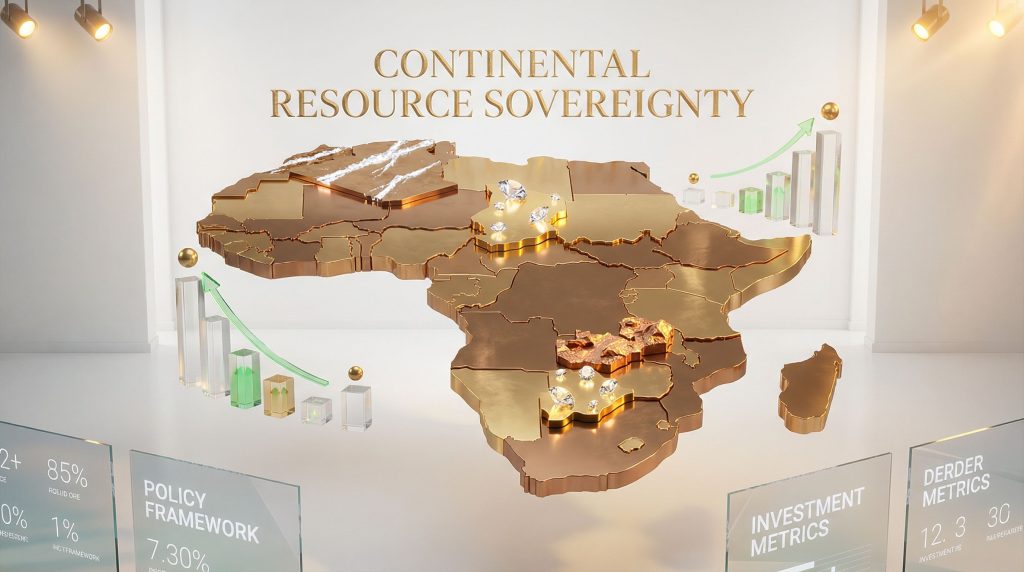
Africa's mineral wealth positions the continent at the centre of global resource competition, with supply chain security concerns elevating the strategic importance of Africa's top 10 mining countries. As governments navigate between attracting international investment and maintaining sovereignty over natural resources, understanding the factors that determine mining investment attractiveness becomes crucial for sustainable economic development. The intersection of geological endowments and policy frameworks creates a complex landscape where institutional quality often outweighs pure mineral potential in investment decisions.
The continent's mineral wealth represents both immense opportunity and significant challenge, as policy frameworks must navigate between openness to international investment and protection of national economic interests. Understanding these dynamics requires examining how investment attractiveness correlates with resource governance, technological adoption, and long-term critical minerals strategy across diverse African jurisdictions.
Economic Forces Behind Mining Investment Allocation Patterns
Mining investment decisions operate through sophisticated risk-return calculations that extend well beyond simple geological assessments. The Fraser Institute's comprehensive methodology demonstrates how capital allocation reflects a complex interplay between resource potential and institutional frameworks, with survey data from over 2,300 global mining executives revealing the quantitative weighting of decision factors.
Investment Attractiveness Measurement Framework
The Fraser Institute's Investment Attractiveness Index employs a dual-component structure that provides insight into capital deployment priorities across Africa's top 10 mining countries. The methodology assigns 60% weighting to geological and mineral potential while allocating 40% to policy perception factors, indicating that even world-class mineral deposits cannot overcome significant regulatory or governance concerns in investment calculations.
This weighting structure reveals why jurisdictions with exceptional geological endowments may underperform in attracting international capital. The Policy Perception Index evaluates multiple governance dimensions including taxation predictability, regulatory certainty, infrastructure quality, and dispute resolution mechanisms. For African nations seeking to optimise their position among the continent's most attractive mining destinations, this framework suggests that policy improvements can substantially enhance investment competitiveness even where geological characteristics are fixed.
Capital Flow Sensitivity to Regulatory Frameworks
Global mining industry trends demonstrate pronounced geographical concentration in North American and Oceanian jurisdictions, with Nevada, Ontario, and Saskatchewan consistently ranking among top-tier destinations. This concentration reflects institutional advantages that African mining jurisdictions must address to compete effectively for international capital.
Key factors driving capital flow sensitivity include:
- Permitting timeline predictability and transparency
- Taxation regime stability over multi-decade project lifecycles
- Infrastructure investment coordination with mining development
- Legal framework reliability for contract enforcement
- Environmental compliance cost certainty
The survey data indicates that mining executives prioritise jurisdictions where operational and regulatory risks can be quantified and managed through established institutional processes, rather than markets requiring constant policy adaptation or where regulatory outcomes remain unpredictable.
Foreign Direct Investment Response to Policy Signals
African mining sectors demonstrate particular sensitivity to policy signalling effects, where government communications and regulatory changes can trigger disproportionate capital flow responses. This sensitivity stems from historical experiences with nationalisation, contract modification, and governance instability that create elevated risk premiums for African mining investments.
The Fraser Institute methodology captures these dynamics through executive perception surveys that translate policy uncertainty into quantifiable investment attractiveness metrics. Countries achieving high Policy Perception Index scores typically demonstrate consistent policy implementation over extended periods, transparent amendment processes for mining legislation, and professional civil service capacity for regulatory administration.
When big ASX news breaks, our subscribers know first
Leading African Mining Jurisdictions and Their Strategic Advantages
Continental resource endowments alone do not determine investment attractiveness, as evidenced by the performance variations among Africa's mineral-rich nations. The most successful African mining jurisdictions have developed integrated approaches that optimise both their geological advantages and policy frameworks to compete effectively in global capital markets.
Southern African Excellence Models
Botswana has emerged as Africa's premier mining investment destination through a combination of institutional stability and infrastructure development aligned with mining sector needs. The country's approach demonstrates how consistent policy implementation over decades can establish investor confidence that transcends individual government transitions.
The nation's mining framework incorporates transparent licensing processes, competitive taxation structures, and coordinated infrastructure investment that supports large-scale mining operations. Botswana's partnership models with international mining companies, while evolving, have provided templates for foreign investor engagement that balance national economic interests with operational efficiency requirements.
Morocco's diversified policy approach reflects strategic positioning across multiple commodity sectors, from traditional phosphate dominance to emerging rare earth element development. The country's Mediterranean location provides logistical advantages for European supply chain integration, while domestic policy frameworks accommodate both large-scale industrial mining and smaller-scale operations.
Zambia's copper belt optimisation strategy demonstrates commodity-specific policy development that leverages existing geological advantages while adapting to evolving market demands, particularly in cobalt extraction for battery technology applications. The country's approach illustrates how established mining regions can maintain competitiveness through targeted policy refinements rather than comprehensive regulatory overhauls.
West African Competitive Dynamics
Regional competition within West Africa provides insight into how policy differentiation affects investment flows between jurisdictions with similar geological characteristics. Côte d'Ivoire's resurgence over Ghana in mining investment attractiveness rankings demonstrates that policy modifications can relatively quickly alter competitive positioning between neighbouring countries.
Both nations possess significant gold resources and established mining sectors, yet divergent policy trajectories have created measurable differences in investor perception. This regional dynamic suggests that African governments can influence their investment attractiveness through strategic policy choices, even where geological endowments are comparable to regional competitors.
Factors contributing to Côte d'Ivoire's improved positioning include:
- Streamlined permitting processes for exploration and development
- Competitive royalty rate structures relative to regional standards
- Infrastructure investment coordination with mining development timelines
- Stable currency arrangements supporting long-term project economics
Resource Endowment and Policy Integration
| Country | Primary Strengths | Key Commodities | Policy Advantages |
|---|---|---|---|
| Botswana | Institutional stability, infrastructure coordination | Diamonds, copper | Transparent licensing, consistent implementation |
| Morocco | Geographic positioning, diversified approach | Phosphates, rare earths | Multi-sector frameworks, European market access |
| Zambia | Commodity specialisation, established infrastructure | Copper, cobalt | Sector-specific optimisation, mining belt development |
These leading jurisdictions demonstrate that sustained investment attractiveness requires ongoing policy refinement and institutional development rather than static regulatory frameworks. Their success reflects adaptive governance that responds to evolving global mining industry requirements while maintaining core institutional strengths.
Governance Deficits as Investment Barriers
Institutional weaknesses create quantifiable barriers to mining investment that extend beyond traditional economic risk factors. African jurisdictions experiencing governance challenges face elevated capital costs and reduced access to international mining finance, as investors apply risk premiums that reflect uncertainty about contract enforcement, regulatory consistency, and operational security.
Policy Uncertainty and Capital Flight
Mali, Burkina Faso, and Guinea exemplify how governance deterioration translates directly into reduced mining investment attractiveness. These countries possess significant mineral endowments yet struggle to attract international capital due to policy uncertainty, security risks, and institutional capacity constraints that create unacceptable risk-return profiles for mining investors.
Policy uncertainty manifests through multiple channels that directly impact mining project economics:
- Regulatory instability: Frequent modifications to mining codes, taxation structures, and licensing requirements
- Contract sanctity concerns: Uncertainty regarding government commitment to existing mining agreements
- Institutional capacity gaps: Limited civil service expertise for consistent policy implementation
- Dispute resolution limitations: Weak legal frameworks for resolving commercial conflicts
Security Risk Integration into Investment Models
Mining operations in conflict-affected or politically unstable regions incur substantial additional costs that reduce project viability even where geological characteristics are favourable. Security risk premiums applied by international investors reflect both direct operational costs and insurance premium increases for projects in high-risk jurisdictions.
Quantifiable security-related cost increases include:
- Armed security personnel and infrastructure protection
- Supply chain disruption contingency planning and inventory buffers
- Personnel risk management protocols and evacuation procedures
- Political risk insurance premiums for project finance arrangements
- Elevated cost of capital reflecting country risk assessments
Governance Quality Correlation with Investment Flows
International governance indices provide measurable indicators that correlate strongly with foreign direct investment flows into African mining sectors. Countries with improving governance scores typically experience increased mining exploration activity and development project commitments, while those with deteriorating institutional metrics face capital withdrawal and reduced new investment.
Mining executives consistently identify governance quality as a primary factor in long-term investment decisions, often weighing institutional stability more heavily than short-term policy incentives when evaluating multi-decade project commitments.
The correlation between governance improvements and investment attraction suggests that African governments can enhance their mining sector competitiveness through institutional development initiatives that may provide higher returns than direct financial incentives to mining companies.
Resource Nationalism and Economic Value Optimisation
African governments increasingly pursue strategies to maximise economic value capture from mineral extraction while maintaining foreign investment attraction. This balance requires sophisticated policy design that addresses domestic development objectives without creating prohibitive barriers to international capital deployment.
Foreign Ownership and Value Capture Tensions
Extensive foreign control of African mining sectors has prompted governments to explore enhanced value capture mechanisms that redirect economic benefits toward domestic populations. However, these initiatives must be calibrated to avoid triggering capital flight or deterring new investment in exploration and development activities.
Primary value capture mechanisms include:
- Enhanced royalty structures: Progressive taxation based on commodity prices or project profitability
- Local content requirements: Mandated domestic employment, procurement, and processing activities
- State equity participation: Government ownership stakes in mining operations
- Export value addition: Requirements for domestic processing before mineral export
Policy Innovation in Resource Governance
African jurisdictions experiment with various approaches to balance resource nationalism objectives with investment attraction requirements. Zimbabwe's indigenisation policies demonstrate how aggressive local ownership mandates can reduce foreign investment, while South Africa's mining charter evolution illustrates iterative policy development attempting to optimise this balance.
The DRC cobalt policy reform provides insight into how strategic mineral importance affects policy development, as global battery technology demand creates leverage for enhanced domestic value capture initiatives.
Revenue Sharing Model Optimisation
| Mechanism | Advantages | Investment Impact | Implementation Challenges |
|---|---|---|---|
| Progressive royalties | Revenue increases with profitability | Moderate deterrent effect | Price volatility complications |
| Local content mandates | Employment and skills development | Higher operational costs | Capacity development requirements |
| State equity participation | Direct revenue sharing | Reduced foreign ownership appeal | Capital contribution obligations |
Successful resource nationalism implementation requires understanding investor decision-making processes and designing policies that achieve domestic objectives without eliminating investment viability. Countries achieving optimal balance typically implement gradual policy transitions with extensive stakeholder consultation and clear implementation timelines.
Critical Mineral Demand and Strategic Positioning
Global energy transition requirements have fundamentally altered mining investment priorities, creating new opportunities for African countries with relevant mineral endowments. Battery metal demands for lithium, cobalt, and rare earth elements now drive exploration and development activities that previously received limited international attention.
Battery Technology Supply Chain Considerations
Cobalt supply concentration in the Democratic Republic of Congo creates strategic leverage for enhanced value capture initiatives, as global battery manufacturers require secure access to high-grade cobalt supplies. This dynamic illustrates how critical mineral designation can alter bargaining power between governments and international mining companies.
Lithium exploration across multiple African jurisdictions reflects growing investor interest in battery metal supply chain diversification. Countries with emerging lithium resources can leverage this interest to attract exploration investment while negotiating favourable development terms for future production.
Furthermore, the mineral exploration importance becomes particularly evident when considering Africa's top 10 mining countries and their positioning for future critical mineral demands.
Geopolitical Competition Effects on Investment
US-China supply chain rivalry increasingly influences mining investment decisions across Africa, as both nations seek to secure access to critical mineral supplies outside competitor control. This competition creates opportunities for African governments to attract investment through strategic partnership arrangements with preferred trading partners.
European Union critical raw materials strategies similarly prioritise supply chain security over pure cost optimisation, potentially providing African countries with enhanced negotiating power for mining development partnerships that emphasise strategic relationship development rather than purely commercial terms.
Technology Transition Investment Patterns
Rare earth element exploration has expanded significantly across African jurisdictions as global technology companies seek supply chain alternatives to current concentration patterns. Botswana's recent rare earth discoveries demonstrate how emerging strategic mineral identification can rapidly enhance investment attractiveness even in already competitive jurisdictions.
Key investment drivers in critical mineral sectors:
- Supply chain security prioritisation over cost minimisation
- Government strategic partnership preferences affecting investment access
- Technology company direct investment in upstream mineral supply
- Enhanced project finance availability for strategically important minerals
Infrastructure Development and Mining Competitiveness
Transportation, energy, and port infrastructure quality directly impacts mining project economics through operational cost structures and export logistics efficiency. African countries with coordinated infrastructure development strategies can substantially improve their mining investment attractiveness even where geological characteristics remain constant.
Transportation Corridor Economics
Lobito Corridor development demonstrates how transportation infrastructure investment can transform mining project viability across multiple countries. The corridor's impact on copper export economics from Zambia and the Democratic Republic of Congo illustrates infrastructure development's role in regional mining competitiveness enhancement.
Rail network modernisation requirements vary significantly across African jurisdictions, with countries achieving coordinated rail and mining development typically outperforming those with inadequate transportation infrastructure. Modern rail capacity enables bulk commodity transport at competitive costs essential for large-scale mining profitability.
Energy Security and Operational Efficiency
Power grid reliability represents a critical factor in mining investment decisions, as industrial mining operations require consistent electricity supply for processing and extraction activities. Countries with unreliable power systems face higher operational costs and reduced project viability even where mineral resources are world-class.
Renewable energy integration opportunities provide African mining jurisdictions with potential competitive advantages, particularly for energy-intensive processing operations. Solar and wind resources across much of Africa enable mining operations to achieve energy cost advantages while meeting environmental sustainability requirements increasingly important to international investors.
Port Capacity and Export Competitiveness
Export infrastructure capacity directly affects mining project economics through transportation costs and logistics efficiency. Countries with inadequate port facilities face competitive disadvantages in global commodity markets, particularly for bulk minerals where transportation costs represent significant portions of delivered prices.
Port modernisation investment coordination with mining development timelines can create synergistic benefits that enhance overall sectoral competitiveness. Countries achieving effective coordination between mining development and port capacity expansion typically demonstrate superior export performance and enhanced investor interest.
The next major ASX story will hit our subscribers first
Investment Predictive Indicators and Risk Assessment
Mining investment flows respond to quantifiable economic and institutional metrics that provide early indicators of changing investment attractiveness. Understanding these predictive relationships enables African governments to implement policy modifications that enhance their competitive positioning before investment pattern shifts become irreversible.
Macroeconomic Stability Metrics
Currency volatility significantly impacts long-term mining project economics, as multi-decade investment commitments require predictable currency arrangements for debt servicing and profit repatriation. Countries with stable currency policies typically attract higher levels of mining investment than those experiencing frequent exchange rate volatility.
Inflation rate stability affects operational cost predictability over mining project lifecycles that may extend 20-30 years. Consistent inflation performance enables more accurate project financial modelling and reduces risk premiums applied to investment returns.
Fiscal policy predictability encompasses taxation stability, government spending patterns, and debt management practices that affect overall investment climate perceptions. Mining investors prioritise jurisdictions with transparent fiscal frameworks and consistent policy implementation over extended periods.
Regulatory Environment Assessment Methods
Investment protection agreements provide legal frameworks for dispute resolution and contract enforcement that directly influence investor confidence. Countries with comprehensive bilateral investment treaties and effective arbitration mechanisms typically demonstrate superior investment attraction performance.
Tax regime competitiveness requires balance between revenue generation for governments and investment returns sufficient to attract international capital. Optimal taxation structures provide predictable, competitive rates that enable project profitability while generating sustainable government revenues.
| Indicator | Measurement | Investment Impact | Policy Leverage |
|---|---|---|---|
| Currency stability | Exchange rate volatility | Project finance costs | Monetary policy coordination |
| Regulatory consistency | Policy modification frequency | Investment risk premiums | Institutional capacity building |
| Infrastructure quality | Transportation/energy metrics | Operational cost structure | Capital investment prioritisation |
Strategic Optimisation for Enhanced Mining Investment
African countries can systematically enhance their mining investment attractiveness through targeted policy initiatives that address specific factors identified in international investment decision-making processes. These improvements require coordinated approaches that optimise multiple policy dimensions simultaneously rather than isolated interventions.
Best Practice Policy Framework Elements
Transparent licensing and permitting processes reduce administrative uncertainty and timeline unpredictability that create barriers to mining investment. Countries implementing clear, time-bound permitting procedures with defined appeal mechanisms typically outperform those with opaque or discretionary licensing systems.
Competitive taxation structures must balance government revenue objectives with investor return requirements over multi-decade project lifecycles. Successful frameworks often incorporate:
- Progressive royalty structures linked to commodity price performance
- Depreciation schedules aligned with mining equipment lifecycles
- Clear transfer pricing guidelines for multinational operations
- Predictable amendment processes for taxation modifications
Local content requirements can enhance domestic economic benefits while maintaining operational efficiency when designed with industry input and realistic implementation timelines. Effective programmes typically include skills development initiatives and supplier capacity building components.
Regional Cooperation Benefits
Cross-border infrastructure development can reduce individual country investment requirements while enhancing regional mining competitiveness. Shared transportation corridors, power generation facilities, and port infrastructure create economies of scale that benefit multiple jurisdictions simultaneously.
Harmonised regulatory standards across regional economic communities can reduce compliance costs for mining companies operating in multiple countries while facilitating technology and expertise transfer between jurisdictions.
Coordinated processing facility development enables smaller countries to access mineral processing capabilities through regional cooperation arrangements, potentially increasing domestic value addition without requiring individual countries to develop full processing capacity independently.
Technology Integration and Productivity Enhancement
Digital mining technology adoption can improve operational efficiency and reduce environmental impacts, making African mining operations more competitive globally. Countries supporting technology integration through appropriate regulatory frameworks and infrastructure investment typically attract higher levels of advanced mining investment.
Automation implementation requires workforce development strategies that enable domestic employment adaptation while improving mining productivity. Successful approaches often combine automation adoption with skills training programmes and economic diversification initiatives.
Innovation ecosystem development through mining technology research partnerships and startup support can create additional economic value beyond traditional mineral extraction, potentially positioning countries as regional mining technology centres.
Future Trends Shaping African Mining Investment
Long-term trends in global mining investment reflect evolving priorities around sustainability, technology adoption, and supply chain security that will fundamentally alter competitive dynamics among African mining jurisdictions. Understanding these trends enables strategic policy positioning for enhanced future investment attraction.
Environmental and Social Governance Integration
ESG compliance requirements increasingly influence mining investment decisions as institutional investors apply environmental and social criteria to capital deployment decisions. African countries developing robust ESG frameworks early can establish competitive advantages as these requirements become more stringent globally.
Environmental compliance cost implications vary significantly based on regulatory framework design and implementation efficiency. Countries with clear, science-based environmental standards and efficient permitting processes typically achieve better environmental outcomes at lower compliance costs than those with unclear or inconsistently applied requirements.
The integration of decarbonisation benefits into mining operations represents a significant opportunity for forward-thinking African jurisdictions to attract environmentally conscious investors while improving operational efficiency.
Social licence to operate requirements emphasise community engagement and benefit-sharing arrangements that go beyond traditional taxation and employment mechanisms. Successful approaches often incorporate community development programmes, local business development initiatives, and transparent revenue sharing mechanisms.
Technological Innovation and Operational Evolution
Digital transformation in mining operations creates opportunities for African countries to attract advanced mining investment through supportive technology policies and infrastructure development. Countries with reliable telecommunications infrastructure and appropriate data governance frameworks can position themselves as preferred destinations for technologically advanced mining operations.
Automation impact assessment requires understanding how technological change affects employment patterns and skills requirements in mining communities. Proactive workforce development strategies can help countries maintain mining sector employment while improving productivity and competitiveness.
Innovation ecosystem development through research partnerships, technology transfer arrangements, and startup support can create additional economic value streams beyond traditional mineral extraction, potentially establishing countries as regional mining technology centres.
What Makes a Successful Mining Jurisdiction?
Looking at Africa's most attractive mining countries, several common characteristics emerge that distinguish successful jurisdictions from underperforming ones. These successful countries typically combine geological advantages with institutional stability, creating predictable operating environments that international investors value.
The most effective mining jurisdictions balance resource sovereignty with investment attraction through carefully calibrated policies that evolve with changing global market conditions. This requires ongoing policy refinement rather than static regulatory frameworks, as market dynamics and investor priorities continue evolving with technological advancement and geopolitical shifts.
Additionally, examining top mineral-producing countries in Africa reveals that production volume alone does not guarantee investment attractiveness. Instead, the combination of resource quality, policy stability, and operational efficiency determines long-term competitiveness in global mining investment markets.
Understanding these complex dynamics enables African nations to optimise their positioning among Africa's top 10 mining countries while balancing resource sovereignty objectives with investment attraction requirements. Success requires sophisticated policy design that addresses multiple stakeholder interests while maintaining long-term competitive advantages in global mining investment markets.
Readers seeking deeper analysis of African mining investment trends may explore additional educational resources through international mining industry publications and economic development research institutes specialising in resource governance and investment policy analysis.
Could Your Investment Strategy Benefit from Real-Time Discovery Intelligence?
Discovery Alert's proprietary Discovery IQ model delivers instant notifications on significant ASX mineral discoveries, transforming complex geological data into actionable investment insights that help position investors ahead of market movements. Explore historic examples of major mineral discoveries that have generated substantial returns, then begin your 14-day free trial to secure your competitive advantage in identifying tomorrow's breakthrough opportunities.