June 20, 2026
Africa's natural gas reserves represent one of the continent's most underutilised energy assets, with technological and logistical challenges creating significant barriers between production fields and end-user markets. The East–West Offshore Gas Gathering System exemplifies how strategic infrastructure development can bridge this gap, particularly in regions where offshore production capabilities far exceed onshore transportation infrastructure. Furthermore, energy security insights highlight the importance of reliable gas transportation networks for regional energy stability.
Advanced Subsea Engineering Solutions for Complex Gas Transportation
Nigeria's approach to offshore gas transportation represents a fundamental shift from traditional onshore pipeline networks toward sophisticated subsea systems designed for maximum operational reliability. The engineering specifications for large-scale offshore gas gathering systems require careful consideration of multiple technical factors that differentiate them from conventional land-based infrastructure.
Dual-Pipeline Architecture and Redundancy Systems
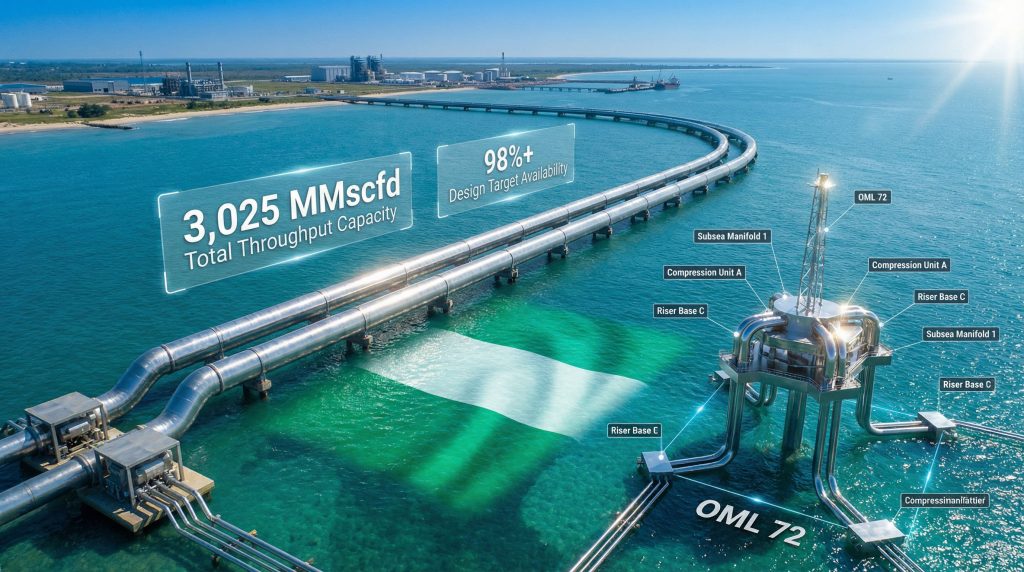
The East–West Offshore Gas Gathering System incorporates a revolutionary dual-pipeline design featuring 38-inch diameter steel pipes arranged in parallel configurations. Each pipeline extends approximately 550 kilometres, creating a total network span of roughly 1,100 kilometres from Nigeria's Rivers State to Lagos industrial zones.
This redundant architecture ensures continuous gas flow even during maintenance operations or unexpected disruptions. The parallel system design allows operators to maintain supply reliability while performing scheduled maintenance on individual pipeline sections, addressing one of the most significant challenges facing single-pipeline systems across West Africa.
Key technical specifications include:
• Pipe diameter: 38 inches for optimal flow capacity
• Individual pipeline length: ~550 kilometres each
• Total system capacity: Designed for industrial-scale throughput
• Operational redundancy: Independent operation capability
• Material sourcing: Chinese-manufactured steel pipes with specialised coating
Subsea Installation and Pressure Management Technologies
The offshore installation methodology for the East–West Offshore Gas Gathering System requires specialised pipelaying vessels capable of operating in varying water depths along Nigeria's continental shelf. The system incorporates advanced pressure management protocols to ensure consistent gas delivery across the entire network.
Engineering challenges addressed include:
• Corrosion resistance: Marine-grade coating systems for saltwater environments
• Hydrate prevention: Chemical injection systems to prevent gas hydrate formation
• Seabed stability: Concrete weight coating and strategic trenching in shallow areas
• Thermal management: Insulation systems to maintain optimal gas temperatures
The subsea compression stations integrated throughout the network provide pressure boosting capabilities, ensuring adequate flow rates to multiple offtake points serving different industrial applications.
When big ASX news breaks, our subscribers know first
Addressing Critical Infrastructure Bottlenecks in Nigeria's Gas Value Chain
Nigeria's existing gas transportation infrastructure has historically struggled with reliability issues that limit industrial utilisation of the country's substantial natural gas reserves. The shift toward offshore pipeline systems represents a strategic response to these persistent challenges, particularly as energy transition challenges demonstrate the need for robust energy infrastructure.
Comparative Infrastructure Reliability Analysis
| System Type | Typical Availability | Primary Risk Factors | Maintenance Requirements |
|---|---|---|---|
| Onshore Networks | 70-80% | Security, vandalism, right-of-way | Continuous security presence |
| Offshore Systems | 95%+ | Weather, corrosion | Scheduled vessel operations |
| EWOGGS Design | 98%+ target | Minimal external threats | Predictable maintenance windows |
The offshore approach eliminates many risk factors that affect land-based infrastructure, including vandalism, theft, and right-of-way disputes that have plagued existing Nigerian gas pipelines. Industry analysis indicates that offshore systems typically achieve availability rates exceeding 95%, compared to 70-80% for comparable onshore networks.
Open-Access Framework and Multi-Operator Integration
The East–West Offshore Gas Gathering System operates under an innovative open-access model that allows multiple gas producers to connect at designated points and pay transportation fees based on volume throughput. This contrasts with traditional single-operator controlled systems that limit access and flexibility.
Key advantages of the open-access approach:
• Supply diversification: Multiple Niger Delta fields can contribute to system throughput
• Economic efficiency: Shared infrastructure costs across multiple operators
• Market competition: Transparent pricing mechanisms for transportation services
• Operational flexibility: Ability to accommodate varying production profiles
Major international oil companies including Shell, Chevron, and ExxonMobil have expressed interest in utilising the system to transport gas from their Niger Delta operations, indicating strong industry confidence in the project's commercial viability.
Industrial Applications and Downstream Processing Capabilities
The East–West Offshore Gas Gathering System enables a comprehensive range of industrial applications that leverage Nigeria's abundant natural gas resources for both domestic utilisation and export markets. Consequently, these applications align with broader industry evolution trends observed across the global energy sector.
Primary Industrial End-Uses and Processing Requirements
Liquefied Natural Gas (LNG) Production:
The system supports large-scale LNG export facilities by providing reliable feedstock for liquefaction plants. LNG production requires consistent gas composition and flow rates, making the redundant pipeline design particularly valuable for maintaining production schedules.
Petrochemical Manufacturing:
Natural gas serves as both feedstock and fuel for petrochemical processes, including polymer production, synthetic rubber manufacturing, and chemical intermediates. The system's capacity enables industrial-scale petrochemical complexes that require substantial and reliable gas supplies.
Fertiliser Production:
Ammonia and urea synthesis for fertiliser manufacturing represents one of the most gas-intensive industrial processes. The system connects directly to major fertiliser production facilities, including operations at the Lekki industrial complex.
Power Generation:
Gas-fired power plants benefit from the system's reliability improvements, enabling more consistent electricity generation for industrial users and the national grid.
Integration with Nigeria's Industrial Development Strategy
The pipeline system supports Nigeria's broader industrialisation objectives by providing the energy infrastructure foundation necessary for manufacturing sector expansion. The reliable gas supply enables industries that were previously constrained by energy availability to scale operations and improve competitiveness.
Manufacturing sectors enabled:
• Steel production: Gas-powered furnaces for steel manufacturing
• Aluminium smelting: Energy-intensive aluminium processing operations
• Cement manufacturing: Kiln operations requiring consistent fuel supply
• Food processing: Industrial-scale food production and preservation
• Textile manufacturing: Steam generation and process heating applications
Strategic Infrastructure Development at Olokola Free Trade Zone
The Olokola Free Trade Zone represents a critical component of the integrated industrial development strategy supported by the East–West Offshore Gas Gathering System. Located between Ogun and Ondo States, this coastal industrial area was specifically designated during the Obasanjo administration to host large-scale export-oriented manufacturing.
Deep-Sea Port Development and Export Capabilities
The planned deep-sea port at Olokola is designed to handle the full range of gas-derived products, from LNG carriers to bulk petrochemical shipments. The port's strategic location approximately 100 kilometres from existing industrial complexes at Lekki provides logistical synergies while offering independent export access.
Port specifications and capabilities:
• Water depth: Designed for large LNG carriers and bulk cargo vessels
• Cargo handling: Specialised terminals for petrochemicals, fertilisers, and LNG
• Storage capacity: Tank farms for liquid and gas products
• Rail connectivity: Potential rail links to inland industrial centres
• Pipeline integration: Direct connection to the offshore gas gathering system
Industrial Clustering and Manufacturing Integration
The Olokola development incorporates industrial clustering principles that co-locate related manufacturing processes to achieve operational efficiencies and reduce transportation costs. The gas pipeline system provides the energy foundation for this integrated approach.
Planned industrial facilities:
• Steel manufacturing complex: Integrated steel production using gas-fired furnaces
• Aluminium processing: Smelting and rolling operations
• Petrochemical plants: Polymer and chemical intermediate production
• Fertiliser manufacturing: Ammonia and urea synthesis facilities
• Power generation: Combined heat and power systems for industrial users
The engineering design work and environmental impact assessments for Olokola have been completed, indicating the project has progressed beyond conceptual planning into detailed implementation phases.
Technical Challenges and Engineering Solutions in Offshore Gas Systems
Subsea gas pipeline systems face unique technical challenges that require specialised engineering solutions and advanced materials technology. The East–West Offshore Gas Gathering System incorporates proven technologies adapted for Nigeria's specific marine environment.
Environmental and Operational Risk Management
Corrosion Prevention Systems:
The marine environment presents significant corrosion challenges that require comprehensive protection strategies. The system incorporates multi-layer coating systems combined with impressed current cathodic protection to ensure long-term pipeline integrity.
Gas Hydrate Management:
Natural gas hydrates can form under specific temperature and pressure conditions, potentially blocking pipeline flow. The system includes chemical injection points for methanol or other hydrate inhibitors, along with thermal management systems to maintain optimal pipeline temperatures.
Seabed Stability and Protection:
Pipeline sections in shallow water areas require protection from fishing activities, anchoring, and environmental forces. The system design incorporates concrete weight coating where necessary and strategic burial in areas with appropriate seabed conditions.
Construction Progress and Implementation Timeline
The project has moved beyond planning phases into active construction, with Chinese-manufactured pipeline materials already arriving at Nigerian ports. This indicates significant progress in procurement and logistics coordination for the massive infrastructure undertaking.
Construction phases and current status:
- Material procurement: Chinese pipe manufacturing completed, shipments arriving
- Route surveying: Seabed surveys and environmental assessments ongoing
- Installation planning: Specialised pipelaying vessel contracting and logistics
- Regulatory approvals: Final government approvals still pending for full construction
The use of Chinese manufacturing for pipeline materials reflects cost optimisation strategies while maintaining international quality standards for subsea applications. Moreover, the construction timeline demonstrates how major energy infrastructure projects require careful coordination of multiple technical and logistical elements.
Economic Impact and Nigeria's Gas Monetisation Strategy
The East–West Offshore Gas Gathering System represents a fundamental shift in Nigeria's approach to natural gas monetisation, moving from ad-hoc, single-operator systems toward integrated, multi-user infrastructure that maximises economic value from the country's substantial gas reserves. In addition, this development occurs alongside broader market dynamics affecting natural gas price forecast trends globally.
Revenue Generation and Economic Multiplier Effects
Transportation Revenue Model:
The open-access framework creates a sustainable revenue stream through volume-based transportation fees paid by gas producers utilising the system. This model provides predictable cash flows while encouraging maximum utilisation of pipeline capacity.
Industrial Development Catalyst:
Reliable gas infrastructure enables manufacturing industries that were previously constrained by energy availability. The system's capacity and reliability support industrial expansion that generates employment, tax revenue, and export earnings.
Export Revenue Diversification:
By enabling LNG exports and gas-derived products (petrochemicals, fertilisers), the system reduces Nigeria's dependence on crude oil exports and creates more stable revenue streams less vulnerable to oil price volatility.
Strategic Positioning in West African Energy Markets
The system positions Nigeria as a potential gas hub for the broader West African region, with the technical capability to handle increased production from deepwater fields and the infrastructure to reach international markets efficiently.
Competitive advantages created:
• Reliability improvements: 98%+ availability target versus 70-80% for existing infrastructure
• Capacity scalability: Ability to accommodate increased deepwater gas production
• Export optimisation: Direct access to deep-sea port facilities for LNG carriers
• Regional integration: Technical foundation for potential cross-border gas trade
The project demonstrates how private capital deployment can address critical infrastructure gaps that constrain economic development across Africa. Furthermore, the West African Gas Pipeline provides additional regional context for cross-border gas transportation initiatives in the region.
The next major ASX story will hit our subscribers first
Long-Term Energy Security and Infrastructure Resilience
Nigeria's energy security strategy increasingly emphasises infrastructure resilience and supply chain diversification, with the East–West Offshore Gas Gathering System serving as a cornerstone of this approach. However, global energy markets continue to influence regional strategies, as seen in recent oil price rally impact analyses.
Supply Chain Diversification and Domestic Energy Access
The system enhances domestic gas availability for power generation, industrial applications, and residential use by providing multiple connection points for Niger Delta gas producers. This diversification reduces dependence on single infrastructure assets that have historically created bottlenecks.
Energy security benefits:
• Domestic supply reliability: Improved access for local industries and power plants
• Strategic reserve capability: Potential for gas storage and supply buffering
• Infrastructure redundancy: Reduced vulnerability to single-point failures
• Economic resilience: More stable energy costs for industrial users
Foundation for Energy Transition and Future Development
While natural gas serves as a bridge fuel in Nigeria's energy transition, the pipeline infrastructure provides a platform for future energy developments including renewable energy integration and hydrogen production.
Future development potential:
• Hydrogen production: Infrastructure adaptable for blue hydrogen from gas
• Carbon management: Potential CO2 transport for carbon capture and storage
• Renewable integration: Gas backup for intermittent renewable energy sources
• Regional connectivity: Foundation for West African gas trading networks
Investment Timeline and Development Milestones
Near-term objectives (2026-2028):
• Pipeline installation completion and system commissioning
• Initial gas flow commencement to anchor industrial users
• Olokola port construction initiation and infrastructure development
• Regulatory framework finalisation for open-access operations
Medium-term development (2028-2032):
• Full system capacity utilisation across all connection points
• Industrial complex operational phase at Olokola Free Trade Zone
• Export facility completion and international market access
• Regional gas hub establishment and cross-border trade initiation
Implications for African Infrastructure Development
The East–West Offshore Gas Gathering System exemplifies how strategic private investment can address critical infrastructure gaps that constrain economic development across Africa. The project's integrated approach combining transportation, processing, and export infrastructure provides a model for similar developments across the continent.
The system's open-access design encourages competition and efficiency while the offshore routing approach reduces many risk factors that affect land-based infrastructure. By connecting Nigeria's substantial gas resources to both domestic industrial users and international export markets, the project demonstrates how energy infrastructure can serve as a catalyst for broader economic transformation.
Industry analysts suggest that large-scale private infrastructure investments of this type could play a crucial role in helping African nations monetise their natural resource endowments more effectively. The comprehensive approach extending from resource extraction through processing to final export creates value chains that generate employment, technology transfer, and economic diversification benefits.
Moreover, according to Business Day analysis, Nigeria's potential transformation from an oil-dependent economy to a gas giant largely depends on successful implementation of major infrastructure projects like this offshore gathering system.
Disclaimer: This analysis is based on publicly available information and industry reports. Infrastructure development projects involve significant technical, financial, and regulatory risks that may affect timelines, costs, and outcomes. Readers should consult official project documentation and qualified advisors before making investment or business decisions related to this infrastructure development.
Considering opportunities in African energy infrastructure investments?
Discovery Alert's proprietary Discovery IQ model delivers real-time alerts on significant mineral discoveries across global markets, including critical minerals essential for energy infrastructure development. Explore how historic discoveries have generated substantial returns by visiting Discovery Alert's dedicated discoveries page, then begin your 14-day free trial today to position yourself ahead of the market with actionable insights powered by advanced AI technology.