May 19, 2026
Africa's petroleum supply challenges represent more than temporary market volatility – they signal fundamental structural transformation requiring immediate strategic intervention. Continental refined petroleum requirements will expand dramatically over the next two decades, with Africa's looming fuel shortfall projected to reach critical levels by 2040. Furthermore, geopolitical tensions affecting global supply chains intensify vulnerability patterns across import-dependent economies, whilst OPEC market influence continues shaping continental energy security dynamics.
Financial markets increasingly price geopolitical risk premiums into energy commodity contracts, reflecting heightened awareness of supply chain vulnerabilities. Traditional energy security frameworks prove inadequate when confronting synchronized global tensions affecting critical maritime chokepoints. Investment capital allocation patterns suggest institutional recognition that energy independence represents both economic imperative and strategic necessity.
The Mathematics of Continental Energy Deficit
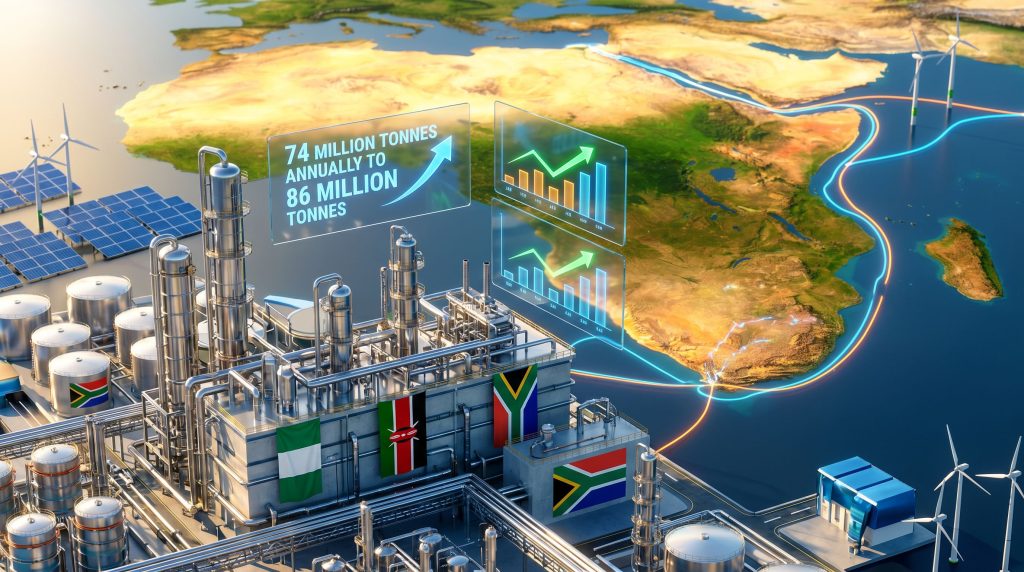
Africa's looming fuel shortfall represents more than temporary market imbalance – it signals fundamental structural transformation requiring comprehensive strategic response. According to recent Africa Finance Corporation analysis, continental refined petroleum requirements will expand from current baseline consumption of 74 million tonnes annually to projected demand of 86 million tonnes by 2040, creating a net deficit of 12 million tonnes over the forecast period.
This 16.2% aggregate growth trajectory occurs against backdrop of constrained domestic refining capacity expansion. Current import dependency exceeds 70% of total continental fuel consumption, with approximately $230 billion in annual essential goods imports including refined petroleum products, creating systematic foreign exchange pressure across multiple economies. The mathematical progression suggests widening supply gaps absent significant infrastructure investment acceleration.
Regional demand analysis reveals uneven distribution patterns with concentrated vulnerability zones. West African markets face projected shortfalls approaching 900,000 barrels per day by 2040, while East African economies confront potential gaps of 750,000 barrels daily. Southern Africa's projected deficit of 380,000 barrels per day appears more manageable, though North Africa's relatively modest 200,000 barrel shortfall masks underlying consumption growth patterns.
Supply-Demand Imbalance by Region (2040 Projections)
| Geographic Zone | Current Refining Capacity | Projected Demand | Daily Deficit |
|---|---|---|---|
| West Africa | 1.8 million bpd | 2.7 million bpd | 900,000 bpd |
| East Africa | 450,000 bpd | 1.2 million bpd | 750,000 bpd |
| Southern Africa | 720,000 bpd | 1.1 million bpd | 380,000 bpd |
| North Africa | 2.1 million bpd | 2.3 million bpd | 200,000 bpd |
When big ASX news breaks, our subscribers know first
Industrial Sector Exposure to Energy Supply Disruptions
Manufacturing operations across multiple sectors demonstrate acute sensitivity to fuel supply reliability and pricing stability. Transportation networks handling cross-border trade depend extensively on diesel fuel availability, with supply interruptions creating cascading effects throughout regional commerce systems. Agricultural distribution chains require consistent fuel access for harvest transportation, cold storage operations, and processing facility functionality.
Mining sector operations, particularly those located in remote areas, maintain strategic fuel reserves but face escalating costs when global supply chains experience disruption. Urban public transportation systems operating on imported petroleum products become vulnerable to price shocks that affect affordability and accessibility for millions of commuters.
Critical Vulnerability Factors:
• Transportation Infrastructure: Cross-border logistics networks handling 60% of intra-African trade
• Agricultural Processing: Food distribution systems serving urban populations exceeding 500 million
• Mining Operations: Extraction facilities located beyond grid electricity access
• Manufacturing Base: Energy-intensive industries including cement, textiles, and chemical production
Economic multiplier effects from energy supply disruptions extend beyond immediate operational impacts. Employment generation potential per major refinery project ranges between 50,000 and 100,000 positions, including direct operational roles and indirect supply chain employment. Value-added manufacturing capabilities depend on reliable energy inputs, with petrochemical derivative industries requiring consistent feedstock availability.
Construction materials production, particularly cement manufacturing, requires substantial energy inputs that become cost-prohibitive during supply disruptions. Food processing operations serving growing urban populations face operational constraints when fuel costs spike unpredictably. Textile manufacturing for both domestic consumption and export markets depends on energy-intensive production processes vulnerable to supply chain interruptions.
Refining Infrastructure Development Constraints
Continental refining capacity expansion faces multiple systematic barriers beyond simple capital availability. Technical expertise requirements for modern refinery operations demand specialised engineering knowledge and operational experience that remains concentrated in limited geographic centres. Regulatory frameworks governing petroleum sector development vary significantly across national boundaries, creating compliance complexity for cross-border investment projects.
Infrastructure Investment Requirements:
• Capital Intensity: Major refinery projects requiring $10-15 billion initial investment
• Technical Workforce: Specialised engineering and operational expertise limitations
• Regulatory Harmonisation: Inconsistent policy frameworks across regional markets
• Distribution Networks: Market access systems favouring established import channels
The Dangote refinery in Nigeria serves as operational benchmark for continental capacity potential. This 650,000 barrels-per-day facility demonstrates feasibility of large-scale domestic refining operations while highlighting capital and technical requirements for comparable projects. Aliko Dangote's expansion commitments, conditional on governmental support frameworks, suggest private sector willingness to invest given appropriate policy environments.
Market access structures present additional challenges as existing distribution networks favour import-based supply chains optimised for port-to-retail delivery systems. Domestic refineries must develop parallel distribution infrastructure competing against established import channels with decades of operational refinement. Financial markets price these competitive disadvantages into project valuations, increasing capital costs for domestic refining investments.
Geopolitical Supply Chain Risk Amplification
Recent Middle Eastern conflicts have demonstrated Africa's systematic exposure to global energy supply route disruptions. The Strait of Hormuz, through which approximately 20% of global petroleum transits, directly affects pricing mechanisms for roughly 40% of African fuel imports. Supply interruptions at this critical chokepoint create immediate price volatility across continental markets regardless of alternative supply source availability.
Suez Canal disruptions force alternative routing around the Cape of Good Hope, extending delivery schedules by 15-20 days whilst increasing transportation costs by 25-30%. These delays compound inventory management challenges for importers operating with optimised supply chain timing. Insurance premiums for vessels transiting Red Sea shipping lanes have increased substantially due to regional security concerns, directly affecting landed fuel costs across East African markets.
Maritime Chokepoint Dependencies:
• Strait of Hormuz Control: 20% of global petroleum transit affecting 40% of African imports
• Suez Canal Alternative: Cape route adding 15-20 days and 25-30% cost increase
• Red Sea Security: Insurance premium escalation affecting East African deliveries
• Port Capacity Limitations: Concentrated discharge facilities creating bottleneck vulnerabilities
The interconnected nature of global petroleum markets means that regional conflicts affecting any major supply route create price transmission effects across all importing regions. However, oil price movements demonstrate how African economies experience these shocks through currency pressure as petroleum imports consume increasing shares of foreign exchange reserves. Consequently, central banks face policy dilemmas balancing currency stability against domestic fuel price inflation during global supply disruptions.
Investment Models for Accelerated Domestic Development
Public-private partnership frameworks offer potential acceleration mechanisms for refining capacity expansion through risk-sharing arrangements. Government land provision reduces initial capital requirements whilst international technology partnerships ensure operational efficiency standards. Development finance institution backing provides long-term capital at favourable rates compared to commercial market pricing.
Off-take agreements guarantee revenue streams for investors whilst providing supply security for domestic consumers. These contractual arrangements reduce investment risk by ensuring minimum capacity utilisation regardless of competitive market dynamics. Regional integration strategies through shared refinery ownership enable smaller economies to participate in large-scale infrastructure projects beyond individual national capacity.
Partnership Structure Components:
• Government Land Provision: Reduced capital requirements through public asset contribution
• Technology Transfer: International expertise ensuring operational efficiency
• Development Finance: Long-term capital at below-market rates
• Revenue Guarantees: Off-take agreements providing investment security
Cross-border cooperation through pipeline infrastructure connecting refineries to broader distribution networks creates economies of scale justifying larger initial investments. Harmonised regulations streamlining cross-border fuel trade eliminate administrative barriers that increase operational costs. Joint procurement leveraging collective bargaining power for crude oil purchases improves input cost competitiveness against international refined product imports.
Strategic Location Analysis for Expansion
Nigeria's existing crude oil production infrastructure provides foundation for expanded refining capacity development. The established technical workforce base and government policy support for domestic processing create favourable investment conditions. Regional market access through ECOWAS framework offers distribution opportunities extending beyond domestic consumption requirements.
Kenya's strategic Indian Ocean access positions potential East African refining hub serving regional demand growth. Stable regulatory environment and existing port infrastructure reduce operational complexity compared to landlocked alternatives. Growing domestic and regional demand justify capacity investments whilst government development priorities align with private sector expansion objectives.
South Africa's advanced manufacturing base and existing petrochemical infrastructure enable integrated development approaches. Financial market sophistication provides domestic capital access reducing dependency on international financing. Regional economic leadership creates political support for cross-border infrastructure integration serving continental markets.
Location Selection Criteria:
• Existing Infrastructure: Transportation and utility systems reducing development costs
• Technical Workforce: Available expertise minimising operational startup challenges
• Market Access: Regional distribution capabilities extending revenue opportunities
• Regulatory Stability: Predictable policy frameworks supporting long-term investment
The next major ASX story will hit our subscribers first
Value Chain Localisation Economic Benefits
Domestic refining capacity creates economic multiplier effects extending beyond immediate petroleum sector development. Employment generation encompasses direct operational positions, construction phase workforce requirements, and indirect supply chain job creation. Technology transfer associated with modern refinery operations builds local industrial capabilities applicable to broader manufacturing development.
Foreign exchange savings from reduced import dependency strengthen currency stability whilst providing fiscal space for alternative development priorities. Price stability resulting from domestic production capacity insulates economies from global market volatility, improving macroeconomic planning predictability.
Economic Impact Dimensions:
• Direct Employment: 50,000-100,000 positions per major refinery facility
• Technology Advancement: Industrial capabilities supporting broader manufacturing
• Currency Stabilisation: Reduced import dependency strengthening exchange rates
• Price Predictability: Domestic production reducing global market exposure
Downstream petrochemical industry development becomes feasible with reliable domestic refining capacity. Plastics and packaging production for growing consumer markets creates additional employment whilst reducing import requirements. Fertiliser manufacturing supporting agricultural productivity improvement generates rural economic development opportunities.
Pharmaceutical intermediate production capabilities emerge from petrochemical industry expansion, reducing healthcare sector import dependency. Synthetic materials for construction industry development support infrastructure expansion whilst creating additional industrial employment opportunities.
Alternative Energy Integration Strategy
Renewable energy capacity expansion provides complementary strategy addressing long-term energy security whilst managing immediate petroleum requirements. Solar potential across the continent exceeds 200 gigawatts with particularly favourable conditions in North and West African regions. Wind power development opportunities concentrate in North and East African areas with consistent atmospheric patterns.
Hydroelectric resource optimisation remains significantly underdeveloped, particularly in Central African regions with substantial untapped potential. Geothermal energy resources in the East African Rift Valley offer baseload generation capabilities supporting industrial development requirements.
Renewable Energy Timeline Integration:
• 2025-2030: Refining capacity expansion addressing immediate fuel security requirements
• 2030-2035: Renewable energy scaling with grid integration development
• 2035-2040: Hybrid energy systems reducing fossil fuel dependency
The continental energy strategy balances immediate petroleum security needs against long-term sustainability objectives. Electric vehicle adoption timelines affect future petroleum demand projections whilst renewable energy transition security influences transition economics. Grid infrastructure development requirements for renewable integration create additional investment opportunities whilst reducing overall energy system vulnerability.
Innovative Financing Mechanisms
Sovereign wealth fund deployment offers domestic capital mobilisation for energy infrastructure development. Nigeria's infrastructure development fund provides model for targeted sectoral investment, whilst other resource-rich economies develop similar mechanisms. Development finance institution partnerships leverage multilateral capital at favourable terms compared to commercial market rates.
Capital Source Diversification:
• Sovereign Wealth Funds: Domestic resource mobilisation for infrastructure development
• Development Finance: Multilateral institution partnership at favourable rates
• Carbon Credit Monetisation: Climate finance access through clean energy projects
• Green Bond Issuance: International capital markets for renewable projects
Carbon credit monetisation enables clean energy project financing through international climate finance mechanisms. Green bond issuance accesses global capital markets specifically targeting sustainable infrastructure development. Chinese Belt and Road Initiative infrastructure loans provide alternative financing sources though with specific conditionality requirements.
Economic Implications of Continued Import Dependency
Current petroleum import patterns create structural balance of payments challenges consuming substantial foreign exchange reserves. The $230 billion annual import requirement drains currency reserves whilst creating systematic pressure on exchange rates during global commodity price increases. Trade deficit expansion occurs when energy import costs offset commodity export revenue gains.
Macroeconomic Pressure Points:
• Foreign Exchange Drain: $230 billion annual import requirements
• Currency Weakness: Systematic pressure during global price increases
• Inflation Transmission: Energy price shocks affecting domestic cost structures
• Trade Balance: Import costs offsetting export revenue improvements
Opportunity cost analysis reveals resources allocated to fuel imports could alternatively fund education infrastructure, healthcare system development, transportation network expansion, and technology sector advancement. The compounding effects of continued import dependency restrict fiscal space for development priorities whilst maintaining external vulnerability to supply disruptions.
Regional Economic Community Coordination
ECOWAS energy integration initiatives include cross-border pipeline development, harmonised energy regulations, and joint refinery investment coordination. West African economic integration encompasses energy cooperation through shared strategic petroleum reserves and coordinated procurement strategies.
East African Community collaboration focuses on integrated infrastructure development, shared renewable energy projects, and joint procurement mechanisms. Furthermore, the global trade impact on regional cooperation frameworks requires consideration of broader US-China trade conflict dynamics affecting energy partnerships.
Integration Framework Elements:
• Infrastructure Coordination: Cross-border pipeline and grid development
• Regulatory Harmonisation: Standardised frameworks reducing compliance costs
• Joint Investment: Shared ownership models for large-scale projects
• Strategic Reserves: Coordinated stockpiling for supply security
Investment Timeline Expectations
Short-term milestones between 2025 and 2027 include completion of major refinery projects currently under construction, initial capacity additions approaching 500,000 barrels per day, and import dependency reductions of 15-20%. Medium-term targets spanning 2028 to 2032 encompass additional refining capacity development of 1.2 million barrels daily, regional distribution network expansion, and 40% reductions in fuel import requirements.
Long-term objectives for 2033 through 2040 target continental fuel self-sufficiency achievement, export capacity development for refined products, and integration with renewable energy systems. These timeline projections assume coordinated policy implementation, sustained capital deployment, and maintenance of political stability across key investment locations.
Development Phase Milestones:
• 2025-2027: Initial capacity expansion reducing imports by 15-20%
• 2028-2032: Regional infrastructure development cutting imports 40%
• 2033-2040: Continental self-sufficiency with export capability
Success depends on sustained political commitment, international partnership development, and coordinated capital deployment across multiple countries and timeframes. Investment return expectations must accommodate longer payback periods typical of large-scale infrastructure projects whilst managing regulatory and operational risks.
What Happens Without Strategic Intervention?
Africa's looming fuel shortfall will intensify without immediate strategic response, potentially creating cascading economic disruptions across the continent. Recent analysis indicates that current trajectory projections suggest systematic vulnerabilities will compound exponentially, particularly affecting industrial development capabilities and regional economic stability.
"Investment Considerations: Africa's energy security transformation requires unprecedented coordination between public policy frameworks, private sector capital deployment, and regional integration initiatives. Success metrics extend beyond immediate capacity additions to encompass currency stability, employment generation, and technological capability development across multiple economic sectors."
Continental energy independence represents both economic necessity and strategic opportunity for reducing external dependencies whilst creating domestic industrial capabilities. The convergence of demographic growth, industrial development, and infrastructure investment creates favourable conditions for comprehensive energy sector transformation, provided coordinating mechanisms prove effective across diverse political and economic systems.
Ready to Capitalise on Africa's Energy Infrastructure Transformation?
The energy security crisis across Africa creates compelling investment opportunities in mining companies providing critical materials for petroleum infrastructure development and alternative energy systems. Discovery Alert's proprietary Discovery IQ model delivers instant notifications on significant ASX mineral discoveries, empowering investors to identify emerging opportunities in companies supporting continental energy independence initiatives through strategic mineral exploration projects.