August 3, 2026
Africa's Gold Sector Stands at a Generational Crossroads
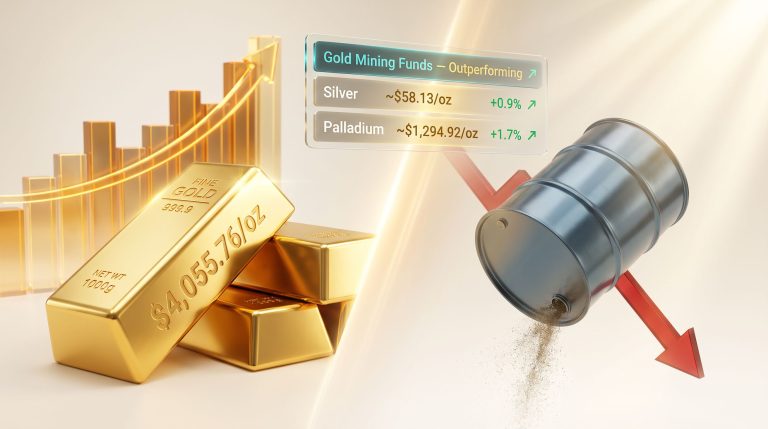
Few commodity cycles in recent memory have aligned as many favourable structural forces simultaneously as the one reshaping African gold production in 2026. When gold prices sustain levels above $4,000 per ounce not as a fleeting spike but as a persistent market reality, the economics of exploration, mine development, and artisanal formalisation all shift fundamentally. The gold price forecast for 2025 and beyond anticipated this upward momentum, and feasibility studies that looked marginal at $1,800/oz become compelling at current prices. Projects once shelved for lacking bankable economics are being reopened, and sovereign institutions are taking notice.
This is the backdrop against which the African Mining Week gold growth dialogue takes centre stage in October 2026, bringing together the continent's most consequential voices in gold to examine what structural growth actually looks like beyond the current price cycle.
When big ASX news breaks, our subscribers know first
What Sustained Gold Prices Above $4,000/oz Actually Change for African Producers
The instinct is to treat elevated gold prices as a windfall. However, that framing misses the more durable implication: at these price levels, the entire investment calculus for African gold assets shifts from speculative to strategic. The margin expansion effect is not linear. A producer operating at $1,200/oz all-in sustaining cost who was generating roughly $600/oz margin at $1,800/oz is now generating more than $2,800/oz margin at $4,000/oz prices. That is not incremental improvement; it is a fundamental restructuring of project returns.
For development-stage assets, the impact runs deeper still. Higher spot prices lift the net present value of projects, reduce the debt-to-equity ratios required to finance construction, and lower the grade thresholds that make mineralisation economically exploitable. In practice, this means that deposits previously classified as subeconomic become viable, and greenfield exploration in under-drilled African terranes suddenly attracts serious capital.
Central bank gold demand has reinforced this dynamic in a way that differs from previous gold bull markets. Six African nations have expanded their sovereign gold purchase programmes in 2026:
| Country | Central Bank Gold Activity | Strategic Implication |
|---|---|---|
| Ghana | Expanded purchase program | Supports domestic refinery capacity |
| Tanzania | Increased reserve accumulation | Strengthens export revenue base |
| Kenya | New gold reserve initiative | Diversifies forex holdings |
| Uganda | Active buying program | Reduces USD dependency |
| Egypt | Reserve expansion underway | Macro financial resilience play |
| Namibia | Gold purchase scale-up | Emerging producer alignment |
What distinguishes this from external demand is the domestic dimension. When a country's own central bank is an active buyer of gold produced within its borders, it creates what economists sometimes describe as a captive demand floor: a price-support mechanism that insulates local producers from some of the volatility that typically characterises commodity cycles.
For institutional investors evaluating African gold assets, this signals that sovereign stakeholders have a financial incentive aligned with producer success, consequently reducing one category of political risk that has historically deterred long-cycle capital from the continent.
The African Mining Week Gold Growth Dialogue: Structure and Significance
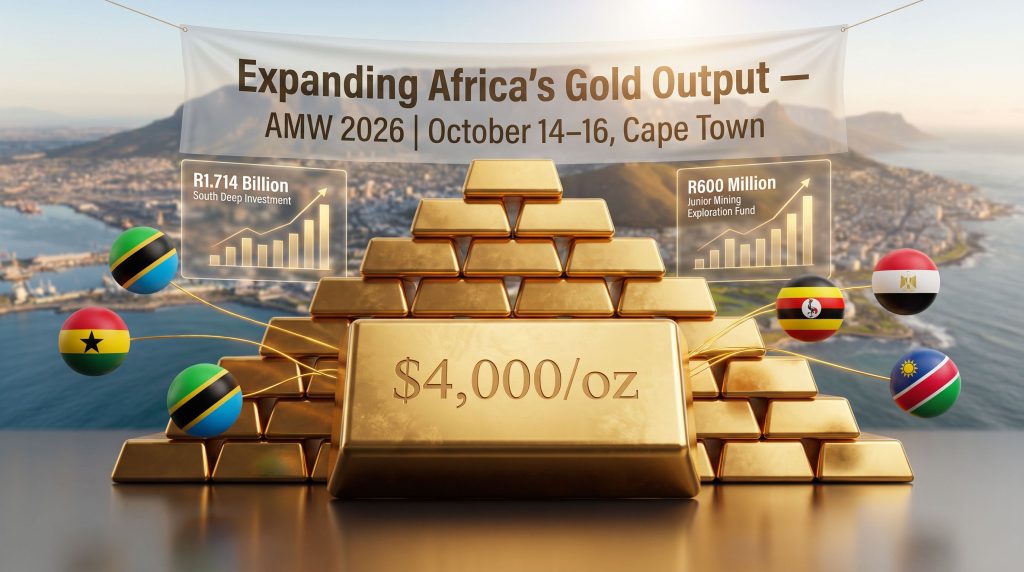
African Mining Week 2026, scheduled for October 14 to 16 in Cape Town, functions as the continent's primary convergence platform for mining governments, major producers, junior explorers, institutional investors, and professional services providers. You can explore the full African Mining Week conference programme to see how this session fits within the broader event structure. Within the broader programme, a dedicated session titled Expanding Africa's Gold Output will examine the interconnected challenges and opportunities shaping production growth, sector governance, and capital mobilisation across African gold markets.
The panel configuration is deliberate in its range. Moore Global's Head of Mining, Matt Banton, will moderate the session, bringing an advisory and financial structuring lens to a discussion that could otherwise become purely operational. Independent professional services firms play an underappreciated role in translating project-level data into bankable frameworks that institutional investors can evaluate, and Moore Global's international network across mining jurisdictions gives it unusual breadth in that function.
The two featured voices span the full spectrum of African gold production:
- Fousseni Togola, representing the Mali Chamber of Mines, brings the perspective of one of West Africa's most productive gold jurisdictions, along with direct insight into artisanal sector reform at a scale most countries have not attempted.
- Benford Mokoatle, Gold Fields' Executive Vice President for South Africa, anchors the discussion with the capital allocation decisions of a globally listed major, providing real-world data on what long-cycle investment in a deep, mechanised mine environment actually looks like.
This combination of regulatory, institutional, and operational voices is precisely what separates the African Mining Week gold growth dialogue from generic commodity conferences. It is designed to produce frameworks, not headlines.
Mali's ASGM Formalisation: The Largest Workforce Governance Exercise in African Mining
Mali's gold sector narrative in 2026 is dominated by a single structural ambition: sustaining annual production above 60 metric tons while simultaneously bringing nearly two million artisanal miners operating across approximately 400 informal sites into a regulated framework. These numbers are not incidental. They represent the largest artisanal and small-scale gold mining (ASGM) formalisation programme currently underway anywhere on the continent.
In July 2026, the Malian government established the Malian Office of Precious Substances, a dedicated state institution with regulatory authority over the ASGM sector. The creation of this body reflects a recognition that informal production, while economically significant, creates substantial governance problems: fiscal leakage through untracked royalties and taxes, mercury contamination from unregulated processing, supply chain opacity that complicates international offtake agreements, and community safety risks from unmanaged operations.
Formalisation is not a simple administrative exercise. It involves a sequenced set of interventions:
- Site registration and legal recognition of operators currently working outside the formal system.
- Environmental and safety compliance frameworks introduced progressively, with transition periods that avoid economically destabilising small operators.
- Integration into formal tax and royalty collection systems, expanding the government's fiscal base from artisanal output.
- Access to formal financial services and equipment financing, enabling productivity improvements that increase output per site.
- Connection to certified offtake and refining channels, creating traceable supply chains that meet international due diligence standards under frameworks such as the OECD's due diligence guidelines for responsible mineral supply chains and Fairtrade Gold certification pathways.
The economic case for formalisation is compelling at a national level. A 2020 World Bank analysis estimated that ASGM globally produces between 15 and 20 percent of the world's gold supply while generating a disproportionately small share of formally captured fiscal revenue. In Mali, closing that gap would meaningfully expand the government's ability to fund infrastructure, healthcare, and education without increasing external debt.
Mali's large-scale production base remains anchored by partnerships with established operators. Barrick, B2Gold, Toubani Resources, and Cora Gold each contribute to a production profile that positions Mali consistently among Africa's top three gold-producing nations. The dual-track strategy, combining institutional mine production with a formalising artisanal sector, creates a resilience that single-track models lack.
South Africa's Gold Revival: Exploration Capital and Long-Life Mine Investment
South Africa's gold industry has spent decades confronting a structural challenge that no amount of price uplift can fully resolve: the country's richest gold deposits sit kilometres underground, making them among the world's most expensive to access. The Witwatersrand Basin, which has produced more gold than any other geological formation in recorded history, still holds substantial reserves, but extracting them requires mechanised deep-level mining methods and sustained capital commitments that deter short-cycle investors.
Two initiatives announced in 2026 suggest that South Africa is beginning to address both ends of the investment spectrum simultaneously.
What Is the Junior Mining Exploration Fund?
The Junior Mining Exploration Fund, expanded to R600 million earlier this year, targets the early-stage end of the production pipeline. Junior exploration funding of this kind addresses a long-standing gap, as junior explorers historically struggle to access capital on commercially viable terms because their assets lack the reserve certainty that debt providers require. Government-backed exploration funding absorbs early-stage geological risk, enabling more rigorous drilling programmes that can convert resource estimates into reserves bankable enough to attract private capital at the next stage.
At the producing end, Gold Fields' commitment of R1.714 billion through 2027 to deepen and expand its South Deep Mine sends a signal that carries weight beyond its financial scale. South Deep is one of the world's largest known gold deposits by contained metal, and Gold Fields' willingness to commit long-cycle capital to shaft deepening and infrastructure upgrades reflects genuine confidence in South Africa's regulatory and operational environment. Furthermore, the broader gold M&A activity observed in global markets in 2025 reinforces how seriously major producers are treating long-cycle asset consolidation at elevated price levels.
| Initiative | Scale | Target Outcome |
|---|---|---|
| Junior Mining Exploration Fund | R600 million | New discovery pipeline for emerging miners |
| Gold Fields South Deep Investment | R1.714 billion (through 2027) | Long-life production continuity post-2030 |
| ASGM Formalisation (national policy) | Policy-led | Incremental production from artisanal sector |
South Deep's mechanised mining methodology is worth understanding in technical terms. Unlike the conventional labour-intensive narrow-reef mining that characterised South Africa's gold industry for most of the 20th century, mechanised deep-level mining deploys equipment-intensive extraction methods that improve productivity per worker while reducing exposure to occupational hazard.
Africa's Competitive Position in the Global Gold Landscape
Understanding where Africa sits within the global gold producing hierarchy requires examining not just volume but the structural characteristics of each region's competitive advantage and primary constraints.
| Region | Key Competitive Advantage | Primary Challenge |
|---|---|---|
| West Africa (Mali, Ghana, Burkina Faso) | High-grade deposits, established infrastructure | Political risk, regulatory flux |
| Southern Africa (South Africa, Zimbabwe) | Deep, large-scale reserves | Depth economics, energy costs |
| East Africa (Tanzania, Kenya, Uganda) | Emerging exploration frontiers | Infrastructure gaps, capital access |
| Latin America (Peru, Chile) | Mature regulatory frameworks | Environmental opposition, water scarcity |
| Australia/North America | Tier-1 jurisdiction stability | Higher cost base, limited new discoveries |
What this comparison reveals is that Africa's competitive advantage is fundamentally geological and economic: the continent hosts a disproportionate share of the world's remaining undiscovered gold potential, and its cost structures in most jurisdictions are materially lower than peer regions in developed markets. The primary discount applied to African gold assets by international investors has historically been jurisdictional: concerns about licence security, fiscal regime stability, and resource nationalism.
Bridging the gap between Africa's geological opportunity and the capital it requires is not primarily a geological problem. It is a governance and communication problem, which is exactly why forums like AMW 2026 matter.
The next major ASX story will hit our subscribers first
The Three Pillars Driving Africa's Gold Growth Agenda
The AMW 2026 gold panel is structured around three intersecting themes that collectively define the continent's production growth trajectory.
Pillar 1: Production Expansion Through Greenfield Exploration
After years in which brownfield optimisation dominated capital allocation, greenfield exploration is re-emerging as a strategic priority. Modern exploration technology, including airborne geophysical surveys, satellite-based geological mapping, and AI-assisted target generation, is reducing the cost and time required to identify high-priority drill targets. Combined with the price incentive created by $4,000+/oz gold, exploration budgets are returning to African terranes that were deprioritised during the previous decade of capital austerity.
Pillar 2: ASGM Formalisation as an Investment Opportunity
The artisanal sector is too often framed purely as a governance problem. A more nuanced view recognises that formalised ASGM creates investable supply chains. Once artisanal sites are registered, compliant, and connected to certified offtake channels, they become assets that streaming and royalty companies can finance, that equipment leasing businesses can serve, and that commercial banks can lend against. Mali's formalisation programme is, in a meaningful sense, the creation of a new investable asset class within its gold sector.
Pillar 3: Investment Mobilisation Across the Value Chain
Capital flows into African gold through multiple mechanisms, each with distinct risk-return profiles:
- Sovereign wealth fund participation in mining infrastructure and logistics.
- Private equity interest in mid-tier producer consolidation, where scale advantages can improve unit economics.
- Streaming and royalty structures that provide upfront capital to developers in exchange for the right to purchase future production at predetermined prices.
- Junior explorer funding through government-backed schemes like South Africa's R600 million exploration fund.
Key Risks That Investors and Policymakers Cannot Ignore
Elevated gold prices attract capital, but sustainable sector growth requires parallel progress on challenges that price alone cannot resolve.
Critical Consideration: The same conditions that make African gold attractive at $4,000/oz also make the stakes of governance failure proportionally higher. More capital flowing into poorly governed environments does not improve outcomes; it amplifies them.
The principal risks facing African gold investors and producers in 2026 include:
- Political and regulatory risk: Licence security, fiscal regime changes, and resource nationalism remain the primary deterrents to long-cycle capital commitment. Several West African nations have experienced military-led government transitions in recent years, creating uncertainty that outlasts any single administration.
- Operational risk: Energy supply constraints are a material cost driver across Southern and West Africa. Skilled labour availability at deep mechanised operations is an escalating concern as the industry competes with other sectors for technically qualified workers.
- ESG risk: Mercury use in artisanal gold processing remains both an environmental and reputational liability. Formalisation programmes must address this directly if they are to meet international supply chain due diligence requirements.
- Currency and repatriation risk: Most African gold producers sell in US dollars but incur costs in local currencies. When local currencies depreciate sharply, this can create short-term margin windfalls, but it also signals macroeconomic instability that complicates long-term planning and profit repatriation.
Frequently Asked Questions: AMW 2026 Gold Growth Dialogue
What Is the African Mining Week Gold Growth Dialogue?
A dedicated panel session at AMW 2026 titled Expanding Africa's Gold Output, structured to examine production growth strategies, ASGM formalisation, and investment mobilisation across the continent's gold sector, featuring government, industry, and advisory participants.
When and Where Is AMW 2026 Taking Place?
October 14 to 16, 2026, in Cape Town, South Africa.
Who Are the Key Speakers at the Gold Panel?
The session is moderated by Matt Banton of Moore Global, with panellists Fousseni Togola of the Mali Chamber of Mines and Benford Mokoatle, Executive Vice President for South Africa at Gold Fields.
Why Is Mali's Gold Sector Significant to This Discussion?
Mali targets annual gold output above 60 metric tons and has launched a major ASGM formalisation programme covering approximately 400 sites employing nearly two million workers, one of the most ambitious workforce governance exercises in African mining history.
What Is Gold Fields Investing in South Africa?
Gold Fields has committed R1.714 billion through 2027 to deepen and expand its South Deep Mine, securing long-term production capacity well beyond 2030.
How Are African Central Banks Influencing the Gold Market?
Six African central banks in Tanzania, Kenya, Ghana, Uganda, Egypt, and Namibia have expanded gold purchase programmes in 2026, creating sustained domestic demand that supports producer revenue and strengthens the gold investment outlook for African assets.
What the Next Five Years Could Look Like for African Gold
The convergence of structural factors visible in 2026 is historically uncommon. Record gold prices, sovereign demand from domestic central banks, large-scale ASGM formalisation programmes, and long-cycle capital commitments from globally listed producers are not typically aligned simultaneously. The question for investors and policymakers is whether this alignment is durable enough to produce the next generation of African gold infrastructure, or whether it represents a window that closes as quickly as it opened.
Furthermore, the African Mining Week gold growth dialogue is structured precisely to address that question. By bringing together the Mali Chamber of Mines, Gold Fields, and Moore Global in a single forum, the event creates the conditions for translating macro tailwinds into specific, bankable partnerships. Whether the continent's gold sector capitalises on this moment depends less on geology, which is broadly favourable, and more on the governance frameworks, investment structures, and community engagement models that industry, governments, and capital providers are willing to build together.
This article is intended for informational purposes only and does not constitute financial or investment advice. Forecasts, price references, and project timelines discussed herein are subject to change and should not be relied upon as the basis for investment decisions. Readers should conduct independent due diligence before making any investment in mining or resource sector assets.
Want to Capitalise on the Next Major African Gold Discovery Before the Broader Market?
Discovery Alert's proprietary Discovery IQ model delivers real-time alerts on significant ASX mineral discoveries, instantly translating complex geological data into actionable investment insights — explore Discovery Alert's discoveries page to understand how historic discoveries have generated substantial returns, and begin your 14-day free trial to position yourself ahead of the market.