August 3, 2026
When Oil Falls and Gold Firms Rise: Understanding the Commodity Divergence
Commodity markets rarely move in lockstep, and the relationship between crude oil and gold is one of the more nuanced dynamics in global finance. While both assets are sensitive to geopolitical conditions, they respond to risk events through entirely different mechanisms. Understanding why gold firms as oil prices slump after Trump holds off on Iran attack requires a deeper look at inflation expectations, central bank policy, mining sector economics, and the structural role of the U.S. dollar in pricing precious metals globally.
The divergence that unfolded in early August 2026 offers a textbook illustration of how diplomatic signalling can simultaneously reduce one commodity's risk premium while creating conditions that support another.
When big ASX news breaks, our subscribers know first
The Asymmetry Between Oil and Gold in Geopolitical De-escalation
When military conflict threatens a major oil-producing region, crude prices typically absorb a risk premium that reflects the possibility of supply disruption. The reverse is also true: when that threat recedes, even temporarily, oil prices can shed that premium rapidly.
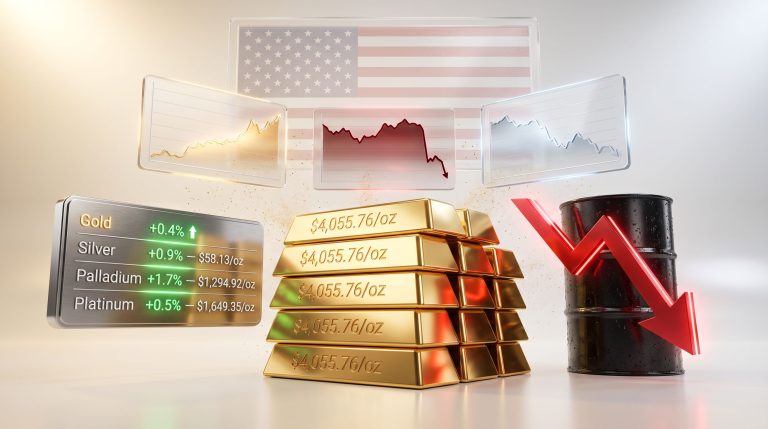
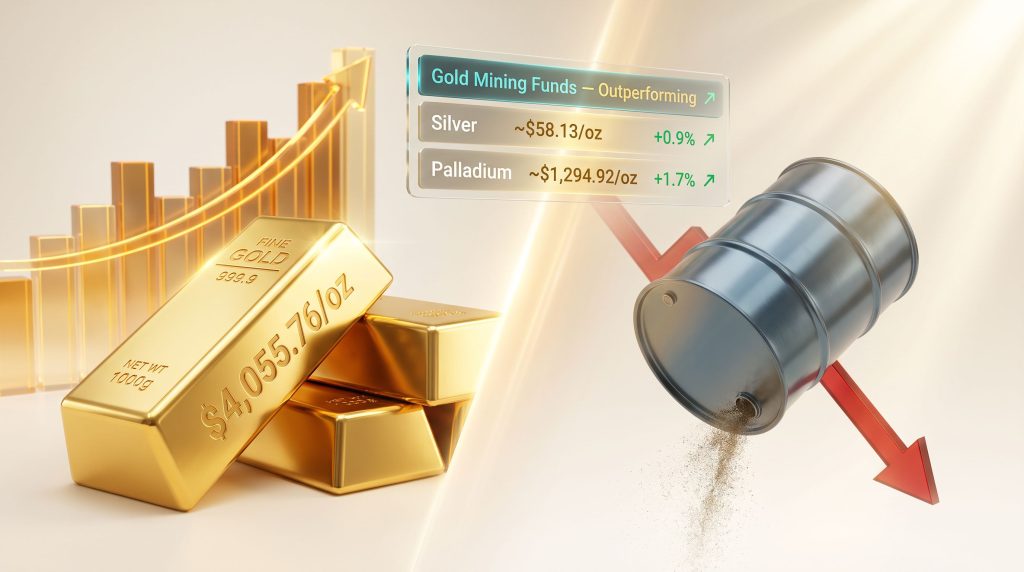
Gold behaves differently. While it also carries a safe-haven bid during periods of conflict, its response to de-escalation is moderated by a separate and arguably more powerful set of variables: inflation expectations and interest rate policy. When U.S. President Donald Trump chose to pause military action against Iran in favour of pursuing a diplomatic agreement, oil price volatility caused crude to fall by more than 5% in a single session. However, gold did not follow crude lower. Instead, spot gold climbed 0.4% to $4,055.76 per ounce, while U.S. gold futures rose 0.9% to $4,054.00.
This divergence is not accidental. The fall in oil prices carried a secondary implication that directly benefits gold: softer inflation.
The Transmission Channel From Crude to CPI
Energy costs are embedded throughout the consumer price index. When oil prices decline meaningfully, downstream effects ripple through transport, manufacturing, food production, and utilities. A sustained drop in crude prices acts as a disinflationary force that reduces the urgency for central banks to maintain restrictive monetary policy.
For gold, which does not pay interest or dividends, the appeal of holding bullion is inversely related to the perceived need for high interest rates. When inflation expectations soften, the argument for aggressive rate hikes weakens, which in turn reduces the opportunity cost of holding a non-yielding asset like gold.
The core logic is straightforward: falling oil prices reduce inflation pressure, which reduces the likelihood of further rate hikes, which reduces the penalty for holding gold.
Gold Above $4,000: What Is Sustaining Record Bullion Prices?
The fact that gold was trading above $4,000 per ounce heading into this session reflects a structural accumulation of bullish forces that have built over several years. These include persistent central bank gold demand from emerging market institutions diversifying away from U.S. dollar reserves, sustained demand from Asian retail markets, and a broader reassessment of geopolitical risk following a series of regional conflicts.
Furthermore, the gold record highs seen in recent sessions have been underpinned by dollar weakness. Foreign exchange authorities intervened in currency markets to support the Japanese yen, placing downward pressure on the U.S. dollar. Because gold is denominated in dollars, a weaker greenback makes bullion more affordable for buyers operating in other currencies, effectively broadening the global demand base and providing a secondary lift to prices.
Why Dollar Weakness Expands Gold's Buyer Base
This mechanism is frequently underappreciated. When the dollar weakens, the notional cost of gold in euros, yen, yuan, or rupees declines even if the dollar price of gold remains unchanged. This incentivises buying from international investors and central banks, increasing effective demand and creating a floor beneath prices. In a session where both dollar weakness and inflation softening aligned, gold had two separate tailwinds operating concurrently.
The Federal Reserve's Dilemma: Three Dissenting Officials and What They Signal
The monetary policy backdrop adds a layer of complexity that investors in precious metals must navigate carefully. Following the most recent Federal Reserve policy meeting, three officials who dissented from the majority position expressed concern that without an immediate increase in short-term borrowing costs, inflation risks becoming entrenched above the Fed's 2% target.
This dissent matters for gold in a counterintuitive way. On one hand, it signals that the Fed's internal debate remains unresolved, creating policy uncertainty. On the other hand, dissenting voices in favour of hikes serve as a reminder that the rate environment has not yet definitively turned dovish.
Gold is often described as an inflation hedge, but this framing is incomplete. The more precise relationship is between gold and real interest rates, meaning nominal rates adjusted for inflation. When real rates are negative or falling, gold tends to perform strongly. When real rates rise, gold faces headwinds regardless of whether nominal inflation is elevated.
The current environment in 2025–2026 has been characterised by exactly this tension. Inflation has remained above target, but the pace of rate hikes has slowed, leaving real rates in a zone that is neither clearly supportive nor clearly destructive for gold. The result has been elevated but range-bound bullion prices, with directional breaks requiring a catalyst.
Why Gold Mining Companies Are the Leveraged Play
One of the less widely understood dynamics in this market is why gold mining equity leverage means equities often outperform the gold price itself when conditions are favourable. The answer lies in the operating leverage embedded in a miner's cost structure.
Gold mining is an energy-intensive process. Diesel fuel powers haulage trucks, processing plants consume electricity generated from fossil fuels, and heap leach operations require significant energy inputs for solution pumping and processing. Energy costs typically represent 15% to 25% of a gold miner's total cash costs per ounce, depending on the operation's location, depth, and processing method.
When crude oil prices fall sharply, the cost side of a miner's income statement improves. When this happens simultaneously with elevated gold prices, the margin effect is compounded. Revenue per ounce rises while cost per ounce falls, creating a disproportionate expansion in profitability.
The Dual-Leverage Effect in Practice
Consider a simplified example:
| Scenario | Gold Price (USD/oz) | All-In Sustaining Cost (USD/oz) | Margin (USD/oz) |
|---|---|---|---|
| Base Case | $3,200 | $1,400 | $1,800 |
| Record Gold + High Oil | $4,055 | $1,600 | $2,455 |
| Record Gold + Low Oil | $4,055 | $1,350 | $2,705 |
The difference between the second and third scenarios represents the additional margin capture from lower energy costs alone. At scale, across hundreds of thousands of ounces of annual production, this effect translates into materially higher cash flows and earnings per share, which is why gold mining funds have been among the strongest-performing asset categories in 2025.
Gold Mining Fund Performance vs. Broader Market Categories in 2025
| Asset Category | 2025 Performance (Indicative) | Key Driver |
|---|---|---|
| Gold Mining Funds | Leading sector performance | Record bullion prices and margin expansion |
| Technology Funds | Moderate gains | Earnings growth and rate sensitivity |
| Natural Resources Funds | Mixed results | Energy price volatility offsetting gains |
| Broad Equity Indices | Positive but volatile | Geopolitical de-escalation and macro shifts |
Geopolitical Risk Premiums and How Markets Price Uncertainty
A nuanced point that experienced commodity traders understand is that geopolitical risk is not priced symmetrically into oil and gold. Oil's risk premium is primarily about supply disruption. If a conflict threatens pipelines, shipping lanes, or producing infrastructure in the Middle East, crude prices spike to reflect the probability-weighted cost of reduced supply.
Gold's risk premium, by contrast, is driven by demand for safety. Investors move capital into gold when they seek to preserve purchasing power against unpredictable outcomes. The two mechanisms operate independently, which is why the resolution of a specific threat can deflate oil's premium rapidly while gold's safe-haven demand transitions into a different kind of support: the expectation of accommodative monetary policy. According to Reuters market analysis, this pattern has been evident across multiple recent geopolitical episodes.
Historical Pattern of Commodity Responses to Middle East Diplomatic Events
| Scenario | Oil Price Response | Gold Price Response | Market Sentiment |
|---|---|---|---|
| Active conflict escalation | Sharp spike, +5% to +10% | Moderate rise as safe haven | Risk-off, defensive positioning |
| Diplomatic pause or ceasefire | Sharp decline, -5% or more | Modest gain or neutral | Cautiously risk-on |
| Prolonged unresolved uncertainty | Elevated volatility | Sustained safe-haven bid | Mixed, headline-driven |
| Confirmed diplomatic resolution | Normalisation toward trend | Pullback from crisis highs | Full risk-on rotation |
The next major ASX story will hit our subscribers first
The Labour Market as the Next Swing Factor for Gold
With the geopolitical catalyst partially absorbed by markets, attention shifts to the U.S. labour market data pipeline for the week. Employment data is a critical input for Federal Reserve policy deliberations, and by extension, a key variable for gold pricing.
A strong nonfarm payrolls print would reinforce the case made by dissenting Fed officials that the labour market remains too tight for inflation to reliably return to target. This would increase the probability of a September rate hike, strengthening the dollar and creating headwinds for gold. Conversely, softer employment data would bolster the case for a policy pause, removing a significant structural impediment to further gains in bullion.
Key Labour Market Data Releases and Their Implications for Gold
| Data Release | What It Measures | Gold Market Implication |
|---|---|---|
| JOLTS Job Openings | Strength of labour demand | High openings reinforce hawkish Fed expectations |
| ADP Employment Report | Private sector hiring activity | Strong print adds rate-hike pressure |
| Weekly Jobless Claims | Near-term labour market resilience | Rising claims signal dovish Fed opportunity |
| Nonfarm Payrolls (NFP) | Broad employment across all sectors | Primary swing factor for September rate probability |
The Broader Precious Metals Complex: Silver, Platinum, and Palladium
The session's gains were not confined to gold. The broader precious metals complex moved in the same direction, though with varying degrees of momentum that reflect each metal's unique demand profile.
| Metal | Indicative Price | Session Move | Primary Driver |
|---|---|---|---|
| Gold (Spot) | ~$4,055.76/oz | +0.4% | Inflation expectations and dollar pressure |
| Silver (Spot) | ~$58.13/oz | +0.9% | Industrial demand and safe-haven spillover |
| Platinum | ~$1,649.35/oz | +0.5% | Automotive sector demand and supply dynamics |
| Palladium | ~$1,294.92/oz | +1.7% | Concentrated supply geography and industrial use |
Palladium's outperformance is worth examining in detail. Unlike gold, palladium demand is overwhelmingly industrial, driven primarily by catalytic converters in petrol-powered vehicles. Its supply is geographically concentrated, with Russia accounting for a substantial portion of global output. Any geopolitical event that raises concerns about supply continuity from Russian mining operations disproportionately affects palladium, making it among the most volatile of the major precious metals in conflict-adjacent market environments.
Silver occupies a hybrid position. Approximately 50% to 55% of global silver demand is industrial, driven by solar panel manufacturing, electronics, and electric vehicle components. The remainder serves investment and jewellery demand. Furthermore, the gold-silver ratio provides an important lens through which to assess relative value between the two metals, particularly during periods of elevated market volatility. This dual identity means silver tends to respond both to industrial growth expectations and to the same safe-haven dynamics that drive gold, often producing amplified moves relative to gold in either direction.
Three Scenarios for Gold and Energy Markets Looking Ahead
The current environment presents three plausible trajectories, each carrying distinct implications for commodity investors:
Scenario 1: Diplomatic Resolution Holds. If U.S.-Iran negotiations produce a credible agreement, oil prices would likely normalise toward pre-conflict levels. Inflation pressure would ease, reducing the urgency of rate hikes. Gold could consolidate near current levels rather than rallying strongly, as the safe-haven bid diminishes while the rate-outlook improvement provides partial offset.
Scenario 2: Negotiations Collapse and Conflict Resumes. A breakdown in talks would likely push oil sharply higher, reigniting inflation concerns. This would simultaneously strengthen the case for rate hikes, which would act as a headwind for gold even as geopolitical fear supports a safe-haven bid. The net effect on gold would be ambiguous, with risk-off demand potentially offset by rate-hike expectations.
Scenario 3: Prolonged Stalemate With Persistent Uncertainty. This scenario tends to produce the most sustained support for gold. Oil remains elevated but volatile, inflation stays above target but the Fed hesitates to hike into geopolitical uncertainty, and investors maintain defensive allocations. Historical precedent suggests this environment has supported multi-month gold price elevation. As reported by the Economic Times, such stalemate conditions have historically underpinned prolonged bullion strength.
Investors tracking gold through this period should monitor diplomatic developments and U.S. labour market data as the two dominant catalysts for near-term price direction. Neither variable is currently resolved, which explains the market's characteristically cautious but upbeat posture.
Frequently Asked Questions: Gold, Oil, and Geopolitical Market Dynamics
Why does gold rise when oil prices fall?
Falling oil prices reduce inflationary pressure, which softens the case for interest rate hikes. Since gold does not generate yield, it benefits when the opportunity cost of holding it decreases. Lower rate expectations make gold relatively more attractive compared to interest-bearing assets.
Does a weaker U.S. dollar always support gold prices?
Not always, but the correlation is strong. A weaker dollar reduces the effective price of gold for buyers operating in other currencies, broadening demand internationally. There are exceptions when risk-off flows strengthen the dollar and gold simultaneously, but in most non-crisis environments the inverse relationship holds.
How do Middle East conflicts typically affect commodity markets?
Middle East tensions elevate oil prices through supply-risk premiums and lift gold through safe-haven demand. However, the two responses are driven by different mechanisms, which is why de-escalation affects them differently. Oil loses its risk premium quickly; gold transitions to a rate-expectations framework.
What is the relationship between Federal Reserve rate decisions and gold valuations?
Gold is most sensitive to real interest rates, which are nominal rates minus inflation. When the Fed raises rates faster than inflation rises, real rates increase and gold typically faces pressure. When rates are held steady or cut while inflation remains elevated, real rates fall and gold tends to outperform.
Why are gold mining stocks sometimes more volatile than the gold price itself?
Mining equities carry operational leverage. Fixed costs remain relatively stable regardless of gold prices, so movements in the gold price flow disproportionately through to earnings. A 10% increase in the gold price can translate into a 20% to 30% increase in a miner's net profit, depending on its cost structure. This amplification works in both directions.
How does energy cost reduction benefit gold mining companies specifically?
Energy is a major component of a gold miner's all-in sustaining costs. Lower diesel and electricity prices directly reduce the cost per ounce of production. When this margin improvement coincides with record gold prices, the compounding effect on profitability can be substantial, which is why mining equities often lead bullion in bull market conditions.
Key Takeaways: What This Market Moment Reveals
- Oil and gold diverge during geopolitical de-escalation events because they respond to different underlying mechanisms: supply risk versus inflation and rate expectations.
- Spot gold at approximately $4,055.76 per ounce reflects structural demand from central banks, Asian buyers, and investors repricing real interest rate risk.
- The simultaneous pressure on the U.S. dollar from yen intervention added a secondary demand catalyst by improving affordability for international buyers.
- Gold mining companies benefit from a dual tailwind when oil falls and gold prices remain elevated, as both revenue and cost dynamics improve concurrently.
- Three dissenting Federal Reserve officials represent a meaningful hawkish risk that could cap gold's upside if labour market data confirms ongoing inflationary wage pressures.
- Nonfarm payrolls represent the most significant near-term swing factor for gold pricing, with a strong print likely pressuring bullion and a weak print potentially catalysing a move above current resistance levels.
- Silver at $58.13 and palladium at $1,294.92 both reflected broader precious metals strength, with palladium's supply concentration geography adding an additional speculative risk premium that distinguishes it from the monetary metals.
This article is for informational purposes only and does not constitute financial advice. Commodity and precious metal markets involve significant risk, and past performance of any asset class is not indicative of future results. Investors should seek independent financial guidance before making any investment decisions.
Want to Capitalise on the Next Major ASX Mineral Discovery Before the Market Does?
Discovery Alert's proprietary Discovery IQ model delivers real-time alerts on significant ASX mineral discoveries — cutting through complex data to surface actionable opportunities the moment they're announced — so begin your 14-day free trial today and explore the historic returns that major mineral discoveries have generated.