
July 23, 2026
The Reliability Crisis Driving AI's Hunger for Firm Power
Every major technology cycle in modern history has eventually collided with a physical constraint. For the current AI era, that constraint is electricity. The computational demands of training large language models and running continuous inference workloads at scale have created a power consumption profile that bears little resemblance to traditional enterprise IT. Unlike conventional servers that cycle through periods of low utilisation, hyperscale AI infrastructure operates at sustained high load around the clock, generating a baseload electricity demand signature that resembles a heavy industrial facility more than a tech campus.
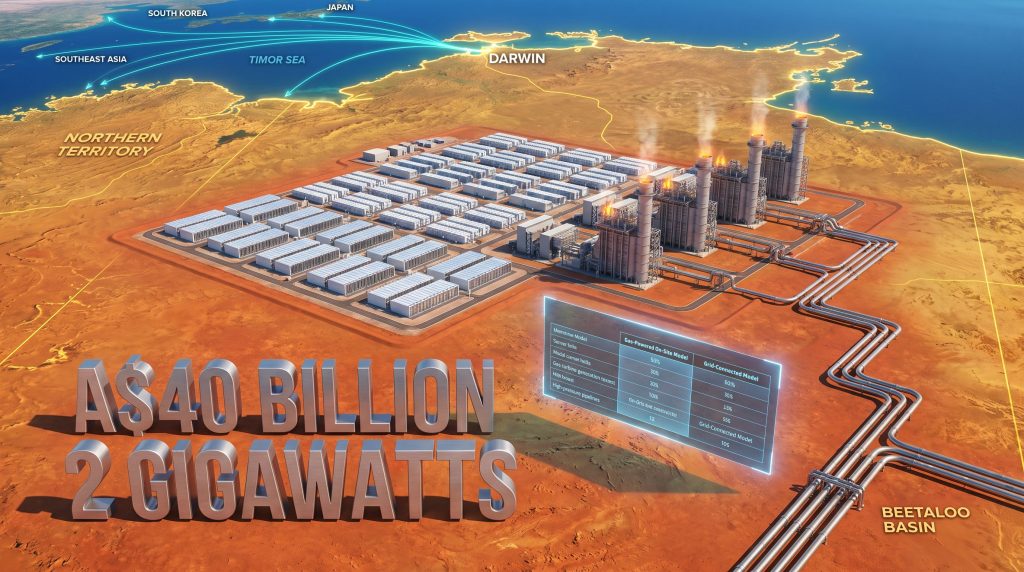
Global data centre power consumption is projected to grow dramatically over the coming decades, with the Asia-Pacific corridor identified as one of the fastest-expanding markets. Australia sits at a critical junction within this regional growth story, and the question of how its AI infrastructure ambitions will be powered is no longer theoretical. It is now the subject of a proposed A$40 billion (approximately USD $28 billion) private investment that links Australian shale gas to fuel an AI data centre project of unprecedented scale for the Northern Territory.
When big ASX news breaks, our subscribers know first
Why the Grid Cannot Simply Absorb This Demand
The Structural Mismatch Between Legacy Infrastructure and AI Workloads
National electricity grids across developed economies were engineered around demand diversity. Residential, commercial, and industrial loads were assumed to fluctuate across hours and seasons, allowing grid operators to manage generation dispatch accordingly. Hyperscale AI campuses destroy this assumption entirely. A facility drawing 500 megawatts continuously imposes a load profile that transmission infrastructure was never designed to absorb in a concentrated geographic footprint.
Australia's grid faces a compounding version of this challenge. Aging coal-fired generation assets are being retired at pace, while the renewable capacity replacing them carries inherent variability. Solar and wind generation respond to weather, not to compute demand schedules. The resulting reliability gap is not a temporary transitional problem but a structural feature of the current energy landscape, and it is pushing hyperscale developers toward an increasingly common solution: generating power on-site rather than drawing from the grid.
Furthermore, mining electrification trends show that the broader resources sector is grappling with similar reliability pressures, reinforcing just how systemic the firm power challenge has become across Australia's heavy-demand industries.
The Search for Firm Power: In energy planning terminology, "firm power" describes electricity that is reliably dispatchable on demand, regardless of weather or time of day. The scramble to secure firm power is now one of the most consequential and least publicly discussed forces shaping where AI infrastructure gets built globally.
This is precisely the context in which the Beetaloo Basin, a shale gas formation in Australia's Northern Territory, has moved from being a contested upstream resource to becoming the centrepiece of a digital infrastructure thesis.
Understanding the Beetaloo Basin: Geology, Scale, and Commercial Timing
What Makes This Formation Significant?
The Beetaloo Basin is a sedimentary sub-basin located in the Northern Territory's interior, representing one of the largest identified shale gas deposits in the Southern Hemisphere. The formation's geological characteristics include organically rich source rock sequences that have attracted sustained exploration interest over more than a decade.
Key geological factors that make the Beetaloo Basin commercially compelling include:
- Thick, laterally continuous shale sequences with elevated total organic carbon content
- Formation depths and pressures considered technically accessible via modern horizontal drilling and hydraulic fracturing techniques
- Proximity to Darwin, which provides logistical access to port infrastructure, workforce capacity, and utility connections
- Commercial production from the basin is now targeted to commence in 2026, a timeline that aligns with the project's proposed power generation buildout
What distinguishes the Beetaloo Basin's current positioning from prior LNG-export-oriented gas development in Australia is the proposed domestic consumption model. Rather than monetising gas through liquefaction and shipping to Asian buyers, the proposed structure captures the energy value onshore by converting gas to electricity at the data centre site. This is a fundamentally different commercial logic that transforms the upstream resource into the foundation of a digital infrastructure asset.
The Darwin Geographic Advantage: Cables, Land, and Connectivity
Darwin's strategic position is easy to underestimate when viewed purely through a domestic Australian lens. Viewed from the perspective of Asia-Pacific digital infrastructure, however, its advantages become considerably more apparent.
Darwin hosts existing subsea cable landing stations that provide direct connectivity to major markets across Southeast Asia, East Asia, and South Asia. For hyperscale AI operators, latency is not merely a performance metric but a commercial constraint. Serving cloud and AI inference workloads across the Asia-Pacific region requires physical proximity to the cable infrastructure linking those markets, and Darwin's geographic location delivers that proximity more effectively than data centre precincts in Sydney or Melbourne.
The combination of three factors converging in the Northern Territory is rare in global infrastructure development:
- A large-scale domestic gas supply with near-term commercial production timelines
- Available land in the quantities required for gigawatt-scale power generation and hyperscale campus footprints
- Established subsea cable connectivity to high-growth Asian digital markets
Breaking Down the $28 Billion Hyperscale AI Campus Proposal
Project Parameters at a Glance
The Northern Territory government has awarded 185 hectares (457 acres) of land at the Weddell site to Beetaloo Digital Pty Ltd., a subsidiary of Beetaloo Energy Australia Ltd., for the development of two hyperscale AI data centre campuses. The proposal's key parameters are summarised below.
| Parameter | Detail |
|---|---|
| Total Investment Target | A$40 billion (~USD $28 billion) |
| Land Allocation | 185 hectares (approximately 457 acres) |
| Planned Power Generation Capacity | Up to 2 gigawatts (GW) |
| Campus Configuration | Two hyperscale AI data centre campuses |
| Primary Fuel Source | Beetaloo Basin shale gas |
| Project Location | Weddell site, Northern Territory |
| Development Stage | Greenfield; partner negotiations underway |
What 2 Gigawatts Actually Represents
To contextualise the proposed 2 GW generation target, it is worth noting that the entire Darwin-Katherine electricity network, which serves the Northern Territory's most populated corridor, operates at a fraction of this capacity. A 2 GW on-site generation commitment at continuous baseload would exceed the total existing demand of that network, placing this proposal among the largest single-site power infrastructure commitments in Australian history.
For further context, a single gigawatt of continuous power is sufficient to supply approximately 725,000 average Australian homes. The proposed campus would not be serving homes; it would be consuming an equivalent volume of energy to run AI training clusters, inference servers, and the associated cooling and ancillary systems that keep them operational.
The Gas-to-Power-to-Compute Value Chain
The structural innovation at the heart of this proposal is the vertically integrated energy-to-compute supply chain. Shale gas extracted from Beetaloo Basin wells feeds dedicated gas turbine or combined-cycle generation assets located at or adjacent to the data centre campuses. The power generated is consumed entirely on-site, bypassing grid interconnection requirements and giving the operator direct control over reliability, pricing, and capacity expansion.
"This structure effectively creates a private utility embedded within a digital infrastructure asset, blurring the boundary between an upstream gas company and a technology infrastructure operator in ways that have no direct precedent in the Australian market."
Gas-fired generation is described as the dispatchable backbone of the power supply, complemented by renewable energy solutions and battery storage components. The complementary renewables component is important for both emissions management and alignment with the sustainability requirements of prospective hyperscale tenants.
Comparing Power Models: On-Site Gas vs. Grid Connection
The decision between building on-site generation versus connecting to the national grid is not merely a technical one. It carries significant implications for capital requirements, emissions profiles, regulatory exposure, and long-term commercial flexibility.
| Dimension | Gas-Powered On-Site Model | Grid-Connected Model |
|---|---|---|
| Power Reliability | High (dispatchable, controlled) | Variable (grid stability dependent) |
| Emissions Profile | Higher (direct Scope 1 combustion) | Depends on grid energy mix |
| Infrastructure Dependency | Low (self-contained) | High (grid capacity, transmission) |
| Capital Requirement | Very High (generation + facility) | Moderate (facility only) |
| Scalability | Tied to gas supply capacity | Tied to grid capacity |
| Regulatory Risk | High (fracking approvals required) | Moderate |
| Asia-Pacific Latency Advantage | Location-specific | Location-specific |
This pattern of incorporating gas-fired firming generation alongside renewables is not unique to the Northern Territory. Data centre proposals in New South Wales and Western Australia have adopted similar hybrid approaches, suggesting a national-level recognition that grid reliability alone cannot currently satisfy hyperscale AI power requirements. What differentiates the Beetaloo proposal is its direct integration with an upstream shale development, creating a fully vertically integrated structure that no other Australian proposal replicates.
Environmental and Regulatory Risks: The Critical Friction Points
Hydraulic Fracturing Controversy and Regulatory Scrutiny
Hydraulic fracturing in the Beetaloo Basin has been subject to sustained regulatory and scientific review. Multiple independent inquiries have examined groundwater contamination risks, fugitive methane emissions during the extraction process, and land access impacts on pastoral and Indigenous land users. These are not hypothetical concerns but active regulatory considerations that will shape the approval pathway for any expanded fracturing program linked to the data centre power supply.
Environment Centre NT and other advocacy organisations have raised substantive objections to the premise of combining expanded shale gas extraction with large-scale data centre development. They argue that the combined emissions and water consumption footprint represents a material escalation of environmental pressure on the Northern Territory's already stressed arid landscape.
The Dual Water Demand Problem
One of the least-discussed but most consequential environmental risks associated with this project is water. Both hydraulic fracturing operations and large-scale data centre cooling systems are significant freshwater consumers. In the Northern Territory, where surface water availability is highly seasonal and groundwater systems serve as critical ecological and community resources, the compounding water demand from co-locating these two industries creates a significant regulatory challenge.
Water sourcing strategies, recycling rates, and discharge management protocols are consequently likely to become central conditions of any environmental approval, and their resolution will be as technically demanding as any aspect of the upstream or data centre engineering.
Emissions Accounting: The Scope 1 Problem
When a data centre generates its own power from on-site gas combustion rather than purchasing grid electricity, the resulting emissions shift from Scope 2 (purchased energy) to Scope 1 (direct emissions). This reclassification carries profound implications for how operators report and manage their climate commitments, particularly given growing energy security pressures shaping Australia's broader policy environment.
Global hyperscale operators, including the largest cloud and AI platform companies, have made public commitments to 100% renewable energy procurement and net-zero operational emissions. A facility powered primarily by on-site gas combustion creates a direct tension with these commitments, regardless of how compelling the reliability or cost arguments for gas may be.
Australia's mandatory climate disclosure regime is progressively expanding to require large entities to report Scope 1 emissions with increasing precision from 2025 onward. This regulatory trajectory will make the emissions accounting challenge for any gas-powered data centre increasingly visible to investors, customers, and regulators simultaneously.
Regulatory Approval Pathway: Key Hurdles
The project faces a multi-stage regulatory process before any construction can commence:
- Environmental Impact Assessment covering both the expanded fracking programme and the data centre development at federal and Northern Territory level
- Water Allocation Licensing to secure sustainable access to freshwater for fracturing operations and cooling systems
- Land Use Planning Approvals including formal rezoning and development consent for the 185-hectare Weddell site
- Hydraulic Fracturing Regulatory Compliance under NT Government regulations and any conditions arising from ongoing independent scientific review processes
- Climate Disclosure Obligations requiring alignment with Australia's mandatory Scope 1 emissions reporting framework for large infrastructure operators
The next major ASX story will hit our subscribers first
The Northern Territory's Position in Australia's AI Infrastructure Race
How Darwin Stacks Up Against Rival Australian Locations
The competition for hyperscale AI data centre investment across Australian states is intensifying, and each jurisdiction offers a distinct combination of advantages and constraints.
| Factor | Northern Territory | New South Wales | Western Australia |
|---|---|---|---|
| Proximity to Asia-Pacific Cables | High (Darwin) | Moderate | Moderate |
| Available Land | Abundant | Constrained | Abundant |
| Domestic Gas Supply | Beetaloo Basin (emerging) | Pipeline-dependent | Pilbara/offshore |
| Renewable Energy Potential | High (solar) | High | Very High |
| Grid Infrastructure Maturity | Low | High | Moderate |
| Regulatory Environment | Developing | Established | Established |
The Northern Territory's relative disadvantage in grid maturity is, paradoxically, one reason the on-site gas generation model is structurally logical here. Where grid infrastructure is immature, building a private utility alongside the data centre campus sidesteps an infrastructure gap that would otherwise require years and billions of dollars of public grid investment to address.
Asia-Pacific Market Displacement: Why Darwin Benefits from Regional Constraints
Singapore and Hong Kong have historically dominated Asia-Pacific data centre markets. Both jurisdictions are now facing acute constraints: Singapore imposed a moratorium on new data centre development that, while partially lifted, continues to restrict large-scale expansion; Hong Kong faces land scarcity and geopolitical uncertainty. These pressures are actively redirecting hyperscale demand toward alternative locations with available land, power capacity, and reliable connectivity.
Australia, and Darwin specifically, sits in a strong position to capture a portion of this displaced demand. The Australian market offers political stability, an established legal framework, and, in Darwin's case, the geographic connectivity to serve the same regional markets that Singapore and Hong Kong have historically dominated. However, as Australia's energy export challenges demonstrate, realising this potential requires navigating complex and evolving policy headwinds.
The Bridge vs. Lock-In Debate: Gas as AI Infrastructure's Firming Fuel
Two Competing Interpretations of the Same Investment Thesis
The Beetaloo-to-data-centre proposal crystallises a debate that is playing out across energy and technology markets globally. Two fundamentally different narratives can be constructed around the same set of facts:
- The Bridge Narrative: Gas provides the reliable, dispatchable baseload capacity required to establish AI infrastructure at scale today, while renewable energy and battery storage are progressively built out. Over a 10-to-15-year horizon, the campus transitions toward a lower-emissions energy mix, with gas generation either retired or operating in a firming rather than primary capacity role.
- The Lock-In Narrative: Constructing dedicated on-site gas generation assets creates 20-to-30-year capital commitments to fossil fuel combustion. Once this infrastructure is built and project financing is structured around it, the economic incentives to transition away from gas become structurally weaker, effectively embedding emissions into AI infrastructure at a moment when the technology sector should be leading decarbonisation.
Which narrative proves more accurate will depend heavily on the contractual terms negotiated with hyperscale tenants, the pace of battery storage cost reduction, and the regulatory evolution of Australia's climate policy framework. Indeed, natural gas price trends over the coming years will also play a significant role in determining the long-term economics of the bridge versus lock-in decision.
What Hyperscale Operators Will Actually Require
The commercial viability of the proposed campuses hinges not just on construction and power generation but on securing long-term capacity commitments from hyperscale operators. These operators — the large cloud and AI platform companies that would lease computing capacity in the facility — have made binding public sustainability commitments that create real constraints on where they can locate infrastructure.
Prospective tenants are likely to require:
- Credible, time-bound transition roadmaps from gas-primary to renewable-primary power supply
- Renewable energy certificate frameworks that allow purchased or generated green energy to be credited against their operational emissions
- Carbon offset mechanisms that meet international verification standards
- Transparency on fugitive methane emissions from the upstream gas supply chain, which contribute to the facility's full lifecycle emissions footprint
The degree to which the project proponents can satisfy these requirements in advance of finalising partner negotiations will be a decisive determinant of whether this proposal advances from land allocation to operational reality. Media reports on fossil fuel-backed data centres suggest that public and investor scrutiny of these arrangements is already intensifying across Australia.
Frequently Asked Questions: Australian Shale Gas and AI Data Centres
What is the Beetaloo Basin and where is it located?
The Beetaloo Basin is a shale gas formation located in Australia's Northern Territory, south of Darwin. It is regarded as one of the country's most significant untapped onshore gas resources, with commercial production now targeted for 2026 following an extended period of exploration and regulatory assessment of hydraulic fracturing operations.
How much power would the proposed AI data centre campus require?
The proposal targets up to 2 gigawatts of on-site power generation capacity. This figure would, if operated continuously at full capacity, exceed the total electricity demand of the Darwin-Katherine grid, illustrating the transformative scale of the project relative to the Northern Territory's existing energy infrastructure.
Why is Darwin specifically chosen for this development?
Darwin offers a convergence of infrastructure prerequisites that is rare globally: proximity to subsea cable landing stations connecting Australia to Asia-Pacific digital markets, available land at the scale required for gigawatt-class power generation and hyperscale computing campuses, and geographic proximity to the Beetaloo Basin gas supply. Consequently, it represents a genuinely distinctive opportunity within the regional data centre landscape.
What are the main environmental concerns?
Three primary environmental dimensions have been raised: greenhouse gas emissions from both hydraulic fracturing operations and on-site gas combustion; freshwater consumption from fracturing and data centre cooling in an arid environment; and the broader climate policy contradiction of constructing fossil-fuel-dependent infrastructure for a technology sector that has made public net-zero commitments.
How does the A$40 billion figure translate to USD $28 billion?
The A$40 billion represents the total private investment the project aims to attract across power generation, data centre construction, network infrastructure, and supporting services over the full development lifecycle. At prevailing exchange rates at the time of the announcement, this equated to approximately USD $28 billion, making it one of the largest proposed private infrastructure investments in Australian history.
Key Takeaways for Investors, Policymakers, and Industry Observers
The Australian shale gas to fuel AI data centre project represents a genuinely novel intersection of upstream gas development and hyperscale digital infrastructure, and its progression will serve as a critical test case for how Australia navigates competing priorities across energy security, climate policy, and digital economy ambition.
Several factors will determine whether this proposal advances beyond its current greenfield status:
- Partner negotiations: The company is actively in discussions with potential development partners, and the terms of those agreements will define the project's financing structure and emissions accountability framework
- Regulatory outcomes: Environmental approvals for expanded Beetaloo fracturing operations and the Weddell site development represent the critical path items with the longest lead times and greatest uncertainty
- Hyperscale tenant sustainability requirements: The gap between the gas-powered generation model and the net-zero commitments of prospective tenants will need to be bridged through credible transition planning
- Capital market signals: A 20% single-session share price movement in response to the land allocation announcement indicates that markets are assigning material option value to the project even at an early feasibility stage, though this also reflects the speculative nature of the current development phase
Disclaimer: This article contains forward-looking statements and analysis based on publicly available information. It does not constitute financial or investment advice. The project described is at a greenfield development stage, and there is no certainty that it will proceed as described or attract the investment levels indicated. Readers should conduct their own due diligence before making any investment decisions.
Want to Track the ASX Stocks Positioned at the Intersection of Energy and Digital Infrastructure?
Discovery Alert's proprietary Discovery IQ model delivers real-time alerts on significant ASX mineral and energy discoveries, instantly cutting through complex market data to surface actionable opportunities — precisely the kind that major infrastructure themes like the Beetaloo Basin project tend to generate. Explore Discovery Alert's dedicated discoveries page to understand how transformative resource discoveries have historically generated substantial market returns, and begin your 14-day free trial today to position yourself ahead of the broader market.