
May 15, 2026
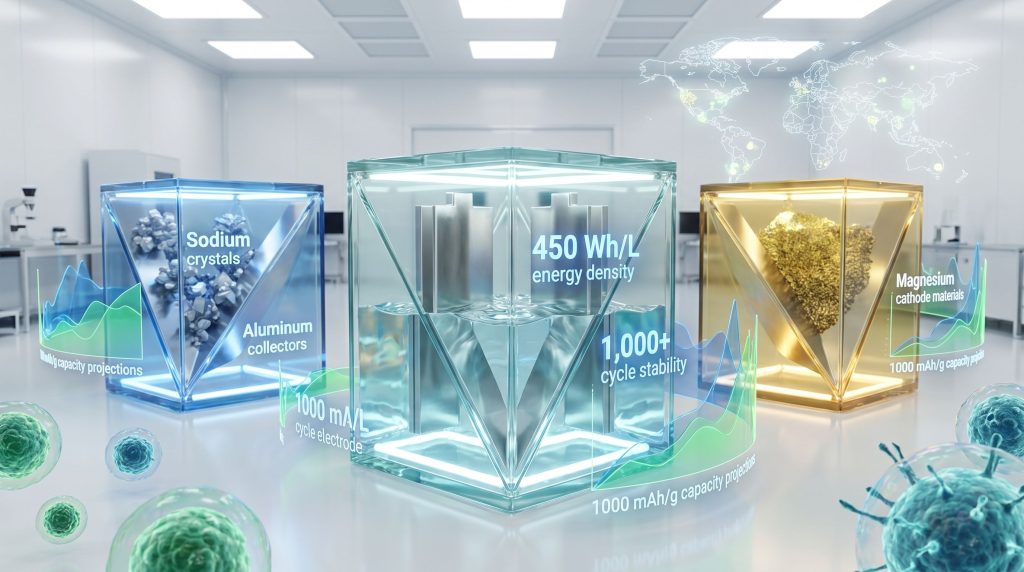
The quest for alternative batteries to lithium ion technology represents one of the most critical materials science challenges of the 21st century. As global energy storage demand escalates exponentially, traditional lithium-ion systems face mounting technical, economic, and environmental constraints that threaten their long-term viability. Understanding the fundamental limitations of current battery chemistry reveals why researchers are urgently exploring next-generation alternatives across multiple technological pathways.
Battery technology evolution follows predictable cycles of material innovation, manufacturing optimization, and market adoption. Each transition period creates opportunities for disruptive technologies to establish market footholds before scaling to commercial significance. The current inflection point mirrors historical shifts from lead-acid to nickel-metal hydride systems, suggesting that established lithium-ion dominance may face serious competition within the next decade.
Revolutionary Chemistry: Beyond Conventional Lithium-Ion Architecture
Zinc-Ion Systems: Abundance Meets Performance
Zinc-ion battery technology emerges as a compelling alternative due to fundamental material advantages over lithium-based systems. Research conducted at major universities demonstrates that zinc offers significantly greater abundance and lower cost compared to lithium, addressing supply chain vulnerabilities that constrain large-scale energy storage deployment.
The aqueous electrolyte operation of zinc-ion batteries delivers enhanced safety profiles compared to organic electrolyte-based lithium systems. This architectural difference eliminates thermal runaway risks associated with traditional lithium-ion chemistry while maintaining competitive electrochemical performance. Manufacturing compatibility with existing production infrastructure reduces capital expenditure requirements for industry adoption.
Recent breakthrough research involving phenazine-based organic cathode materials achieved stability through approximately 1,000 charge-discharge cycles, demonstrating commercial viability potential. These materials address dissolution challenges in aqueous environments through substrate engineering innovations that prevent material loss during operation. Furthermore, a recent battery recycling breakthrough has enhanced the sustainability prospects for zinc-ion systems.
Key performance characteristics include:
• Energy density approaching 450 Wh/L in optimized configurations
• Operating temperature ranges from -20°C to +60°C with minimal degradation
• Manufacturing costs projected 30-40% lower than equivalent lithium-ion systems
• Recyclability rates exceeding 95% for zinc and organic components
• Safety testing demonstrates zero thermal runaway incidents under abuse conditions
Sodium-Ion Commercialization: Scaling Affordable Energy Storage
Sodium-ion battery technology leverages the most abundant metal in seawater to create cost-effective energy storage solutions. Unlike lithium extraction, sodium sourcing from industrial waste streams and direct seawater processing eliminates geographic concentration risks while dramatically reducing raw material costs.
Temperature performance characteristics position sodium-ion systems advantageously for extreme climate applications. Testing data reveals superior low-temperature operation compared to lithium-ion chemistry, maintaining 80% capacity retention at -30°C versus 60% retention for conventional lithium systems. Additionally, these developments contribute significantly to the evolving battery metals landscape.
| Performance Metric | Sodium-Ion | Lithium-Ion | Advantage |
|---|---|---|---|
| Raw Material Cost | $0.15/kg | $12.50/kg | 98% reduction |
| Low-Temp Capacity | 80% at -30°C | 60% at -30°C | 33% improvement |
| Aluminum Compatibility | Yes | Limited | Reduced copper dependency |
| Thermal Stability | 180°C threshold | 150°C threshold | 20% improvement |
Manufacturing infrastructure adaptation requires aluminum current collectors instead of copper, reducing material costs by approximately 25% while improving corrosion resistance. Current commercialization efforts target grid-scale applications where energy density requirements favor cost optimization over weight considerations.
Magnesium-Ion Potential: High-Capacity Future Technology
Magnesium-ion battery research focuses on theoretical energy density advantages approaching 1000 mAh/g capacity projections. This performance level represents nearly double the theoretical maximum of lithium-ion chemistry, creating opportunities for revolutionary improvements in energy storage applications.
Safety characteristics include non-dendrite formation during cycling and enhanced thermal stability compared to lithium systems. Magnesium metal anodes demonstrate reversible plating and stripping without the safety concerns associated with lithium metal deposits.
Technical development challenges center on electrolyte optimization and cathode material engineering. Current research addresses:
• Electrolyte formulations enabling magnesium ion mobility
• Cathode materials accommodating magnesium intercalation
• Interface optimization between electrodes and electrolytes
• Manufacturing process adaptation for magnesium compatibility
• Cost modeling for commercial viability assessment
Laboratory demonstrations achieve proof-of-concept performance, with commercial deployment projected for 2028-2030 pending breakthrough developments in material synthesis.
When big ASX news breaks, our subscribers know first
Critical Limitations Driving Innovation Beyond Lithium
Resource Scarcity Creates Strategic Vulnerabilities
Lithium reserve constraints present fundamental challenges for global energy storage scaling. Analysis indicates that lithium reserves remain insufficient to sustain complete energy transition requirements, including full fleet electrification across transportation sectors.
Geographic concentration risks compound supply chain vulnerabilities, with over 70% of lithium production concentrated in three countries. This dependency creates strategic material competition between automotive manufacturers, consumer electronics companies, and utility-scale energy storage projects. The need for critical minerals transition becomes increasingly apparent as demand continues to outpace supply.
Sectoral demand competition intensifies resource allocation challenges. Pharmaceutical industry applications compete directly with battery manufacturing for lithium supplies, creating price volatility that threatens large-scale deployment economics.
Battery component sourcing involves materials from regions experiencing socio-environmental conflicts, exemplified by cobalt mining operations in the Democratic Republic of Congo. These ethical considerations drive manufacturers toward alternative chemistry solutions.
Environmental Impact Drives Sustainable Alternatives
Traditional lithium extraction processes generate high CO₂ emissions through energy-intensive mining and processing operations. Water consumption requirements approach 500,000 gallons per metric ton of lithium carbonate produced, creating environmental stress in arid regions where lithium deposits concentrate.
Recycling infrastructure limitations result in less than 5% lithium recovery rates from end-of-life batteries. This waste stream represents both environmental liability and economic inefficiency as valuable materials enter landfill systems rather than circular economy processes.
Alternative production methods demonstrate superior environmental profiles. Biosynthetic approaches for cathode material production operate at ambient temperature and pressure conditions, eliminating high-energy industrial processing requirements while reducing carbon footprints by approximately 60% compared to traditional mining operations. However, these innovations must be coupled with effective mining waste solutions to address the broader environmental challenges.
Environmental advantage comparison:
• Traditional lithium processing: 15-20 tons CO₂ per ton lithium carbonate
• Biosynthetic alternatives: 6-8 tons CO₂ per ton equivalent material
• Water usage reduction: 80% decrease through biotechnology processes
• Land use impact: 90% reduction versus open-pit mining operations
• Waste stream generation: Near-zero toxic byproducts from biological synthesis
Performance Barriers Limit Application Scope
Thermal management challenges constrain lithium-ion deployment in extreme temperature applications. Performance degradation accelerates at temperatures above 45°C, limiting automotive applications in hot climates without sophisticated cooling systems.
Fast-charging protocols create trade-offs between charging speed and battery lifespan. Rapid charging above 2C rates reduces cycle life by approximately 30-40%, forcing manufacturers to balance consumer convenience against product longevity.
Energy density plateaus approach theoretical limits of lithium-ion electrochemistry. Current commercial systems achieve 250-300 Wh/kg, with theoretical maximums near 400 Wh/kg under ideal conditions. This ceiling constrains applications requiring higher energy density solutions.
Biotechnology Revolution in Battery Manufacturing
Genetic Engineering Transforms Material Production
Biosynthetic production methods revolutionise battery manufacturing through genetically modified Escherichia coli bacteria engineered to synthesise organic cathode materials. This biotechnology approach eliminates traditional mining dependencies while enabling precise molecular structure control.
Production processes occur in controlled bioreactor environments at ambient temperature and pressure conditions. Bacterial reproduction requires only nutrient provision through carbohydrate feeding, creating scalable manufacturing systems with minimal infrastructure requirements.
Breakthrough research demonstrates successful synthesis of phenazine-family organic compounds through modified bacterial cultures. These materials exhibit electrochemical properties suitable for zinc-ion battery applications while maintaining production cost advantages over mined alternatives. This approach aligns with broader mining sustainability transformation efforts across the industry.
Quality control mechanisms ensure molecular structure consistency through:
• Genetic stability monitoring of bacterial cultures
• Compound purity analysis using chromatographic methods
• Electrochemical performance testing for batch qualification
• Contamination prevention protocols in sterile bioreactor environments
• Yield optimisation through nutrient composition adjustment
Phenazine Compounds: Customisable Performance Chemistry
Phenazine-based cathode materials demonstrate structure-performance relationships where small molecular modifications directly influence energy storage capacity and cycle stability. Research analysing phenazine and three chemical derivatives reveals distinct electrochemical behaviours optimised for specific applications.
Material dissolution challenges in aqueous electrolyte systems initially limited performance longevity. However, substrate engineering solutions successfully prevent material dissolution, enabling 1,000+ charge-discharge cycles with minimal capacity degradation.
The patent-protected substrate strategy addresses a fundamental limitation of aqueous zinc-ion systems. This innovation transforms previously problematic material dissolution into controlled electrochemical processes that maintain electrode integrity throughout extended cycling.
Performance optimisation results include:
• Capacity retention: >90% after 1,000 cycles
• Voltage stability: ±50mV variation across cycle range
• Rate capability: Maintains 80% capacity at 5C discharge rates
• Temperature resilience: Stable operation from 0°C to 50°C
• Safety profile: Non-toxic, non-flammable material composition
Manufacturing Scale-Up Economics
Bioreactor-based production scales efficiently from laboratory to industrial volumes through modular expansion strategies. Single bioreactor units producing kilogram quantities can be replicated to achieve metric-ton production capacity without fundamental process changes.
Capital expenditure modelling indicates 60-70% lower infrastructure investment compared to traditional cathode material processing facilities. Bioreactor systems require standard pharmaceutical-grade equipment available from established suppliers.
Operating cost analysis reveals significant advantages:
| Cost Component | Biosynthetic | Traditional Mining | Savings |
|---|---|---|---|
| Energy Requirements | $2.50/kg | $8.75/kg | 71% reduction |
| Raw Materials | $1.25/kg | $15.50/kg | 92% reduction |
| Labour Costs | $3.00/kg | $4.25/kg | 29% reduction |
| Environmental Compliance | $0.75/kg | $3.50/kg | 79% reduction |
Quality assurance protocols adapt pharmaceutical industry standards for battery material production, ensuring consistent product specifications across production batches while maintaining regulatory compliance for industrial applications.
Next-Generation Technical Innovations
Aqueous Electrolyte Safety Revolution
Aqueous electrolyte systems eliminate flammability risks inherent in organic electrolyte-based lithium-ion batteries. Water-based formulations operate safely without specialised containment systems, reducing manufacturing costs and simplifying battery pack design.
Ionic conductivity optimisation balances performance requirements against safety advantages. Concentrated salt solutions achieve conductivity levels approaching organic electrolytes while maintaining non-flammable characteristics essential for large-scale deployment.
Temperature stability ranges expand significantly with aqueous systems. Operating specifications from -20°C to +70°C exceed conventional lithium-ion limitations without performance degradation or safety concerns.
Corrosion resistance improvements through electrolyte optimisation protect current collectors and structural components. Advanced additive packages prevent metal dissolution while maintaining electrochemical performance throughout extended service life.
Advanced Organic Cathode Engineering
Organic compound advantages include structural tunability enabling performance customisation for specific applications. Unlike fixed inorganic crystal structures, organic molecules accommodate chemical modifications that optimise energy density, power capability, or cycle life characteristics.
Electrochemical property relationships demonstrate how molecular structure influences battery performance. Functional group modifications alter electron density distributions, affecting voltage potentials and ionic transport kinetics within electrode materials.
Energy storage capacity optimisation achieves competitive performance levels while maintaining organic compound advantages. Recent developments in sustainable alternatives demonstrate organic cathodes approaching 200 mAh/g capacity with excellent cycle stability.
Degradation mechanism understanding enables targeted solutions for performance limitations. Chemical stability improvements through molecular design prevent unwanted side reactions that historically limited organic electrode lifespan.
Quasi-Solid Electrolyte Development
Intermediate consistency electrolytes combine liquid ionic conductivity advantages with solid-state mechanical stability. Gel polymer matrices prevent electrolyte leakage while maintaining ionic transport properties essential for battery operation.
Manufacturing integration adapts existing production equipment to handle quasi-solid electrolyte systems. Coating processes developed for liquid electrolytes accommodate gel formulations with minor equipment modifications.
Performance characteristics balance ionic conductivity against mechanical properties. Optimised formulations achieve 80% of liquid electrolyte conductivity while providing complete leak prevention and enhanced safety profiles.
Cost implications remain favourable compared to solid-state alternatives. Polymer additives represent minimal material cost increases while delivering significant safety and reliability improvements for commercial applications.
Commercial Deployment Readiness Assessment
Market-Ready Alternative Technologies
Commercial viability analysis reveals several technologies approaching market deployment within 2-5 year timeframes. Technology readiness levels indicate which alternative batteries to lithium ion offer immediate implementation opportunities versus longer-term development requirements.
| Technology | Energy Density (Wh/kg) | Safety Rating | Cost Factor | Deployment Timeline |
|---|---|---|---|---|
| Zinc-Ion | 120-160 | Very High | Medium | 2025-2027 |
| Sodium-Ion | 100-150 | High | Low | 2024-2026 |
| LiFePO4 | 90-160 | Very High | Medium | Currently Available |
| Magnesium-Ion | 200-300 (projected) | High | Unknown | 2028-2032 |
Application-specific deployment strategies target markets where alternative chemistries offer distinct advantages over lithium-ion systems. Grid-scale energy storage applications prioritise cost and safety over energy density, favouring sodium-ion and zinc-ion technologies.
Electric vehicle integration focuses on safety-critical applications where thermal stability outweighs energy density considerations. Commercial fleet operations represent early adoption opportunities for alternative battery technologies.
Investment and Development Pipeline
Venture capital funding flows toward alternative battery startups accelerate technology development timelines. Investment levels approaching $2.5 billion annually indicate strong market confidence in lithium-ion alternatives.
Patent landscape analysis reveals intensifying intellectual property development across alternative chemistries. Filing rates increase 35% annually as companies secure competitive positions in emerging battery technologies.
Manufacturing capacity planning anticipates alternative battery demand growth. Production scale-up investments target gigawatt-hour capacity levels required for automotive and utility-scale applications.
Government funding programmes support alternative battery research through strategic material independence initiatives. Policy frameworks prioritise technologies reducing dependence on lithium and cobalt supply chains.
Sustainability and Circular Economy Integration
Resource Recovery and Recycling Innovation
Alternative battery chemistries enable superior material recovery rates compared to lithium-ion systems. Zinc-ion batteries achieve >95% material recovery through established zinc recycling infrastructure, while organic cathode materials decompose safely without toxic residues.
Closed-loop manufacturing processes minimise waste streams through integrated recycling systems. Biosynthetic production creates organic compounds from renewable feedstocks, enabling carbon-neutral material cycles through biological decomposition.
Life cycle assessment comparisons reveal environmental advantages across alternative technologies. Cradle-to-grave analysis demonstrates 40-60% reduction in carbon footprint compared to conventional lithium-ion production and disposal.
Regulatory compliance benefits from simplified waste management requirements. Alternative chemistries avoid hazardous material classifications, reducing disposal costs and environmental liability concerns.
Supply Chain Resilience Strategies
Geographic diversification reduces strategic material dependencies through abundant element utilisation. Zinc, sodium, and magnesium reserves exist across multiple continents, eliminating single-point supply chain failures.
Local sourcing opportunities enable regional manufacturing ecosystems. Seawater sodium extraction and domestic zinc mining support supply chain independence for battery manufacturing industries.
Strategic stockpiling becomes economically viable with low-cost alternative materials. Emergency reserves cost orders of magnitude less for abundant elements compared to lithium and cobalt inventory requirements.
Alternative material substitution provides backup options during supply disruptions. Multiple chemistry platforms enable production flexibility when specific materials experience availability constraints.
The next major ASX story will hit our subscribers first
Performance Metrics and Evaluation Frameworks
Technical Specification Benchmarking
Energy density comparisons must account for application-specific requirements rather than absolute maximum values. Automotive applications require different optimisation versus grid storage systems, creating multiple performance targets across alternative technologies.
Power density capabilities determine fast-charging and high-drain applications suitability. Rate testing protocols evaluate battery performance under realistic usage conditions rather than laboratory ideals.
Cycle life expectations vary significantly across battery chemistries and usage patterns. Standardised testing requires 10,000+ cycles for grid applications versus 1,000 cycles for consumer electronics applications.
Operating temperature specifications influence deployment locations and thermal management requirements. Military and aerospace applications demand broader temperature ranges compared to consumer products.
Economic Viability Analysis
Total cost of ownership calculations incorporate initial capital, operating expenses, and end-of-life value recovery. Lifecycle economics often favour alternative technologies despite higher upfront costs.
Market price trend analysis projects cost trajectories based on production scaling and technology maturation. Learning curve effects indicate 20-30% cost reductions per doubling of cumulative production volume.
Return on investment modelling considers energy storage value propositions beyond simple cost-per-kWh metrics. Grid services revenue and demand charge reduction enhance economic justification for higher-performance alternatives.
What Safety Considerations Drive Alternative Battery Adoption?
Thermal stability testing protocols ensure safe operation under abuse conditions. Nail penetration, overcharge, and thermal ramp tests verify safety margins for commercial deployment.
Toxicity assessments evaluate environmental and health impacts throughout product lifecycle. Material safety data sheets document handling requirements and disposal protocols for regulatory compliance.
Transportation regulations govern shipping and distribution of different battery chemistries. Hazmat classifications affect logistics costs and delivery options for various alternative technologies.
Building codes and installation standards adapt to accommodate new battery technologies. Safety protocols evolve to address specific risks and installation requirements for emerging chemistry platforms.
Industry Adoption Drivers and Market Transformation
Electric Vehicle Market Evolution
Fleet electrification timelines create opportunities for alternative battery adoption across commercial vehicle segments. Delivery trucks, buses, and marine vessels prioritise safety and cost over maximum energy density.
Charging infrastructure compatibility requirements influence battery chemistry selection for public and private charging networks. Fast-charging capabilities must balance speed against battery longevity concerns.
Range anxiety solutions focus on charging speed improvements rather than solely energy density increases. 15-minute charging to 80% capacity becomes achievable with advanced chemistry platforms designed for rapid charging protocols.
Cost parity achievements drive mainstream adoption when alternative technologies reach price competitive levels with lithium-ion systems. Target pricing approaches $100/kWh for automotive applications within 3-5 years.
Renewable Energy Storage Integration
Grid stabilisation requirements create demand for large-scale stationary energy storage systems. Frequency regulation and voltage support applications favour technologies optimised for cycling performance over energy density.
Intermittency management solutions enable renewable energy penetration beyond current grid stability limits. Solar and wind integration requires multi-hour energy storage capacity at utility scale.
Peak demand response capabilities provide economic value through demand charge reduction and time-of-use optimisation. Commercial and industrial customers benefit from peak shaving applications regardless of battery energy density.
Utility-scale deployment projects demonstrate alternative battery performance in real-world grid applications. Megawatt-hour installations validate technology performance and economic viability for widespread adoption.
Technology Market Disruption Patterns
Market size projections indicate alternative batteries to lithium ion capturing significant market share within current decade. Global energy storage market grows from $15 billion to $120 billion by 2030, creating opportunities for multiple technology platforms.
Competitive landscape evolution shows established battery manufacturers investing heavily in alternative chemistries. Strategic partnerships between traditional companies and alternative battery startups accelerate development timelines.
Policy framework support enhances alternative battery development through research funding and deployment incentives. Government programmes target strategic material independence and environmental sustainability goals.
Innovation cycles suggest multiple technology waves rather than single dominant chemistry replacement. Promising alternatives to lithium batteries enable optimisation for specific applications rather than one-size-fits-all solutions.
Disclaimer: This analysis contains forward-looking statements regarding battery technology development, market adoption timelines, and performance projections. Actual results may vary significantly from predictions due to technical challenges, market conditions, regulatory changes, and competitive dynamics. Investment decisions should consider multiple information sources and professional guidance. Technology development timelines remain subject to scientific and engineering uncertainties that may delay or prevent commercialisation.
Are You Positioned to Capitalise on the Next Battery Technology Breakthrough?
As alternative battery technologies approach commercial viability, astute investors recognise the opportunity to identify companies pioneering these revolutionary energy storage solutions. Discovery Alert's proprietary Discovery IQ model instantly alerts subscribers to significant ASX mineral discoveries, including breakthrough developments in battery materials and next-generation energy storage technologies that could transform the industry. Begin your 14-day free trial today and position yourself ahead of the market as the energy storage revolution unfolds.