June 4, 2026
Aluminium Bahrain force majeure declarations have become a focal point for understanding how regional disruptions cascade through global commodity markets. The intersection of geopolitical tensions and supply chain vulnerabilities creates scenarios where legal emergency provisions trigger widespread market recalibrations. When major producers invoke force majeure clauses due to external constraints beyond their operational control, the resulting supply gaps force rapid repricing across international trading platforms.
Understanding Force Majeure in Industrial Commodity Markets
The maritime chokepoints that control global trade flows operate under a delicate balance of geopolitical stability and commercial necessity. When this equilibrium fractures, the ripple effects cascade through commodity markets with swift and measurable precision. The aluminium sector, heavily dependent on predictable shipping lanes and contractual reliability, exemplifies how external disruptions can trigger market-wide recalibrations that extend far beyond the initial point of constraint.
Force majeure declarations in commodity trading represent more than legal technicalities. They signal fundamental breakdowns in the supply chain infrastructure that underpins modern manufacturing. When producers invoke these emergency provisions, markets must rapidly reprice risk premiums while industrial consumers scramble to secure alternative sourcing arrangements. Furthermore, these disruptions often highlight the interconnected nature of global supply chains and their vulnerability to external shocks.
Legal Framework for Extraordinary Circumstances
The International Chamber of Commerce provides standardised language for force majeure clauses in global commodity contracts. These provisions distinguish between controllable operational disruptions and extraordinary circumstances beyond reasonable producer control. Maritime blockades, military actions in shipping lanes, and port accessibility constraints typically qualify under these definitions, provided producers demonstrate all reasonable mitigation attempts.
Documentation requirements for valid force majeure claims include:
• Written notification to contracted buyers within specified timeframes
• Evidence of extraordinary circumstances preventing contract fulfilment
• Demonstration of reasonable efforts to overcome constraints
• Establishment of causal relationships between events and performance inability
The Aluminium Bahrain force majeure declaration exemplifies shipping-related constraints rather than production facility failures. This distinction proves critical because inventory continues accumulating at production sites while export capacity remains constrained by external maritime factors. Moreover, understanding these tariffs economic implications becomes essential when assessing broader trade disruption impacts.
Historical Precedents in Metals Markets
Previous force majeure events in industrial metals demonstrate consistent market response patterns. The April 2022 aluminium price spike, reaching levels similar to current dynamics, resulted from comparable export constraints affecting major producing regions. These historical precedents provide context for understanding market participant reactions and pricing mechanisms during supply disruptions.
Insurance implications for commodity contracts vary significantly based on force majeure clause specificity. Standard coverage typically excludes war risks and civil unrest, requiring separate political risk insurance for comprehensive protection. Buyers and sellers must navigate complex claim processes while managing immediate supply chain disruptions. Additionally, the broader tariffs impact on markets demonstrates how trade policy uncertainties compound these supply chain challenges.
When big ASX news breaks, our subscribers know first
Regional Production Vulnerabilities in the Gulf Cooperation Council
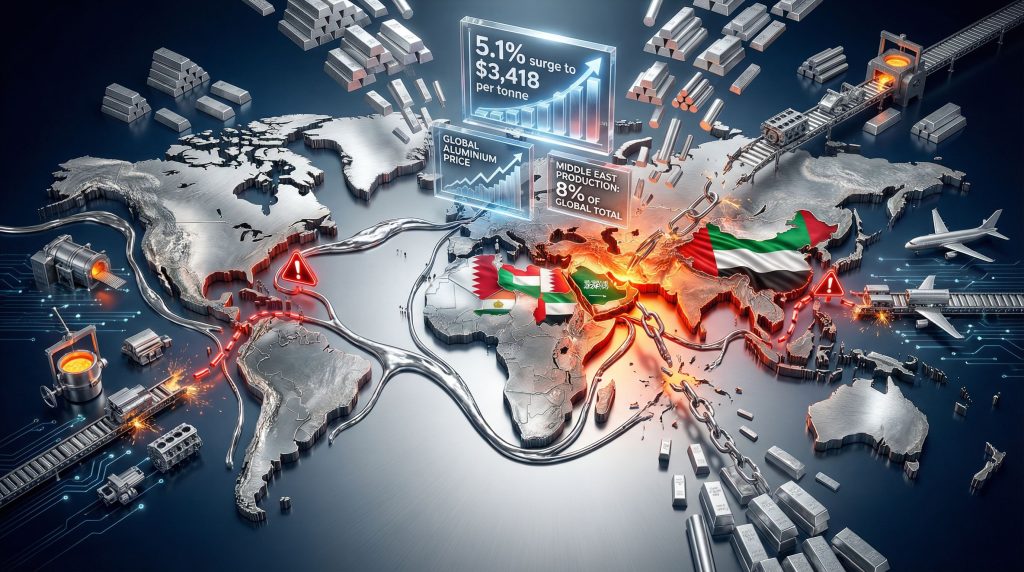
Geographic concentration creates systemic risk amplification in industrial commodity production. The Gulf Cooperation Council's 8% contribution to global aluminium output demonstrates how regional instability can trigger worldwide supply constraints. Unlike diversified mining operations spread across multiple continents, aluminium smelting capacity clusters in specific zones due to energy availability and infrastructure requirements.
The convergence of abundant natural gas resources, established port facilities, and skilled workforce concentrations made the GCC an attractive location for energy-intensive smelting operations. However, this same geographic clustering now represents a critical vulnerability when regional tensions disrupt normal commercial operations.
Production Infrastructure Dependencies
Modern aluminium smelting requires continuous electrical power consumption of approximately 13,000-16,000 kilowatt hours per metric ton of refined metal. GCC facilities rely primarily on natural gas-fired power generation, creating energy security advantages during normal operating conditions. However, the current shipping constraints affecting refined metal exports highlight how downstream logistics can become binding constraints regardless of upstream production capacity.
Alba's 1.62 million metric tons of annual production capacity represents the dominant share of regional output. Combined with Qatar's curtailed operations, the simultaneous disruption of two major facilities creates measurable supply gaps in global markets. The accumulation of finished inventory at production facilities, rather than normal warehouse distribution, signals the severity of export logistics constraints.
Risk Assessment Matrix
| Impact Level | Mitigation Complexity |
|---|---|
| Maritime shipping dependencies | Critical |
| Production facility concentration | High |
| Energy supply reliability | Medium |
| Workforce accessibility | Medium |
Supply Chain Bottleneck Analysis
The Strait of Hormuz represents a critical maritime chokepoint for regional aluminium exports. Approximately 20% of global oil shipments transit this waterway, making it a strategic pressure point during regional conflicts. Alternative shipping routes through the Red Sea or overland transport networks involve significant cost increases and extended transit times, making them economically unfeasible for large-volume commodity shipments.
Port infrastructure limitations compound these constraints. Specialised aluminium handling facilities require dedicated loading equipment and storage areas designed for metal ingot handling. The inability to access these facilities forces producers to accumulate inventory on-site, creating working capital constraints and potential quality degradation risks from extended storage periods. Consequently, understanding the broader US‑China trade war impact helps contextualise how multiple geopolitical tensions simultaneously affect global supply chains.
Market Response Mechanisms and Price Discovery
Commodity futures markets function as sophisticated pricing mechanisms that incorporate both immediate supply constraints and forward-looking risk assessments. The 5.1% price surge to $3,418 per metric ton on the London Metal Exchange reflects market participants rapidly repricing aluminium contracts to account for supply uncertainty duration and magnitude.
This price movement represents the strongest levels since April 2022, providing historical context for the severity of current market disruptions. The correlation with previous geopolitical events suggests institutional memory exists among traders and risk managers, supporting the reasonableness of current price responses relative to fundamental supply constraints.
Risk Premium Components
The immediate price reaction incorporates several distinct risk factors:
• Immediate supply reduction from confirmed production curtailments
• Duration uncertainty regarding shipping lane normalisation timelines
• Contagion risks from potential additional facility disruptions
• Inventory depletion expectations as global stocks compensate for lost supply
Forward curve analysis reveals how markets price extended supply disruption scenarios. Contango structures, where future delivery prices exceed spot prices, typically emerge during supply crises as buyers bid up deferred delivery contracts to secure future supply availability. According to Reuters analysis, these market dynamics reflect fundamental supply-demand imbalances rather than speculative activity.
What Drives Speculative Versus Fundamental Activity?
The distinction between speculative trading activity and fundamental supply-demand imbalances becomes crucial during crisis periods. Current evidence suggests primarily fundamental drivers, as actual production curtailments create measurable supply reductions rather than purely sentiment-driven price movements.
"Market participants must distinguish between temporary supply interruptions and structural capacity reductions when making investment decisions during geopolitical disruptions."
Open interest expansion in aluminium futures contracts indicates new position establishment rather than existing position liquidation. This pattern suggests institutional investors and industrial hedgers are actively managing increased supply chain risks rather than engaging in purely speculative activities. Industry reports from Mining.com confirm that these are operational constraints rather than financial market manipulations.
Strategic Implications for Global Manufacturing
Industrial sectors exhibit varying degrees of vulnerability to aluminium supply disruptions based on inventory management practices, supplier diversification strategies, and material substitution capabilities. The automotive industry's increasing aluminium intensity, particularly in electric vehicle applications, creates heightened exposure to supply chain interruptions.
Sector-Specific Vulnerability Assessment
Automotive Manufacturing:
Electric vehicle adoption accelerates aluminium demand intensity due to battery housing requirements and lightweight body panel specifications. These applications require high-purity, precision-cast aluminium with specific thermal conductivity properties. Alternative materials often compromise performance characteristics or increase production costs significantly.
Aerospace Applications:
Aircraft manufacturing operates under rigid certification requirements that extend supplier qualification timelines to 6-12 months for new sources. Just-in-time inventory systems incompatible with supply disruptions create cascading production delays. The 18-36 month aircraft production pipeline means current disruptions affect deliveries extending into late 2026 and beyond.
Construction Sector Flexibility:
Building and infrastructure projects demonstrate greater supply chain adaptability through material substitution options and extended project timelines. Architectural specifications often permit alternative materials, providing buffer capacity during supply constraints.
Packaging Industry Resilience:
Food and beverage container manufacturing maintains higher inventory buffers and operates with shorter lead time requirements compared to automotive and aerospace sectors. However, consumer goods demand stability creates pressure for consistent supply availability.
Supply Chain Integration Models
Modern manufacturing operates through tiered supplier relationships that distribute risk and responsibilities across multiple organisational levels. Tier 1 manufacturers maintain direct relationships with original equipment manufacturers and typically possess greater financial resources for inventory buffers and hedging instruments.
Tier 2 and 3 suppliers often operate with reduced inventory buffers and limited hedging capabilities, creating vulnerability concentration at these supply chain levels. The cascading effects of aluminium shortages propagate through these networks with varying time delays and impact magnitudes. In addition, these disruptions highlight the importance of energy security in mining operations and their downstream impacts.
Regulatory Framework and International Trade Law
International commodity trading operates under complex legal frameworks that balance commercial flexibility with contractual certainty. The United Nations Convention on Contracts for the International Sale of Goods provides foundational principles, while the International Chamber of Commerce's Incoterms establish standardised trading terminology and risk allocation mechanisms.
Force Majeure Legal Standards
Valid force majeure claims require demonstration of circumstances "beyond reasonable control" and "not reasonably foreseeable" at contract formation. Maritime blockades and military actions in shipping lanes generally satisfy these requirements, provided producers can establish direct causal relationships between external events and performance inability.
Dispute resolution mechanisms in commodity contracts typically specify arbitration procedures through established institutions such as the London Court of International Arbitration or the Singapore International Arbitration Centre. These processes can extend over 12-18 months, creating prolonged uncertainty for market participants.
Insurance and Risk Management Frameworks
Political risk insurance provides coverage for contract frustration due to government actions, civil unrest, and war-related disruptions. However, standard commercial property insurance excludes these risks, requiring specialised coverage that many smaller trading companies lack.
The Aluminium Bahrain force majeure declaration highlights the importance of comprehensive risk management strategies that address both operational and political risks in international commodity supply chains. Furthermore, these events demonstrate how quickly regional disruptions can escalate into global supply concerns.
Trade Sanctions and Secondary Effects
Economic sanctions regimes create additional complexity in commodity trading during geopolitical conflicts. Export licensing requirements and secondary sanctions risks force international companies to implement enhanced due diligence procedures that can delay normal commercial transactions.
Strategic stockpile policies in major consuming nations provide government intervention mechanisms during supply crises. The United States Strategic Materials Program and similar initiatives in other countries maintain emergency reserves for critical industrial materials, including aluminium.
Long-term Structural Changes in Global Aluminium Markets
Persistent geopolitical risks accelerate fundamental shifts in global commodity supply chain structures. The concept of "friend-shoring" gains momentum as companies and governments prioritise supply security over pure cost optimisation in strategic material sourcing decisions.
Investment Pattern Evolution
Capital allocation in aluminium smelting increasingly considers geopolitical stability alongside traditional factors such as energy costs and transportation infrastructure. New facility development shows preference for politically stable regions with diversified trade relationships, even when initial investment costs exceed traditional locations.
Technology transfer restrictions affecting smelting equipment and production processes create additional barriers for capacity development in certain regions. These constraints influence long-term supply geography as advanced smelting technologies become concentrated in specific geopolitical zones.
Regional Self-Sufficiency Trends
Major consuming regions demonstrate increased interest in domestic aluminium production capacity, despite higher energy costs compared to traditional producing areas. Environmental regulations and carbon pricing mechanisms support this trend by reducing the competitive advantage of energy-intensive production in regions with less stringent environmental standards.
Strategic reserve policies expand beyond government stockpiles to include private sector inventory requirements and supply diversification mandates. These initiatives create structural demand for aluminium inventory that supports higher average price levels but reduces supply chain vulnerability. However, the mining sector's adaptation to these changes reflects broader industry evolution trends that prioritise resilience over efficiency.
The next major ASX story will hit our subscribers first
Investment and Risk Assessment Framework
Institutional investors require sophisticated analytical frameworks for evaluating aluminium sector exposure during periods of elevated geopolitical risk. Traditional financial metrics must incorporate political risk assessments and supply chain resilience factors that extend beyond conventional commodity analysis.
Portfolio Risk Management
Geographic diversification analysis becomes paramount when evaluating aluminium-related investments. Companies with production facilities concentrated in geopolitically sensitive regions warrant higher risk premiums and position size limitations within diversified portfolios.
Investment Risk Factors
| Weighting | Assessment Methodology |
|---|---|
| Production geographic spread | 35% |
| Contract flexibility provisions | 25% |
| Alternative supplier access | 20% |
| Financial hedging sophistication | 20% |
Early Warning Indicator Systems
Successful commodity investment requires monitoring systems that identify supply disruption risks before they manifest in price movements. Maritime insurance premium fluctuations provide leading indicators of shipping lane risks, while regional political stability indices offer broader geopolitical context.
Energy price volatility in major producing regions signals potential cost pressures that could affect production economics. Currency exchange rate movements influence export competitiveness and can precipitate supply allocation changes among international customers.
Future Market Structure Evolution
The current supply disruption accelerates existing trends toward more resilient but potentially less efficient global aluminium markets. Redundancy and geographic diversification command premium valuations as supply security concerns override pure cost optimisation in sourcing decisions.
Technology and Process Innovation
Investment in aluminium recycling technology intensifies as companies seek to reduce dependence on primary smelting capacity in geopolitically sensitive regions. Advanced recycling processes can achieve near-primary metal quality while requiring significantly less energy input than traditional smelting operations.
Alternative material development receives increased research funding as end-users explore substitution options for critical applications. However, aluminium's unique combination of lightweight properties, corrosion resistance, and thermal conductivity makes complete substitution challenging for many industrial applications.
Policy Response Development
International cooperation frameworks for commodity supply security emerge as governments recognise shared vulnerabilities in critical material supply chains. Emergency supply sharing agreements and coordinated strategic reserve policies provide mechanisms for managing future supply crises.
Investment incentives for domestic production capacity expansion compete with environmental regulations and community acceptance challenges. Balancing supply security objectives with sustainability goals creates complex policy trade-offs that influence long-term industry structure. Consequently, the Aluminium Bahrain force majeure situation serves as a catalyst for reassessing global supply chain dependencies and risk management strategies across multiple sectors.
The analysis presented reflects current market conditions and historical precedents. Commodity investments involve substantial risk, including potential for significant price volatility and loss of capital. Investors should consult qualified financial advisors and conduct thorough due diligence before making investment decisions based on geopolitical risk assessments.
Seeking Strategic Opportunities in Commodity Supply Chain Disruptions?
Discovery Alert's proprietary Discovery IQ model delivers real-time alerts on significant ASX mineral discoveries, instantly empowering subscribers to identify actionable opportunities as supply chain disruptions reshape global markets. Begin your 14-day free trial today and secure your market-leading advantage in an increasingly volatile commodity landscape.