August 7, 2026
The Mechanics Behind Physical Aluminium Premiums and Why They Shift So Violently
Physical commodity pricing is rarely straightforward. While most investors track exchange-based benchmarks like the London Metal Exchange aluminium price, the cost that European manufacturers actually pay for metal is shaped by an entirely separate layer of pricing: the physical premium. This is where supply chain realities, geopolitical risk perceptions, logistics costs, and market sentiment converge into a single number that can move tens or hundreds of dollars per tonne within weeks.
The Europe aluminium duty-paid premium referenced to Rotterdam in-warehouse delivery is one of the most closely watched physical benchmarks in the global aluminium market. It represents the amount buyers must pay above the LME base price to receive actual metal in Europe, incorporating import duties, freight, insurance, financing costs, and a risk-adjusted component that reflects prevailing market conditions. When supply chains tighten, this premium expands rapidly. When conditions normalise, it can collapse just as fast.
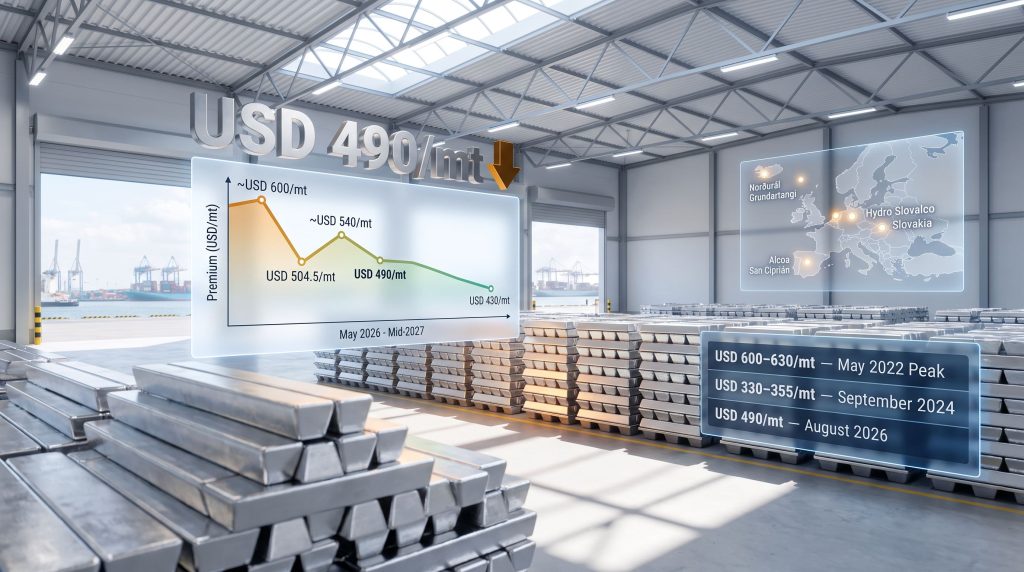
Understanding what has driven an approximately 18% decline in this premium between May and August 2026, from roughly USD 600 per tonne to around USD 490 per tonne, requires examining the full architecture of European aluminium supply, the upstream alumina supply chain, and the demand-side dynamics that have amplified the correction.
When big ASX news breaks, our subscribers know first
Rotterdam as the Pricing Epicentre of European Aluminium
Rotterdam functions as Europe's primary aluminium pricing reference point for several interconnected reasons. Its position as a major port, its warehousing infrastructure, and its deep integration with European trade routes make it the natural hub for physical aluminium delivery. When traders, producers, and manufacturers negotiate term contracts, the Rotterdam duty-paid premium provides the agreed-upon benchmark above the LME that both sides use to calculate final transaction prices.
This premium is not static. Furthermore, it fluctuates based on a range of interconnected factors:
- Freight and logistics costs, which determine how expensive it is to move metal from producing regions into European warehouses
- Import duty levels, particularly relevant for non-EU origin material subject to tariff schedules
- Physical availability, reflecting the balance between nearby supply and immediate buyer demand
- Market risk sentiment, which embeds a forward-looking component based on perceived supply threats or disruptions
- Currency movements, as a stronger US dollar compresses the purchasing power of European buyers and weighs on dollar-denominated premium expectations
The risk sentiment component is what created the so-called war premium that dominated European aluminium pricing during the first half of 2026. When the Middle East conflict raised fears about potential disruption to Gulf-based aluminum and alumina markets, buyers competed aggressively to secure available supply, driving premiums to levels not seen since the post-invasion shock of 2022.
Mapping the 2026 Premium Cycle: A Multi-Phase Correction
The trajectory of the Europe aluminium duty-paid premium through 2026 reflects a market moving through distinct phases, each shaped by a different combination of supply signals and demand conditions.
| Period | Rotterdam Duty-Paid Premium (USD/mt) | Primary Driver |
|---|---|---|
| Mid-May 2026 (Peak) | ~USD 600/mt | Middle East supply disruption fears |
| June 2026 | USD 593/mt | Elevated risk sentiment, tight nearby supply |
| Early July 2026 | USD 504.5/mt | EGA Al Taweelah restart announcement |
| Mid-July 2026 (Rebound) | ~USD 540/mt | Short-covering, temporary position unwinding |
| August 2026 | USD 490/mt | Improved supply, weak demand, contango pressure |
The most striking feature of this trajectory is the speed of the June-to-July decline. A drop of nearly USD 90 per tonne within weeks represents a rapid repricing of risk, not a gradual adjustment. The catalyst was singular and identifiable: the phased restart of Emirates Global Aluminium's Al Taweelah alumina refinery in Abu Dhabi.
The mid-July rebound to approximately USD 540 per tonne is equally instructive. It was not driven by any genuine improvement in physical fundamentals. Instead, traders who had established short positions during the decline began covering those positions to lock in gains, while some buyers who had delayed purchases re-entered the market when premiums appeared to stabilise. The rebound was a positioning phenomenon, not a demand signal, and it proved short-lived as underlying supply conditions continued to improve.
The EGA Al Taweelah Refinery: Why an Alumina Outage Moves European Prices
One of the less widely understood dynamics in aluminium pricing is how upstream feedstock disruptions transmit risk all the way to physical premiums in distant markets. The connection between an alumina refinery in Abu Dhabi and the Rotterdam duty-paid premium is not immediately obvious, but it is direct and consequential.
Alumina is the essential intermediate material produced from bauxite and used as the feedstock for all primary aluminium smelting. Without a consistent alumina supply, smelters cannot maintain output regardless of their energy availability, labour capacity, or technical readiness. Al Taweelah is not merely a large facility; it is one of the world's most significant alumina operations, and its integration into Emirates Global Aluminium's vertically structured production chain means its outage disrupted a critical upstream node in the global value chain.
The refinery sustained damage during the early stages of the Iran conflict and remained offline for approximately three and a half months. The phased recovery unfolded as follows:
- 24 June 2026: Aluminium hydroxide hydrate production resumed, indicating core refinery systems were functional and confirming the recovery process was underway
- 10 July 2026: EGA formally confirmed the restart of alumina production, representing the direct feedstock restoration that markets had been waiting for
- Within days of 10 July: The refinery reached 50% of its rated capacity, providing immediate reassurance about the pace of recovery
- End-2026 target: Full technical capability restoration, completing the phased return to pre-damage operating levels
The market reaction on 10 July was immediate. LME three-month aluminium prices fell 2.1% intraday before closing 1.8% lower, reversing the bullish momentum that had accumulated over the preceding five weeks. The European duty-paid premium followed, declining from USD 593 per tonne in June to USD 504.5 per tonne in early July as the risk premium embedded in physical prices unwound.
The phased nature of the restart allowed the market to progressively price out supply risk in stages rather than through a single violent correction, but the cumulative impact was nonetheless a rapid and decisive repricing of European physical aluminium.
European Smelter Restarts Compounding the Supply Recovery
The Al Taweelah restart did not operate in isolation. A simultaneous wave of European smelter capacity returning to operation added meaningful tonnage to the regional supply picture at precisely the moment when geopolitical risk premiums were already fading.
The three most significant restart contributions were:
- Hydro Slovalco (Slovakia): Approximately 75,000 tonnes per year of primary aluminium production capacity returned to operation, adding material European supply directly into the regional market
- Alcoa San Ciprián (Spain): The facility returned to near-full production following an extended curtailment that had removed a substantial volume of European primary supply
- Norðurál Grundartangi (Iceland): Operations resumed following a partial shutdown spanning October 2025 to April 2026, restoring capacity that had been absent for six months
The convergence of multiple smelter restarts within the same timeframe amplified the supply-side signal. When several facilities return simultaneously, the market reassesses its near-term availability assumptions quickly, accelerating the premium compression beyond what any single restart would achieve independently.
Alongside smelter restarts, European buyers systematically diversified their sourcing strategies during the conflict period, increasing import volumes from Canada, India, and other producing regions. This diversification reduced the structural dependency on Middle East supply that had made aluminium premiums so sensitive to Gulf-area disruptions in the first place.
Demand Weakness as an Amplifying Factor
Supply-side recovery explains the direction of the Europe aluminium duty-paid premium correction, but weak downstream demand has determined the speed and magnitude. European manufacturing and construction activity, the two largest end-use sectors for aluminium, remain well below trend in 2026.
Key demand indicators signal persistent weakness:
- German recycled aluminium output declined during the first quarter of 2026, a direct consequence of elevated electricity costs and subdued end-user demand from fabricators and manufacturers
- Construction activity across major European economies continues to contract, reducing requirements for aluminium extrusions, structural profiles, and fabricated sheet products
- Industrial production, particularly in Germany, remains below pre-2025 trend levels, suppressing demand throughout the aluminium value chain
- Elevated energy costs continue to compress margins across fabricating and downstream processing operations, discouraging inventory accumulation and speculative purchasing
Secondary aluminium production functions as a particularly useful leading indicator of downstream health. When recyclers reduce output, it signals that fabricators are not drawing down metal aggressively, which in turn reflects weak orders from manufacturers and constructors. The weakness in German recycled aluminium output during early 2026 therefore provided an early signal that physical demand was insufficient to absorb the available supply at elevated premium levels.
How Do Global Trade Policies Factor In?
It is also worth noting that US aluminium tariffs have contributed to redirecting metal flows globally, with some volumes that might otherwise have entered the US market instead flowing into European and Asian markets. This trade diversion effect has, consequently, added incremental supply pressure to European physical premiums beyond what domestic fundamentals alone would suggest.
Furthermore, softening China steel demand has dampened broader industrial metals sentiment, indirectly weighing on the appetite for speculative premium positioning across base metals markets including aluminium.
The next major ASX story will hit our subscribers first
The Contango Effect: How Forward Curve Structure Accelerates Spot Corrections
A technical but critically important factor in the premium decline is the shift in the LME forward curve into a steeper contango structure. In contango, forward prices exceed nearby prices, meaning the cost of carrying physical metal into future months exceeds the benefit of holding it.
When the forward curve steepens into contango, holders of physical aluminium inventory face an economic incentive to sell into the nearby market rather than carry metal forward. This increases the supply of physical metal available for immediate delivery, reinforcing downward pressure on near-term premiums even before the underlying physical supply-demand balance has fully shifted.
The contango dynamic creates a self-reinforcing correction mechanism: falling nearby premiums discourage inventory accumulation, which reduces buying interest, which further compresses premiums, which makes carrying costs even less attractive.
This explains why the spot correction in European duty-paid premiums accelerated faster than pure physical supply-demand analysis would suggest, and why the mid-July rebound was insufficient to reverse the broader downward trend.
The Forward Curve Trajectory: Projections Through 2027
Market pricing for forward delivery periods provides insight into how participants expect conditions to evolve over the coming year.
| Period | Forward Premium Estimate (USD/mt) | Market Signal |
|---|---|---|
| August-November 2026 | USD 490-492.5/mt | Stabilisation phase |
| December 2026 | USD 480/mt | Gradual easing continues |
| Q1 2027 (Jan-Mar) | USD 450/mt | Coincides with term contract negotiations |
| April-October 2027 | USD 430/mt | Extended structural normalisation |
The Q1 2027 projection carries particular significance because it aligns with Europe's annual aluminium term contract negotiation cycle. If premiums settle near USD 450 per tonne during this window, it will establish a new post-conflict pricing baseline that European manufacturers and their supply partners will reference for the following twelve months.
Critically, the forward curve does not project a return to the USD 230-260 per tonne lows recorded in late 2022. Two structural factors are expected to maintain a floor:
- The EU Carbon Border Adjustment Mechanism (CBAM) imposes a carbon cost on aluminium imports from high-carbon production regions, creating a structural cost differential that prevents premiums from collapsing to pre-regulatory levels
- European energy costs remain structurally elevated compared to competing production regions, maintaining a baseline cost premium for domestically produced metal that underpins regional physical pricing
In addition, the emerging importance of green steel pricing and low-carbon metal valuations is beginning to influence how European buyers frame the cost of aluminium procurement more broadly, adding another layer of structural support to premium floors over the medium term.
Historical Context: How 2026 Compares to Prior Premium Cycles
| Period | Approximate Premium Level | Primary Driver |
|---|---|---|
| May 2022 (Peak) | USD 600-630/mt | Post-invasion energy and supply shock |
| Late 2022 | USD 230-260/mt | Demand destruction, energy stabilisation |
| September 2024 | USD 330-355/mt | Freight normalisation, moderate demand |
| May 2026 (Peak) | ~USD 600/mt | Middle East conflict, EGA outage |
| August 2026 | USD 490/mt | Supply recovery, demand weakness |
| Q1 2027 (Forecast) | USD 450/mt | Structural normalisation |
The 2026 premium cycle has reached similar peak magnitudes to the 2022 shock but is correcting more rapidly. The faster normalisation reflects more agile supply-side responses, broader import diversification from European buyers, and a global aluminium production base that has expanded capacity in regions including China and Indonesia over the intervening years.
The 2024 baseline of USD 330-355 per tonne provides a useful reference for where premiums may ultimately settle once the full geopolitical risk premium is unwound and CBAM and energy cost floors begin to dominate the pricing calculus. According to Fastmarkets global price data, the structural dynamics shaping European premiums have been building for several years, making the current correction a continuation of longer-term normalisation trends rather than an isolated episode.
Frequently Asked Questions: Europe Aluminium Duty-Paid Premium
What is the Europe aluminium duty-paid premium?
The duty-paid premium is a differential added above the LME aluminium benchmark that reflects the physical cost of delivering aluminium into Europe, including import duties, freight, insurance, and a market risk component. It is most commonly quoted for Rotterdam in-warehouse delivery and forms the basis for physical aluminium contract pricing across European manufacturing sectors.
Why did the Europe duty-paid premium fall approximately 18% in August 2026?
The decline reflects a convergence of supply-side recovery and demand-side weakness. The restart of the EGA Al Taweelah alumina refinery, combined with European smelter capacity returning at Hydro Slovalco, Alcoa San Ciprián, and Norðurál Grundartangi, significantly improved the regional supply outlook. Simultaneously, weak downstream demand across construction and manufacturing, a stronger US dollar, and a contango forward curve that incentivised physical inventory liquidation all contributed to the decline.
Will European aluminium premiums continue to fall through 2027?
Forward market pricing indicates a gradual decline from USD 490 per tonne in August 2026 toward approximately USD 430 per tonne by mid-2027. Structural cost factors including CBAM and European energy pricing are expected to prevent premiums from returning to the USD 230-260 per tonne lows recorded in late 2022.
What is CBAM and how does it affect aluminium premiums?
The EU Carbon Border Adjustment Mechanism imposes a carbon cost on imports of carbon-intensive materials, including aluminium, entering the EU from regions without equivalent carbon pricing frameworks. For physical aluminium markets, it creates a structural cost floor by making low-cost, high-carbon imported metal more expensive on a carbon-adjusted basis, preventing premiums from collapsing to pre-regulatory levels.
How does an alumina refinery outage in the UAE affect European aluminium premiums?
Alumina is the direct feedstock for primary aluminium smelting. When a major alumina facility such as Al Taweelah goes offline, it restricts the upstream material required for smelter output globally. The resulting supply risk is priced into physical markets worldwide, including European duty-paid premiums, even when the refinery is geographically distant from the end market.
Key Takeaways for European Aluminium Market Participants
The approximately 18% fall in Europe's duty-paid aluminium premium between May and August 2026 represents a structural unwinding of geopolitically driven risk pricing, not a temporary technical correction. Several conclusions follow for buyers, manufacturers, and market participants:
- The EGA Al Taweelah alumina refinery restart was the single most consequential catalyst, confirming that upstream feedstock restoration has a more immediate pricing impact than incremental demand-side changes
- European smelter restarts arriving simultaneously amplified the supply signal and accelerated the premium correction beyond what sequential restarts would have produced
- The supply diversification strategies adopted by European buyers during the conflict period appear to be taking on a permanent character, structurally reducing the sensitivity of European premiums to Gulf-area disruptions
- The forward curve projects the Q1 2027 term contract window at approximately USD 450 per tonne, establishing a likely post-conflict pricing baseline that procurement teams should incorporate into 2027 planning assumptions
- CBAM and European energy costs are expected to maintain a structural floor that prevents premiums from returning to the 2022 lows, even as geopolitical risk continues to fade
- Participants should monitor the pace of EGA Al Taweelah's progression toward full technical capacity by end-2026 as the most significant near-term variable capable of altering the projected normalisation trajectory
Disclaimer: This article contains forward-looking projections based on current market pricing and publicly reported information. Premium forecasts are inherently uncertain and subject to revision based on changes in geopolitical conditions, supply-side developments, demand trends, and macroeconomic factors. This content does not constitute financial advice.
Want to Stay Ahead of the Next Major Commodity Market Shift?
Discovery Alert's proprietary Discovery IQ model scans ASX announcements in real time, delivering instant alerts on significant mineral discoveries across aluminium, bauxite, and more than 30 other commodities — turning complex market data into clear, actionable opportunities for investors at every level. Explore how historic discoveries have generated extraordinary returns on Discovery Alert's discoveries page, and begin your 14-day free trial today to position yourself ahead of the next major market move.