August 14, 2026
What Economic Forces Drive Aluminum's Critical Role in Geopolitical Conflicts?
Industrial metals markets operate within complex webs of geopolitical risk, supply chain dependencies, and economic fundamentals that can transform overnight. The aluminum sector exemplifies this volatility, where concentrated production systems intersect with regional tensions to create cascading effects across global manufacturing supply chains. When Iran attacks aluminium smelters, the ripple effects extend far beyond immediate production losses, reshaping investment strategies, pricing mechanisms, and long-term industrial planning frameworks.
Understanding Aluminum's Position in Global Industrial Supply Chains
Aluminum's strategic importance stems from its unique combination of lightweight properties, corrosion resistance, and electrical conductivity that makes it indispensable across aerospace, automotive, and defense manufacturing. The metal's critical role in modern industrial applications creates systematic vulnerabilities when production becomes concentrated in geopolitically sensitive regions.
The Gulf region's significance in global aluminum production cannot be understated, with major facilities controlling approximately 9% of worldwide primary aluminum output. This concentration reflects the region's competitive advantages in natural gas access and established industrial infrastructure, but also creates systemic exposure to regional conflicts.
Key production facilities in the Gulf include:
- EGA Al Taweelah facility: 1.5 million tonnes annual capacity
- Alba Bahrain operations: 1.6 million tonnes annual capacity
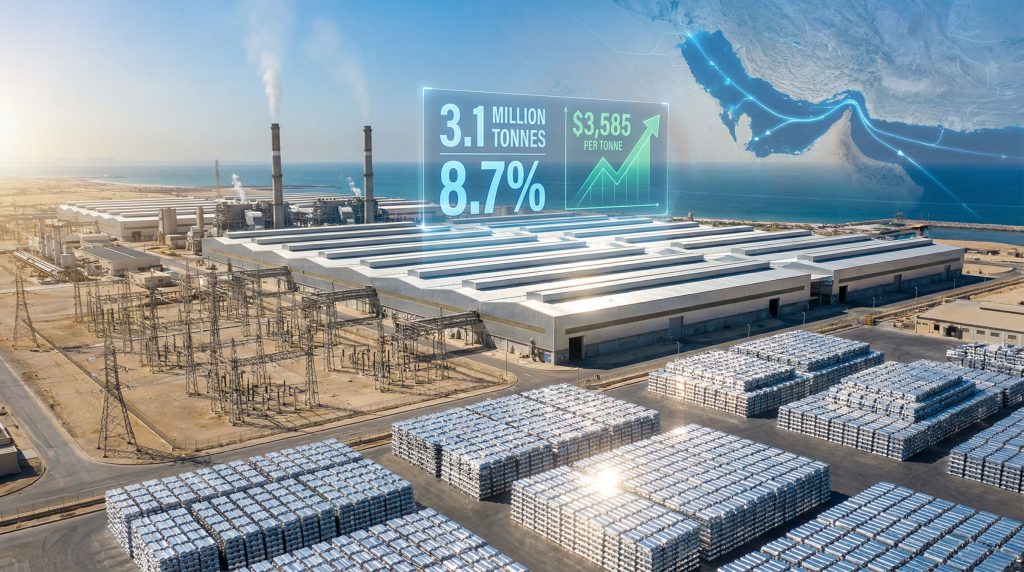
- Combined regional output: 3.1 million tonnes representing 8.7% of global capacity
The Macroeconomic Impact of Critical Infrastructure Targeting
Supply shock economics demonstrate how rapidly commodity markets reprice when production infrastructure faces disruption. The aluminum market's response to regional security threats illustrated this dynamic, with price discovery mechanisms immediately incorporating supply destruction estimates into forward-looking valuations.
Jorge Eduardo Dyszel, a London Metal Exchange trainer and risk management consultant, observed in his analysis that markets had shown signs of stabilization in late March 2026, noting that aluminum trading was no longer experiencing vertical declines but had yet to rebuild sustained upward momentum. This technical consolidation provided the foundation for subsequent volatility when new supply threats emerged.
Regional production dependencies create particular risks in aluminum manufacturing due to the sector's high energy intensity and capital requirements. Unlike other commodity markets where production can shift relatively quickly between regions, aluminum smelting requires substantial fixed infrastructure investments and long-term energy supply agreements that cannot be easily replicated or relocated. Furthermore, the tariffs impact on markets adds another layer of complexity to global aluminum trade flows.
When big ASX news breaks, our subscribers know first
How Do Supply Disruptions Transform Aluminum Market Fundamentals?
Quantifying the Production Impact of Infrastructure Damage
The March 28, 2026 Iranian strikes on Emirates Global Aluminium and Aluminium Bahrain facilities demonstrated how geopolitical events can instantly alter global supply-demand dynamics. Goldman Sachs responded by removing 1.1 million tonnes of primary aluminum production from their 2026 forecasts, representing approximately 3.5% of annual global output.
| Facility | Annual Capacity | Global Market Share | Primary Export Markets |
|---|---|---|---|
| EGA Al Taweelah | 1.5 million tonnes | 4.2% | Asia-Pacific, North America |
| Alba Bahrain | 1.6 million tonnes | 4.5% | Europe, Middle East |
| Combined Impact | 3.1 million tonnes | 8.7% | Global distribution |
The speed of market repricing illustrated the tight correlation between supply availability and price discovery mechanisms. Within four days of the Iran attacks aluminium smelters incidents, major investment banks had revised their fundamental outlooks, suggesting that aluminum markets operate with limited buffer capacity to absorb sudden production losses. The war pushes fragile aluminium markets to the brink of disaster, according to industry analysts.
Goldman Sachs Forecast Revisions: From Surplus to Deficit
The investment bank's forecast adjustments revealed the magnitude of supply-demand rebalancing triggered by infrastructure disruption:
- Q2 2026 price target increase: $3,200 → $3,450 per tonne (+7.8%)
- Annual 2026 forecast adjustment: $3,100 → $3,200 per tonne (+3.2%)
- 2027 average forecast revision: $2,700 → $2,750 per tonne (+1.9%)
- Market balance transformation: 550,000-tonne surplus → 570,000-tonne deficit
This 1.12 million-tonne swing in market balance projections demonstrated how concentrated production systems create outsized vulnerability to regional disruptions. Goldman Sachs noted that risks to their revised forecasts remained tilted to the upside, indicating potential for additional price increases if damage assessments proved conservative or if secondary disruptions occurred.
The bank identified several upside risk factors:
- Extent of facility damage exceeding initial assessments
- Additional supply disruptions from military strikes or labor actions
- Raw material supply shortages affecting regional operations
- Natural gas supply interruptions to smelting operations
What Are the Broader Economic Implications of Middle East Aluminum Disruptions?
LME Price Performance and Market Volatility Analysis
London Metal Exchange aluminum prices reached $3,585 per tonne on March 31, 2026, marking a four-year high that surpassed previous resistance levels established earlier in the month. This price action represented an $85 per tonne increase over a 19-day period, demonstrating the market's sensitivity to supply security concerns.
The price trajectory showed distinct phases:
- March 12 breakthrough: Three-month benchmark surpassed $3,500 per tonne
- Mid-March consolidation: Technical stabilization following earlier volatility
- March 28-31 acceleration: Cash offer prices reached four-year peaks following infrastructure attacks
Historical context suggests this pricing level represents the highest aluminum valuations since approximately April 2022, indicating that current supply disruptions have pushed markets into territory not seen during recent economic cycles. This volatility necessitates comprehensive market volatility hedging strategies for industrial consumers.
Downstream Industry Vulnerability Assessment
Different sectors face varying degrees of exposure to aluminum price increases based on their usage intensity and pricing power dynamics:
Aerospace Manufacturing
- Highest aluminum intensity (~80% of airframe weight)
- Direct exposure to material cost increases
- Limited short-term substitution options
- Long-term contracts may provide temporary insulation
Automotive Industry
- Medium aluminum intensity (9-15% of vehicle weight, increasing)
- Supply chain disruption risks across multiple components
- Growing aluminum usage in lightweighting initiatives
- Potential for delayed model launches or specification changes
Construction Sector
- High volume applications but longer contract horizons
- Partial ability to pass through cost increases
- Regional variations in pricing elasticity
- Alternative material options in some applications
The construction and automotive sectors represent the largest volume consumers of aluminum globally, making their demand responses critical to overall market dynamics. However, price elasticity varies significantly based on application, with aerospace willing to pay premium pricing for performance characteristics while construction markets may delay projects or substitute materials during price spikes.
How Do Regional Conflicts Amplify Global Commodity Market Risks?
The Strait of Hormuz Factor in Supply Chain Security
Pre-existing shipping disruptions from regional tensions had already created baseline stress in Gulf commodity export channels before the aluminum facility attacks. The combination of maritime chokepoint vulnerabilities with production infrastructure risks creates compounding supply chain exposures for global aluminum consumers.
The Strait of Hormuz represents one of the world's most critical energy and commodity shipping corridors, with any additional restrictions potentially affecting not just aluminum shipments but also the natural gas supplies essential for regional smelter operations. Moreover, Iran blows hole in US aluminium supply chain with these strategic strikes.
Risk Management Strategies for Industrial Consumers
Key Market Insight: The aluminum market's transition from gradual recovery to renewed volatility demonstrates how geopolitical events can rapidly restructure commodity fundamentals, forcing industrial consumers to reassess supply security strategies.
Industrial buyers are implementing several risk mitigation approaches:
- Geographic diversification of supplier bases beyond Gulf region producers
- Inventory buffer optimization to manage supply interruption risks
- Contract structure modifications including force majeure provisions
- Alternative material qualification for non-critical applications
Investment Banking Perspectives on Upside Risk Scenarios
Goldman Sachs assessment highlighted that the aluminum market remains vulnerable to additional disruptions, with their baseline forecasts assuming limited damage scope and relatively quick production restoration. The bank's identification of upside risks suggests current pricing may not fully reflect worst-case scenarios.
Critical risk factors include:
- Escalating regional conflicts affecting multiple production facilities
- Energy supply disruptions impacting smelter operations across the Gulf
- Labor disputes emerging from security concerns at industrial facilities
- Insurance and financing constraints limiting rapid facility reconstruction
Consequently, understanding the broader tariff economic implications becomes essential for comprehensive risk assessment in aluminum markets.
What Long-Term Structural Changes Could Emerge from This Crisis?
Geographic Diversification Pressures in Aluminum Production
The concentration risk exposed by Gulf facility attacks is likely to accelerate investment in alternative production regions with more stable geopolitical profiles. Aluminum smelting requires abundant low-cost electricity, typically from hydroelectric or natural gas sources, limiting viable locations but creating opportunities for regions with these advantages.
Potential beneficiaries of diversification trends include:
- North American markets with hydroelectric capacity and stable regulatory frameworks
- Northern European producers leveraging renewable energy advantages
- Southeast Asian facilities offering cost competitiveness and growing regional demand
- African operations where bauxite proximity reduces raw material transportation costs
Additionally, the evolving mining industry evolution will influence these geographic shifts in production capacity.
Market Structure Evolution and Price Discovery Mechanisms
Enhanced volatility patterns in aluminum futures markets reflect growing recognition that geopolitical risk premiums require permanent incorporation into pricing models. Traditional supply-demand fundamentals increasingly compete with security-of-supply considerations in price formation.
Long-term supply contracts are evolving to include:
- Enhanced force majeure provisions covering geopolitical disruptions
- Geographic diversification requirements for major volume commitments
- Price indexing mechanisms that incorporate volatility premiums
- Supply security guarantees backed by multiple production sources
Furthermore, potential aluminum tariff exemptions could reshape trade flows and sourcing strategies in response to these security concerns.
The next major ASX story will hit our subscribers first
How Should Investors and Industry Players Respond to This New Reality?
Portfolio Positioning for Aluminum Market Volatility
Investment strategies must balance aluminum market opportunities against heightened volatility and geopolitical risks:
| Investment Strategy | Risk Level | Potential Return | Time Horizon |
|---|---|---|---|
| Direct aluminum exposure | High | High | Short-term |
| Diversified materials portfolio | Medium | Medium | Medium-term |
| Downstream hedging strategies | Low | Stable | Long-term |
Direct Aluminum Exposure
- LME futures and options for price appreciation potential
- Physical aluminum holdings for supply security
- Producer equity positions in geographically diversified operators
- Higher volatility requires sophisticated risk management
Diversified Materials Approach
- Balanced commodity portfolio reducing single-metal concentration
- Industrial metals basket providing broader sector exposure
- Regional production diversification through global producer holdings
- Moderate risk profile suitable for institutional investors
Supply Chain Resilience Building for Industrial Users
Manufacturing companies are implementing comprehensive supply chain resilience programs addressing aluminum procurement risks:
Multi-Source Procurement Development
- Qualification of suppliers across multiple geographic regions
- Contract structures preventing over-reliance on single sources
- Regular supplier financial and operational risk assessments
- Backup supplier relationships maintained for critical applications
Inventory Buffer Optimization
- Strategic aluminum stockpiling for production continuity
- Cost-benefit analysis of carrying inventory versus spot market exposure
- Warehouse location strategy considering transportation alternatives
- Working capital implications of enhanced inventory levels
Alternative Material Research Programs
- Engineering qualification of substitute materials for non-critical applications
- Performance testing of composite materials in traditional aluminum roles
- Cost analysis of alternative materials during aluminum price spikes
- Design modifications enabling material flexibility
Monitoring Key Risk Indicators Going Forward
Effective aluminum market risk management requires continuous monitoring of leading indicators:
Production Capacity Metrics
- Regional capacity utilization rates and maintenance schedules
- New facility construction timelines and permitting progress
- Energy cost trends affecting smelter economics
- Raw material availability including bauxite and alumina supplies
Geopolitical Risk Assessment
- Regional tension escalation monitoring through multiple intelligence sources
- Shipping route security analysis including alternative corridor capacity
- Government policy changes affecting trade flows and strategic stockpiling
- Insurance market pricing for political risk coverage
Market Structure Evolution
- LME inventory level trends and warehouse location analysis
- Futures market positioning data and speculative activity levels
- Long-term contract pricing trends and indexing mechanism evolution
- Producer consolidation and capacity ownership changes
The aluminum market's experience during the Gulf facility crisis provides a template for understanding how commodity markets respond to concentrated supply risks in an increasingly unstable geopolitical environment. In conclusion, when Iran attacks aluminium smelters, the reverberations demonstrate that industrial consumers, investors, and policymakers must develop frameworks capable of managing persistent volatility while maintaining operational flexibility and economic competitiveness.
Market participants who successfully navigate this new reality will combine traditional fundamental analysis with enhanced geopolitical risk assessment, geographic diversification strategies, and flexible operational approaches that can adapt quickly to changing supply security conditions.
Ready to Capitalise on Critical Mineral Market Opportunities?
Discovery Alert's proprietary Discovery IQ model delivers real-time notifications on significant ASX mineral discoveries, instantly empowering subscribers to identify actionable opportunities ahead of the broader market. Begin your 14-day free trial today and secure your market-leading advantage in an increasingly volatile commodity landscape.