May 20, 2026
Australia's aluminum manufacturing sector faces an unprecedented transformation as renewable energy infrastructure reshapes industrial operations across the continent. The Rio Tinto partnership for Boyne aluminum smelter demonstrates how the convergence of energy transition policies, manufacturing preservation strategies, and supply chain resilience creates complex strategic scenarios for heavy industry operators navigating this fundamental shift.
Understanding Government Co-Investment in Critical Manufacturing
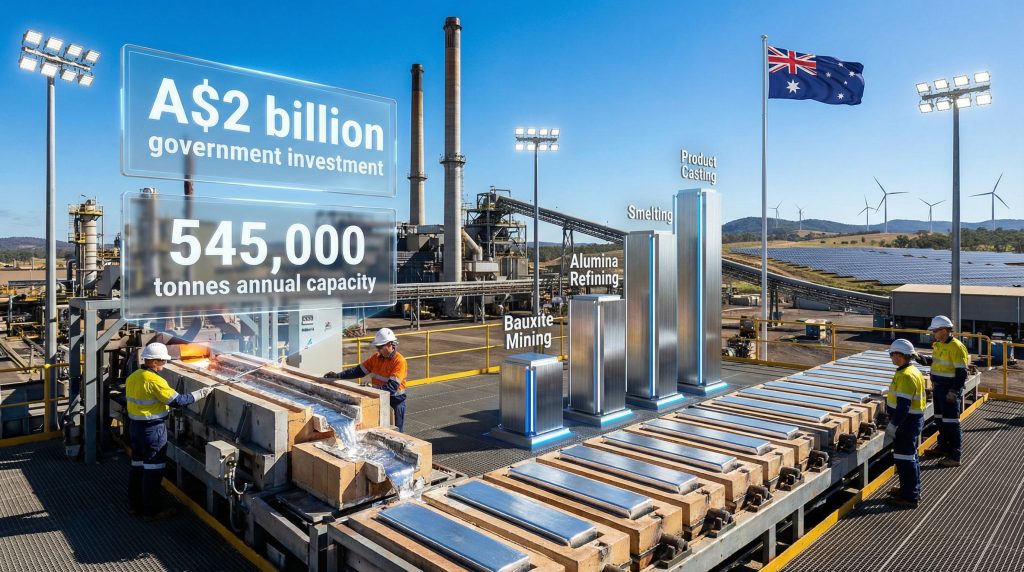
The Queensland and Commonwealth governments have structured an innovative A$2 billion investment framework spanning the next decade, representing a fundamental departure from traditional industry support mechanisms. This co-investment model distributes financial risk between public and private sectors while maintaining operational efficiency under private sector management.
Investment Structure Breakdown:
- Queensland Government commitment: A$1 billion (2030-2040)
- Commonwealth Government allocation: A$1 billion (2030-2040)
- Total public sector involvement: A$2 billion over 10 years
- Rio Tinto partnership renewable infrastructure: A$7.5 billion supporting investment
Furthermore, the framework extends aluminum production operations through at least 2040, bridging the critical transition period following the retirement of coal-fired power infrastructure. This timeline provides certainty for long-term planning whilst enabling renewable energy transformations across the manufacturing sector.
Strategic Risk Distribution Mechanisms
Government capital deployment operates through long-term commitments rather than short-term subsidies, creating stability for energy-intensive manufacturing during mandatory energy system transitions. The partnership maintains private sector operational responsibility whilst reducing investment uncertainty through public sector financial participation.
This approach addresses three simultaneous challenges: maintaining manufacturing competitiveness, energy sector decarbonisation, and aluminum supply chain security within a single integrated framework. Moreover, the model could influence similar arrangements across energy-intensive industries facing comparable transition requirements.
Consequently, the approach demonstrates how decarbonisation benefits can align with manufacturing preservation whilst maintaining operational efficiency and market discipline through distributed risk management.
When big ASX news breaks, our subscribers know first
Critical Infrastructure Advantages in Integrated Production Systems
The Boyne Smelters Limited facility demonstrates rare vertical integration advantages within global aluminum manufacturing. Established in 1982, the operation functions as Australia's second-largest aluminum smelter with strategic positioning that creates unique operational efficiencies.
| Production Component | Location | Integration Benefit | Operational Advantage |
|---|---|---|---|
| Carbon anode manufacturing | On-site production | Direct material supply | Eliminated transport delays |
| Aluminum smelting operations | Reduction line facilities | Continuous production flow | Reduced handling costs |
| Molten metal casting | Integrated casting systems | Immediate processing | Quality control efficiency |
| Alumina supply | Conveyor connection to QAL refinery | Zero intermediate transport | Cost competitiveness enhancement |
The conveyor belt connection to Queensland Alumina Ltd creates direct physical integration between alumina refining and smelting operations. This configuration eliminates intermediate transportation costs and reduces supply chain vulnerability, representing a competitive differentiation unavailable to geographically dispersed operations.
Manufacturing Process Continuity Requirements
Aluminum smelting operates as a continuous production process requiring consistent baseload power supply without frequent interruptions. Production line disruptions cause metal solidification in crucibles, necessitating complex recovery procedures that impact operational efficiency and cost structures.
The integrated facility design provides multiple advantages:
- Supply Chain Security: Direct control over alumina supply eliminates external procurement risks
- Production Efficiency: Consolidated operations reduce energy losses during material transfers
- Quality Control: Integrated oversight across production stages reduces variability
- Cost Competitiveness: Elimination of intermediate handling reduces overhead allocation
Employment Impact and Regional Economic Anchoring
The Rio Tinto partnership for Boyne aluminum smelter secures approximately 1,000 direct manufacturing positions whilst generating an estimated 2,000 additional regional roles across supporting industries. This employment structure creates significant economic stability for central Queensland's industrial workforce.
Employment Distribution Analysis:
- Direct smelter operations: Production line staff, maintenance technicians, quality control specialists
- Supporting industries: Transportation logistics, equipment supply, regulatory compliance services
- Indirect consumption effects: Local retail, housing, and service sector employment from worker spending
- Regional multiplier impact: 2:1 ratio of supporting jobs to direct manufacturing positions
In addition, the facility's continuation ensures long-term stability that encourages supply chain development and reduces business closure risks across the broader regional economy. This economic anchoring effect attracts additional investment in supporting infrastructure and services.
Skills Transition and Workforce Development
The partnership framework addresses workforce requirements during the energy transition period, maintaining employment continuity whilst developing capabilities for renewable energy-powered manufacturing operations. This approach reduces regional economic disruption whilst building skills for future industrial operations.
Regional economic multiplier effects typically range 1.5-2.5 indirect jobs per direct manufacturing position, depending on supply chain localisation. The government announced the $2 billion investment package suggests moderate-to-strong regional integration supporting the government's co-investment rationale.
Energy Transition Challenges and Infrastructure Solutions
The retirement of the 1,680 MW Gladstone Power Station in 2029 creates both operational challenges and strategic opportunities for aluminum production continuity. Current power contracts expire simultaneously with coal-fired generation retirement, requiring comprehensive renewable energy infrastructure development.
Critical Timeline Factors:
- Power contract expiration: 2029
- Partnership operations extension: Through at least 2040
- Infrastructure development period: 11-year renewable transition timeline
- Continuous production requirements: Baseload power supply necessity
What Are the Technical Requirements for Renewable Energy Integration?
The solution architecture addresses three essential components for maintaining production continuity:
- Generation Capacity: Solar and wind power purchase agreements providing renewable energy supply
- Storage Infrastructure: Battery storage systems bridging intermittency gaps during production requirements
- Grid Stability: Government co-investment in supporting renewable infrastructure ensuring consistent voltage and frequency
Technical Requirements for Smelting Operations:
- Consistent power supply without frequent interruptions
- Stable voltage and frequency for reduction line operations
- Baseload capacity matching continuous production demands
- Backup systems preventing metal solidification during supply disruptions
However, the transition requires capital investment beyond power generation alone, encompassing energy storage infrastructure and grid stability systems that enable renewable-powered aluminum production at industrial scale.
Global Competitive Positioning in Renewable Aluminum Production
This partnership positions the Boyne facility among the world's first major aluminum smelters operating primarily on renewable energy sources. For instance, this creates potential premium market positioning for green aluminum products in international markets, particularly as green transition investments drive demand for sustainable materials.
Australia's Strategic Manufacturing Advantages:
- Abundant renewable resources: Solar and wind energy potential across Queensland
- Integrated value chain: Bauxite mining through aluminum smelting within single state
- Political stability: Regulatory certainty supporting long-term investment planning
- Market proximity: Geographic positioning near Asian consumption markets
International Competition Analysis
Global aluminum production faces varying competitive pressures that influence Australia's strategic positioning. The storage-firmed renewables commitment represents a significant competitive advantage:
- Chinese production dominance: Scale advantages but increasing environmental regulations
- Middle Eastern operations: Low-cost energy advantages from natural gas and oil resources
- European producers: Carbon pricing mechanisms driving renewable energy adoption
- North American facilities: Mixed energy sources with varying cost structures
Furthermore, the renewable energy transition could establish competitive differentiation through environmental credentials whilst maintaining cost competitiveness through government co-investment support during the transition period.
Broader Implications for Australian Industrial Policy
The partnership framework creates a replicable template for preserving critical manufacturing capabilities whilst advancing environmental objectives across multiple energy-intensive sectors. This approach could influence similar government interventions in steel production, chemical manufacturing, and other industries requiring baseload power supply.
Policy Framework Components:
- Co-investment structure: Public-private risk sharing during energy transitions
- Long-term operational guarantees: Reducing private sector investment uncertainty
- Regional employment protection: Explicit policy objectives beyond economic efficiency
- Renewable infrastructure development: Government participation in supporting systems
Integration with Future Made in Australia Initiative
The Boyne partnership operates as a component of the federal government's Future Made in Australia initiative, signalling strategic government involvement in maintaining domestic manufacturing capabilities. This represents a shift from market-based approaches toward active industrial policy supporting critical sectors.
Consequently, the model demonstrates how government financial participation can provide stability during mandatory environmental transitions whilst maintaining private sector operational efficiency and market discipline.
The next major ASX story will hit our subscribers first
Investment Risk Assessment and Financial Structure
Rio Tinto's 73.5% stake in Boyne Smelters Limited, combined with government backing, strengthens the company's position in global aluminum markets. This arrangement distributes operational risks across public and private sectors during the energy transition period whilst addressing potential concerns about aluminum tariff exemptions in international trade.
Risk Mitigation Factors:
- Government co-investment reducing private sector capital requirements
- Long-term operational commitment providing revenue certainty
- Renewable energy infrastructure support ensuring power supply continuity
- Regional employment protection creating political support for project continuation
Financial Structure Considerations
The partnership structure requires verification of specific terms regarding government equity stakes, debt arrangements, or financial instruments utilised. Official government budget allocations and spending categories for the A$2 billion commitment would provide clarity on infrastructure versus operational versus workforce transition support distribution.
Moreover, understanding these investment strategies enables Queensland's positioning as a leader in renewable-powered manufacturing to attract additional investment in clean industrial processes, creating broader economic development opportunities beyond the aluminum sector alone.
Future Scenarios and Strategic Implications
The success of this Rio Tinto partnership for Boyne aluminum smelter will influence similar arrangements across Australia's energy-intensive manufacturing sectors. Effective execution of renewable energy infrastructure development whilst maintaining global cost competitiveness represents a critical test case for industrial policy approaches.
Key Success Factors:
- Renewable energy infrastructure completion within timeline requirements
- Maintenance of production cost competitiveness against international producers
- Successful workforce transition and skills development during energy system changes
- Regional economic development beyond aluminum sector employment alone
However, the partnership model provides a framework for other energy-intensive industries navigating similar energy transition requirements, though each situation requires specific assessment of strategic value and economic impact potential.
This analysis is based on publicly available information and industry research. Investment decisions should consider comprehensive due diligence and professional financial advice. Future projections involve uncertainty and actual outcomes may differ from strategic scenarios presented.
Looking to Capitalise on Australia's Industrial Renaissance?
Discovery Alert's proprietary Discovery IQ model delivers real-time alerts on significant ASX mineral discoveries across the critical materials driving Australia's renewable energy transformation, instantly empowering subscribers to identify actionable opportunities ahead of the broader market. Begin your 14-day free trial today and secure your market-leading advantage in the evolving industrial landscape.