
July 21, 2026
The Evolution of American Energy Regulation: A Century-Plus Legacy
The landscape of American energy regulation emerged from 19th-century industrial challenges that demanded innovative governmental responses. As railroad monopolies dominated transportation networks across the expanding frontier, state governments grappled with establishing regulatory frameworks that could balance private enterprise with public interest. This foundational tension between market freedom and oversight accountability would shape one of the nation's most enduring regulatory institutions, ultimately extending far beyond its original railroad mandate to encompass the entire spectrum of hydrocarbon development and energy infrastructure management.
The regulatory evolution that began with railroad oversight reflects broader patterns in American administrative governance, where specialised agencies adapt their core competencies to address emerging economic sectors. This institutional flexibility has proven essential as energy markets transformed from coal-dominated transportation systems to complex oil and gas production networks, requiring sophisticated technical expertise and multi-stakeholder coordination across vast geographical territories.
When big ASX news breaks, our subscribers know first
Constitutional Foundations and Regulatory Independence
The Texas Railroad Commission's establishment in 1891 through constitutional amendment created unprecedented regulatory independence within American governance structures. Unlike executive-branch agencies subject to political transitions and legislative funding pressures, the commission operates under constitutional protection that ensures long-term policy consistency across changing political administrations.
This constitutional foundation enabled the development of three-commissioner elected structure that distinguishes Texas from peer regulatory agencies nationwide. While most states employ appointed regulators within executive frameworks, Texas voters directly select commissioners through regular electoral processes, creating democratic accountability mechanisms rarely seen in technical regulatory domains.
The commission's authority encompasses:
• Production oversight covering approximately 300,000 active oil and gas wells statewide
• Infrastructure regulation including pipeline safety standards and underground storage facilities
• Environmental stewardship through comprehensive well plugging programmes and groundwater protection protocols
• Emergency response coordination enabling production shutdowns during critical infrastructure threats
This multi-faceted jurisdiction reflects decades of incremental authority expansion as energy markets evolved beyond initial railroad transportation networks. Furthermore, the Texas Railroad Commission's historical significance demonstrates its enduring role in American energy governance.
Historical Adaptation Through Energy Transitions
The Spindletop Revolution and Market Stabilisation
The January 10, 1901 Spindletop discovery near Beaumont fundamentally altered American energy markets and regulatory requirements. Producing approximately 100,000 barrels per day at peak output, the field generated ten times larger production volumes than any previous U.S. oil discovery, creating unprecedented market volatility and operational safety challenges.
The commission's response established foundational regulatory frameworks that influenced national energy policy development. Through innovative market demand prorationing systems, regulators set statewide production allowables based on estimated national demand, then allocated individual well quotas to prevent price collapse from oversupply conditions.
| Conservation Era Achievements | Metrics |
|---|---|
| Peak Texas Production (1972) | 3.5 million barrels daily |
| Active Prorationing Period | 1930s-1970s |
| Market Stabilisation Impact | Extended resource life through controlled extraction |
These early conservation measures required sophisticated demand forecasting capabilities, well-by-well allowable calculations, and comprehensive compliance monitoring systems. Consequently, they became templates for subsequent regulatory challenges across the energy sector, influencing oil price movements throughout global markets.
Modern Shale Development Integration
The emergence of commercial shale production beginning with Barnett Shale development around 2000 demanded comprehensive regulatory framework modifications. Horizontal drilling techniques and multi-stage hydraulic fracturing operations presented novel environmental and operational oversight requirements beyond conventional vertical well parameters.
The commission developed specialised regulatory protocols addressing:
• Hydraulic fracturing safety standards including wellbore integrity requirements and groundwater protection measures
• Water management frameworks governing wastewater disposal and treatment facility operations
• Subsurface rights coordination managing horizontal drilling across multiple property boundaries
• Induced seismicity monitoring establishing response protocols for earthquake activity associated with injection well operations
These adaptations demonstrate institutional learning capabilities that enable regulatory evolution without fundamental structural reorganisation. Moreover, they preserve accumulated expertise while addressing technological innovation challenges, influencing natural gas forecasts and market stability.
Contemporary Modernisation Initiatives
Digital Transformation and Operational Efficiency
The commission's current modernisation efforts centre on comprehensive digitisation of regulatory processes and historical record management. The ongoing initiative encompasses over 100 million historical documents spanning the agency's 135-year operational history, creating searchable databases for permit research, compliance tracking, and regulatory precedent analysis.
Electronic permitting systems have revolutionised application processing timelines, enabling:
• Streamlined submission processes through automated compliance checking and digital workflow management
• Real-time monitoring capabilities integrating operational data transmission with regulatory oversight systems
• Enhanced cybersecurity protocols protecting sensitive operational information and proprietary technical data
• Improved public access to regulatory decisions and environmental impact assessments
These technological improvements represent estimated 30-50% reductions in permitting processing timelines compared to historical paper-based systems. Additionally, they improve compliance monitoring accuracy through automated data analysis capabilities, contributing to more effective data-driven digitisation across the energy sector.
Emerging Energy Technology Oversight
The commission has expanded regulatory jurisdiction to encompass hydrogen infrastructure development and geothermal energy production. This reflects energy transition policy alignment while maintaining core hydrocarbon oversight competencies, addressing concerns about oil price stagnation through diversified energy portfolio management.
Hydrogen pipeline regulation requires modifications from existing natural gas standards due to unique technical characteristics:
• Material compatibility considerations addressing hydrogen embrittlement concerns for steel pipeline infrastructure
• Pressure and temperature parameter variations requiring specialised safety protocol development
• Blending compatibility assessments for integration with existing natural gas distribution networks
• Emergency response protocol adaptations accommodating hydrogen's distinctive combustion characteristics
Geothermal well permitting represents the commission's first renewable energy development authority. Recent permits issued for deep geo-pressured formations access thermal resources at depths exceeding 2,500 metres. These wells require specialised oversight addressing subsurface pressure management, thermal fluid circulation safety, and induced seismicity monitoring in previously unmonitored geological formations.
Environmental Protection and Resource Management
Comprehensive Well Plugging Programme Performance
The commission operates one of the nation's most extensive orphaned well remediation programmes, demonstrating long-term environmental stewardship commitment across multiple decades of implementation.
| Programme Metric | Achievement | Timeline |
|---|---|---|
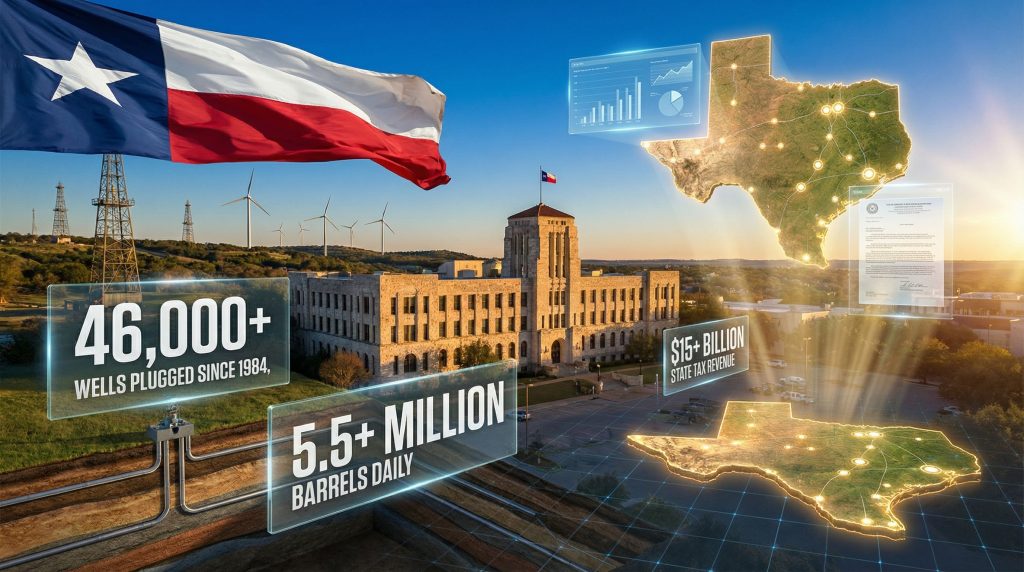
| Total Wells Plugged | 46,000+ | Since 1984 |
| Annual Plugging Rate | 1,150+ wells | Current average |
| Environmental Sites Remediated | 2,300+ | Cumulative |
| Total Programme Investment | $500+ million | 42-year period |
The programme's average cost per well of approximately $10,870 reflects comprehensive remediation standards including wellbore cement plugging, surface equipment removal, soil contamination assessment, and long-term monitoring protocols. This investment represents industry-funded environmental restoration through operator fee structures and state appropriations supporting orphaned well cleanup operations.
Groundwater Protection and Monitoring Systems
Environmental protection frameworks integrate multiple monitoring systems addressing potential groundwater contamination from drilling operations. The commission requires hydraulic fracturing activities and produced water disposal oversight alongside comprehensive safety protocols.
Furthermore, these protection measures incorporate:
• Pre-drilling groundwater quality assessments establishing baseline conditions for post-completion monitoring
• Wellbore integrity testing ensuring cement bond quality and casing installation compliance
• Produced water management regulating disposal well operations and treatment facility standards
• Long-term monitoring protocols tracking environmental conditions throughout well operational lifecycles
These comprehensive protection measures reflect regulatory evolution incorporating environmental considerations into traditional production-focused oversight frameworks. In addition, they support broader renewable energy transformations while maintaining operational effectiveness.
Economic Impact and State Revenue Generation
Direct Economic Contributions
The commission's regulatory oversight enables substantial state economic activity through oil and gas production operations. Current Texas production levels include 5.5+ million barrels daily oil output and 25+ billion cubic feet daily natural gas production, representing approximately 40% of total U.S. oil production.
| Economic Indicator | Annual Impact |
|---|---|
| Industry Employment | 350,000+ jobs |
| State Tax Revenue | $15+ billion |
| Royalty Payments | $8+ billion |
| Economic Multiplier Effect | $180+ billion |
These figures demonstrate the commission's role in facilitating economic activity that extends far beyond direct energy sector employment. Consequently, they support supply chain industries, transportation networks, and rural community development across Texas.
Infrastructure Investment and Development
Regulatory oversight enables private sector infrastructure investment in pipeline networks, processing facilities, and transportation systems that create long-term economic benefits. The commission's permitting authority covers:
• Pipeline construction and safety compliance ensuring reliable interstate energy transportation
• Processing facility development supporting value-added manufacturing and petrochemical industries
• Underground storage authorisation enabling strategic reserve capacity and supply chain flexibility
• Export facility permitting facilitating international energy trade and domestic market access
This infrastructure development creates employment opportunities in engineering, construction, and operations sectors. Moreover, it generates property tax revenues for local governments and school districts throughout energy-producing regions.
The next major ASX story will hit our subscribers first
National Energy Security and Interstate Coordination
Strategic Resource Management
The commission's production oversight directly impacts national energy security through its jurisdiction over approximately 40% of domestic oil production and significant natural gas reserves. This regulatory responsibility requires coordination with federal agencies including the Department of Energy, Environmental Protection Agency, and Federal Energy Regulatory Commission.
Emergency response capabilities enable rapid production adjustments during national security events or natural disasters. The commission retains authority to:
• Mandate production shutdowns during hurricane events affecting Gulf Coast infrastructure
• Coordinate supply chain stability through interstate pipeline network management
• Facilitate emergency fuel distribution during regional supply disruptions
• Support strategic petroleum reserve operations through production allocation coordination
These capabilities position the commission as a critical component in national energy resilience planning and emergency preparedness frameworks. Furthermore, the commission's regulatory evolution demonstrates its adaptability to changing national security requirements.
Interstate Commerce and Market Stability
Texas energy production significantly influences national market conditions through interstate pipeline networks and export facilities. The commission's regulatory decisions affect:
• Regional price stability through production level management and infrastructure development approval
• Supply chain reliability ensuring consistent energy flows to domestic and international markets
• Market competition through fair access requirements for pipeline transportation and processing facilities
• Investment confidence providing regulatory certainty for long-term capital deployment decisions
This market influence extends beyond state boundaries, affecting energy costs and availability across regional markets throughout the central and eastern United States.
Future Regulatory Challenges and Adaptation Strategies
Energy Transition Integration
The commission faces increasing pressure to balance traditional hydrocarbon oversight with energy transition policy objectives. This balance requires regulatory frameworks that:
• Support carbon management technologies including carbon capture, utilisation, and storage facilities
• Integrate renewable energy development while maintaining traditional energy sector employment
• Facilitate grid stability through coordination between intermittent renewable sources and reliable baseload generation
• Address climate policy compliance while preserving state economic competitiveness and energy affordability
These challenges demand institutional innovation that preserves regulatory expertise while adapting to changing energy market dynamics and environmental policy requirements.
Technological Innovation Management
Emerging technologies in oil and gas development require continuous regulatory framework updates addressing artificial intelligence applications. The commission must develop oversight capabilities for autonomous drilling operations and advanced materials utilisation, including:
• Automated drilling systems ensuring safety standards for reduced human oversight operations
• Data privacy and cybersecurity protecting operational information and critical infrastructure systems
• Nanotechnology applications in extraction techniques and environmental remediation processes
• Advanced completion technologies optimising resource recovery while minimising environmental impacts
These technological advances require specialised technical expertise and collaborative relationships with research institutions. Additionally, they necessitate industry associations and federal technology development programmes coordination.
Institutional Legacy and Continuing Evolution
The Texas Railroad Commission anniversary milestone represents more than historical commemoration; it demonstrates institutional resilience and adaptive capacity. This has enabled effective energy regulation through transformative technological and market changes. From 19th-century railroad oversight to contemporary hydrogen infrastructure development, the commission's evolution illustrates successful regulatory adaptation while maintaining core public safety and environmental protection responsibilities.
The commission's ability to balance economic development objectives with environmental stewardship requirements has established regulatory frameworks that support sustained energy sector growth while protecting public resources and community interests.
This balance requires continuous institutional learning, stakeholder engagement, and policy innovation that addresses emerging challenges. Furthermore, it preserves accumulated regulatory expertise while maintaining public confidence and industry accountability throughout energy sector transformations.
As American energy markets continue evolving toward greater diversity of resources, technologies, and environmental considerations, the commission's regulatory frameworks will require ongoing adaptation and modernisation. The institutional foundation established through more than a century of energy oversight provides essential stability for managing these transitions while maintaining public confidence and industry accountability.
Disclaimer: This analysis contains forward-looking statements regarding energy policy development, technological advancement, and regulatory framework evolution. Actual outcomes may vary based on political, economic, and technological factors beyond current predictive capabilities. Investment and policy decisions should incorporate comprehensive risk assessment and professional consultation appropriate to specific circumstances and objectives.
Searching for Energy Investment Opportunities?
Discovery Alert's proprietary Discovery IQ model delivers real-time notifications on significant ASX mineral discoveries, empowering subscribers to identify actionable investment opportunities ahead of the broader market. Start your 14-day free trial today and gain the market-leading advantage you need to capitalise on Australia's dynamic mining sector.