June 26, 2026
Why Europe's Critical Minerals Race Is Reshaping Junior Mining Capital Flows
Across global capital markets, a structural shift is quietly redefining where exploration-stage mining companies choose to raise their profiles. The convergence of tightening raw material supply chains, escalating geopolitical competition for industrial inputs, and the maturation of Europe's formal critical minerals policy framework is creating an entirely new category of investor demand. For junior explorers with assets domiciled in European jurisdictions, the calculus around capital market strategy has fundamentally changed.
Against this backdrop, the Apollo Minerals Euronext listing represents more than a routine administrative milestone. It reflects a deliberate repositioning of an ASX-listed tungsten and gold explorer into the epicentre of European institutional capital flows at precisely the moment when demand for domestically sourced strategic minerals is reaching policy-level urgency.
When big ASX news breaks, our subscribers know first
The Architecture of a Dual-Exchange Strategy
Why Euronext Growth Paris Over Any Other Venue
Not all stock exchanges are created equal, and the selection of Euronext Growth Paris as the secondary listing destination was far from arbitrary. Euronext Growth Paris operates as a distinct growth-oriented subsidiary market within the broader Euronext network, rather than as an entry point to the main Euronext board. This distinction matters enormously for a junior explorer.
The listing requirements and regulatory burden on a growth market are calibrated for companies at earlier stages of development, allowing them to access European capital without the compliance overhead of a primary large-cap exchange. Furthermore, Europe's critical minerals supply chains are increasingly directing institutional attention toward venues where strategic mineral explorers are actively listing.
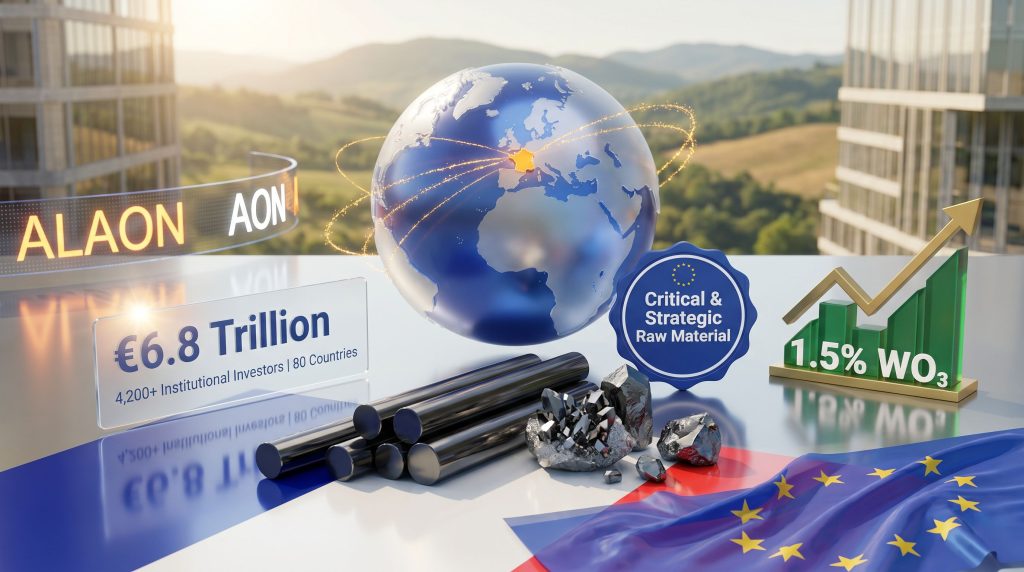
Euronext itself stands as Europe's preeminent equity listing venue, with an aggregate market capitalisation exceeding €6.8 trillion and average daily trading volumes surpassing €11 billion. The exchange connects issuers with a network of more than 4,200 active institutional investors operating across 80 countries. Paris accounts for the dominant share of Euronext's overall market activity, making it the most strategically relevant node within that network for a company seeking European visibility.
Cross-Listing Mechanics and Shareholder Implications
A critical structural feature of this arrangement is that the Euronext listing involves no new share issuance. Existing shareholders are not diluted. The listing is a pure cross-listing, meaning Apollo retains its existing AON ticker on the Australian Securities Exchange while simultaneously trading under the ticker ALAON on Euronext Growth Paris. Shares are fully transferable between the two exchanges.
This transferability creates several dynamics worth understanding:
- Liquidity enhancement: trading across two time zones increases the total available window for price formation and order matching.
- Arbitrage potential: any persistent price differential between the ASX and Euronext venues creates natural arbitrage opportunities that, over time, tend to compress toward convergence.
- Investor base diversification: the company shifts from a predominantly Asia-Pacific retail investor base toward a structurally different pool of European institutional capital, including funds with explicit ESG and critical minerals mandates.
| Structural Element | Detail |
|---|---|
| Listing Venue | Euronext Growth Paris |
| ASX Ticker | AON |
| Euronext Ticker | ALAON |
| New Shares Issued | No |
| Share Transferability | Full, between ASX and Euronext |
| Euronext Market Cap | €6.8 trillion |
| Daily Trading Volume | €11 billion+ |
| Institutional Investor Network | 4,200+ across 80 countries |
The Couflens Project: Understanding the Asset at the Core
A Historically Exceptional Tungsten Deposit
The Couflens tungsten-gold project in France is the centrepiece asset driving the rationale for this listing. Its historical pedigree is remarkable. The Salau mine, located within the Couflens project boundary, was recognised during its operational life as one of the world's highest-grade tungsten operations. Between 1971 and 1986, the mine recorded average mining grades of 1.5% tungsten trioxide (WO₃), a figure that places it in rarefied company when assessed against the global tungsten resource landscape.
To appreciate the significance of that grade, context is essential. Most tungsten deposits globally are considered economic at grades well below 0.5% WO₃. An asset averaging 1.5% WO₃ across its mined intervals represents roughly three times that threshold, which has meaningful implications for potential project economics if the deposit can be re-established and developed under modern conditions.
The Salau mine's operational grades of 1.5% WO₃ between 1971 and 1986 place it among the historically richest tungsten operations ever brought into production globally, a geological credential that underpins the strategic interest in its modern-day redevelopment.
Tungsten's Physical Properties and Why Grade Matters So Much
Tungsten is not a commodity that tolerates mediocrity in grade. It possesses the highest melting point of any metal at 3,422 degrees Celsius, extraordinary hardness, and exceptional resistance to thermal and mechanical stress. These properties make it irreplaceable in applications ranging from cutting tools and armour-piercing munitions to the filaments and electrodes used in advanced electronics and aerospace components.
Consequently, tungsten's strategic importance to European industrial policy cannot be overstated, particularly as supply chain resilience becomes a legislative priority. The supply inelasticity of tungsten makes grade quality especially important: higher-grade deposits produce concentrate more efficiently, at lower processing cost, and with a superior competitive position on the global cost curve.
Apollo's Broader Portfolio Across Multiple Jurisdictions
While Couflens dominates the strategic narrative, Apollo's portfolio extends beyond France.
| Project | Location | Primary Commodity |
|---|---|---|
| Couflens Tungsten-Gold Project | France | Tungsten, Gold |
| Salanie Gold Project | Gabon | Gold |
| Belgrade Copper Project | Serbia | Copper |
This geographic spread provides exposure to multiple commodity cycles and reduces concentration risk. However, the Euronext listing thesis rests firmly on Couflens, given its location within a European Union member state and the alignment between tungsten's commodity profile and EU strategic minerals policy.
Tungsten Under the EU Critical Raw Materials Act: A Dual Classification with Real Weight
What the CRMA's Two-Tier Classification Actually Means
The EU Critical Raw Materials Act, which came into force in 2024, establishes two distinct categories of mineral designation. A critical raw material is one where supply disruption would impose severe economic costs across broad industrial sectors. A strategic raw material carries additional weight: it is specifically identified as essential to the EU's green transition, digital transformation, defence, or aerospace industrial base, and where domestic or allied supply is considered a security imperative.
Tungsten holds both designations simultaneously. Few commodities sit in that dual classification. In addition, the European raw materials facility established under the CRMA framework further reinforces the policy architecture directing capital toward strategically classified minerals. The practical implication is that tungsten sits at the top of the EU's raw material priority hierarchy, attracting the most intensive policy focus and creating a commercial environment where European-domiciled tungsten projects attract structural investor attention.
The Supply Chain Vulnerability Driving Urgency
Europe's exposure on tungsten supply is substantial. The continent currently depends heavily on non-EU sources for its tungsten requirements, with China historically accounting for the majority of global tungsten mine production and processing capacity. This concentration creates strategic vulnerability across several sectors simultaneously:
- Defence manufacturing: tungsten is a core component in kinetic energy penetrators, heavy alloy munitions, and ballistic protection systems.
- Aerospace engineering: high-temperature tungsten alloys are used in turbine blades, rocket nozzles, and radiation shielding.
- Industrial tooling: tungsten carbide cutting tools are foundational to precision manufacturing across automotive, semiconductor, and machinery sectors.
- Energy transition hardware: tungsten is used in electrical contacts, heating elements, and certain thin-film photovoltaic technologies.
The geopolitical risk embedded in this supply picture has materially elevated the investment case for European tungsten projects over the past several years, a trend the CRMA has formalised into policy architecture. Furthermore, the EU metals action plan reinforces this direction, setting clear industrial priorities that benefit domestically positioned mineral explorers.
Scenario Modelling: What the Euronext Listing Could Mean in Practice
Three Capital Market Pathways
No cross-listing outcome is predetermined. The actual effect on Apollo's capital structure and project trajectory will depend on how European institutional investors respond to the listing and how the company executes its investor engagement strategy over the next 12 to 24 months. Three plausible scenarios merit consideration:
| Scenario | Key Driver | Potential Outcome |
|---|---|---|
| Strong institutional uptake | High EU policy alignment, CRMA visibility | Improved liquidity, potential asset re-rating |
| Gradual profile building | Limited initial European awareness | Incremental capital base expansion over 12-24 months |
| Active arbitrage dynamic | ASX/Euronext price differential | Short-term volatility followed by price convergence |
The European Institutional Investor Difference
European institutional capital pools differ in meaningful ways from the Australian retail-dominated base that characterises many ASX junior explorers. European pension funds, sovereign wealth vehicles, and thematic critical minerals funds increasingly operate with formal mandates requiring exposure to strategic raw material supply chains. These investors tend to take longer-duration positions and conduct more rigorous due diligence than retail participants.
This dynamic is also reshaping how mining private equity capital is being deployed across European critical mineral assets, as institutional frameworks align more closely with policy-driven demand signals. The Paris financial ecosystem is particularly relevant here, given France's emergence as a hub for energy transition and defence-related investment themes.
Europe's Broader Critical Minerals Race: Apollo's Contextual Position
Why Domestic Supply Is Becoming Non-Negotiable
The EU's push to onshore critical mineral supply chains is not merely rhetorical. The CRMA sets binding targets: by 2030, the EU aims to extract at least 10% of its annual consumption of strategic raw materials domestically, process at least 40% within EU borders, and ensure that no single third country supplies more than 65% of any strategic raw material consumed by the bloc. These are specific, legally codified benchmarks, not aspirational guidelines.
For a French-domiciled tungsten project like Couflens, these targets create a structural tailwind for investor interest that is independent of short-term tungsten spot price movements. The project's relevance is partly a function of commodity economics and partly a function of its geographic positioning within the EU's own supply resilience strategy.
The Precedent Set by Other ASX-Listed Explorers in Europe
Apollo is not the first ASX-listed junior to pursue a European exchange listing for a European-domiciled critical minerals project. The broader pattern suggests that dual-listed explorers with European assets have used secondary listings as a mechanism to access project-level financing partnerships, attract European strategic investors, and build the kind of in-jurisdiction profile that supports permitting and stakeholder engagement processes.
Whether Apollo follows a similar trajectory will depend on factors specific to the Couflens project's development timeline and the company's execution capacity. For instance, the Apollo Minerals Euronext listing may prove to be an early example of a structural trend that accelerates across the junior exploration sector as EU policy targets draw closer.
Investors should note that cross-listing alone does not guarantee improved liquidity, a higher share price, or accelerated project development. All forward-looking scenarios carry inherent uncertainty and should not be construed as financial advice.
The next major ASX story will hit our subscribers first
Frequently Asked Questions: Apollo Minerals Euronext Listing
What exchange is Apollo Minerals listing on?
Apollo Minerals has received formal approval to list on Euronext Growth Paris, the growth-oriented subsidiary market of Euronext, which is Europe's largest equity exchange by aggregate market capitalisation.
What ticker symbol will Apollo Minerals use on Euronext?
The company will trade under the ticker ALAON on Euronext Growth Paris, while retaining its existing AON ticker on the ASX.
Does the Euronext listing involve issuing new shares?
No. The listing is structured as a pure cross-listing. No new equity is being issued, meaning existing shareholders face no dilution as a result of the Paris admission.
Why does tungsten's grade matter so much at Couflens?
The Salau mine's historical mining grades of 1.5% WO₃ are approximately three times the typical economic threshold for tungsten deposits globally. Higher grades translate to lower processing costs, better concentrate quality, and a stronger competitive position on the global cost curve, all of which are relevant to the project's long-term development economics.
Why is tungsten classified as both critical and strategic under EU law?
The dual classification reflects tungsten's combination of broad economic criticality and specific indispensability to defence, aerospace, industrial manufacturing, and energy transition applications, combined with Europe's high dependence on non-EU supply sources. Few commodities satisfy both criteria simultaneously.
Key Data Summary: Apollo Minerals Euronext Listing at a Glance
| Data Point | Detail |
|---|---|
| Listing Venue | Euronext Growth Paris |
| Euronext Ticker | ALAON |
| ASX Ticker | AON |
| New Shares Issued | No |
| Share Transferability | Full, between ASX and Euronext |
| Flagship Asset | Couflens Tungsten-Gold Project, France |
| Historical Mining Grade (Salau) | 1.5% WO₃ average |
| Salau Operating Period | 1971 to 1986 |
| Euronext Market Cap | €6.8 trillion |
| Euronext Daily Trading Volume | €11 billion+ |
| Institutional Investor Network | 4,200+ across 80 countries |
| EU Tungsten Classification | Critical and Strategic Raw Material (CRMA) |
| EU Domestic Extraction Target | 10% of consumption by 2030 |
| EU Processing Target | 40% within EU borders by 2030 |
What to Watch as the European Chapter Unfolds
The Apollo Minerals Euronext listing opens a new strategic chapter, but the milestones that will define whether this dual-exchange structure delivers tangible value lie ahead. Near-term indicators worth monitoring include the pace of European institutional investor engagement following the Paris admission, trading volume and liquidity patterns across both exchanges in the initial months, and progress at the Couflens project itself in terms of exploration activity and resource development.
Over a longer horizon, the more consequential question is whether Couflens can advance meaningfully along the development pathway from exploration toward a defined resource and ultimately toward production feasibility. If it does, the combination of exceptional historical grades, a French jurisdiction within the EU's own supply resilience framework, and a dual-listed capital structure with access to European institutional pools creates a genuinely differentiated positioning in the critical minerals investment landscape.
This article is intended for informational purposes only and does not constitute financial or investment advice. Readers considering investment in junior mining companies should conduct independent due diligence and consult a licensed financial adviser. Exploration-stage companies carry significant development, funding, and geological risk.
Further context on the EU Critical Raw Materials Act and European strategic minerals policy can be found via Mining Weekly, which provides ongoing reporting on critical minerals developments across global mining jurisdictions.
Want to Track the Next Major ASX Mineral Discovery Before the Market Moves?
Discovery Alert's proprietary Discovery IQ model scans ASX announcements in real time, instantly identifying significant mineral discoveries across more than 30 commodities and translating complex data into clear, actionable insights — explore historic discoveries and their exceptional returns, then begin your 14-day free trial at Discovery Alert to position yourself ahead of the broader market.