June 15, 2026
The Supply Chain Shift Reshaping Latin America's Copper Industry
When geologists and commodity analysts model the long-term copper supply curve, two countries consistently anchor the upper end of every projection: Chile and Peru. Together, they form a production and reserve base that no other regional pairing can replicate, and the supplier ecosystems that serve their mines are increasingly being recognised as strategic assets in their own right. For the companies that manufacture equipment, provide engineering services, and deliver specialised technology to these operations, the next decade represents a window of exceptional market expansion, provided they can cross borders and compete regionally.
That context makes the participation of APRIMIN en ExpoCobre Chile Perú proveedores mineros not simply a trade fair appearance, but a signal of structural change in how Latin American mining supply chains are being organised.
When big ASX news breaks, our subscribers know first
What ExpoCobre 2026 Represents for the Region's Supplier Sector
Now in its third edition, ExpoCobre is a Lima-based international conference and trade fair dedicated specifically to the copper industry. Unlike broader mining expos that cover the full spectrum of minerals, ExpoCobre's copper focus makes it a high-concentration environment where supply and demand conversations are tightly targeted. For supplier companies whose products are used specifically in copper operations, that specificity is commercially significant.
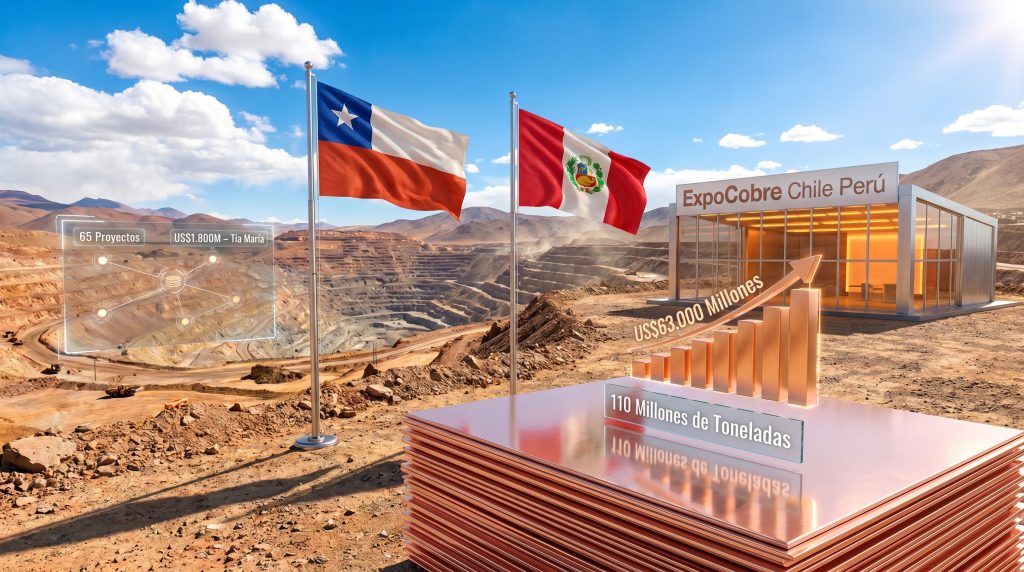
Peru is the natural host for this kind of event. The country holds the second-largest copper reserves on the planet, estimated at 110 million tonnes, and ranks as the world's third-largest copper producer. Chile, meanwhile, leads global copper production by volume. Hosting a copper-focused international conference in Lima therefore positions Peru as both a supplier market and a destination for capital allocation discussions, which is precisely how industry participants are treating it.
Why Binational Focus Matters More Than Ever
The Chile-Peru mining relationship is not simply one of geographic proximity. Both countries face structurally similar regulatory environments, share comparable workforce challenges, and increasingly recognise that the technical expertise embedded in their respective supplier ecosystems is complementary rather than competitive.
Chilean suppliers have accumulated decades of operational experience in some of the world's most technically demanding copper environments, including high-altitude, high-salinity, and water-scarce conditions. Peruvian operations, which span a different but equally demanding set of geological environments, can benefit from that accumulated institutional knowledge. Furthermore, Peru's expanding project pipeline creates addressable market opportunities for Chilean suppliers that their domestic market alone cannot provide at the same scale. The growing copper supply crunch makes this regional collaboration even more strategically pressing.
APRIMIN's Internationalization Architecture at ExpoCobre 2026
The Asociación de Proveedores Industriales de la Minería, known as APRIMIN, is Chile's peak representative body for mining supply companies. Its member base spans equipment manufacturers, engineering consultancies, technology providers, and specialist service firms whose collective revenue is tightly correlated with the investment cycle in Chilean mining.
APRIMIN's presence at ExpoCobre 2026 was deliberately structured as more than a single exhibition booth. The organisation took on the role of official event sponsor, installed a dedicated stand designed to serve as a meeting and articulation point for member companies, intervened in three separate technical and business panels, and organised what was described as APRIMIN's first international networking event.
That last element is particularly significant. Organising an event, rather than simply attending one, signals a shift in institutional posture. Rather than passively presenting Chilean supplier capabilities to Peruvian buyers, APRIMIN took on the role of convener, creating structured dialogue between sector leaders from both countries. According to reporting by Reporte Minero, APRIMIN General Manager Paula Frigerio highlighted the value of these engagement formats for strengthening the joint value proposition that both mining industries can present to international capital markets and downstream buyers.
This approach reflects a deliberate internationalisation strategy: Chilean suppliers are being encouraged to think of Peru not as a foreign market requiring complex entry, but as an adjacent operating environment where their existing technical capabilities transfer directly. In addition, companies exploring copper investment strategies would do well to monitor how these bilateral supplier relationships evolve over the coming years.
Peru's US$63 Billion Project Pipeline and What It Means for Suppliers
The scale of Peru's mining development pipeline is the quantitative foundation beneath APRIMIN's regional engagement strategy. The figures are substantial enough to reframe how supplier companies should think about market prioritisation.
| Metric | Figure |
|---|---|
| Projects in Peru's mining development portfolio | 65 projects |
| Total estimated investment value | US$63,000 million |
| Active mining supplier companies operating in Peru | More than 7,800 |
| Sector revenue target over the next decade | US$30,000 million |
| Peru's copper reserves | 110 million tonnes |
| Peru's global copper production ranking | 3rd place |
These numbers represent a structural opportunity rather than a cyclical one. The scale of Peru's project pipeline is not driven by a commodity price spike but by the underlying geology of the country and the long-term demand trajectory for copper as a critical mineral in energy transition applications.
The Projects That Define the Opportunity
Three specific projects were highlighted during ExpoCobre 2026 discussions as representing the most immediate and highest-value participation opportunities for specialised suppliers:
-
Tía María: An estimated US$1,800 million copper project that has moved through multiple development phases and represents significant procurement scope for equipment and services suppliers.
-
Reposición Antamina: A life extension initiative at one of Peru's largest and most technically complex copper-zinc operations. Mine life extension projects typically generate substantial demand for replacement equipment, updated processing technology, and specialised engineering assessments.
-
Reposición Ferrobamba: An operational continuity project at a major mine with significant regional economic impact. Continuity projects of this type tend to compress procurement timelines because operational interruption carries direct revenue cost.
Why Chilean Suppliers Have a Structural Advantage
The fact that Peru's supplier ecosystem already includes more than 7,800 active companies means the market is not undeveloped. However, the complexity and scale of projects like those listed above typically require capabilities that are concentrated in more mature supplier ecosystems. Chilean suppliers, having developed alongside some of the world's largest copper operations, have a depth of experience that newer or smaller market entrants cannot easily replicate in the short term. That capability gap is precisely what APRIMIN is working to convert into commercial relationships.
Regulatory Challenges as a Shared Obstacle to Regional Investment
One of the more substantive themes at ExpoCobre 2026 was the frank acknowledgement that both Chile and Peru face shared regulatory friction that slows capital deployment into mining development. This is not a politically comfortable topic for either country's industry bodies to raise publicly, which makes the fact that it featured as an explicit discussion theme at the conference notable in itself.
| Challenge | Operational Impact | Proposed Response |
|---|---|---|
| Environmental permitting delays | Project start dates pushed back, capital cost increases | Digitalization of administrative review processes |
| Regulatory unpredictability | Investment committees apply higher risk premiums | Development of stable, long-horizon regulatory frameworks |
| Fragmented supply chain continuity | Reduced operational efficiency for suppliers | Binational integration and encadenamiento productivo |
The concept of encadenamiento productivo, roughly translated as productive supply chain linkage, is central to how both industries are thinking about this problem. Rather than each country's supplier sector operating in relative isolation, the model being discussed involves deliberate cross-border integration that allows companies in both countries to specialise and collaborate rather than compete on identical service offerings. Navigating mining permitting complexity remains one of the most persistent barriers to accelerating this integration.
Legal certainty is consistently identified in mining investment literature as among the most influential variables in capital allocation decisions. For long-dated projects with 20 to 30-year payback horizons, regulatory ambiguity functions as a structural deterrent that cost-of-capital calculations cannot easily accommodate.
Digitalization of permitting processes represents a practical near-term intervention. In contexts where administrative bottlenecks rather than geological or commercial factors are the binding constraint on project timelines, process digitalization offers efficiency gains without requiring fundamental legislative change.
Workforce Competencies and Female Leadership: Expanding the Industry Agenda
APRIMIN's participation extended into discussions that are reshaping what mining industry conferences actually discuss. Two APRIMIN representatives contributed to separate sessions addressing the human capital dimensions of modern mining supply chains.
Macarena Vallejo participated in a technical panel examining the competency requirements that advanced mining operations now demand from their workforce. This is an increasingly urgent topic as automation, remote operation systems, and data analytics tools change the skill profiles that mines require from both operators and supplier company personnel.
Dominique Viera contributed to discussions examining female leadership within supply chain value structures and the broader collaboration mechanisms that govern how suppliers and operators interact. The growing visibility of women in mining at events like ExpoCobre reflects a gradual but meaningful shift in how the industry conceptualises workforce development beyond technical skills alone.
These discussions are not peripheral to the commercial agenda. Workforce availability and capability directly affect project execution timelines, and supplier companies that build deep talent pipelines, including through deliberately inclusive hiring practices, tend to demonstrate stronger operational continuity than those that do not.
The next major ASX story will hit our subscribers first
Copper's Critical Mineral Status and the Demand Fundamentals Behind Regional Expansion
The commercial logic driving APRIMIN's regional expansion at ExpoCobre 2026 cannot be fully understood without placing it against the backdrop of global copper demand dynamics. Copper's role as a critical mineral for energy transition applications creates a demand floor that did not exist in previous commodity cycles.
Electric vehicles require substantially more copper per unit than internal combustion engine vehicles, with estimates across the industry typically ranging from three to four times the copper content per vehicle. Grid-scale renewable energy installations, including solar farms and wind generation facilities, are copper-intensive per megawatt installed. Battery storage systems and the transmission infrastructure required to connect distributed generation sources to end users represent additional structural demand sources.
The combined effect is a long-horizon demand curve that makes investment in copper production capacity commercially defensible over timeframes that match the natural life cycle of major mining projects. For suppliers whose revenue scales with capital expenditure in copper operations, this demand structure provides a planning horizon that other mineral categories currently cannot offer with the same confidence.
Chile's copper supply role is central to this global picture, and the supplier ecosystems serving Chilean and Peruvian operations are consequently embedded in a strategically significant position in global industrial supply chains, even if that significance is rarely framed in those terms by the companies themselves.
Frequently Asked Questions
What is APRIMIN and who does it represent?
APRIMIN is Chile's Association of Industrial Mining Suppliers, representing companies that supply goods, services, and technology to domestic and international mining operations across the full value chain from exploration through production.
What is ExpoCobre and where is it held?
ExpoCobre is an international copper industry conference and trade fair held in Lima, Peru. Its 2026 edition was the event's third iteration and focused on sector integration across Latin America's copper-producing nations.
How large is Peru's current mining project pipeline?
Peru has 65 mining projects in its active development portfolio, with a combined estimated investment of approximately US$63,000 million. This pipeline underpins long-term demand for specialised mining supplier services.
What are the most significant projects for supplier participation?
The Tía María project, estimated at US$1,800 million, along with the Reposición Antamina and Reposición Ferrobamba continuity projects, are identified as representing the highest near-term participation potential for specialised external suppliers.
What regulatory challenges do Chile and Peru share?
Both countries face slow environmental permitting processes, regulatory unpredictability that affects long-term investment decisions, and fragmented supply chain structures. Digitalization of administrative processes and development of stable regulatory frameworks are the primary responses being discussed.
Why is binational supplier collaboration between Chile and Peru commercially logical?
Chilean suppliers bring deep technical experience from operating in some of the world's most demanding copper environments. Peru's expanding project pipeline creates addressable market scope that Chile's domestic market alone cannot provide at equivalent scale. Consequently, the complementary nature of both ecosystems makes integration commercially rational for participants in both countries.
Building a Durable Regional Supplier Model
The APRIMIN en ExpoCobre Chile Perú proveedores mineros participation represents something more substantive than a regional trade fair appearance. It is an early institutional expression of a supply chain integration thesis that, if executed consistently over multiple event cycles and commercial engagements, could reshape how Chilean supplier companies position themselves in Latin America's mining economy.
For that thesis to convert into durable commercial outcomes, however, several conditions need to be met. Regulatory environments in both countries need to move toward greater predictability. Permitting digitalization needs to progress from aspiration to operational reality. Workforce capability pipelines need to be built with explicit attention to the competency profiles that increasingly automated, data-driven mining operations demand. And supplier companies need to make the organisational investments in market presence and relationship building that cross-border commercial success requires.
The commercial prize, measured by Peru's US$63 billion project portfolio and the structural copper demand outlook tied to global energy transition commitments, is large enough to justify those investments. The question for supplier companies evaluating regional expansion is not whether the opportunity exists, but whether they can build the institutional relationships and operational credibility to compete for it before the procurement windows on the next generation of major projects close.
APRIMIN's decision to sponsor, convene, and actively participate in ExpoCobre 2026 is a considered move toward answering that question on behalf of its member base. Whether that institutional momentum translates into sustained commercial penetration of the Peruvian market will be one of the more instructive case studies in Latin American mining supply chain development over the next several years.
This article is based on publicly reported information from Reporte Minero (May 5, 2026) and contextual industry analysis. Statistics relating to project valuations, reserve figures, and pipeline data are sourced from that reporting. This article does not constitute investment advice. Readers should conduct their own due diligence before making commercial or investment decisions related to the mining sector.
Want To Know When The Next Major Copper Discovery Hits The ASX?
Discovery Alert's proprietary Discovery IQ model delivers real-time alerts the moment significant copper discoveries are announced on the ASX, cutting through complex mineral data to surface actionable opportunities ahead of the broader market — explore historic discoveries and their exceptional returns, then begin your 14-day free trial at Discovery Alert to position yourself at the forefront of the next major find.