June 20, 2026
Arctic Resource Competition Drives New Era of Territorial Ambitions
Modern great power competition increasingly centers on control of critical resources and strategic geography, with Arctic territories emerging as focal points for national security planning. Trump open to talks over Greenland's future represents a significant shift in traditional diplomatic approaches to territorial sovereignty. The convergence of climate change, technological advancement, and supply chain vulnerabilities has transformed previously inaccessible regions into contested strategic assets.
This dynamic creates unprecedented challenges for established alliance structures and international law frameworks designed for different geopolitical realities. Furthermore, the opening of Arctic shipping routes through climate-induced ice reduction has fundamentally altered global trade calculations. Traditional maritime corridors face potential disruption as northern passages offer significant time and cost advantages for transcontinental commerce.
Nations with Arctic territorial claims now possess enhanced leverage in global supply chain negotiations, creating new forms of economic and strategic influence. Consequently, understanding how tariffs impact investment decisions becomes crucial for market participants navigating these territorial tensions.
When big ASX news breaks, our subscribers know first
Understanding Strategic Territorial Acquisition in the 21st Century
Trump's approach toward Greenland represents a calculated shift from traditional diplomatic engagement to economic coercion tactics. The strategy employs targeted tariff threats against specific European nations while maintaining openness to negotiations, creating pressure without immediate military escalation. This methodology reflects broader changes in how territorial disputes unfold in an interconnected global economy.
The administration's 10% tariff threat against the UK and seven EU members, scheduled for February 1, 2026, serves as the primary leverage mechanism. The targeted nations include Germany, France, Italy, Spain, Netherlands, Belgium, and Austria, representing major European economic powers with significant transatlantic trade relationships. Moreover, a potential Trump executive order could further intensify pressure on European allies.
Historical Context and Legal Framework
Trump's defense of territorial acquisition references historical precedents including American westward expansion and European colonial activities. However, modern international law operates under fundamentally different principles than 19th and early 20th-century territorial transfers. The United Nations Charter Article 2(4) specifically restricts territorial acquisition through force or coercion between sovereign states.
During World War II, the United States did establish military presence in Greenland following Denmark's occupation by Nazi Germany in 1940. This involved radio stations and defensive installations but never constituted formal annexation. Denmark retained nominal sovereignty throughout the conflict, with Greenland returning to full Danish administrative control after the war's conclusion.
Economic Pressure versus Diplomatic Solutions
Treasury Secretary Scott Bessent has urged European counterparts to avoid retaliatory measures, characterising the market decline as partially attributed to contagion effects from Japanese government bond market volatility. The administration's defensive positioning suggests awareness of potential economic backlash from escalating trade tensions.
Alternative Strategic Arrangements:
- Status-of-forces agreements enabling military presence without sovereignty transfer
- Exclusive economic zone partnerships for resource extraction rights
- NATO collective defence frameworks providing security without territorial acquisition
- Long-term lease agreements similar to existing U.S. overseas installations
In addition, understanding the broader US-China trade war impacts provides essential context for these territorial negotiations within global competition dynamics.
Critical Resource Security and Supply Chain Vulnerabilities
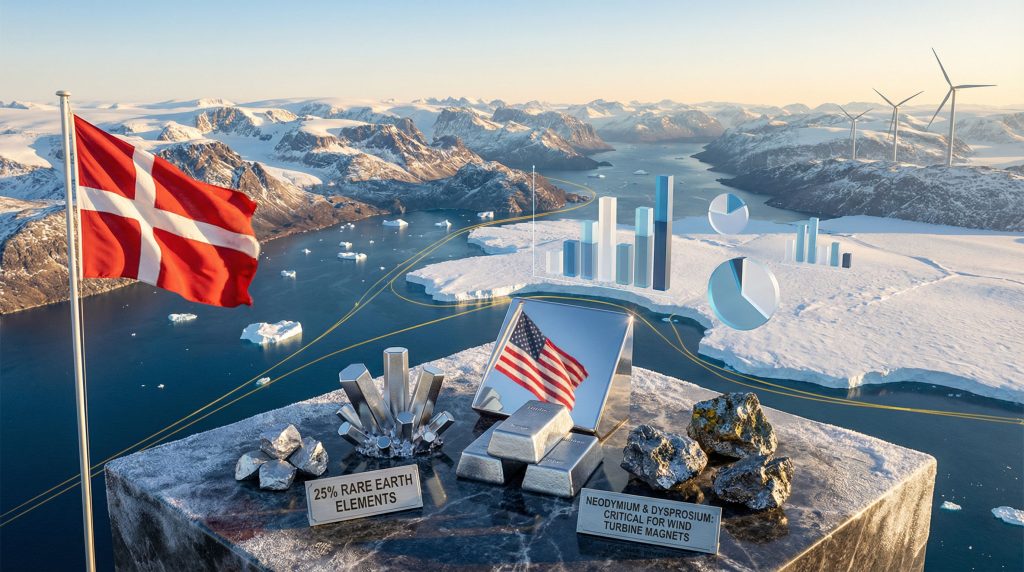
Trump open to talks over Greenland's future primarily stems from the territory's strategic value, which extends far beyond its geographical position. Greenland encompasses substantial reserves of materials essential for modern technology and defence systems. The territory contains significant concentrations of rare earth elements, lithium deposits, and uranium reserves that could reduce Western dependence on Chinese-controlled supply chains.
Rare Earth Element Concentrations
The Kvanefjeld deposit in southern Greenland represents one of the world's largest known rare earth concentrations outside Chinese territory. This site contains substantial dysprosium and neodymium reserves crucial for high-performance permanent magnets used in wind turbines, electric vehicle motors, and defence guidance systems.
| Resource Category | Strategic Applications | Current Supply Challenges |
|---|---|---|
| Neodymium | Wind turbine magnets, EV motors | 85% Chinese processing dominance |
| Dysprosium | High-temperature applications, defence | Limited alternative sources |
| Lithium | Battery manufacturing, energy storage | Concentrated in few producing nations |
| Uranium | Nuclear energy, defence applications | Strategic stockpile requirements |
The importance of securing these resources aligns with broader critical minerals energy transition strategies essential for national security.
Extraction Challenges and Technical Realities
Trump's assessment that rare earth extraction requires drilling through hundreds of feet of ice reflects genuine technical obstacles facing Arctic resource development. Permafrost conditions, limited operating seasons, and infrastructure deficits create substantial development timelines and cost considerations that territorial control alone cannot resolve.
Key Technical Constraints:
- Operating seasons limited to 6-8 months annually due to Arctic conditions
- Absence of existing processing infrastructure requiring massive capital investment
- Environmental impact assessments and regulatory approval processes
- Transportation logistics from remote locations to processing facilities
- Typical development timelines of 8-15 years from exploration to full production
Arctic Shipping Route Economics
The Northern Sea Route through Arctic waters offers approximately 40% shorter transit times between Asian and European markets compared to traditional Suez Canal routing. This represents a reduction from approximately 21,000 nautical miles to 13,000-15,000 nautical miles, creating substantial cost savings for maritime cargo transport.
Climate-induced ice reduction has extended navigable periods, though shipping remains seasonal and requires specialised ice-class vessels. Control over Arctic territories provides oversight capabilities for these emerging trade corridors, potentially influencing global commerce patterns as shipping volumes increase.
European Alliance Response and Strategic Coordination
European reactions to the territorial acquisition threat demonstrate coordinated resistance whilst maintaining diplomatic channels. The European Union's scheduled January 22, 2026 leadership meeting aims to establish unified response protocols addressing both immediate tariff threats and longer-term strategic implications.
Economic Retaliation Mechanisms
The European Parliament is preparing to freeze implementation of laws related to the EU-US trade agreement reached in summer 2025, representing procedural retaliation without immediate escalation to reciprocal tariffs. This approach maintains flexibility for diplomatic resolution whilst demonstrating European unity against economic coercion.
EU Response Framework:
- Trade deal implementation suspension
- Coordinated diplomatic opposition through international forums
- Enhanced economic partnerships with Greenlandic communities
- Strengthened Arctic defence cooperation among NATO members
UK Positioning and Alliance Dynamics
British leadership appears reluctant to pursue retaliatory trade measures, potentially creating divisions within European response coordination. This stance reflects post-Brexit considerations and desire to maintain bilateral trade relationships with the United States despite territorial dispute concerns.
California Governor Gavin Newsom's presence at Davos provided contrasting American perspectives, urging European leaders to adopt stronger resistance positions. His characterisation of the situation as requiring Europeans to develop greater resolve against pressure tactics illustrates domestic American divisions regarding the administration's approach.
NATO Framework Complications
The territorial acquisition bid creates unprecedented challenges for NATO collective defence obligations. Denmark's membership in the alliance theoretically provides protection against territorial coercion, yet the situation involves ally-on-ally pressure rather than external threats traditionally covered by Article 5 provisions.
Alliance Stability Considerations:
- Article 5 collective defence interpretation regarding economic coercion
- Sovereignty protection for NATO member territorial integrity
- Burden-sharing discussions linked to territorial control demands
- Arctic defence strategy coordination among member nations
However, recent developments suggest that Trump open to talks over Greenland's future may indicate diplomatic flexibility beyond initial hardline positions, as reported by Argus Media.
Market Psychology and Economic Implications
Financial markets demonstrated immediate sensitivity to escalating tensions, with U.S. equity indices declining following initial tariff announcements. The market reaction reflects investor concerns about potential trade war escalation and disruption to established transatlantic economic relationships.
Sectoral Impact Assessment
Different industries face varying exposure levels to potential trade disputes, with energy commodities potentially exempt from tariff implementation based on previous administration policies. However, Treasury Secretary Bessent has not provided detailed specifications regarding exemption categories or implementation mechanisms.
| Industry Sector | Exposure Level | Specific Vulnerabilities |
|---|---|---|
| Energy | Moderate | LNG export dependencies, pipeline partnerships |
| Technology | High | Supply chain integration, component sourcing |
| Agriculture | Low | Limited direct EU trade concentration |
| Defence | Variable | NATO procurement, alliance equipment standards |
Currency and Bond Market Reactions
European bond yields increased as investors sought safer assets during geopolitical uncertainty, following typical flight-to-safety patterns during international tensions. However, Treasury Secretary Bessent attributed partial market decline to contagion effects from Japanese government bond volatility, suggesting multiple contributing factors beyond the territorial dispute.
Investment Flow Implications:
- Defensive asset allocation toward traditional safe havens
- Reduced appetite for transatlantic investment projects
- Increased sovereign risk premiums for affected European nations
- Currency volatility affecting trade financing costs
Global Power Competition and Strategic Positioning
The situation regarding Trump open to talks over Greenland's future reflects broader patterns of great power competition in resource-rich regions previously considered outside traditional spheres of influence. China's Belt and Road Initiative and Russia's Arctic development activities create competitive pressures for Western nations to secure strategic positions before rivals establish dominant presence.
Chinese Arctic Strategy Response
Beijing's approach involves enhanced investment in alternative Arctic partnerships and cooperation with Russia on Northern Sea Route development. China's self-designation as a "near-Arctic state" despite geographical distance reflects recognition of the region's growing strategic importance for global trade and resource access.
Chinese investment in Arctic research stations, icebreaker technology, and partnerships with Arctic nations demonstrates long-term commitment to establishing influence in the region. The country's substantial rare earth processing capabilities provide leverage in negotiations with nations possessing raw material deposits but lacking refining infrastructure.
Russian Defensive Positioning
Moscow's response includes military buildup along Arctic boundaries and enhanced cooperation with non-NATO Arctic nations. Russia's extensive Arctic coastline and existing infrastructure provide natural advantages in regional competition, though economic sanctions limit technological advancement and international partnerships.
Russian Strategic Assets:
- Extensive Arctic military installations and bases
- Nuclear icebreaker fleet for year-round Arctic navigation
- Established energy extraction operations in Arctic regions
- Historical claims to expanded Arctic continental shelf areas
Furthermore, the strategic importance of Greenland critical minerals cannot be overstated in this geopolitical context.
The next major ASX story will hit our subscribers first
Investment Opportunities from Arctic Militarisation
Increasing Arctic tensions create specific investment opportunities in specialised equipment and technologies adapted for extreme climate operations. Defence contractors focusing on cold-weather capabilities, Arctic surveillance systems, and polar logistics solutions may benefit from enhanced military spending in the region.
Defence Sector Growth Areas
Arctic militarisation drives demand for specialised equipment designed for extreme cold conditions and extended deployment periods. Traditional military hardware requires substantial modifications for effective Arctic operations, creating niche markets for specialised manufacturers.
Key Growth Categories:
- Cold-weather military vehicles and aircraft systems
- Arctic-specific communication and surveillance technologies
- Specialised logistics and transportation equipment for polar regions
- Ice-resistant infrastructure and construction materials
Resource Extraction Technology Development
Enhanced Arctic activity stimulates demand for technologies enabling resource extraction in permafrost conditions. Companies developing solutions for extreme climate mining, drilling, and processing operations may benefit from increased exploration and development activities.
Investment opportunities include manufacturers of ice-resistant mining equipment, cold-climate renewable energy systems, and Arctic-specific transportation infrastructure. However, development timelines remain extended due to technical challenges and regulatory requirements.
Long-Term Strategic Scenarios and Implications
The outcome of Trump open to talks over Greenland's future will establish precedents for future resource-driven territorial disputes and alliance management in an era of climate change and great power competition. Three primary scenarios emerge based on current trajectory analysis and stakeholder positioning.
Scenario Analysis Framework
Negotiated Settlement Pathway: Enhanced U.S. military presence without territorial transfer, combined with shared resource extraction agreements and expanded NATO Arctic cooperation frameworks. This approach maintains Danish sovereignty whilst addressing American security concerns through partnership arrangements.
Economic Pressure Success: Sustained tariff pressure resulting in gradual European concessions on Greenland governance, potentially involving modified sovereignty arrangements or increased U.S. Arctic influence without formal annexation. This scenario assumes European economic vulnerabilities outweigh sovereignty principles.
Alliance Fracture Outcome: Escalation leading to fundamental NATO restructuring, new European defence partnerships excluding U.S. participation, and multipolar Arctic governance systems. This represents the most disruptive scenario with long-term implications for Western alliance structures.
Regional Stability Implications
Regardless of specific outcomes, the Greenland situation demonstrates how climate change and resource competition combine to create new forms of international tension. Arctic regions previously considered peripheral to global politics now occupy central positions in strategic planning for major powers.
The precedent established by current negotiations will influence approaches to territorial sovereignty and alliance management in other resource-rich regions experiencing climate-induced accessibility changes. Success or failure of economic coercion tactics will inform future diplomatic strategies across multiple geographical contexts.
Timeline Considerations for 2026 and Beyond
The February 1, 2026 tariff implementation date creates immediate pressure for diplomatic resolution, though no executive orders have been issued confirming specific implementation details. European leaders must balance sovereignty principles against economic relationships whilst maintaining alliance cohesion.
Critical Decision Points:
- January 22, 2026: EU leadership coordination meeting outcomes
- February 1, 2026: Tariff threat implementation deadline
- Mid-2026: NATO summit discussions on Arctic strategy revision
- 2027-2028: Long-term alliance restructuring negotiations
The convergence of resource scarcity, climate change impacts, and geopolitical rivalry makes Arctic territories increasingly valuable strategic assets requiring careful management to prevent broader conflict escalation. How current negotiations resolve will significantly impact future approaches to territorial sovereignty disputes in resource-rich regions worldwide, establishing precedents for diplomacy, economic pressure, and alliance obligations in an era of accelerating environmental and political change.
Wondering How Arctic Tensions Could Impact Your Investment Portfolio?
Discovery Alert's proprietary Discovery IQ model delivers real-time alerts on significant mineral discoveries across critical resources like rare earth elements and lithium, enabling investors to capitalise on geopolitical supply chain shifts and emerging opportunities. Begin your 30-day free trial at Discovery Alert today to position yourself ahead of these evolving market dynamics.