June 5, 2026
The global electronics industry relies on a complex network of mineral extraction operations spanning continents, yet few supply chains face the concentrated risk inherent in artisanal mining operations within conflict-affected territories. These small-scale, labour-intensive extraction sites operate without the geological surveys, engineering controls, or safety protocols that characterise industrial mining ventures. Furthermore, the recent landslide at DRC coltan mine incidents underscore how the intersection of geological vulnerability and economic necessity creates conditions where catastrophic incidents become not merely possible, but statistically inevitable.
What Makes Artisanal Coltan Mining Operations Vulnerable to Catastrophic Ground Failures?
The structural vulnerabilities plaguing artisanal mining operations stem from fundamental gaps in geological assessment and engineering safeguards. Unlike industrial mining ventures that conduct comprehensive geotechnical surveys before excavation begins, artisanal operations typically commence extraction based solely on mineral presence indicators. Consequently, they disregard slope stability considerations and soil composition analysis entirely.
Geological Risk Factors in Eastern DRC Mining Zones
North Kivu province presents particularly challenging geological conditions for mining operations due to its equatorial climate patterns and soil composition. The region's tropical soils demonstrate high plasticity when saturated, meaning their structural integrity deteriorates rapidly under increased moisture conditions. However, understanding [mineral exploration importance](https://discoveryalert.com.au/mineral exploration-importance-2025-gold-copper/) becomes crucial for implementing proper geological assessments.
During precipitation events, these materials experience reduced cohesion between particles, creating ideal conditions for slope failures. The tragic incidents at the Rubaya coltan mine demonstrate these vulnerabilities in stark terms. In March 2026, heavy rainfall triggered a catastrophic landslide at DRC coltan mine that claimed over 200 lives, including approximately 70 children according to DRC Ministry of Mines reports.
This disaster followed a similar collapse at the identical location in late January 2026, which also resulted in over 200 fatalities under comparable weather conditions. An M23 official acknowledged that the March incident resulted from heavy rains of recent days and noted that protective measures for miners required implementation.
Risk Assessment Framework Comparison:
| Assessment Category | Industrial Operations | Artisanal Operations |
|---|---|---|
| Pre-excavation geological surveys | Mandatory comprehensive analysis | Rarely conducted |
| Slope angle calculations | Engineered to stable specifications | Determined by extraction efficiency |
| Drainage system implementation | Required for water management | Typically absent |
| Soil moisture monitoring | Continuous measurement protocols | No systematic monitoring |
| Failure prediction systems | Early warning mechanisms | Visual assessment only |
Regulatory Gaps in Conflict Zone Mining Operations
The regulatory landscape governing mining operations in contested territories creates additional layers of vulnerability. Traditional mining oversight relies on government inspection regimes, permit conditions, and enforcement mechanisms that prove ineffective when territories fall under non-state governance. Moreover, government intervention insights reveal how fragmented authority complicates safety implementation.
Since M23's control of Rubaya mining operations began in 2024, the site has operated under rebel group administration rather than DRC government oversight. This governance structure eliminates standard regulatory protections while creating competing authorities over safety standards implementation.
The dispute over casualty reporting from the March 2026 landslide at DRC coltan mine illustrates these regulatory challenges. While DRC authorities reported over 200 deaths including 70 children, M23 official Fanny Kaj disputed these figures, claiming only five people died and attributing the incident to bombings rather than landslides.
Miner Ibrahim Taluseke provided insight into operational realities under this governance structure, stating that pit owners discourage revealing accurate death tolls while miners continue working despite fear due to economic necessity. Such testimonies indicate systematic casualty concealment practices that would trigger immediate regulatory intervention in formally governed territories.
When big ASX news breaks, our subscribers know first
How Do Weather Patterns Amplify Mining Disasters in Central Africa?
Central Africa's equatorial climate patterns create predictable windows of elevated risk for mining operations, yet artisanal extraction continues throughout these dangerous periods due to economic pressures and inadequate weather monitoring systems. The region experiences two distinct rainy seasons annually, typically occurring from March through May and September through November. In addition, precipitation intensity varies significantly between years.
Seasonal Precipitation Impact on Mining Safety
The documented pattern of rainfall-triggered collapses at Rubaya demonstrates how seasonal weather cycles directly translate into mining casualties. Both the January and March 2026 incidents occurred following heavy rainfall periods, indicating consistent vulnerability to precipitation-induced ground failures.
When soil reaches saturation levels, several mechanisms contribute to slope instability:
• Pore water pressure increase reduces effective stress between soil particles
• Capillary bond breakdown eliminates cohesive forces maintaining slope integrity
• Hydrostatic loading adds gravitational weight to already unstable excavations
• Seepage forces create drag along potential failure planes
The rapid succession of fatal incidents at Rubaya within a two-month window suggests that local soil conditions reach critical saturation thresholds relatively quickly during precipitation events. This indicates that the site's geological materials possess limited water absorption capacity before structural failure becomes inevitable.
Climate Change Implications for Mining Infrastructure
Evolving precipitation patterns across Central Africa present increasing challenges for mining safety management. While specific meteorological data for North Kivu province during the 2026 incidents remains unavailable through public sources, the documented increase in extreme weather event frequency across equatorial Africa suggests traditional seasonal patterns may prove insufficient for risk prediction.
Mining operations designed around historical precipitation norms face elevated risks as climate variability increases. Furthermore, mining permitting insights demonstrate how proper planning must account for changing environmental conditions.
Climate Adaptation Requirements for Mining Operations:
• Enhanced drainage system capacity to handle increased precipitation volumes
• Real-time weather monitoring with operational suspension protocols
• Improved soil stability engineering for variable moisture conditions
• Emergency evacuation procedures for rapid weather deterioration
• Seasonal operation scheduling aligned with precipitation forecasts
What Role Does Coltan Play in Global Technology Supply Chains?
Coltan extraction represents a critical bottleneck in global electronics manufacturing, with the processed mineral tantalum serving essential functions across numerous high-technology applications. The concentration of coltan production in specific geographical locations creates systemic supply chain vulnerabilities that extend far beyond regional mining communities.
Strategic Importance of Tantalum in Electronics Manufacturing
Tantalum's unique metallurgical properties make it irreplaceable in numerous electronic applications. The metal demonstrates exceptional corrosion resistance, maintains stable electrical characteristics across temperature extremes, and provides superior capacitive performance in miniaturised electronic components.
Modern electronics manufacturing depends on tantalum for critical components including mobile phone capacitors, computer processing circuits, aerospace navigation systems, and gas turbine control mechanisms. These applications require materials capable of withstanding extreme operational conditions while maintaining precise electrical characteristics.
Global Coltan Production Distribution (2024-2026 estimates):
| Production Region | Estimated Global Share | Key Mining Sites |
|---|---|---|
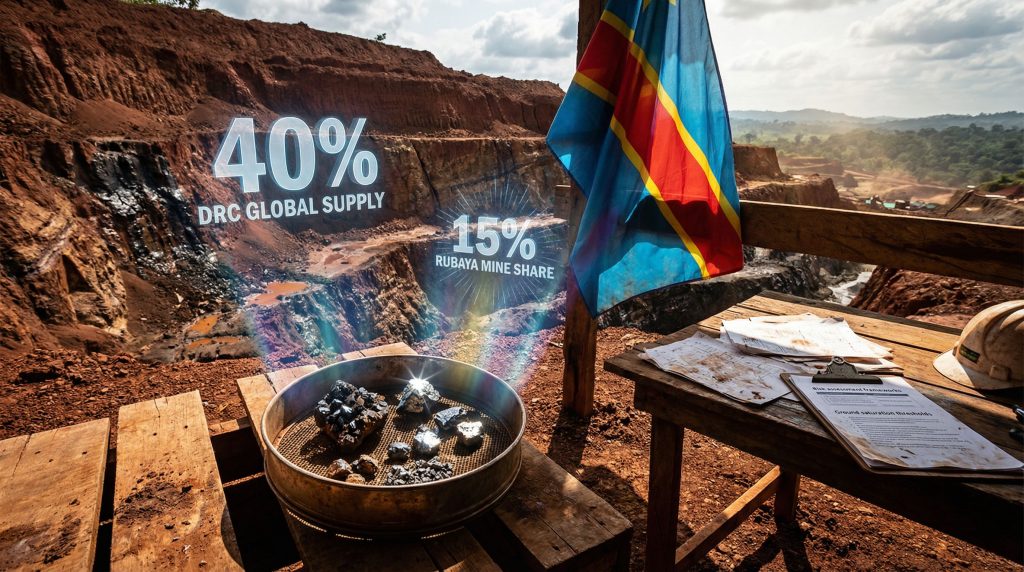
| Democratic Republic of Congo | 40% | Rubaya, Bisie, Lueshe |
| Rwanda | 25% | Gatumba, Nemba |
| Nigeria | 15% | Jos Plateau region |
| Brazil | 12% | Minas Gerais state |
| Other locations | 8% | Various smaller operations |
Rubaya's production represents approximately 15 percent of global coltan supply, making it one of the world's most strategically significant single mining sites. This concentration creates vulnerability where disruption at one location affects substantial portions of global electronics manufacturing capacity.
The site's recent addition to a shortlist of mining assets offered to the United States under a minerals cooperation framework demonstrates recognition of its strategic importance. This designation reflects growing awareness among major economies of critical mineral supply vulnerabilities.
Supply Chain Vulnerability Assessment
The March 2026 Rubaya collapse illustrates how geological incidents translate directly into global supply chain disruptions. Loss of 15 percent of world coltan production from a single landslide at DRC coltan mine creates immediate shortage pressures for electronics manufacturers requiring continuous tantalum supply streams.
Supply chain impacts extend beyond immediate shortages to include:
• Price volatility as spot markets react to reduced supply availability
• Production delays for electronics requiring tantalum capacitors
• Strategic stockpiling by manufacturers seeking supply security
• Alternative sourcing pressure on remaining production sites
Technology companies typically maintain limited tantalum inventories due to the mineral's high value and storage costs. Consequently, this makes them particularly vulnerable to supply disruptions caused by incidents such as the landslide at DRC coltan mine.
How Do Armed Groups Control Mining Operations in Eastern DRC?
Non-state armed groups exercise comprehensive control over mining operations through territorial dominance, administrative functions, and economic extraction mechanisms that replace traditional government oversight. This governance model creates unique challenges for safety regulation and international monitoring efforts.
M23 Governance Structure in Mining Territories
M23's control over Rubaya mining operations since 2024 demonstrates how rebel groups establish administrative systems governing extraction activities. The organisation maintains senior officials responsible for operational decisions, safety protocols, and incident response procedures, effectively replacing state mining authorities in controlled territories.
Following the March 2026 landslide at DRC coltan mine, an M23 official stated that continued operation had been discouraged pending area securing and protective measure implementation. This response indicates the group maintains decision-making authority over mining continuation or suspension, demonstrating functional administrative control over extraction activities.
The group's governance model includes:
• Operational oversight through appointed officials managing daily mining activities
• Safety decision authority regarding operational continuation during hazardous conditions
• Information control over incident reporting and casualty documentation
• Economic management of revenue distribution and taxation systems
Economic Incentives Behind Continued Operations
Despite documented safety risks, mining operations continue under M23 control due to compelling economic incentives affecting all stakeholders. For artisanal miners, coltan extraction provides essential income in regions with limited economic alternatives, creating powerful motivation to accept elevated risks.
Miner testimonies reveal the economic pressures driving continued work in dangerous conditions. Ibrahim Taluseke's statement that miners remain afraid but continue working because these are lives in danger illustrates how subsistence economics override safety concerns. Furthermore, understanding mining claims framework helps contextualise how territorial control affects operational decisions.
Cost-Benefit Analysis Factors:
• Daily earnings potential from coltan extraction versus agricultural or service work
• Investment requirements for safety improvements versus production output
• Risk tolerance levels influenced by immediate economic necessity
• Alternative employment availability in mining-dependent communities
The systematic concealment of casualty figures, as described by pit owners discouraging accurate death toll disclosure, suggests economic calculations prioritise production continuity over safety transparency. This practice indicates that operational economics favour minimising safety concerns rather than addressing underlying hazards.
What Are the Human Costs of Unregulated Artisanal Mining?
The human toll from unregulated artisanal mining operations extends beyond immediate casualties to encompass systematic child labour exploitation, inadequate medical infrastructure, and community-wide health impacts that persist across generations. These costs remain largely hidden due to reporting limitations and geographic isolation of affected communities.
Child Labour Prevalence in Coltan Extraction
The presence of approximately 70 children among over 200 fatalities in the March 2026 Rubaya landslide provides stark documentation of systematic child participation in dangerous mining operations. This casualty distribution suggests children comprise substantial portions of active mining workforces rather than occasional participants.
Child involvement in hazardous mining work represents multiple violations of international labour standards and creates long-term developmental impacts affecting entire communities. Children working in mining operations typically abandon formal education, limiting future economic opportunities and perpetuating cycles of poverty.
The economic calculation families face regarding child labour participation reflects broader structural challenges:
• Immediate income necessity versus long-term educational investment
• Survival economics requiring maximum family earning capacity
• Educational accessibility in remote mining regions with limited school infrastructure
• Future opportunity availability in mining-dependent local economies
Community Health and Safety Impacts
Artisanal mining operations create numerous health hazards extending beyond acute incidents like landslides to include respiratory conditions from dust exposure, contamination of water supplies, and limited access to medical treatment. The evacuation of injured survivors from the March 2026 Rubaya incident to medical facilities in Goma demonstrates the geographic isolation characterising many mining sites.
This distance creates delays in emergency medical response that can transform survivable injuries into fatalities, effectively increasing casualty rates beyond those directly caused by mining incidents. However, industry evolution trends suggest potential technological solutions for remote medical support.
Health Infrastructure Challenges in Mining Communities:
• Geographic isolation requiring extended transport times to medical facilities
• Limited emergency response capacity for mass casualty incidents
• Occupational health monitoring absence for long-term exposure risks
• Preventive care unavailability for mining-related health conditions
Community health impacts also include psychological trauma from witnessing repeated fatal incidents, economic disruption when primary income earners suffer injuries or death, and social fragmentation as families migrate seeking safer economic opportunities.
How Can International Frameworks Improve Mining Safety Standards?
International cooperation mechanisms offer potential pathways for improving artisanal mining safety through certification programmes, technology transfer initiatives, and coordinated investment in safety infrastructure. However, implementation challenges in conflict-affected territories require innovative approaches that account for non-state governance structures and economic realities.
Certification and Traceability Initiatives
Conflict-free mineral certification programmes represent the most developed international framework for addressing mining conditions in unstable regions. These initiatives create market incentives for improved mining practices by linking supply chain access to verified compliance with labour and safety standards.
Technology solutions for supply chain transparency include blockchain-based tracking systems that document mineral extraction origins and transport pathways. These systems enable electronics manufacturers to verify their tantalum supplies derive from operations meeting specified safety and labour standards.
Corporate responsibility programmes implemented by major electronics manufacturers create demand-side pressure for improved mining conditions. Companies including major smartphone and computer producers have established supplier verification requirements that theoretically exclude minerals from operations failing to meet safety standards.
Certification Framework Components:
• Third-party auditing of mining operations for safety and labour compliance
• Chain of custody documentation tracking minerals from extraction to processing
• Penalty mechanisms excluding non-compliant operations from certified supply chains
• Premium pricing providing economic incentives for certification achievement
Investment in Safety Infrastructure
Basic safety improvements for artisanal mining operations require relatively modest investments compared to industrial mining projects, yet funding mechanisms for such improvements remain underdeveloped. Simple interventions including drainage systems, slope stabilisation, and emergency communication equipment could significantly reduce casualty risks.
Cost Analysis for Basic Safety Measures:
| Safety Intervention | Estimated Cost (USD) | Expected Risk Reduction |
|---|---|---|
| Drainage system installation | $15,000-25,000 per site | 60-70% landslide risk reduction |
| Slope angle correction | $8,000-12,000 per pit | 40-50% collapse risk reduction |
| Emergency communication equipment | $2,000-3,000 per site | Improved rescue response times |
| Basic safety training programmes | $5,000-8,000 per community | 20-30% accident reduction |
International funding mechanisms for mining safety improvements include development bank programmes, bilateral aid initiatives, and private sector corporate social responsibility investments. However, accessing these funds requires governmental or organisational capacity that may be absent in conflict-affected territories.
The next major ASX story will hit our subscribers first
What Are the Long-term Implications for DRC's Mining Sector?
The recurring disasters at sites like Rubaya highlight fundamental structural challenges that require comprehensive reform rather than incremental safety improvements. Long-term sustainability for DRC's mining sector depends on resolving governance conflicts, developing regulatory capacity, and creating economic alternatives that reduce dependence on hazardous artisanal extraction.
Regulatory Reform Opportunities
Effective mining sector reform requires establishing unified governance structures capable of enforcing safety standards across all extraction operations regardless of territorial control. This necessitates resolution of underlying conflicts that fragment regulatory authority and create competing administrative systems.
Proposed regulatory reforms include mandatory geological surveys before excavation permits, required safety equipment for all mining operations, and independent monitoring systems for casualty reporting. However, implementing such requirements demands governmental capacity and territorial control currently absent in many mining regions.
Revenue Sharing Models for Safety Investment:
• Production-based safety fees creating dedicated funds for protective infrastructure
• Export taxation funding mining safety oversight and emergency response systems
• International partnerships providing technical expertise and financing for regulatory development
• Community benefit arrangements ensuring local populations receive compensation for mining risks
Alternative Livelihood Development
Reducing dependence on dangerous artisanal mining requires creating viable economic alternatives in mining-dependent communities. This involves agricultural development programmes, skills training initiatives for alternative employment, and infrastructure investment supporting economic diversification.
Economic diversification strategies must account for geographic isolation, limited educational infrastructure, and cultural factors affecting employment preferences in mining communities. Successful transitions typically require sustained investment over multiple years rather than short-term intervention programmes.
Sustainable Development Approaches:
• Agricultural productivity improvement through technical assistance and market access development
• Vocational training programmes for construction, manufacturing, and service sector employment
• Infrastructure development improving transportation access to alternative economic opportunities
• Microfinance initiatives supporting small business development in mining communities
The transition from artisanal to industrial mining operations offers potential for improved safety standards while maintaining economic benefits for local communities. However, such transitions require substantial capital investment and stable governance structures currently unavailable in many DRC mining regions.
Frequently Asked Questions About DRC Mining Safety
Why do miners continue working in dangerous conditions?
Economic necessity drives continued mining work despite documented safety risks. In regions with limited alternative employment, artisanal mining provides essential income for family survival. The immediate need for daily earnings overrides longer-term safety concerns, particularly when mining represents the only available income source in geographically isolated communities.
How does conflict affect mining safety oversight?
Armed conflict creates fragmented governance structures that eliminate traditional mining safety regulation. When territories fall under non-state control, standard government inspection regimes, permit conditions, and enforcement mechanisms become ineffective. Competing authorities over mining operations create gaps in safety oversight while prioritising production revenue over protective measures.
What can consumers do to support safer mining practices?
Consumer pressure for conflict-free electronics can influence supply chain practices by creating market demand for certified minerals. Supporting companies with verified responsible sourcing policies and advocating for stronger international certification standards helps establish economic incentives for improved mining conditions. However, consumer actions alone cannot address underlying governance and economic factors driving unsafe practices.
Are there safer alternatives to artisanal coltan mining?
Industrial mining operations typically maintain higher safety standards through comprehensive geological surveys, engineering controls, and regulatory oversight. However, transitioning from artisanal to industrial extraction requires substantial capital investment and stable governance structures. Alternative approaches include cooperative mining models that combine artisanal scale operations with professional safety management and equipment provision.
This analysis is based on publicly available information and should not be considered as investment advice. Mining operations in conflict-affected territories involve substantial risks that may not be fully reflected in available reporting. Casualty figures and operational details from disputed territories may be subject to verification challenges due to limited independent monitoring capacity.
Ready to Capitalise on Mining Opportunities?
Discovery Alert's proprietary Discovery IQ model delivers real-time alerts on significant ASX mineral discoveries, turning complex mining sector developments into actionable investment insights. Visit Discovery Alert's dedicated discoveries page to understand how major mineral discoveries can generate substantial market returns, then begin your 14-day free trial to position yourself ahead of the market.