Askari Metals Ltd
Askari Metals Expands Uis Pegmatite Pipeline With Seven New Targets Ahead of RC Drilling
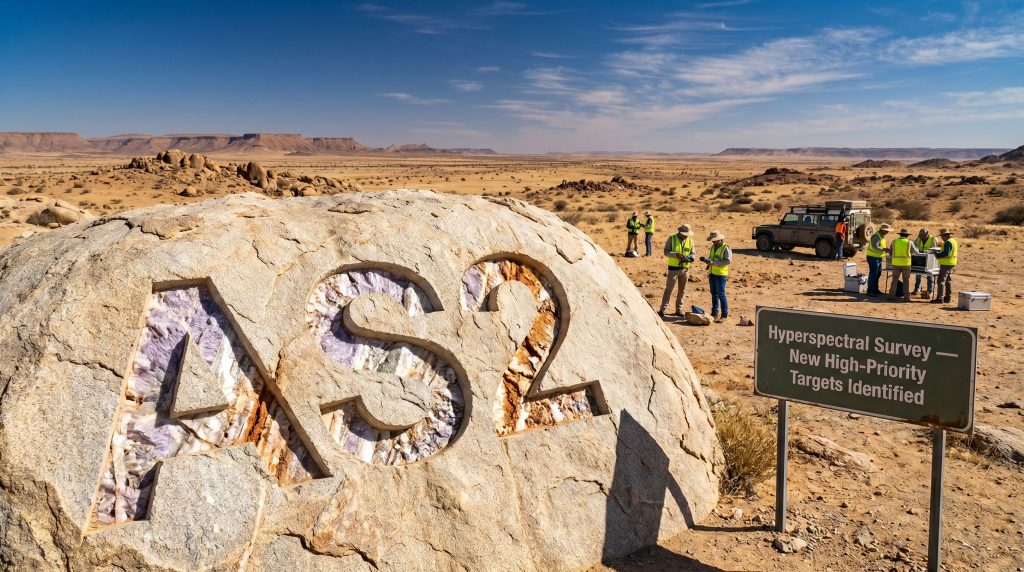
Askari Metals Limited (ASX: AS2) has expanded its exploration pipeline at the Uis Project in Namibia, after an in-house hyperspectral study identified seven new high-priority pegmatite targets across EPL 7345 and EPL 8535. According to the ASX announcement, the new targets sit within a 15km by 5km Corridor of Interest, while RC drilling is scheduled to commence next quarter on the previously defined DP, OP, PS and K9 pegmatite targets.
For investors, the update matters because it increases the number of priority targets feeding into Askari's drill pipeline at a time when multiple field programmes are already underway. The announcement also outlined the commissioning of on-site LIBS and pellet press equipment, which the company expects will improve assay turnaround times and speed up exploration decisions.
When big ASX news breaks, our subscribers know first
Seven New Pegmatite Targets Add Scale to the Uis Pipeline
In the announcement, Askari reported that its optimised in-house hyperspectral analysis generated seven new prospective pegmatite targets. Four are located on EPL 7345 and three on EPL 8535.
The estimated strike lengths reported by the company are summarised below.
| Target | Tenement | Estimated Strike Length |
|---|---|---|
| K10 | EPL 7345 | 3.1 km |
| GP | EPL 7345 | 2.4 km |
| EVE | EPL 7345 | 1.7 km |
| MW | EPL 7345 | 0.9 km |
| Tawny | EPL 8535 | 2.2 km |
| Martial | EPL 8535 | 1.7 km |
| Zebedeus-1 | EPL 8535 | 1.4 km |
The larger targets stand out on first pass. K10, at 3.1km, is the longest interpreted target in the new group, followed by GP at 2.4km and Tawny at 2.2km.
Strike length does not confirm grade or economic mineralisation, but it is an important early indicator of geological scale in pegmatite exploration. Furthermore, longer target footprints can justify follow-up work such as mapping, rock-chip sampling, trenching and drilling.
What Did the Executive Director Say?
"This study marks another important step in unlocking the scale and polymetallic potential of Uis. Our in-house hyperspectral work has now delivered seven new high-priority pegmatite targets, materially expanding the project's pipeline ahead of the next phase of RC drilling."
Gino D'Anna, Executive Director, Askari Metals
Uis Is Being Advanced as a Polymetallic Critical Minerals Project
According to the ASX release, Askari is positioning Uis as a polymetallic pegmatite project with exposure to tin, tantalum, lithium, rubidium and caesium. That gives the project broader commodity exposure than a single-metal exploration story.
The project is located in Namibia's Erongo Region, within the Cape Cross-Uis Pegmatite Belt, less than 5km from the township of Uis and less than 2.5km from Andrada Mining's operating Uis Tin-Tantalum-Lithium Mine. The announcement cited this nearby operating mine as part of the district context for the project.
Askari's tenure position at Uis includes:
- 100% ownership of EPL 7345
- 100% ownership of EPL 7626
- 80% ownership of EPL 8535
The broader project area is reported to host more than 100 mapped pegmatites, with many having been historically mined for tin and semi-precious stones. In practical terms, that gives Askari a large existing geological inventory to work through, while the new hyperspectral targets add another layer of prospectivity.
For investors, the multi-commodity angle is relevant because pegmatites in the belt may carry different mineral combinations. If follow-up work confirms fertile systems, value could come from more than one metal, rather than relying on a single commodity outcome.
How the Hyperspectral Study Was Used to Find New Targets
A notable part of the update is the way the targets were generated. Askari stated that the study combined Sentinel-2 multispectral imagery with Maxar WorldView-3 hyperspectral data to improve geological and regolith mapping across Uis.
In accessible terms, this means the company used advanced satellite imagery to detect subtle surface differences between pegmatites, host rocks and weathered ground cover. Those contrasts can help geologists identify target areas before more expensive field work begins.
The announcement explained that:
- Sentinel-2 data was used for geological and surface mineral mapping across broad areas, especially in the visible and shortwave infrared bands.
- WorldView-3 data provided higher-resolution imagery that can help distinguish granitic pegmatite exposures from surrounding host schist at the prospect scale.
Askari also referred to image-processing methods such as:
- False-colour RGB composites
- Decorrelation stretch
- Minimum Noise Fraction (MNF)
- Principal Component Analysis (PCA)
While these terms are technical, their purpose is straightforward. They help remove visual noise from satellite data and make meaningful geological patterns easier to see. In this case, the workflow was used to identify pegmatite exposures, refine structural understanding and define new target areas within the Corridor of Interest.
That matters because better targeting can improve the efficiency of exploration spending. Instead of testing broad ground with limited direction, the company can focus mapping, sampling and trenching on areas it believes have the strongest potential.
What Is Hyperspectral Remote Sensing and Why Does It Matter?
Hyperspectral remote sensing is a method of collecting image data across many narrow light wavelengths, rather than just a few broad colour bands. Different minerals reflect light in different ways, so this data can sometimes be used to identify surface mineral patterns from space.
In pegmatite exploration, hyperspectral tools can be useful for locating rock units that may be associated with lithium-caesium-tantalum (LCT) pegmatites. These are a specific type of pegmatite that can host lithium, tantalum, caesium and rubidium, and in some districts can also be associated with tin.
For non-specialist investors, the key point is simple: hyperspectral analysis is a target-generation tool. It does not replace drilling, trenching or assays, but it can help narrow the search area and improve the order in which targets are tested.
A few key terms from the announcement are worth defining.
| Term | Simple Explanation |
|---|---|
| LCT pegmatite | A pegmatite type that may contain lithium, caesium and tantalum minerals |
| SWIR | Shortwave infrared light, useful for identifying some rock and clay minerals |
| MNF | A way to separate useful image data from unwanted noise |
| PCA | A method used to highlight the strongest patterns in complex image data |
| LIBS | A tool that uses a laser to identify elements in a sample |
| Strike length | The mapped horizontal length of a geological feature |
The company's use of this work in-house is also relevant. Internal processing can allow new field observations to be fed back into the targeting model more quickly than a one-off outsourced study.
On-Site LIBS and Pellet Press Could Shorten the Feedback Loop
The announcement also stated that Askari's pellet press and LIBS machine are now on site and commissioned at Uis. The company said future exploration samples will undergo preparation and analysis on site in Namibia.
This is an operational detail, but one with practical implications. Exploration programmes often slow down when sample results take weeks or months to return from external laboratories. Askari's on-site system is expected to improve turnaround time for early-stage field analysis, especially for light elements such as lithium, beryllium, magnesium and boron.
That does not remove the need for more formal laboratory work where required. However, it may help the field team make faster decisions about:
- which outcrops to sample further
- where to focus mapping
- which targets should be prioritised for trenching
- how to refine the next stage of the drill pipeline
In a project with concurrent workstreams, faster analytical feedback can help sequence field programmes more effectively.
Management's View on On-Site Analysis
"Importantly, the commissioning of our on-site pellet press and LIBS machine is expected to materially improve assay turnaround times and accelerate exploration decision-making as multiple workstreams advance in parallel."
Gino D'Anna, Executive Director, Askari Metals
The Corridor of Interest Remains Central to the Exploration Strategy
Askari stated that the new targets fall within its previously defined Corridor of Interest, a focus zone approximately 15km long and 5km wide trending north-east to south-west.
According to the announcement, this corridor was defined using regional magnetic data and chemical data including K/Rb ratios. In simple terms, potassium-to-rubidium ratios can help geologists identify areas where pegmatites may have evolved chemically in ways that are favourable for certain critical minerals.
The company also reported that recently received data has helped further identify:
- zones prospective for Li-Sn-Ta mineralisation
- areas prospective for Ta mineralisation
- interpreted extensions of mineralised zones requiring more work
This regional framework is important because it links individual targets into a broader geological system. For investors, that can support a view that target generation at the Uis Project in Namibia is part of a district-scale exploration model, rather than isolated prospect testing.
Near-Term Work Programme and Catalysts at Uis
The quarterly-style sequencing in the announcement is clear. Askari outlined several active and planned work programmes designed to move targets from early identification through to trenching and drilling.
| Stage | Activity | Status |
|---|---|---|
| 1 | Detailed mapping and rock-chip sampling of priority target areas | Underway |
| 2 | Regional stream sediment geochemical sampling across the Corridor of Interest | Designed |
| 3 | Regional soil geochemical sampling to refine concealed targets | Designed |
| 4 | Assessment of field, assay and geochemical datasets | Planned after field programmes |
| 5 | Phase 1 trenching on EPL 8535 | Planned |
| 6 | Phase 2 trenching on EPL 7345 | Planned |
| 7 | RC drilling on DP, OP, PS and K9 at EPL 7345 | Next quarter |
This sequencing is relevant because it gives the market multiple points of potential newsflow rather than a single binary event. The current drill-ready targets on EPL 7345 are set to be tested first, while the seven newly identified targets are being advanced through mapping and rock-chip work toward trench-ready status.
That creates a layered pipeline. If RC drilling results are reported next quarter, another group of prospects may already be progressing behind them.
The next major ASX story will hit our subscribers first
Why This Update Matters to ASX Investors
The ASX announcement points to three investor-relevant themes at the Uis Project in Namibia.
First, target inventory growth. Seven new targets materially expand the number of prospects that can be tested over time, with several showing strike lengths above 2km.
Second, commodity diversification. Uis gives Askari exposure to tin, tantalum, lithium, rubidium and caesium, which broadens the possible mineralisation outcomes across the project area.
Third, operational momentum. Mapping is underway, geochemical programmes are designed, trenching is planned, on-site analytical tools are commissioned, and RC drilling is expected to begin next quarter.
Taken together, the update suggests that Askari is moving Uis through a structured exploration process with several near-term milestones. The new targets do not confirm economic mineralisation, but they increase the scale of the opportunity set feeding into upcoming field and drill work. For investors following ASX critical minerals explorers, that makes Uis a project to watch as the next round of results approaches.
Want to Know When the Next Major ASX Mineral Discovery Is Announced?
Discovery Alert uses its proprietary Discovery IQ model to deliver real-time alerts on significant ASX mineral discoveries — instantly turning complex exploration data into actionable opportunities for investors at every level. Explore how major discoveries have historically generated substantial returns on Discovery Alert's dedicated discoveries page, and begin your 14-day free trial today to position yourself ahead of the market.