
June 12, 2026
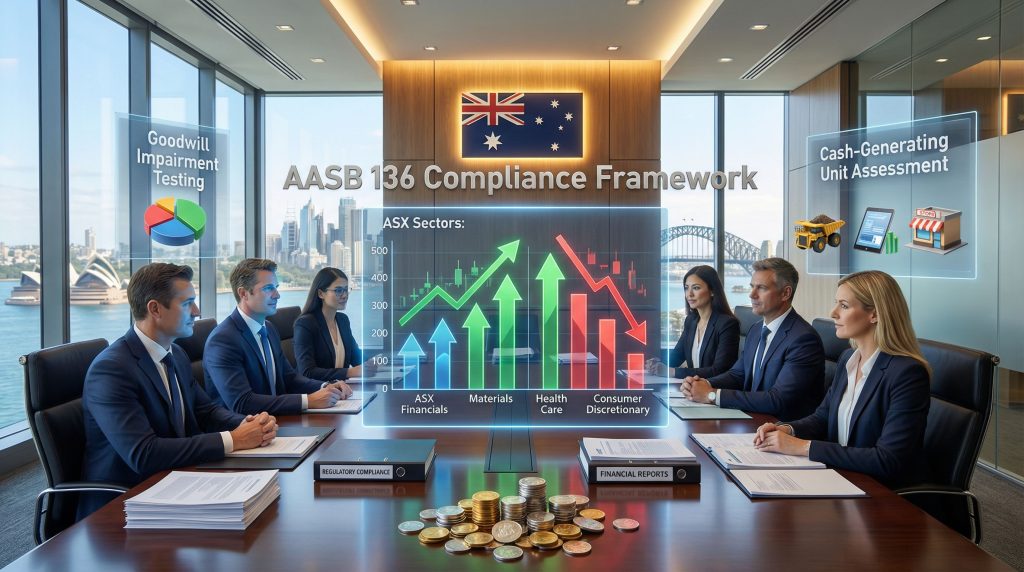
The regulatory framework governing asset valuations across Australian Securities Exchange companies has become increasingly complex as market volatility creates unprecedented challenges for accurate financial reporting. While traditional depreciation schedules account for predictable asset deterioration, the emergence of significant asset impairments in ASX companies reflects deeper structural shifts affecting how businesses must reassess their holdings under evolving accounting standards, particularly when examining commodity price trends and their impact on valuations.
Understanding these impairment mechanisms requires examining the intersection of Australian Accounting Standards Board requirements, market dynamics, and corporate governance responsibilities that collectively shape financial transparency across publicly listed entities.
Understanding Asset Impairment Requirements Under Australian Accounting Standards
The Australian regulatory environment mandates comprehensive asset testing protocols that extend far beyond simple market value comparisons. Under AASB 136, companies must establish robust frameworks for identifying when carrying values exceed recoverable amounts, creating obligations that permeate through multiple levels of corporate decision-making.
AASB 136 Compliance Framework for ASX Listed Companies
The Accounting Standards Board of Australia established AASB 136 as the mandatory impairment testing standard for Australian entities, aligned with International Accounting Standard IAS 36. This framework requires companies to implement systematic approaches for asset valuation that consider both quantitative metrics and qualitative indicators of potential impairment.
Mandatory testing triggers include:
- Economic downturns affecting industry sectors
- Technological changes rendering assets obsolete
- Shifting consumer preferences impacting demand
- Regulatory or legal changes affecting utilization
- External economic factors beyond company control
According to AASB 136, external impairment indicators encompass significant declines in market value, adverse changes in legal or regulatory environments, market interest rate increases affecting discount rates, and evidence of obsolescence or physical damage. These triggers create automatic testing requirements that companies cannot defer or avoid.
The recoverable amount calculation methodology requires determining the higher of fair value less costs of disposal or value in use. This dual-calculation approach ensures the most prudent valuation framework while providing flexibility for different asset types and market conditions.
Key Differences Between Impairments, Depreciation, and Write-Offs
Distinguishing between these three accounting treatments reveals critical differences in both financial impact and strategic implications for ASX companies. The permanent nature of impairment recognition sets it apart from other asset adjustments and creates lasting effects on financial statements.
Write-offs represent complete asset removal due to unusability, such as damaged equipment that cannot be economically repaired. These typically result from specific events rather than gradual deterioration.
Depreciation involves systematic allocation of asset costs over expected useful lives, representing predictable value reduction during ordinary business operations. This expected reduction continues regardless of market value fluctuations and affects EBITDA calculations differently than impairments.
Impairments occur when carrying values significantly exceed recoverable amounts due to unexpected circumstances. Unlike depreciation, which accounts for normal wear and tear, impairments reflect unforeseen deterioration in asset utility or market conditions that cannot be reversed under Australian accounting standards.
The accounting treatment variations create different impacts across financial statements. Impairments directly reduce reported profit after tax as non-cash charges, while preserving EBITDA and operating cash flow metrics. This distinction becomes crucial for investors analyzing company performance beyond headline profit figures.
When big ASX news breaks, our subscribers know first
What Triggers Asset Impairment Testing in Australian Markets?
Market dynamics across Australian industries create diverse impairment triggers that extend beyond traditional economic indicators. Understanding these catalysts helps investors anticipate potential impairment announcements and assess their underlying significance, particularly when considering market volatility insights that affect asset valuations.
External Economic Indicators
Commodity price volatility represents one of the most significant external triggers for Australian companies, particularly given the ASX's heavy weighting toward resource sector entities. Recent examples demonstrate how sustained price weakness in key commodities can necessitate comprehensive asset reassessments.
The case of IGO Limited (ASX: IGO) illustrates this dynamic clearly. Following its acquisition of Western Areas, the company faced impairment charges of A$880-980 million in 2023, followed by additional impairments of A$275-295 million in 2024. These impairments reflected higher capital and operating costs than initially forecast, production schedule challenges at the Cosmos project, and sustained weakness in nickel prices that fundamentally altered the economic assumptions underlying the acquisition.
Technological disruption creates another category of external triggers, particularly affecting traditional industries facing digital transformation pressures. Companies must regularly assess whether their operational assets remain economically viable as new technologies reshape competitive landscapes.
Regulatory changes affecting asset utilization have become increasingly important as environmental, social, and governance considerations influence policy decisions. Assets that were previously profitable under existing regulatory frameworks may require impairment recognition as compliance costs increase or utilization restrictions emerge.
Internal Performance Metrics
Internal triggers often manifest through deteriorating operational performance metrics that signal fundamental changes in asset productivity. Cash flow deterioration versus budget projections frequently serves as an early warning indicator that carrying values may no longer be supportable.
BlueScope Steel Limited (ASX: BSL) experienced such internal performance challenges with its North American Coated Products acquisition. The company recorded a non-cash impairment charge of approximately A$438.9 million in FY2025, with A$362 million attributed to goodwill and the remainder to customer relationship intangibles. Lower sales volumes, weaker demand, and operational inefficiencies meant future cash flow projections could no longer support the carrying values established at acquisition.
Integration challenges and slower ramp-up of planned products created additional internal triggers, demonstrating how execution risks can materialise into impairment requirements even when external market conditions remain stable.
Strategic asset underperformance indicators encompass metrics such as market share erosion, customer retention rates, and competitive positioning changes that may not immediately appear in financial statements but signal underlying value deterioration.
How Do Goodwill Impairments Affect ASX Acquisition Strategies?
Goodwill impairments represent one of the most visible consequences of acquisition strategies that fail to deliver anticipated synergies or performance improvements. The frequency and magnitude of these impairments across ASX companies reveal systematic challenges in acquisition valuation and integration execution, particularly when management red flags emerge during the integration process.
Acquisition Integration Challenges
Post-merger performance gaps commonly emerge when acquisition assumptions fail to materialise in operational reality. The time lag between acquisition completion and impairment recognition typically ranges from two to four years, reflecting the period required for integration challenges to become apparent in financial performance.
Myer Holdings Limited (ASX: MYR) exemplified these challenges through its Apparel Brands acquisition. The company recorded a goodwill impairment of A$213.3 million in FY2025, contributing to a statutory net loss of A$211.2 million. The impairment arose because fair value considerations at acquisition completion, influenced by share price appreciation between announcement and completion, created carrying values that subsequent operational performance could not support.
This case highlights how acquisition accounting requirements can create artificial value inflation when share price movements during transaction periods exceed underlying business performance improvements. Companies must navigate the disconnect between market-driven fair value measures and fundamental business value creation.
Cultural and operational integration failures contribute significantly to goodwill impairment risks. When acquired entities fail to achieve anticipated synergies or operational efficiencies, the premium paid for acquisition goodwill becomes unsustainable under accounting standards that require annual testing.
Annual Goodwill Testing Requirements
AASB 136 mandates that goodwill be allocated to cash-generating units for annual impairment testing, creating ongoing compliance obligations that extend beyond initial acquisition accounting. This requirement ensures that acquisition premiums remain justified by operational performance rather than initial transaction enthusiasm.
Cash-generating unit assessment protocols require companies to identify the smallest groups of assets that generate cash inflows largely independent of other asset groups. This granular approach ensures that goodwill impairment testing reflects actual operational performance rather than broader corporate performance metrics.
Fair value measurement complexities arise when determining recoverable amounts for cash-generating units containing significant goodwill balances. Companies must employ discounted cash flow analyses or market comparable approaches that accurately reflect long-term value creation potential rather than short-term performance variations.
Discount rate assumptions and sensitivity analysis become critical components of goodwill testing, as small changes in these assumptions can significantly affect calculated recoverable amounts. The requirement for annual testing ensures that these assumptions remain current with market conditions and company-specific risk profiles.
Which ASX Sectors Face the Highest Impairment Risks?
Sectoral analysis of asset impairments in ASX companies reveals distinct patterns reflecting industry-specific risk factors and market dynamics. Understanding these patterns enables investors to anticipate potential impairment announcements and assess sector-wide vulnerabilities, particularly within the context of industry evolution trends affecting different market segments.
Resources and Mining Companies
The resources sector faces elevated impairment risks due to commodity price volatility, regulatory compliance costs, and the inherently speculative nature of exploration and development activities. Commodity cycles create systematic impairment pressures across the sector when prices decline significantly from acquisition or development decision assumptions.
Mining companies frequently confront exploration asset write-downs when geological results fail to meet expectations or when changes in commodity prices render projects economically unviable. Development project delays create additional impairment risks as carrying costs accumulate while revenue generation remains deferred.
Environmental and regulatory compliance costs have increased substantially across the mining sector, requiring companies to reassess whether existing operations can generate sufficient cash flows to support historical carrying values. Climate change considerations and social licence to operate challenges add further complexity to long-term asset valuations.
Technology and Growth Sectors
Technology companies face unique impairment challenges related to rapid obsolescence and competitive pressures that can quickly erode asset values. Intangible asset valuation becomes particularly complex as technological advantages may have shorter useful lives than traditional accounting assumptions suggest.
PEXA Group Limited (ASX: PXA) demonstrated technology sector impairment dynamics through its recognition of a A$35-40 million impairment in early 2025. As an e-conveyancer, the company's business model depends on property settlement volumes and digital service revenues. Slower transactional activity and uncertain settlement throughput required impairment recognition when certain carrying values could no longer be supported under IFRS and AASB testing requirements.
Customer relationship and software asset impairments become significant risks for technology companies as competitive landscapes evolve rapidly. The challenge lies in accurately predicting how long customer relationships and proprietary technologies will continue generating economic benefits.
Rapid product development cycles create obsolescence risks that may not be captured in traditional depreciation schedules, necessitating more frequent impairment assessments than in other sectors.
Retail and Consumer Discretionary
Retail sector companies face impairment pressures from changing consumer preferences, online competition, and store network optimisation requirements. Brand value deterioration in changing markets can occur rapidly as consumer loyalty shifts toward new products or delivery channels.
Store network and property impairments reflect structural changes in retail operations as companies adapt to omnichannel strategies and reduced physical footprints. The COVID-19 pandemic accelerated these trends, creating widespread reassessment requirements across retail property portfolios.
Inventory and working capital adjustments may trigger broader impairment assessments when demand patterns shift permanently rather than cyclically. Companies must distinguish between temporary market disruptions and fundamental changes in consumer behaviour.
What Are the Financial Statement Impacts of Asset Impairments?
Asset impairments in ASX companies create cascading effects across all three primary financial statements, with implications extending beyond immediate profit recognition to affect debt covenants, tax positions, and future operational metrics.
Profit and Loss Statement Effects
Non-cash charges from impairments directly reduce net profit after tax while preserving operating cash flow metrics, creating apparent disconnects between profit performance and cash generation capability. This distinction becomes crucial for investors analyzing underlying business performance versus accounting-driven profit volatility.
EBITDA and EBIT preservation despite impairments occurs because impairment charges typically appear below operating profit lines in financial statement presentations. The BlueScope Steel case demonstrated this dynamic, where a A$438.9 million impairment contributed to a 90% decline in full-year profit despite positive EBIT and operating cash flows.
Earnings per share dilution from impairment charges can significantly affect market valuation metrics even when underlying operational performance remains stable. Investors must therefore distinguish between impairment-driven EPS declines and operational EPS deterioration when assessing company performance.
Balance Sheet Restructuring
Asset carrying value adjustments from impairments create permanent reductions in total asset values, potentially affecting financial ratios and debt covenant compliance. Companies may need to renegotiate lending arrangements if impairments reduce asset coverage ratios below required thresholds.
Equity reduction occurs as impairment charges flow through to retained earnings, directly reducing shareholders' equity without corresponding cash outflows. This accounting treatment can create apparent financial weakness that doesn't reflect actual liquidity or operational challenges.
Future depreciation schedule modifications result from impairment recognition, as reduced carrying values create lower ongoing depreciation charges in subsequent periods. This effect can artificially improve future profit margins even when underlying operational performance remains unchanged.
Cash Flow Statement Considerations
Operating cash flow protection mechanisms ensure that non-cash impairment charges don't affect cash-based performance metrics, providing investors with clearer visibility into actual cash generation capability. The cash flow statement adds back impairment charges to net profit when calculating operating cash flows.
Tax implications may arise from impairment recognition, particularly regarding deferred tax assets and liabilities. Companies may need to reassess the recoverability of deferred tax assets if impairments suggest reduced future profitability for tax planning purposes.
Working capital and financing impact analysis becomes important when impairments affect debt covenant calculations or lender confidence. While impairments don't directly affect cash flows, they may influence credit ratings and borrowing costs.
How Should Investors Analyze Impairment Announcements?
Investor analysis of asset impairments in ASX companies requires distinguishing between accounting-driven profit impacts and fundamental changes in business prospects. Understanding the underlying drivers and management responses provides insight into whether impairments represent isolated adjustments or systematic business challenges, particularly when developing investment strategy insights for portfolio management.
Market Reaction Patterns and Timing
Share price volatility following impairment disclosures typically reflects immediate market disappointment rather than calculated reassessment of long-term value creation potential. Historical analysis suggests that market reactions often overstate the significance of non-cash impairment charges relative to their actual impact on business fundamentals.
Volume trading patterns frequently spike following impairment announcements as institutional investors reassess position sizing and retail investors react to headline profit declines. These volume increases often create temporary price dislocations that may present opportunities for informed investors.
Recovery timeframes vary significantly across sectors, with technology and growth companies typically experiencing faster recovery than traditional industrial companies. The speed of recovery often correlates with market confidence in management's strategic response rather than the magnitude of the impairment charge itself.
Management Credibility Assessment
Historical accuracy of asset valuations provides crucial context for evaluating management's track record in capital allocation and strategic decision-making. Companies with frequent impairments may indicate systematic issues in acquisition due diligence or strategic planning processes.
Communication transparency during impairment cycles reveals management's willingness to acknowledge mistakes and adapt strategies accordingly. Companies that provide detailed explanations of impairment drivers and corrective actions typically maintain higher investor confidence than those offering minimal disclosure.
Strategic pivoting and operational adjustments following impairments demonstrate management's ability to learn from experience and improve future performance. The quality of these responses often proves more important for long-term value creation than the impairment magnitude itself.
Comparative Analysis Methodologies
Peer group impairment frequency comparisons help investors assess whether specific company impairments reflect industry-wide challenges or company-specific execution issues. Systematic analysis across comparable companies can reveal sector-wide vulnerabilities or highlight individual management performance differences.
Industry-specific impairment benchmarking enables more nuanced evaluation of impairment announcements within appropriate sectoral contexts. Resource companies, for example, typically experience higher impairment frequencies due to commodity price volatility, making individual impairments less significant than in stable industries.
Acquisition success rate evaluations across management teams and industry sectors provide valuable context for assessing the probability of future impairments. Companies with strong acquisition track records may warrant more patience when isolated impairments occur.
The next major ASX story will hit our subscribers first
What Compliance Challenges Do ASX Companies Face?
Regulatory compliance surrounding asset impairment testing creates multifaceted challenges for ASX companies, extending from technical accounting requirements to governance oversight and stakeholder communication obligations.
ASIC Oversight and Enforcement Actions
Director responsibility for impairment testing adequacy encompasses ensuring that appropriate processes exist to identify impairment indicators and conduct required testing procedures. Directors must demonstrate that they have established adequate systems for ongoing asset monitoring and valuation assessment.
The Australian Securities and Investments Commission maintains oversight authority over impairment testing adequacy and may investigate situations where impairment recognition appears delayed or insufficient. ASIC enforcement actions typically focus on disclosure adequacy and director compliance with due diligence requirements.
Disclosure requirements mandate timely and comprehensive communication of material impairments to ensure market transparency. Companies must balance the need for thorough analysis with prompt disclosure obligations, creating potential tensions between accuracy and timing requirements.
Audit committee governance responsibilities include overseeing the adequacy of impairment testing procedures and ensuring that external auditors receive appropriate access to valuation information. The complexity of impairment testing requires specialised expertise that may challenge traditional audit committee capabilities.
International Accounting Standards Alignment
IFRS convergence creates ongoing implementation complexities as Australian standards adapt to international developments. Companies with international operations must navigate differences between jurisdictions while maintaining consistent global reporting standards.
Cross-border subsidiary impairment coordination becomes complex when different jurisdictions have varying requirements for impairment recognition timing and measurement. Companies must ensure that group-wide impairment testing produces consistent results across all reporting jurisdictions.
Currency translation and foreign asset valuation create additional complexity layers when determining recoverable amounts for international assets. Exchange rate volatility can affect impairment calculations independently of underlying asset performance changes.
Case Study Analysis: Recent ASX Impairment Patterns
Examining specific impairment cases across different market capitalisations and sectors reveals patterns in underlying drivers, management responses, and market reactions that provide insights for future analysis.
Large Cap Resource Sector Examples
The IGO Limited case study demonstrates how commodity price cycles interact with acquisition timing to create impairment pressures. The company's Western Areas acquisition coincided with a sustained period of nickel price weakness that fundamentally altered the economic assumptions underlying the transaction.
Key metrics from the IGO case:
- Initial impairment: A$880-980 million (2023)
- Follow-up impairment: A$275-295 million (2024)
- Primary drivers: Higher capital/operating costs, production delays, commodity price pressures
- Time from acquisition to first impairment: Approximately 1 year
Mining company acquisition impairments often reflect the inherent difficulty of accurately valuing resource assets during volatile commodity cycles. The timing of acquisitions relative to commodity price cycles can significantly influence subsequent impairment risk.
Operational cost escalation impacts have become increasingly significant across the resource sector as inflation, regulatory compliance costs, and skilled labour shortages combine to increase project development expenses beyond initial forecasts.
Mid-Cap Technology and Industrial Cases
BlueScope Steel's Coated Products impairment illustrates integration challenges common in mid-cap industrial acquisitions. The three-year period between acquisition and impairment recognition reflects the time required for integration challenges and market condition changes to manifest in financial performance.
BlueScope Steel impairment breakdown:
- Total impairment: A$438.9 million
- Goodwill component: A$362 million
- Customer relationship intangibles: Balance of impairment
- Integration challenges: Slower product ramp-up than anticipated
- Market conditions: Weaker demand affecting sales volumes
Integration failure patterns across mid-cap acquisitions typically involve overestimation of synergy realisation timeframes and underestimation of cultural and operational challenges. Companies in this segment often lack the integration expertise that larger organisations develop through frequent acquisition activity.
Market positioning challenges can emerge when acquired entities face competitive pressures that weren't fully appreciated during due diligence processes. The time lag between acquisition and full market integration creates vulnerability periods where competitive dynamics may shift unfavourably.
Small Cap and Emerging Company Trends
PEXA Group's minority investment impairment, while smaller in absolute terms at A$35-40 million, reflects challenges common among technology companies dependent on transaction volumes or user activity metrics. The company's e-conveyancing business model created direct exposure to property market activity levels that proved less resilient than initially projected.
Development stage asset reassessments frequently affect smaller companies lacking diversified revenue streams. Market capitalisation constraints limit access to capital required for extended development periods, creating pressure for earlier commercialisation that may not align with optimal development timelines.
Funding constraint implications become critical for small cap companies when impairments affect debt covenant compliance or investor confidence. Access to growth capital may be restricted following impairment announcements, creating strategic constraints for management teams.
How Can Companies Minimize Future Impairment Risks?
Proactive risk management frameworks can significantly reduce impairment frequency and magnitude through enhanced due diligence, continuous monitoring systems, and strategic portfolio optimisation approaches.
Enhanced Due Diligence Frameworks
Pre-acquisition valuation stress testing should incorporate multiple scenario analyses that extend beyond base case assumptions to include adverse market conditions, integration delays, and competitive response scenarios. This comprehensive approach helps identify acquisition targets with greater resilience to adverse conditions.
Integration planning and milestone tracking systems enable early identification of challenges that might otherwise compound into impairment requirements. Establishing clear performance benchmarks and corrective action triggers creates opportunities for proactive management intervention.
Cultural compatibility assessment protocols help predict integration success probability beyond financial metrics. Organisations with compatible cultures typically achieve synergy realisation faster and with lower integration costs than those requiring extensive cultural transformation.
Continuous Asset Monitoring Systems
Real-time performance indicator tracking creates early warning systems for potential impairment situations. Companies should establish automated reporting systems that flag significant deviations from planned performance metrics before they accumulate into material impairment requirements.
Market condition sensitivity analysis helps companies understand how external factor changes might affect asset values and business model viability. Regular scenario planning exercises can identify vulnerable assets before market conditions deteriorate significantly.
Proactive management intervention triggers should be established at performance thresholds well above impairment levels. This approach enables strategic corrections while maintaining asset values rather than reactive responses after impairment becomes unavoidable.
Strategic Portfolio Management
Asset diversification and risk distribution across different markets, technologies, and customer segments reduces concentration risks that can create large impairment exposures. Portfolio construction should consider correlation risks between different assets and business units.
Regular strategic review and optimisation processes ensure that company strategies remain aligned with market conditions and competitive dynamics. Annual strategic planning should include explicit assessment of asset utilisation efficiency and strategic fit.
Exit strategy planning for underperforming assets enables value preservation through timely divestiture rather than extended holding periods that may result in impairment requirements. Companies should establish clear criteria for asset retention versus disposal decisions.
What Future Regulatory Changes May Impact Impairment Testing?
Evolving regulatory frameworks will likely introduce new complexity layers to asset impairment testing, particularly regarding climate-related considerations, ESG factors, and technology disruption accounting treatments.
Evolving Accounting Standards
Climate-related asset impairment considerations are gaining prominence as regulatory bodies recognise the financial significance of climate change impacts on asset values. Future accounting standards may require explicit consideration of climate scenarios in impairment testing procedures.
ESG factor integration requirements may mandate inclusion of environmental, social, and governance considerations in recoverable amount calculations. This evolution could affect asset values in industries with significant ESG exposure or regulatory risk.
Technology disruption accounting treatments will likely evolve as digital transformation accelerates across industries. Standards may need updating to address the shortened useful lives and increased obsolescence risks created by rapid technological change.
Market Transparency Enhancements
Real-time disclosure expectations may reduce the time available for comprehensive impairment testing while increasing pressure for immediate market communication. Companies will need to balance speed requirements with accuracy obligations.
Investor communication protocol improvements should focus on providing more detailed explanations of impairment drivers and management responses. Enhanced disclosure requirements may include forward-looking statements about corrective actions and strategic adjustments.
Cross-sector comparability initiatives aim to standardise impairment testing approaches across different industries, potentially reducing the flexibility that companies currently have in applying sector-specific methodologies.
Disclaimer: This analysis is based on publicly available information and general market observations. Asset impairment analysis involves complex accounting standards and market factors that can change rapidly. Investors should conduct their own due diligence and consider seeking professional advice before making investment decisions. Past performance and impairment patterns do not guarantee future results.
Want to Stay Ahead of ASX Discovery Announcements?
Whilst asset impairments reveal the risks of overpaying for acquisitions, Discovery Alert's proprietary Discovery IQ model helps investors identify genuine mineral discoveries at the precise moment they're announced on the ASX. Rather than waiting for quarterly impairment writedowns, you can receive real-time alerts when companies announce significant discoveries that could drive substantial returns, just as historic examples like De Grey Mining and WA1 Resources demonstrated. Begin your 30-day free trial today and position yourself ahead of the market with immediate insights into actionable investment opportunities.