
June 21, 2026
Strategic Pathways for Asset Recovery in Post-Transition Mining Markets
The global mining industry increasingly faces scenarios where political transitions create opportunities for asset recovery and investment repositioning. When a gold miner retakes Venezuelan assets, modern resource extraction companies must navigate complex frameworks involving arbitration enforcement, regulatory reconstruction, and partnership development across emerging markets. Venezuela's mineral wealth represents a compelling case study for understanding how systematic approaches to post-conflict asset recovery can generate substantial returns while managing political and operational risks.
Mining companies operating in politically volatile regions require sophisticated scenario planning capabilities that account for multiple transition pathways. The Venezuelan situation demonstrates how rapid political changes can transform previously inaccessible deposits into viable investment targets, provided companies maintain proper legal frameworks and technical expertise throughout extended periods of uncertainty.
When big ASX news breaks, our subscribers know first
Asset Recovery Mechanisms in Transitional Mining Jurisdictions
International mining companies seeking to reclaim seized assets typically deploy multiple parallel strategies to maximise recovery probability. Furthermore, the Venezuelan context reveals several critical approaches that have proven effective in similar post-transition scenarios across Latin America and Africa.
Arbitration Award Enforcement Through International Courts
Gold Reserve's approach exemplifies the long-term commitment required for successful asset recovery. The company maintained its arbitration position against Venezuela while preserving its technical team and geological expertise throughout years of political instability. This strategy allowed immediate mobilisation when political conditions shifted favourably.
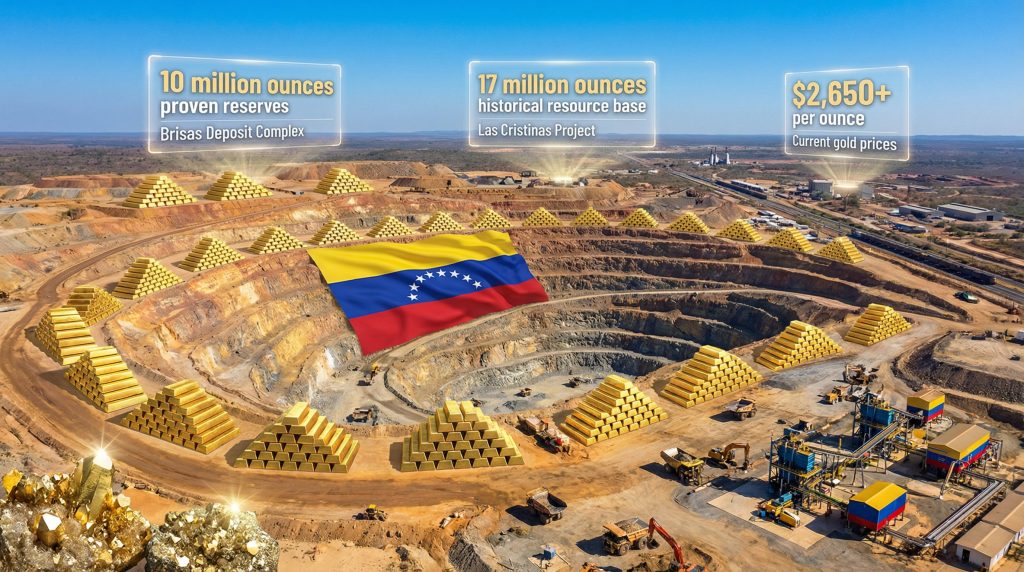
The Brisas deposit, containing approximately 10 million ounces of proven reserves, represents a valuation exceeding $44 billion based on current gold prices near $4,485 per ounce. This substantial asset base demonstrates why companies maintain expensive legal battles over extended periods despite uncertain outcomes.
Direct Negotiation Frameworks with New Administrations
Paul Rivett's experience illustrates the importance of maintaining industry relationships during transition periods. However, Gold Reserve received numerous inquiries from mining companies immediately following Venezuela's political shift, indicating widespread industry evolution trends interest in partnership opportunities for asset development.
The company's strategic position stems from retaining experienced mining professionals and geologists who originally discovered and evaluated the deposits. Nevertheless, most team members now range from their late 60s to early 70s. This presents both an advantage in institutional knowledge and a challenge requiring operational expertise from development partners.
Partnership Structures and Joint Venture Development
Rivett confirmed Gold Reserve will pursue transaction structures involving either direct investment or operational partnerships. The company lacks the operational scale necessary for independent development but possesses irreplaceable geological knowledge and legal standing for the deposits.
This situation creates opportunities for larger mining companies to acquire proven assets with established resource bases. In addition, they can leverage existing legal frameworks and technical expertise. Partnership models typically involve joint ventures asset sales, technology transfer agreements, infrastructure development commitments, and phased capital deployment structures.
Geological Resource Evaluation and Development Priorities
Venezuelan gold deposits present varying levels of immediate development potential based on resource confirmation, infrastructure access, and legal clarity. Consequently, the systematic evaluation of recovery targets requires analysis of both geological merit and operational feasibility under new political conditions.
Tier 1 Recovery Assets with Immediate Development Potential
The Brisas deposit represents the highest priority target due to its substantial proven reserves and established development history. Gold Reserve's retention of the original discovery team provides crucial geological continuity that reduces exploration risks and accelerates development timelines.
Siembra Minera operations, also seized from Gold Reserve, offer additional copper-gold polymetallic potential though specific resource estimates require updated geological assessment. Both deposits operated under cartel control using Chinese extraction technology, indicating existing infrastructure that could facilitate rapid production restart under proper management.
Infrastructure Assessment for Rapid Production Resumption
Current operations at both Brisas and Siembra Minera under the control of Cartel de los Soles demonstrate continued production capability despite criminal management. The transition to legitimate operations will require comprehensive security clearance, equipment assessment, and infrastructure rehabilitation to meet international mining standards.
| Asset Category | Expected Recovery Timeline | Primary Development Challenges |
|---|---|---|
| Operating mines (Brisas/Siembra) | 6-18 months | Security clearance, equipment assessment |
| Processing facilities | 12-24 months | Infrastructure rehabilitation, technology upgrade |
| Transportation networks | 18-36 months | Multi-stakeholder coordination, port access |
| Exploration permits | 3-12 months | Regulatory framework updates |
Investment Partnership Models and Risk Management
Successful asset recovery in post-transition environments requires sophisticated partnership structures that balance risk sharing, expertise requirements, and capital deployment across uncertain timelines. For instance, the Venezuelan context demonstrates several critical considerations for structuring viable development agreements.
Hybrid Investment Structures for Risk Mitigation
Gold Reserve's partnership exploration reflects industry-standard approaches to managing political and operational risks in transitional jurisdictions. Joint venture frameworks typically involve foreign operators providing technical expertise and capital while local or government partners contribute regulatory access and community relationships.
Technology transfer agreements represent another critical component, particularly given the need to replace Chinese extraction technology with Western mining standards. Equipment provision for equity stakes allows capital-constrained companies like Gold Reserve to access necessary infrastructure while maintaining ownership positions.
Operational Expertise Requirements and Skill Gaps
The company's acknowledgement of needing "operational expertise" highlights a crucial challenge in post-conflict mining recovery. While Gold Reserve maintained geological knowledge, successful production requires modern extraction capabilities, environmental compliance systems, and security management protocols.
| Expertise Area | Urgency Level | Sourcing Strategy |
|---|---|---|
| Modern extraction technology | Critical | International mining partnerships |
| Security management | Critical | Specialised contractor arrangements |
| Environmental compliance | High | Regulatory consulting integration |
| Community relations | Medium | Local stakeholder engagement |
Legal Framework Reconstruction and Compliance
Asset recovery in transitional jurisdictions requires navigation of multiple legal systems, including international arbitration awards, bilateral investment treaties, and emerging domestic regulations. Furthermore, implementing claims framework updates demonstrates both the complexity and importance of maintaining legal positions throughout extended uncertainty periods.
International Arbitration Award Recognition
Gold Reserve's arbitration suit against Venezuela represents one component of broader legal action by North American mining companies. Rusoro Mining also filed arbitration proceedings seeking compensation exceeding $2 billion, indicating substantial outstanding claims against the Venezuelan state.
The political transition significantly improves collection prospects for existing arbitration awards. Companies maintained expensive legal positions specifically to capitalise on improved enforcement opportunities following regime change.
Human Rights and Legal Counsel Considerations
Gold Reserve's legal counsel José Ignacio Moreno Suarez remains imprisoned since 2023, reportedly experiencing harsh detention conditions including concrete sleeping arrangements and physical abuse. The regime change creates opportunities for securing counsel release alongside asset recovery efforts.
This situation illustrates the personal risks faced by legal representatives in politically volatile jurisdictions. Moreover, it highlights the importance of international diplomatic pressure for protecting legal professionals involved in arbitration proceedings.
Regulatory Framework Modernisation Requirements
New Venezuelan administrations will require comprehensive mining code updates to attract international investment while ensuring environmental compliance and community protection. Foreign investment protection statutes must align with international standards to provide confidence for large-scale capital deployment.
What Market Dynamics Drive Investment Return Analysis?
Current gold market conditions create favourable environments for Venezuelan mining development, with prices maintaining levels above $4,400 per ounce throughout early 2026. Consequently, this pricing environment substantially improves project economics for previously marginalised deposits.
Gold Price Impact on Asset Valuations
The Brisas deposit's approximately $44 billion valuation at current gold prices demonstrates how commodity price appreciation enhances recovery incentives. Venezuelan production potential could reach 50+ tonnes annually across multiple projects, representing significant global supply additions during periods of supply constraint. Gold jumps after Venezuela's president captured, highlighting immediate market responses to political developments.
Gold Reserve's stock surge of 103% in Toronto trading reflects investor recognition of improved asset recovery prospects. This market response indicates broader industry confidence in successful transition outcomes and asset restoration potential. Gold price rises to weekly high on US-Venezuela fallout demonstrates how geopolitical events directly impact precious metals markets.
Competitive Positioning for Market Entry
First-mover advantages in post-transition markets include premium asset selection before market saturation, early government relationship development, and infrastructure coordination benefits. Companies maintaining legal positions throughout transition periods position themselves advantageously versus new entrants requiring extensive due diligence and regulatory approval.
Investment Return Framework:
Early-stage recovery investments in proven Venezuelan deposits offer potential for substantial returns given current gold prices and established resource bases. However, successful outcomes require comprehensive risk management and partnership structures capable of navigating continued political uncertainties.
The next major ASX story will hit our subscribers first
Infrastructure Development and Operational Requirements
Venezuelan mining recovery requires substantial infrastructure investment across transportation networks, power generation, and processing facilities. The country's mining infrastructure deteriorated significantly under cartel control, necessitating comprehensive rehabilitation for international standard operations.
Transportation Network Rehabilitation
Port facility modernisation represents a critical bottleneck for export-oriented mining operations. La Guaira and Puerto Cabello require capacity expansion and equipment upgrades to handle increased mineral exports under legitimate operations.
Rail system restoration connecting the Orinoco Mining Belt to export facilities could reduce transportation costs while improving operational efficiency. Road network upgrades between mine sites and ports remain essential for equipment transport and personnel access.
Power Generation and Utility Infrastructure
Mining operations require reliable power generation exceeding 500 MW additional capacity for planned developments. Water treatment systems must meet environmental compliance standards while supporting both processing operations and community requirements.
Telecommunications infrastructure enables remote site connectivity and operational coordination across dispersed mining locations. Furthermore, fuel supply networks for diesel and heavy fuel oil support equipment operation and transportation logistics.
Environmental Compliance and Social Licence Development
International mining standards require comprehensive environmental restoration and community engagement programmes. Venezuelan mining regions face substantial mercury contamination from artisanal operations and deforestation from illegal mining activities.
Environmental Restoration Priorities
Mercury contamination remediation represents an immediate health and environmental priority in affected mining regions. Reforestation programmes can address deforestation damage while supporting biodiversity protection initiatives in sensitive ecological zones.
Water quality restoration in mining-affected watersheds requires long-term monitoring and treatment programmes. Environmental management systems must achieve ISO 14001 certification to meet international investment standards.
Community Relations and Social Programmes
Indigenous community consultation and benefit-sharing arrangements provide essential social licence for mining operations. Local employment training programmes create community support while addressing skill shortages in technical mining positions.
Healthcare infrastructure development and education facility construction demonstrate corporate commitment to community development beyond direct mining activities. These programmes typically require 3-9 months for comprehensive community consultation processes.
Political Risk Management and Insurance Frameworks
Successful Venezuelan mining investment requires sophisticated political risk mitigation through insurance products, financing structures, and operational protocols. Multiple scenarios demand flexible strategies capable of adapting to evolving political conditions.
Political Risk Insurance Options
Multilateral insurance agencies provide comprehensive political risk coverage for Venezuelan mining investments. The World Bank's MIGA offers coverage up to $850 million per project with premiums ranging from 0.5% to 2.5% annually.
| Insurance Provider | Coverage Type | Premium Range | Maximum Coverage |
|---|---|---|---|
| MIGA (World Bank) | Comprehensive political risk | 0.5-2.5% annually | $850M per project |
| OPIC/DFC (US) | Expropriation, currency | 0.3-1.8% annually | $1B per project |
| Private insurers | Customised coverage | 1.0-4.0% annually | $500M per project |
Scenario-Based Investment Strategies
Rapid democratic transition scenarios with 12-18 month timelines for institutional stability favour aggressive early-mover strategies but carry higher regulatory uncertainty risks. Managed transition periods extending 24-36 months support phased capital deployment with reduced policy reversal risks.
Extended instability scenarios requiring 36+ months for investment-grade conditions necessitate wait-and-see approaches with comprehensive contingency planning. Asset security and operational disruption risks increase substantially under prolonged uncertainty.
How Should Financial Structuring Support Capital Market Access?
Venezuelan mining recovery requires diverse financing approaches accommodating political risks, extended development timelines, and substantial capital requirements. Both equity and debt markets offer specialised products for emerging market resource investments, which align with effective investment strategy components.
Equity Investment Vehicles
Private equity funds specialising in emerging market resources provide patient capital suitable for multi-year development timelines. Sovereign wealth funds from resource-rich nations offer substantial capital capacity alongside strategic alignment benefits.
Mining company direct investment through balance sheet funding enables rapid decision-making but requires strong corporate risk tolerance. Retail investor participation through mining-focused ETFs provides broader market access while distributing individual investor risks.
Development Finance Institution Participation
World Bank and International Finance Corporation project loans support infrastructure development while providing multilateral risk mitigation. Export credit agencies offer equipment financing programmes that reduce upfront capital requirements for mining companies.
Commercial bank project finance syndications enable large-scale debt financing though political risk premiums remain elevated. Bond market access becomes available for established operators with proven operational track records in Venezuelan operations.
Investment Timeline and Return Expectations
Base case scenarios for major Venezuelan projects typically require $500 million to $1 billion in initial investment with break-even timelines extending 3-5 years. Internal rate of return expectations range from 15% to 25% annually with payback periods of 6-8 years under favourable political and commodity price conditions.
These projections assume successful political transition, infrastructure rehabilitation, and maintained commodity price levels above $4,000 per ounce gold. However, sensitivity analysis reveals substantial return variation based on political stability outcomes and global gold price movements.
Integration with Junior Mining Exploration Strategies
As a gold miner retakes Venezuelan assets, integration with broader junior mining exploration strategies becomes crucial for maximising development potential. Junior miners possess agility and specialised expertise that complement larger operators' capital resources and operational capabilities.
Partnership frameworks between established mining companies and junior explorers can accelerate geological assessment and resource development across Venezuelan deposits. These arrangements typically involve technology sharing, risk distribution, and staged capital deployment that benefits both parties.
The Venezuelan mining recovery opportunity demonstrates how systematic approaches to post-transition asset recovery can generate substantial returns while contributing to economic reconstruction. Success requires patient capital, sophisticated risk management, and comprehensive partnership strategies capable of navigating continued political uncertainties while capitalising on proven geological resources and favourable commodity market conditions.
Looking to Capitalise on Post-Transition Mining Opportunities?
Discovery Alert's proprietary Discovery IQ model delivers instant notifications on significant ASX mining discoveries and asset recovery opportunities, transforming complex transition scenarios into actionable investment insights. Begin your 30-day free trial today to identify emerging opportunities in resource recovery and mining sector developments before the broader market responds.