August 24, 2026
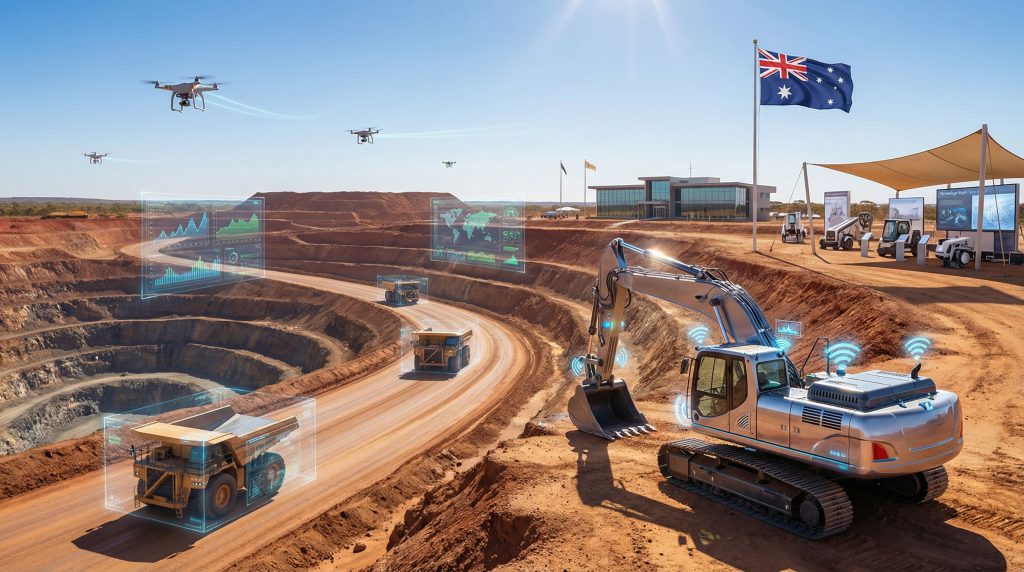
Australia's mining sector has entered a transformative era where traditional resource extraction methods converge with cutting-edge technological innovation. The GRX26 conference Australia mining innovation represents a pivotal moment in this evolution, as the global shift toward critical minerals energy transition requirements and geopolitical considerations has created unprecedented demand for sophisticated mining solutions. This technological evolution is fundamentally reshaping how mining companies operate, collaborate, and compete in an increasingly complex international marketplace.
Mining companies worldwide are grappling with multiple disruptions simultaneously: the urgent need for battery metals and rare earth elements, the implementation of artificial intelligence across operations, and evolving environmental and social governance expectations. These pressures have accelerated the development of collaborative innovation ecosystems that bridge traditional mining operations with technology providers, research institutions, and policy makers.
What Makes Australia's Mining Innovation Landscape a Global Competitive Force?
Australia's mining innovation ecosystem has emerged as a critical driver of global competitiveness through its unique combination of geological advantages, technological sophistication, and strategic industry partnerships. The mining industry evolution extends beyond traditional operational improvements to encompass comprehensive ecosystem development that integrates multiple stakeholders across the value chain.
The Strategic Value of Industry-Led Innovation Platforms
Peak body endorsements serve as crucial validation mechanisms within Australia's mining innovation landscape, providing industry credibility and facilitating coordinated technological advancement. The Minerals Council of Australia's organisational framework demonstrates how industry leadership can align diverse stakeholder interests while promoting strategic technological development across the sector.
This validation process operates through several key mechanisms:
• Credibility signalling to international investors and technology partners
• Policy coordination between industry needs and government initiatives
• Resource allocation guidance for research and development priorities
• Risk mitigation through collective industry standards and best practices
The collaborative innovation model emerging from Australia demonstrates significant economic impact across multiple dimensions. Industry-led platforms facilitate knowledge transfer between established mining operations and emerging technology companies, creating accelerated pathways for innovation adoption and commercial scaling.
Critical Minerals and the New Geopolitical Mining Reality
Australia's position within the global critical minerals supply chain has become increasingly strategic as nations recognise the importance of secure access to battery metals, rare earth elements, and other technology-essential materials. Furthermore, this positioning creates unique opportunities for Australian mining companies to leverage their geological advantages while advancing technological capabilities.
The geopolitical dimensions of critical minerals supply have fundamentally altered investment patterns within Australian mining technology sectors. Strategic alliance opportunities are emerging from resource diplomacy initiatives that position Australia as a reliable supplier of essential materials for global technology manufacturing and energy transition infrastructure.
Key investment trends include:
• Processing technology development for value-added mineral products
• Extraction efficiency improvements for lower-grade deposits
• Environmental compliance technologies for sustainable operations
• Supply chain resilience systems for international market access
Investment flows into Australian mining technology sectors reflect this strategic positioning, with particular emphasis on technologies that enhance Australia's competitive advantages in critical minerals production and processing.
When big ASX news breaks, our subscribers know first
Why Are Peak Industry Bodies Driving Australia's Mining Technology Revolution?
The Minerals Council of Australia's role as an innovation catalyst extends beyond traditional advocacy to encompass comprehensive technology advancement strategies that position Australian mining at the forefront of global industry developments. This approach represents a fundamental shift toward industry-led innovation coordination that leverages collective resources and expertise.
The Minerals Council of Australia's Innovation Strategy Framework
The MCA's innovation framework operates through systematic engagement with multiple stakeholder groups, including mining companies, technology providers, research institutions, and government agencies. This comprehensive approach ensures that technological advancement aligns with both industry needs and national strategic objectives.
CEO Tania Constable has characterised the current period as representing exceptional opportunities for Australian mining despite global uncertainties and geopolitical challenges. Her emphasis on Australian mining serving as a global ambassador reflects the industry's recognition that technological leadership contributes directly to national competitiveness and international relationships.
The MCA's approach to innovation encompasses several strategic dimensions:
• Policy advocacy that creates favourable regulatory environments for technology adoption
• Industry coordination that facilitates collaborative research and development initiatives
• International engagement that positions Australian mining technology globally
• Workforce development that ensures adequate human capital for technological advancement
Government-industry collaboration models facilitated by the MCA demonstrate how effective policy frameworks can accelerate technology adoption while maintaining competitive market dynamics. These partnerships create regulatory clarity that enables long-term investment in innovative technologies and operational improvements.
Cross-Industry Collaboration Models Transforming Mining Operations
The integration of Mining Equipment, Technology and Services (METS) providers with traditional mining operations has created sophisticated collaboration frameworks that enhance operational efficiency and technological capability. These partnerships extend beyond simple vendor relationships to encompass comprehensive innovation ecosystems that drive continuous improvement.
AusIMM CEO Stephen Durkin and Austmine interim CEO Vanessa Haberland have emphasised that collaborative leadership from peak bodies is essential for maintaining Australia's global competitiveness. Their joint perspective reflects industry recognition that technological advancement requires coordinated effort across multiple organisations and disciplines.
Technology transfer mechanisms between academic institutions and mining companies have evolved to support rapid innovation adoption and commercial scaling. These frameworks facilitate the translation of research insights into practical applications that enhance mining operations and competitive positioning.
How is the Asia-Pacific Region Positioning for Mining's Digital Future?
The Asia-Pacific region's approach to mining digitalisation reflects broader technological trends while addressing specific geological, regulatory, and market conditions that characterise regional mining operations. Australia's leadership within this regional context stems from its combination of advanced mining expertise, technological infrastructure, and strategic geographic positioning.
AI-Driven Automation Deployment Across Australian Mining Operations
Artificial intelligence implementation across Australian mining operations has accelerated significantly as companies recognise the competitive advantages of automated systems for extraction, processing, and logistics operations. The deployment of AI-driven mining innovation addresses multiple operational challenges simultaneously, including labour efficiency, safety improvement, and operational optimisation.
Industry leaders have identified the need for Asia-Pacific nations to accelerate breakthrough innovation deployment and scale enabling technologies to maintain competitive advantage. This recognition drives coordinated regional approaches to technology adoption that leverage shared research resources and market access opportunities.
The planned discussions between MCA CEO Tania Constable and UWA Chancellor Diane Smith-Gander regarding Asia-Pacific strategic responses highlight industry recognition that technological advancement requires regional coordination and strategic planning. Their focus on AI-driven automation and enabling technology scaling reflects practical priorities for maintaining competitive positioning.
Key automation deployment areas include:
• Autonomous vehicle systems for material transport and equipment operation
• Predictive maintenance algorithms for equipment optimisation and cost reduction
• Real-time geological analysis for extraction efficiency improvements
• Integrated logistics coordination for supply chain optimisation
Breakthrough Technologies Reshaping Mining Competitiveness
Emerging technology categories gaining traction within Australian mining operations span multiple operational domains, from extraction and processing to environmental monitoring and workforce management. However, these technologies collectively enhance operational efficiency while addressing evolving regulatory and social expectations for sustainable mining practices.
Investment patterns in mining technology startups and scale-ups reflect market recognition of the transformative potential of innovative solutions for traditional mining challenges. Technology readiness levels across different innovation categories vary significantly, creating opportunities for targeted investment and development strategies.
The convergence of multiple technological trends creates compound benefits for mining operations that implement integrated technology solutions. Companies that successfully coordinate AI implementation, automation deployment, and data analytics capabilities achieve competitive advantages that extend beyond individual technology benefits.
What Role Does Workforce Development Play in Mining Innovation Success?
Workforce development initiatives represent critical enablers for mining innovation success, as technological advancement requires human capital capable of implementing, operating, and optimising sophisticated systems. Australia's approach to workforce development integrates traditional mining expertise with emerging technological capabilities through comprehensive training and education programmes.
Next-Generation Talent Pipeline Strategies for Mining Excellence
The Minerals Industry Experience Programme (MiEX) exemplifies innovative approaches to workforce development that bridge academic education with practical mining industry exposure. This two-week intensive programme provides mining-curious STEM students with comprehensive exposure to modern mining career opportunities and technological applications.
MCA Deputy CEO Sid Marris has emphasised how industry collaboration secures future workforce development through systematic engagement with educational institutions and student populations. The MiEX programme demonstrates practical frameworks for translating academic knowledge into industry-relevant capabilities while generating student interest in mining careers.
Industry-university partnership models extend beyond individual programmes to encompass comprehensive collaboration frameworks that align educational outcomes with evolving industry needs. In addition, these partnerships ensure that workforce development initiatives respond to technological advancement and operational evolution within the mining sector.
Key workforce development strategies include:
• STEM education integration with practical mining applications and case studies
• Immersive experience programmes that provide hands-on exposure to modern mining operations
• Diversity and inclusion initiatives that expand talent pool access and demographic representation
• Continuous learning frameworks that support career adaptation to technological change
Skills Gap Analysis in Australia's Mining and METS Sectors
Note: Skills shortage data requires verification from authoritative sources before inclusion in analysis. The following framework indicates areas where detailed research is needed.
Contemporary mining operations require sophisticated skill combinations that blend traditional mining knowledge with advanced technological capabilities. The identification and quantification of specific skills gaps enables targeted workforce development strategies that address operational needs while supporting career development pathways.
Critical skill categories experiencing high demand include:
• Data analytics capabilities for operational optimisation and decision support
• Automation engineering expertise for system implementation and maintenance
• Environmental compliance knowledge for regulatory adherence and sustainability
• Digital twin management skills for integrated operational modelling and optimisation
Training priority identification requires coordination between industry needs assessment, educational institution capabilities, and individual career development objectives. Effective skills gap analysis provides foundation for resource allocation decisions and partnership development strategies.
How Are Innovation Expos Accelerating Mining Technology Commercialisation?
Industry-led innovation events serve as critical catalysts for technology commercialisation by facilitating direct engagement between technology developers, mining companies, investors, and research institutions. The Global Resources Innovation Expo (GRX26) exemplifies how strategic event design can accelerate technology adoption and commercial scaling within the mining sector.
The Economic Impact of Industry-Led Innovation Events
The GRX26 conference Australia mining innovation, scheduled for May 5-7, 2026, at Perth Convention and Exhibition Centre, represents an industry-owned platform focused on addressing critical challenges facing mining and METS sectors. This three-day programme operates under the theme "Competing Globally in the Critical Era," reflecting industry recognition of competitive pressures and technological imperatives.
AusIMM and Austmine leadership have characterised GRX26 as addressing "what matters most for mining and METS" in an era defined by energy transition, digital disruption, and evolving social expectations. This focus ensures that innovation showcases directly address practical industry challenges rather than theoretical technological possibilities.
Deal flow patterns from mining innovation showcases typically demonstrate several key characteristics:
• Technology validation through direct industry engagement and feedback
• Partnership formation between mining companies and technology providers
• Investment acceleration through concentrated investor access to emerging technologies
• Market entry facilitation for international companies seeking Australian market access
The economic impact extends beyond immediate transaction generation to encompass long-term relationship development and collaborative innovation frameworks that support sustained technological advancement.
Innovation Zone Strategies for Technology Validation and Scaling
Effective innovation zones within mining technology events provide structured environments for early-stage technology demonstration and commercial validation. These zones facilitate systematic evaluation of emerging technologies while enabling mining companies to assess practical applications and implementation requirements.
The conference programme includes strategic sessions designed to position delegates as "active participants in positioning Australia at the forefront of global mining and METS innovation." This approach ensures that attendees contribute to technology evaluation and adoption processes rather than passively consuming information.
Technology transfer mechanisms operating through innovation expos typically involve:
• Demonstration protocols that showcase practical applications and operational benefits
• Evaluation frameworks that assess technology readiness and implementation requirements
• Partnership structures that facilitate collaborative development and commercial scaling
• Investment coordination that connects technology developers with appropriate funding sources
What Are the Key Success Factors for Global Mining Innovation Leadership?
Australia's approach to mining innovation leadership demonstrates that sustainable competitive advantage requires coordinated effort across multiple dimensions, including industry collaboration, government policy alignment, and strategic international positioning. The endorsement structure surrounding GRX26 conference Australia mining innovation illustrates how industry consensus can drive effective innovation strategies.
Strategic Positioning Framework for Mining Innovation Excellence
The collaboration between the MCA, AusIMM, and Austmine represents an industry consensus approach that identifies key success factors for innovation leadership. This framework emphasises industry-led collaboration, peak body endorsement, policy alignment, and strategic positioning around critical minerals and Asia-Pacific partnerships.
MCA CEO Tania Constable's articulation of Australia's competitive position emphasises mining's ability to power strategic alliances and serve as a partner in global economic progress. This positioning integrates innovation leadership with geopolitical strategy and international relationship development.
Key Insight: Australia's mining innovation ecosystem demonstrates that industry-led collaboration, supported by peak body endorsement and government policy alignment, creates sustainable competitive advantages in global markets.
Strategic positioning requires continuous adaptation to evolving market conditions, technological developments, and geopolitical dynamics. Effective frameworks provide flexibility for responding to changing circumstances while maintaining core competitive advantages.
Future-Proofing Strategies for Mining Technology Leadership
Long-term technology roadmaps for mining competitiveness must balance current operational needs with anticipated future requirements across multiple time horizons. These roadmaps require integration of geological factors, technological capabilities, regulatory evolution, and market dynamics.
Investment allocation strategies for innovation portfolio management involve systematic assessment of technology categories, development stages, and commercial potential. Consequently, effective allocation balances short-term operational improvements with long-term competitive positioning requirements.
International collaboration frameworks support technology leadership by facilitating knowledge exchange, resource sharing, and market access across geographic boundaries. These frameworks enable Australian mining companies to leverage global expertise while contributing to international technological advancement.
The next major ASX story will hit our subscribers first
How Can Mining Companies Leverage Innovation Partnerships for Competitive Advantage?
Strategic innovation partnerships provide mining companies with access to technological capabilities, market intelligence, and development resources that extend beyond internal capabilities. The partnership ecosystem surrounding GRX26 conference Australia mining innovation demonstrates how structured collaboration can generate competitive advantages for participating organisations.
Partnership Model Analysis for Mining Technology Advancement
Peak body collaboration provides multiple benefits for mining operations, including credibility validation, policy coordination, and resource sharing opportunities. The endorsement structure involving the MCA validates industry credibility while facilitating coordination mechanisms that benefit all participants.
Effective technology provider selection requires comprehensive assessment of technological capabilities, commercial viability, implementation requirements, and long-term development potential. Companies must evaluate both immediate operational benefits and strategic positioning implications of partnership decisions.
Risk mitigation strategies in mining innovation partnerships typically address:
• Technology risk through staged implementation and performance validation
• Commercial risk through structured partnership agreements and performance metrics
• Operational risk through comprehensive testing and integration protocols
• Strategic risk through alignment assessment and competitive impact evaluation
ROI Optimisation Through Strategic Innovation Investments
Performance metrics for mining innovation initiatives must capture both quantitative operational improvements and qualitative strategic benefits. Effective measurement systems provide foundation for investment decision-making and partnership evaluation processes.
Cost-benefit analysis frameworks for technology adoption require comprehensive assessment of implementation costs, operational benefits, competitive positioning improvements, and long-term strategic value creation. These frameworks guide resource allocation decisions and partnership strategy development.
Timeline optimisation for innovation implementation involves systematic project management approaches that coordinate technology deployment with operational requirements, workforce development, and market positioning objectives. For instance, effective timeline management ensures that innovation investments generate maximum competitive advantage while minimising operational disruption.
The convergence of industry collaboration, technological advancement, and strategic positioning creates unprecedented opportunities for mining companies that effectively leverage innovation partnerships. The upcoming WA Mining Conference 2025 will provide additional insights into these collaborative frameworks. Success requires systematic approach to partnership development, technology evaluation, and implementation optimisation that aligns with long-term competitive objectives.
This analysis is based on publicly available information and industry observations. Readers should conduct independent research and seek professional advice before making investment or strategic decisions related to mining innovation or technology partnerships.
Ready to Capitalise on Australia's Mining Innovation Revolution?
Discovery Alert's proprietary Discovery IQ model delivers real-time alerts on significant ASX mineral discoveries, instantly empowering subscribers to identify actionable opportunities in Australia's rapidly evolving mining technology sector. Begin your 14-day free trial today and secure your market-leading advantage as the industry transforms through breakthrough innovations and strategic partnerships.