May 11, 2026
Australia's In-Situ Recovery (ISR) uranium extraction technology represents a sophisticated underground mining methodology that has revolutionised the global nuclear fuel supply chain. This advanced extraction process leverages engineered hydrogeological systems to access uranium deposits without conventional excavation, positioning certain projects as critical components of international energy security infrastructure. The technical complexity and environmental advantages of ISR operations have made them increasingly attractive to mining companies seeking cost-effective uranium production methods.
Understanding Australia's In-Situ Recovery Uranium Operations
Australia maintains its position as the world's third-largest uranium producer, controlling approximately 30% of global uranium resources according to the World Nuclear Association. The nation's uranium sector increasingly relies on US ISR Technology, which now accounts for roughly 50% of global uranium production as reported by the International Atomic Energy Agency.
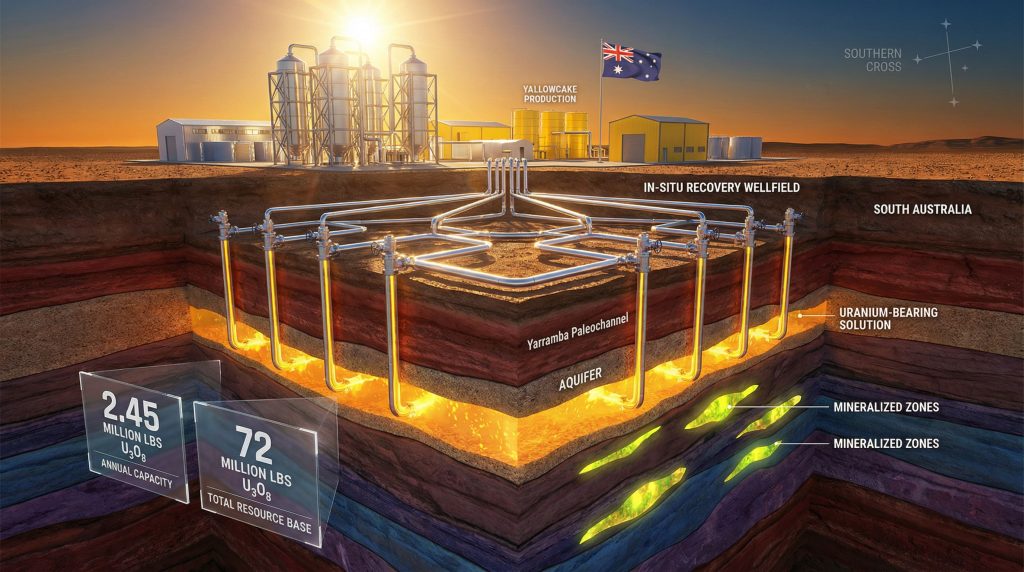
ISR technology functions through controlled injection of lixiviant solutions into uranium-bearing aquifers, followed by systematic recovery of enriched solutions through production wells. This methodology exploits natural hydrogeological conditions to facilitate ore dissolution without major earthmoving operations, representing a significant technological advancement over conventional underground mining techniques.
The process architecture involves several critical components:
- Chemical dissolution systems utilising oxygen and weak acid solutions
- Engineered wellfield configurations optimising solution circulation patterns
- Selective uranium concentration through ion exchange and solvent extraction
- Yellowcake production facilities generating export-ready uranium oxide (U₃O₈)
Australia's existing ISR operations, including the Beverley and Four Mile projects, have established operational precedents demonstrating the technology's viability within the Australian regulatory environment. These facilities provide technical benchmarks for capital intensity, operational costs, and environmental management protocols that influence industry-wide development decisions.
When big ASX news breaks, our subscribers know first
Strategic Importance of the Honeymoon Uranium Project
The Honeymoon uranium project demonstrates the economic viability of restarting previously suspended ISR operations when market conditions improve. Located 80 kilometres northwest of Broken Hill in South Australia, this facility represents a critical test case for uranium market recovery dynamics and operational optimisation strategies.
Production Capacity and Resource Base
| Performance Indicator | Current Status | Target Metrics |
|---|---|---|
| Annual Production Capacity | Ramping up operations | 2.45 million lbs U₃O₈ |
| Total Resource Base | Established reserves | 72 million lbs U₃O₈ |
| Operational Timeline | Restarted April 2024 | Full capacity operations |
| Processing Technology | ISR methodology | Enhanced wellfield designs |
The project's operational history provides valuable insights into uranium market volatility impacts on mining operations. Original production commenced in 2011 under Uranium One ownership, achieving commercial production levels before market pressures forced suspension in November 2013 due to declining uranium prices. Boss Energy's acquisition in 2015 and subsequent restart in April 2024 coincided with uranium spot prices exceeding US$100 per pound for the first time since early 2024.
This price recovery, driven by renewed global nuclear energy investment and supply chain security concerns, has transformed the economic fundamentals supporting ISR uranium operations. Furthermore, the Honeymoon uranium project's restart signals industry confidence in sustained uranium demand growth supporting long-term production planning.
Geographic and Infrastructure Advantages
South Australia's established uranium export infrastructure provides significant logistical advantages for the Honeymoon uranium project. The state's regulatory framework, developed through decades of uranium mining experience, offers streamlined permitting processes and well-defined environmental management protocols.
The project operates under Mining Lease ML 6109, which provides operational authorisation bounded by specific performance standards and rehabilitation obligations. Environmental compliance is managed through the Program for Environment Protection and Rehabilitation (PEPR) mechanism, requiring establishment of monitoring protocols before operations commence.
Technical Architecture of In-Situ Recovery Operations
ISR uranium extraction at the Honeymoon uranium project employs a sophisticated chemical and hydrogeological process designed to maximise uranium recovery while minimising surface infrastructure requirements. Consequently, the system's effectiveness depends on precise control of lixiviant circulation patterns and uranium concentration processes.
Chemical Process Engineering
The ISR methodology utilises weak acid lixiviant solutions to mobilise uranium from sandstone ore bodies through controlled chemical reactions. Injection wells introduce solutions containing dissolved oxygen and sulfuric acid into target formations, creating conditions that dissolve uraninite and coffinite minerals naturally present in the ore body.
Hexagonal well pattern configurations optimise distribution across the mineralised zone, ensuring uniform lixiviant contact with uranium-bearing formations while preventing preferential flow paths that could reduce extraction efficiency. This geometric arrangement balances solution circulation effectiveness with infrastructure costs.
The uranium-enriched pregnant solution recovered at production wells undergoes processing through:
- Ion exchange columns that selectively concentrate uranium from solution
- Solvent extraction systems further refining uranium concentration
- Precipitation and drying facilities producing marketable yellowcake (U₃O₈)
- Solution recycling systems minimising reagent consumption
Innovative Wide-Spaced Wellfield Design
Boss Energy's feasibility study examines alternative wellfield configurations that could significantly improve project economics. The proposed wide-spaced wellfield design represents a potential paradigm shift in ISR operational methodology.
Technical advantages of wide-spaced configurations include:
- Extended lixiviant residence time enabling more complete uranium dissolution
- Reduced capital intensity through optimised infrastructure utilisation across larger surface areas
- Enhanced lixiviant tenors achieved through longer leaching timeframes
- Lower reagent consumption improving operational cost structures
This innovative approach requires sophisticated hydrogeological modelling to prevent solution bypass of mineralised zones. However, the trade-off between extended contact time and operational control represents a critical engineering challenge that could influence ISR technology development across the global uranium industry.
Processing Infrastructure Requirements
Modern ISR operations require specialised infrastructure supporting continuous solution circulation and uranium recovery processes:
Primary Infrastructure Components:
- Groundwater treatment systems managing solution chemistry and environmental compliance
- Leach pond facilities providing solution storage and management capacity
- Power distribution networks supporting 24/7 operational requirements
- Environmental monitoring systems tracking groundwater quality and radiation levels
In addition, the Honeymoon project's processing capacity optimisation focuses on maximising uranium recovery from existing wellfield infrastructure while maintaining operational flexibility for future expansion phases.
Geological Foundations Driving Extraction Success
The Yarramba Paleochannel system provides exceptionally favourable geological conditions for ISR uranium extraction. Paleochannel systems, representing ancient river channels now buried and mineralised, offer natural hydrogeological frameworks perfectly aligned with ISR operational requirements.
Paleochannel Geological Advantages
Permeable sandstone formations within the paleochannel enable efficient lixiviant circulation without creating impermeable barriers that would impede solution flow. These formations, developed through millions of years of sedimentary processes, provide optimal porosity and permeability characteristics for controlled solution injection and recovery.
Confined aquifer systems prevent vertical migration of lixiviant solutions, maintaining operational control while preventing environmental contamination of overlying water resources. This geological confinement eliminates regulatory complications that arise when ISR operations are applied to unconfined aquifer systems.
Multiple mineralised sand packages enable sequential extraction phases, allowing operators to develop different zones systematically while extending overall project life. This geological architecture supports phased capital investment strategies that align expenditures with production schedules.
Uranium Mineralisation Characteristics
The deposit contains uraninite and coffinite mineralisation particularly amenable to acid leach recovery through ISR methodology. These uranium oxide minerals dissolve readily under controlled acidic conditions, enabling efficient uranium mobilisation without complex metallurgical processing.
Five discrete mineralised zones have been identified across the project area, positioned at paleochannel confluence points where ancient water flow concentrated uranium-bearing sediments. This distribution pattern provides:
- Geological continuity supporting long-term extraction planning
- Underground aquifer systems containing naturally occurring uranium-bearing solutions
- Predictable ore body geometry enabling optimised wellfield design
- Resource expansion potential through systematic exploration of paleochannel extensions
The 72 million pounds U₃O₈ total resource base represents substantial uranium inventory capable of supporting decades of production at target capacity levels.
Advanced Wellfield Economics and Operational Optimisation
The economics of ISR uranium extraction depend critically on the relationship between capital intensity, operational costs, and uranium recovery rates. Furthermore, Boss Energy's evaluation of wide-spaced wellfield configurations demonstrates management recognition that cost structure optimisation drives project viability in volatile uranium markets.
Comparative Operational Analysis
Boss Energy's parallel development of the Alta Mesa operation in South Texas provides valuable operational experience informing Honeymoon optimisation strategies. Alta Mesa's 348,930 pounds U₃O₈ production during the first half of 2025 (on a 100% basis) generated 113,522 pounds as Boss Energy's 30% share, demonstrating successful ISR implementation.
Key operational metrics driving project economics:
- C1 cost projections comparing current versus proposed wellfield designs
- Capital expenditure optimisation through wide-spaced infrastructure utilisation
- Processing plant utilisation rates maximising existing facility capacity
- Reagent consumption efficiency reducing ongoing operational expenses
Feasibility Study Development Timeline
The systematic evaluation of wide-spaced wellfield technology follows established engineering milestones:
Development Schedule:
- Scoping study completion – Q2 2026
- Final feasibility outcomes – Q3 2026
- Implementation decisions – Subject to study results
- Production optimisation – Ongoing operational improvements
This timeline enables comprehensive hydrogeological modelling, economic analysis, and risk assessment before committing to alternative wellfield configurations. The feasibility study's outcomes could influence mining innovation trends adoption across the broader uranium industry.
Economic Impact Projections
Preliminary analysis suggests wide-spaced wellfield designs could deliver:
- Enhanced recoverable uranium metal from existing resource base
- Reduced wellfield development requirements lowering capital intensity
- Improved cash margins through operational cost reductions
- Extended project life through optimised resource utilisation
These economic improvements would position the Honeymoon uranium project competitively within global uranium supply chains while demonstrating technological innovation in ISR operations.
Regulatory Framework and Environmental Compliance
South Australia's uranium mining regulatory structure balances operational efficiency with comprehensive environmental protection through sophisticated permitting and monitoring systems. The regulatory framework has evolved through decades of uranium mining experience to address the unique challenges of ISR operations.
Primary Regulatory Authorisation Structure
Mining Lease ML 6109 provides operational authorisation with specific conditions covering:
- Geographic operational boundaries defining authorised mining areas
- Production duration limits establishing operational timeframes
- Rehabilitation obligations requiring post-mining environmental restoration
- Performance monitoring requirements ensuring ongoing compliance
The Program for Environment Protection and Rehabilitation (PEPR) represents a proactive environmental management approach requiring operators to establish performance standards before commencing operations. This mechanism ensures environmental protection measures are integrated into operational planning rather than applied retrospectively.
Environmental Monitoring Protocols
Comprehensive monitoring systems track multiple environmental parameters:
- Groundwater quality assessment monitoring solution chemistry and migration patterns
- Radiation safety management ensuring worker and community protection
- Ecosystem impact evaluation assessing environmental effects on local flora and fauna
- Community consultation processes maintaining stakeholder engagement and transparency
Miscellaneous Purposes Licences address supporting infrastructure extending beyond primary mining lease areas, including water management systems, power distribution networks, and waste handling facilities.
ISR Environmental Advantages
ISR technology offers significant environmental benefits compared to conventional uranium mining methods:
- Minimal surface disturbance eliminating open pit or underground mine development
- Reduced waste generation avoiding tailings and waste rock production
- Lower water consumption per unit of uranium produced
- Reversible environmental impact through systematic aquifer restoration
Post-extraction mine reclamation advances ensure long-term environmental protection through controlled restoration of groundwater chemistry to pre-mining conditions.
The next major ASX story will hit our subscribers first
Market Dynamics and Strategic Positioning
The global uranium market's recent volatility has created opportunities for well-positioned ISR operations like the Honeymoon uranium project. Supply chain security concerns and renewed nuclear energy investment are driving sustained demand growth for reliable uranium producers.
Uranium Price Recovery Dynamics
Recent market developments include:
- Spot prices exceeding US$100 per pound in 2024-2025, representing significant premium to mid-2010s pricing
- Sustained price support from nuclear power policy shifts in major economies
- Supply chain security focus driving demand for politically stable uranium sources
- Long-term contract opportunities for established Australian producers
This price environment has transformed the economic fundamentals supporting previously marginal uranium projects, enabling restart of suspended operations like the Honeymoon project. Moreover, the US uranium import ban has further strengthened demand for alternative suppliers.
Australia's Strategic Supply Chain Role
Australia's uranium sector benefits from multiple competitive advantages:
- Established export infrastructure through South Australian port facilities
- Sophisticated regulatory frameworks ensuring operational reliability
- International trade relationships providing market access
- Technical expertise in modern uranium production methods
Consequently, the Honeymoon uranium project contributes to international energy security objectives while maintaining Australia's position as a reliable uranium supplier to global nuclear fuel cycles.
Satellite Deposits and Expansion Potential
The project's development strategy includes systematic evaluation of satellite deposits that could extend operational life and improve overall project economics. These additional uranium resources benefit from shared infrastructure and proven ISR technology implementation.
Near-Term Development Opportunities
Identified satellite deposits include:
- Gould's Dam deposit offering additional uranium resources within trucking distance
- Jason's Deposit providing expansion potential with similar geological characteristics
- East Kalkaroo prospects supporting long-term production planning
- Yarramba exploration targets extending project life through resource base expansion
These deposits could benefit significantly from wide-spaced wellfield technology if proven viable at the primary operation. The potential for improved recoverable uranium metal and reduced capital intensity at satellite deposits could transform their economic viability.
Strategic Development Sequencing
Satellite deposit development follows systematic evaluation prioritising:
- Resource size and uranium grade determining development priority
- Infrastructure requirements minimising capital expenditure
- Regulatory approval timelines ensuring development scheduling
- Market timing aligning production increases with demand growth
The sequential development approach enables capital-efficient expansion while maintaining operational focus on primary production targets.
Investment Considerations and Risk Assessment
The project represents a complex investment proposition balancing uranium market volatility, technological innovation risk, and operational execution challenges. For instance, investors must evaluate multiple risk factors while considering potential returns from successful ISR optimisation.
Market Risk Factors
Primary investment risks include:
- Uranium price volatility affecting project economics and cash flow generation
- Regulatory changes potentially impacting operational permissions or costs
- Technology implementation risk associated with unproven wide-spaced wellfield designs
- Operational execution challenges in achieving target production rates and costs
Market opportunity factors include:
- Sustained uranium demand growth from global nuclear capacity expansion
- Supply chain security premiums favouring politically stable uranium sources
- Technology innovation value through successful ISR optimisation
- Resource base expansion through satellite deposit development
Operational Risk Management
Boss Energy's operational approach emphasises systematic risk mitigation through:
- Phased development strategies limiting capital exposure while proving technology
- Environmental compliance excellence preventing regulatory complications
- Market diversification through multiple project development
- Technical innovation improving competitive positioning
The company's experience with Alta Mesa ISR operations provides operational benchmarks and risk management protocols applicable to Honeymoon optimisation. According to the South Australian government's mining database, the project represents a significant component of the state's uranium production capacity.
Investment decisions involving uranium mining operations should consider the inherent volatility of commodity markets, regulatory compliance requirements, and technological implementation risks. This analysis is provided for informational purposes and does not constitute investment advice. Potential investors should conduct independent due diligence and consult qualified financial professionals before making investment decisions.
Looking to Capitalise on Australia's Uranium Renaissance?
Discovery Alert's proprietary Discovery IQ model delivers real-time alerts on significant uranium and mineral discoveries across the ASX, enabling subscribers to identify actionable opportunities ahead of the broader market. Understand why major mineral discoveries can lead to substantial market returns by exploring Discovery Alert's dedicated discoveries page, showcasing historic examples of exceptional outcomes.