
June 29, 2026
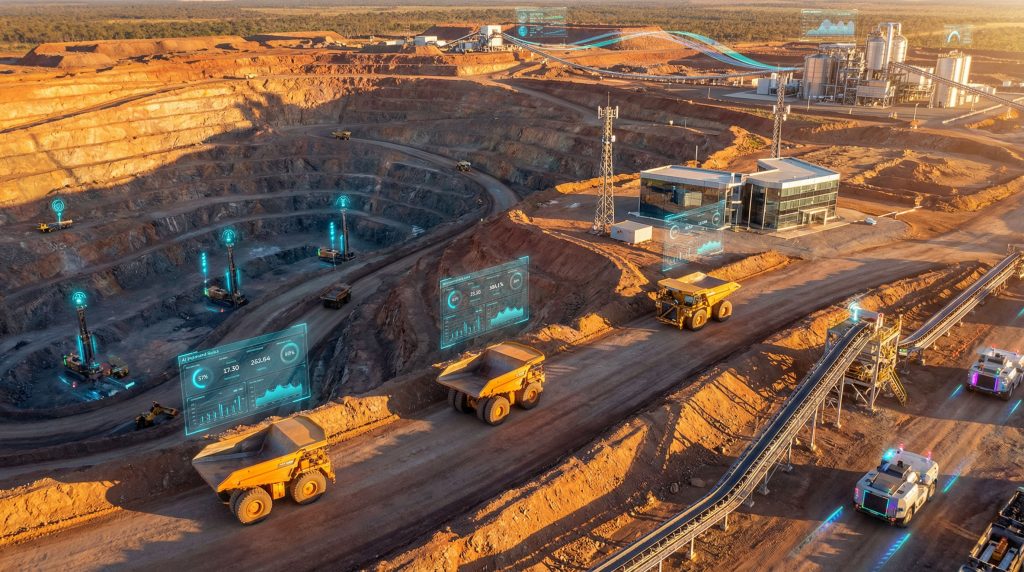
The mining industry confronts an unprecedented transformation as automation and AI in mining becomes essential for addressing workforce shortages, rising operational costs, and competitive pressures. This convergence of demographic transitions, technological advancement opportunities, and market dynamics creates a strategic inflection point where technology adoption will determine long-term industry viability.
This transformation represents more than equipment upgrades or process improvements. Companies must fundamentally reimagine their operational philosophies, workforce development strategies, and competitive positioning to succeed in an increasingly automated future.
Understanding the Workforce Evolution Challenge in Modern Mining
The mining industry confronts an unprecedented demographic transition as experienced workers approach retirement while younger generations pursue alternative career paths. This structural workforce shortage creates permanent labour constraints that traditional recruitment strategies cannot address effectively.
Microsoft's worldwide mining industry leader Joseph Starwood emphasises that this represents a global structural limitation affecting all economic sectors, with mining experiencing particularly acute impacts due to specialised skill requirements and remote operational locations.
The Minerals Council South Africa's skills head Mustak Ally acknowledges that the older generation is departing while new generations enter with different expectations and technological competencies. This generational transition necessitates entirely different operational approaches and training methodologies.
Critical Workforce Challenge Indicators:
- Accelerating retirement rates among experienced miners
- Declining interest in traditional mining careers among younger workers
- Skills gaps in specialised technical roles
- Remote location staffing difficulties
- Increased training costs for replacement workers
This demographic reality creates both operational risks and strategic opportunities. Organisations that proactively address workforce constraints through mining transformation 2025 initiatives will establish competitive advantages over those maintaining traditional labour-intensive approaches.
When big ASX news breaks, our subscribers know first
What Economic Forces Are Driving Mining's Digital Revolution?
Multiple economic pressures converge to accelerate automation adoption across mining operations, creating compelling financial justifications for digital transformation investments.
Labour Cost Escalation Pressures
Mining operations face escalating labour costs that extend beyond basic wage increases. Specialised skills command premium compensation while remote locations require additional incentives to attract qualified workers.
Cost Escalation Components:
- Rising wage demands in competitive labour markets
- Skills shortage premiums for technical specialists
- Increased safety compliance and training expenditures
- Remote location housing and transportation costs
- Healthcare and insurance premium increases
Operational Efficiency Requirements
Modern mining operations require continuous production capabilities that human-operated systems cannot consistently deliver. Equipment downtime for shift changes, breaks, and human error significantly impacts productivity metrics.
Efficiency Improvement Areas:
- Continuous Operations: 24/7 production without shift-change interruptions
- Precision Requirements: Consistent ore grade optimisation and quality control
- Energy Optimisation: Automated systems reducing power consumption
- Predictive Maintenance: AI-powered systems preventing equipment failures
Capital Investment Return Advantages
Automation investments provide predictable returns compared to variable labour costs, while generating additional value through safety improvements and operational data insights.
| Investment Category | ROI Timeline | Primary Benefits |
|---|---|---|
| Safety Systems | 6-18 months | Reduced insurance premiums, compliance |
| Process Automation | 12-24 months | Consistent quality, efficiency gains |
| Predictive Analytics | 18-36 months | Equipment optimisation, downtime reduction |
| Full Autonomy | 3-7 years | Complete operational transformation |
Which Technologies Are Reshaping Mining Operations Today?
Autonomous Equipment Integration
Self-operating machinery represents the most visible aspect of automation and AI in mining, delivering measurable productivity improvements across multiple operational areas.
Autonomous Technology Applications:
- Haulage Systems: Driverless trucks optimising load distribution and route planning
- Drilling Operations: AI-transforming drilling with precision hole placement and automated depth control
- Processing Equipment: Real-time ore grade adjustments and yield optimisation
- Material Handling: Conveyor systems with automated flow control
These systems generate substantial operational data that enables further optimisation through machine learning algorithms and predictive analytics applications.
Collision Prevention and Safety Enhancement
Regulatory mandates increasingly require sophisticated collision avoidance systems that protect workers while generating valuable operational intelligence. Furthermore, Mustak Ally notes that these systems produce extensive data streams that can be analysed to enhance safety protocols beyond their primary protective functions.
Safety Technology Evolution:
- Proximity detection systems preventing equipment collisions
- Automated hazard identification and worker evacuation protocols
- Real-time environmental monitoring for gas and structural risks
- Integrated emergency response coordination systems
These safety-focused technologies create information ecosystems that support broader operational optimisation initiatives while ensuring regulatory compliance.
Predictive Analytics and Maintenance Systems
AI-powered analytical systems process thousands of sensor inputs to identify equipment failure patterns, optimise maintenance schedules, and prevent costly production interruptions.
Predictive System Applications:
- Equipment Health Monitoring: Vibration, temperature, and performance tracking
- Maintenance Scheduling: Optimal timing based on actual condition data
- Spare Parts Management: Inventory optimisation through failure prediction
- Performance Optimisation: Continuous improvement through data analysis
How Are Training Paradigms Evolving for Digital Mining?
Simulation-Based Learning Revolution
SmartOps Solutions CEO Mohene Benzane emphasises that simulation projects have become critically important for safety-focused training programmes. Virtual environments allow operators to practice complex procedures and make mistakes without equipment risk or production disruption.
Simulation Training Advantages:
- Safe practice environments for hazardous procedures
- Standardised training experiences across multiple locations
- Performance data capture for skill assessment
- Cost-effective repetition of complex scenarios
- Integration with actual equipment control systems
These simulation systems generate detailed performance analytics that identify skill gaps and optimise training curriculum development.
Digital Transformation Core Integration
Training programmes must integrate digital transformation concepts as core competencies rather than supplementary skills. New recruits require technological literacy from initial onboarding through advanced career development.
Core Training Elements:
- Data interpretation and analysis skills
- Human-machine interface operation
- System troubleshooting and problem-solving
- Continuous learning and adaptation capabilities
- Safety protocol integration with automated systems
Performance Analytics and Personalisation
Training programmes increasingly leverage analytics to customise learning experiences based on individual performance data and career development objectives.
What Regional Strategies Are Emerging for Technology Adoption?
African Market Positioning Opportunities
African mining operations possess unique advantages for technology adoption due to fewer legacy system constraints and abundant mineral resources requiring efficient extraction methods.
Mustak Ally argues that Africa must embrace new technologies rapidly to advance beyond traditional resource extraction toward value-added beneficiation processes. This technological leap-frogging approach enables competitive positioning in global markets.
Strategic Advantages for African Operations:
- Minimal legacy infrastructure requiring expensive retrofitting
- Government incentives supporting technology adoption
- Abundant mineral resources justifying automation investments
- Partnership opportunities with global technology providers
- Growing local technical expertise and education capabilities
Resource Beneficiation Through Technology
Advanced processing technologies enable countries to add value to raw materials before export, capturing higher profit margins while developing local technical capabilities and employment opportunities.
Beneficiation Technology Applications:
- Automated ore sorting and grade optimisation
- Advanced metallurgical processing control
- Quality assurance through real-time analysis
- Energy-efficient processing methodologies
- Environmental impact minimisation systems
How Will Organisational Structures Adapt to Automated Operations?
Strategic Transformation Requirements
Exxaro Resources head of people and performance Joseph Rock stresses that digital technology represents a core programme for mining companies rather than a supplementary initiative. Organisations failing to recognise this centrality will lose competitive positioning.
Organisational Adaptation Framework:
- Leadership Mindset Evolution: Technology as fundamental business capability
- Workforce Development: Continuous learning and skill enhancement programmes
- Process Redesign: Workflows optimised for human-machine collaboration
- Performance Metrics: Data-driven operations across all operational levels
- Cultural Transformation: Embracing change as strategic advantage
Change Management and Unlearning Processes
Joseph Starwood emphasises that individuals and organisations must "unlearn" outdated policies and practices to succeed in automated environments. This unlearning process often proves more challenging than acquiring new technical skills.
Unlearning and Relearning Elements:
- Abandoning manual processes in favour of automated systems
- Shifting from reactive to predictive operational approaches
- Embracing data-driven decision making over experience-based judgements
- Adapting hierarchical structures to collaborative human-machine teams
- Replacing fixed procedures with adaptive response capabilities
Change will become the strategy itself, requiring organisations to develop permanent adaptation capabilities rather than periodic transformation initiatives.
The next major ASX story will hit our subscribers first
What Investment Strategies Support Long-Term Automation Success?
Technology Portfolio Diversification
Mining companies should distribute automation investments across multiple operational areas to maximise returns while minimising implementation risks through staged deployment approaches.
Investment Prioritisation Strategy:
| Priority Tier | Technology Focus | Implementation Timeline | Risk Level |
|---|---|---|---|
| Foundation | Safety systems, basic automation | 6-18 months | Low |
| Expansion | Process optimisation, analytics | 12-36 months | Medium |
| Transformation | Full autonomy, AI integration | 3-7 years | High |
Strategic Partnership Development
Companies can accelerate automation adoption through partnerships with technology providers, reducing implementation risks while accessing specialised expertise and proven solutions.
Partnership Strategy Components:
- Technology vendor relationships for equipment and software
- Consulting partnerships for implementation guidance
- Academic collaborations for research and development
- Industry consortiums for shared learning and standards development
- Government partnerships for regulatory compliance and incentives
How Will Competitive Landscapes Shift Through Automation?
Market Differentiation Evolution
Automation capabilities will increasingly determine competitive positioning as companies compete on operational efficiency, safety performance, and environmental compliance rather than solely on resource access.
Competitive Advantage Sources:
- Operational Efficiency: Lower production costs enabling market share expansion
- Safety Performance: Superior safety records attracting better talent and reducing insurance costs
- Environmental Compliance: Automated monitoring systems ensuring regulatory adherence
- Market Responsiveness: Faster adaptation to commodity price fluctuations
- Innovation Capability: Continuous improvement through data analytics and optimisation
Industry Consolidation Implications
Companies successfully implementing AI efficiency boost strategies may acquire less technologically advanced competitors, accelerating industry consolidation around technology-enabled organisations.
This consolidation pattern creates strategic imperatives for companies to advance their automation capabilities or risk acquisition by more technologically sophisticated competitors.
What Regulatory Frameworks Are Emerging for Automated Mining?
Safety Standard Development
Regulatory bodies worldwide are developing new standards for autonomous equipment operation, creating compliance requirements that simultaneously drive technology adoption and ensure worker protection.
These evolving standards require mining companies to implement sophisticated monitoring and control systems that generate operational data streams enabling further optimisation opportunities.
Environmental Monitoring Mandates
Automated environmental monitoring systems are becoming regulatory requirements across multiple jurisdictions. However, these create data collection capabilities that support both compliance and operational optimisation.
Regulatory Compliance Areas:
- Real-time air quality monitoring and reporting
- Water usage and treatment process automation
- Waste management and disposal tracking
- Energy consumption optimisation and reporting
- Biodiversity impact monitoring and mitigation
Strategic Implementation Pathways for Mining Automation
Organisational Readiness Assessment
Companies must evaluate their current capabilities and cultural readiness for automation and AI in mining adoption before significant technology investments.
Readiness Evaluation Components:
- Leadership commitment to digital transformation
- Workforce technical competency and adaptation willingness
- Financial resources for sustained technology investment
- Operational infrastructure supporting automation integration
- Change management capabilities and cultural flexibility
Phased Implementation Approach
Successful automation adoption requires staged implementation approaches that build organisational capabilities while delivering measurable results at each phase.
Implementation Phase Structure:
- Foundation Building: Safety systems and basic process automation
- Capability Expansion: Predictive analytics and advanced process control
- Integration Enhancement: System connectivity and data sharing optimisation
- Full Transformation: Comprehensive automation with AI-driven optimisation
Risk Management and Contingency Planning
Technology adoption requires comprehensive risk assessment and mitigation strategies addressing technical failures, workforce disruption, and market changes. Additionally, according to S&P Global research, mining companies must carefully balance the promises and perils of AI implementation.
Risk Categories and Mitigation Approaches:
- Technical Risks: Backup systems and redundancy planning
- Workforce Risks: Retraining programmes and transition support
- Market Risks: Flexible system design enabling adaptation
- Regulatory Risks: Proactive compliance and stakeholder engagement
- Financial Risks: Staged investment and return measurement
Future-Proofing Mining Operations Through Technology Integration
The mining industry faces an unprecedented transformation period where automation and AI in mining adoption will determine organisational survival and success. Companies that recognise these technologies as fundamental business capabilities rather than optional enhancements will capture sustainable competitive advantages.
This transformation extends beyond equipment purchases to encompass comprehensive organisational evolution including leadership mindset, workforce development, process redesign, and strategic investment allocation. The demographic workforce challenges create both urgency and opportunity for this fundamental change.
Organisations beginning this journey now will be positioned to thrive in an increasingly automated future, while those delaying transformation may find themselves unable to compete effectively in evolving market conditions. The strategic imperative requires immediate action combined with long-term commitment to continuous adaptation and learning.
Disclaimer: This analysis contains forward-looking projections about technology adoption trends and industry transformation. Actual results may vary based on technological developments, regulatory changes, market conditions, and individual company execution capabilities. Readers should conduct independent research and consult professional advisors before making investment or strategic decisions based on this content.
Looking to Capitalise on Mining's Technology Revolution?
Discovery Alert's proprietary Discovery IQ model delivers instant notifications on significant ASX mineral discoveries, enabling investors to identify companies at the forefront of mining innovation and automation adoption. With the industry's digital transformation creating unprecedented opportunities, explore Discovery Alert's track record of historic discoveries and begin your 14-day free trial today to position yourself ahead of this technological shift.