BARKLY Rare EARTHS Ltd
Barkly Rare Earths Puts the Drill Bit to Work: 10,000-Metre Resource Expansion Campaign Now Underway
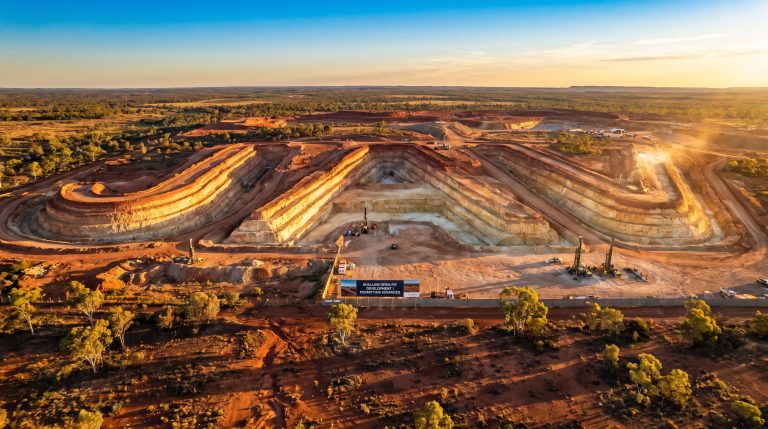
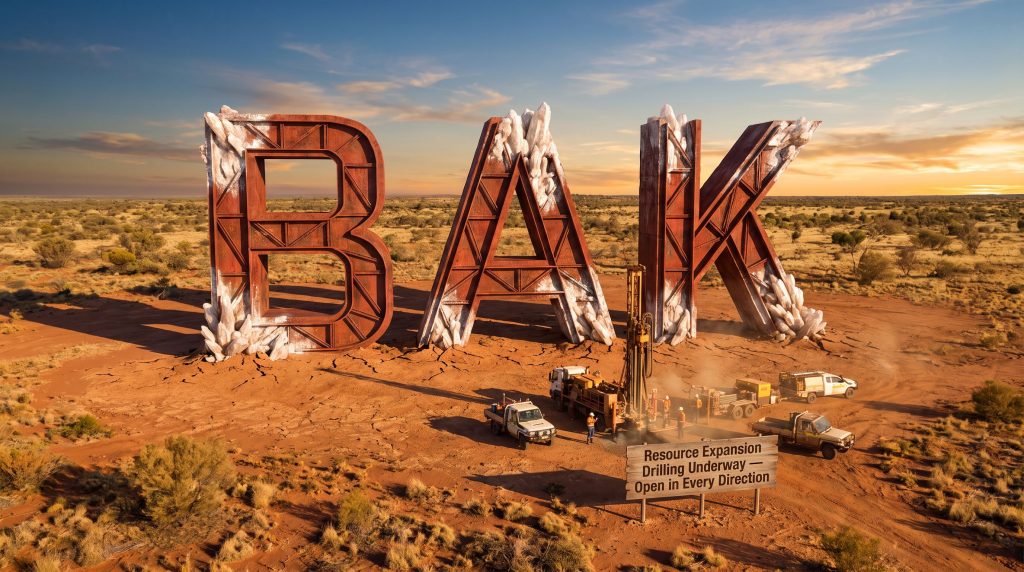
Barkly Rare Earths Limited (ASX: BAK) has started its 10,000-metre Phase 1 drilling programme at the Barkly Project in the Northern Territory, with the campaign aimed at expanding the company's existing 40 Mt @ 2,100 ppm TREO Inferred Mineral Resource. According to the ASX announcement, the resource remains open in all directions, making this drilling campaign a key development for investors watching potential resource growth through Q3 and Q4 CY2026.
The update matters because Barkly is moving from resource definition into active expansion drilling around known mineralisation. Initial samples are scheduled for laboratory dispatch this week, and the company has stated that first assay results will be reported as they become available, setting up a steady flow of exploration news over the coming months.
"It is great to have the drill rig turning at Barkly and to see the Phase 1 programme now underway," said Craig Wright, Managing Director. "The team is determined to build a rare earths company of global significance and this drill campaign underpins that objective. This will be a robust period of news flow now the drill bit is spinning."
When big ASX news breaks, our subscribers know first
What Does the Barkly Drilling Programme Involve?
According to the drilling update, this is the first drilling at the Barkly Project in 2026 and marks the start of a programme designed to test shallow mineralisation close to the existing resource. Early activity is focused on sample quality, drilling efficiency, and building momentum across the wider campaign.
The Phase 1 programme includes approximately 400 shallow holes for a total of 10,000 metres, with average hole depths of about 25 metres. That shallow profile is relevant because it can lower drilling costs and support faster sample collection compared with deeper programmes.
The company also outlined several deeper holes early in the campaign. The first hole was one of several planned 60-metre-deep holes near the southwest optimised pit shell associated with the current Inferred Mineral Resource.
These deeper holes are intended to improve the geological framework by helping the company understand basin layering and test whether mineralisation continues beyond the current resource boundary. After that initial work, drilling has shifted to shorter holes around the existing resource, where Barkly sees scope to add tonnes close to known mineralisation.
Key programme details from the ASX update include:
- 10,000 metres of Phase 1 drilling
- Around 400 holes
- Average hole depth of ~25 metres
- Initial deeper holes of 60 metres
- Focus on shallow mineralisation near the current resource
- First laboratory sample dispatch scheduled this week
- Assay results to be released as available
For investors, that structure suggests a programme designed for scale and speed, with a large number of relatively shallow holes offering regular opportunities for geological updates.
What Does the Existing Barkly Resource Look Like?
The current Barkly Mineral Resource already gives the company a meaningful base from which to pursue expansion. As stated in the ASX announcement, the project hosts an Inferred Mineral Resource of 40 Mt @ 2,100 ppm TREO, containing 82,000 tonnes of TREO, and is reported under the JORC Code (2012) above a 430 ppm NdPr cut-off grade.
The company also stated that the resource includes 40 Mt @ 710 ppm Magnet Rare Earth Oxide (MREO) within the broader TREO grade.
| Resource metric | Value |
|---|---|
| Resource category | Inferred |
| Tonnage | 40 Mt |
| TREO grade | 2,100 ppm |
| MREO grade | 710 ppm |
| Contained TREO | 82,000 tonnes |
| NdPr cut-off grade | 430 ppm |
| Reporting standard | JORC Code (2012) |
The company further noted that the Mineral Resource has a high terbium component and low uranium and thorium. In practical terms, uranium and thorium are radioactive elements that can add handling and permitting complexity in some rare earth projects, so lower levels may be viewed as a positive technical feature.
Metallurgical test work cited in the announcement also adds context. Barkly said initial conventional leaching tests achieved 74% MREO extraction, while beneficiation work returned a mineral concentrate grading 29,000 ppm TREO. These are early technical indicators rather than economic conclusions, but they suggest the company is also advancing processing understanding alongside drilling.
Why Is the Immediate Zone Central to the Resource Growth Plan?
The majority of planned drilling is set within what Barkly calls the Immediate Zone, shown in the company's release as the area surrounding and adjacent to the existing resource. According to the announcement, this area coincides with a previously disclosed Exploration Target.
That focus is important because drilling close to an existing Mineral Resource often offers a clearer path to resource growth than more distant exploration. If mineralisation continuity is confirmed around the current footprint, Barkly may be able to feed those results into its planned Mineral Resource update in Q4 CY2026, subject to drilling and assay progress.
This does not guarantee a larger resource. However, it does mean the programme is aimed squarely at the area most likely to support a near-term upgrade if results are favourable.
How Is Data Quality Being Managed in the Field?
The use of two portable XRF instruments at the rig is worth noting. Portable XRF, or pXRF, is a handheld or field-based scanning tool used to give an early indication of element presence in samples. It does not replace laboratory assays, but it can help geologists prioritise sampling, support logging, and adjust field plans in real time.
Drilling is being carried out by Colling Exploration, an Indigenous-owned contractor based in Pine Creek, while RSC is handling geological logging, sampling, and quality management. Furthermore, that combination indicates Barkly is using external technical specialists to support data quality from the start of the campaign.
Rare Earths Explained: What Do TREO, MREO and NdPr Actually Mean?
Rare earth investing often comes with dense technical language, so this update is easier to assess with a simple explanation of the key terms.
Total Rare Earth Oxide (TREO) measures the total concentration of rare earth oxides in a deposit. It is a broad grade measure that captures the overall rare earth content.
Magnet Rare Earth Oxide (MREO) is the subset of rare earths most relevant to permanent magnets, including neodymium (Nd), praseodymium (Pr), terbium (Tb) and dysprosium (Dy). These elements are commonly used in high-performance magnets for electric vehicles, wind turbines, electronics and other advanced industrial applications.
NdPr refers to neodymium and praseodymium combined. It is frequently used as a benchmark in rare earth projects because these two elements are major value drivers in magnet applications.
| Term | Meaning | Why investors watch it |
|---|---|---|
| TREO | Total Rare Earth Oxide | Indicates total rare earth content |
| MREO | Magnet Rare Earth Oxide | Focuses on the higher-value magnet rare earth subset |
| NdPr | Neodymium + Praseodymium | Common value benchmark and cut-off metric |
| MREO ratio | MREO as a percentage of TREO | Helps assess how much of the resource is in magnet elements |
| ppm | Parts per million | Standard grade unit for rare earths |
| JORC | Australian reporting code for resources and reserves | Provides reporting consistency and disclosure standards |
Why does this matter at Barkly? Because a rare earth deposit with a stronger magnet rare earth component may attract more investor attention than one dominated by lower-value rare earths. In addition, Barkly's current resource includes 710 ppm MREO within 2,100 ppm TREO, which points to a meaningful magnet rare earth component in the deposit.
What Is the Timeline for News Flow Through the Second Half of 2026?
The ASX update provides a clear set of milestones for the remainder of CY2026. For market participants, this timeline gives structure to how the story may develop from drilling into resource work and related technical studies.
| Milestone | Expected timing |
|---|---|
| First assay results from Phase 1 drilling | As available in Q3 CY2026 |
| Ongoing exploration results | Q3 and Q4 CY2026 |
| Rare earths concentration and extraction testing | Ongoing |
| Geo-metallurgical test work and modelling | Q3 and Q4 CY2026 |
| Buntine exploration results | Q3 CY2026 |
| Mineral Resource update | Q4 CY2026, subject to drilling and assays |
| Follow-up exploration at Buntine | Q4 CY2026 |
The most closely watched item is likely to be the planned Mineral Resource update in Q4 CY2026. If drilling in the Immediate Zone supports continuity and additional tonnes around the current resource, that update could become a material valuation event.
At the same time, the company's metallurgical and geo-metallurgical work may help investors gauge whether geological scale is being matched by improving technical understanding of the ore.
Buntine Adds a Second Exploration Thread
Although the Barkly rare earths campaign is the main focus of the latest announcement, Barkly Rare Earths also highlighted the Buntine Project in the Northern Territory as another source of exploration news in 2026.
According to the company, the Fraynes Formation at Buntine is chronostratigraphically equivalent to the Barney Creek Formation, which hosts the McArthur River lead-zinc deposit. In simpler terms, this means the rocks at Buntine are of a similar age and depositional setting to rocks associated with a major Australian base metals deposit, which is one reason the area is being explored.
Barkly said polymetallic mineralisation has been identified across a 9-kilometre strike length, with rock chip results up to:
- 667 ppm zinc
- 1.0% lead
- 1,760 ppm cobalt
- 316 ppm copper
- 10.0% manganese
- 7,100 ppm nickel
- 239 ppm chromium
Buntine is still a secondary story compared with the Barkly rare earths programme, but upcoming results in Q3 CY2026 and planned follow-up work in Q4 CY2026 mean the company has more than one exploration catalyst on the calendar.
The next major ASX story will hit our subscribers first
Why Does This Barkly Update Matter to ASX Rare Earth Investors?
This drilling update is important because it shifts Barkly Rare Earths from preparation into active execution on a clearly defined resource expansion plan. The company is not drilling a conceptual target far from known mineralisation. Instead, it is testing shallow areas around an existing JORC Inferred Resource, where it believes more mineralisation may be added.
Several factors stand out from the ASX announcement:
- The company already has a 40 Mt rare earth resource as a starting base
- Mineralisation is reported to remain open in all directions
- The drilling design is relatively shallow, which may support cost and time efficiency
- Laboratory results are expected to start flowing in Q3 CY2026
- A Mineral Resource update is targeted for Q4 CY2026
- Barkly holds 100% of the 5,030 km² Barkly Project area
For investors looking at ASX rare earth stocks, the next question is straightforward: can Barkly convert an existing resource plus open-ended mineralisation into a larger resource base over the next two quarters? The answer will depend on drilling results, assay turnaround, and how much of the Immediate Zone can be translated into reportable resource growth.
At this stage, the company has established a clear work programme and timeline. With the drill rig active and first samples heading to the laboratory, Barkly Rare Earths has entered a period where operational progress is likely to be measured by regular field results rather than project concept alone.
Want to Be First to Know When Significant ASX Rare Earth Discoveries Hit the Market?
Discovery Alert's proprietary Discovery IQ model scans ASX announcements in real time, delivering instant alerts on significant mineral discoveries — including rare earths — so subscribers can assess actionable opportunities before the broader market reacts. Explore historic examples of major mineral discoveries and their market returns on Discovery Alert's dedicated discoveries page, and begin a 14-day free trial to position yourself ahead of the next significant ASX announcement.