Javelin Minerals Ltd
- ASX Code: JAV
- Market Cap: $25,626,213
Drilling Confirms Grade Continuity and Strike Extensions at Javelin Minerals' Eureka Gold Project
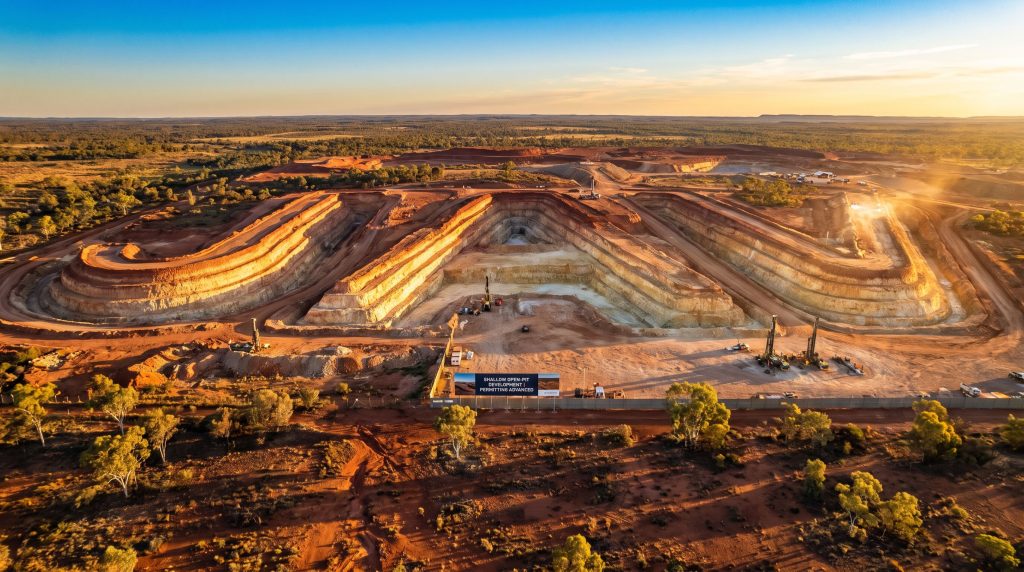
Javelin Minerals (ASX: JAV) has reported assay results from a 37-hole reverse circulation drilling program totalling 5,184 metres at its Eureka Gold Project, located 50km north of Kalgoorlie in Western Australia. The program confirmed continuity of shallow mineralisation within planned pit areas and extended known high-grade zones along strike, supporting the geological model around the existing 2.04Mt at 1.69g/t Au for 110,687oz Mineral Resource Estimate.
The drilling update matters because it addresses two issues that are central to investor assessment of a development-stage gold project: confidence in near-surface ounces that may support open pit mining, and evidence that the resource base may still have room to grow.
Furthermore, the company reported progress on permitting, with water extraction and native vegetation clearing approvals already granted and the Mining Development and Closure Plan at final stage.
"These results demonstrate the strength of the resource and the scope for further growth," said Javelin Executive Chairman Brett Mitchell.
"The drilling returned consistently strong intersections in the top 80m, which shows the excellent continuity of the mineralisation. It has also succeeded in extending the known mineralisation along strike, highlighting the potential to increase the resource."
When big ASX news breaks, our subscribers know first
A Targeted RC Drilling Program Focused on Near-Surface Confidence and Extensions
In the report, Javelin said the drilling was designed to test three main areas:
- Northern extensions of the planned Eureka open pit
- Southern extensions near the historic open pit
- Eureka Northwest and deeper down-plunge potential of the main mineralised system
The strongest reported intersections are summarised below.
| Hole ID | From (m) | To (m) | Width (m) | Grade (g/t Au) | Area |
|---|---|---|---|---|---|
| EKRC036 | 91 | 95 | 4 | 2.7 | Eureka Northwest |
| EKRC037 | 52 | 56 | 4 | 2.3 | Eureka Northwest |
| EKRC022 | 45 | 50 | 5 | 2.1 | Northern Eureka |
| EKRC019 | 67 | 72 | 5 | 2.1 | Northern Eureka |
| EKRC038 | 64 | 68 | 4 | 2.0 | Eureka Northwest |
| EKRC020 | 85 | 95 | 10 | 1.2 | Northern Eureka |
| EKRC008 | 47 | 51 | 4 | 1.6 | Southern Eureka |
| EKRC010 | 278 | 281 | 3 | 1.5 | Eastern structure |
A key theme in this project update is the concentration of drilling within 80 metres of surface. For investors, shallow mineralisation is often important because it can reduce waste stripping and support simpler mine designs, subject to mining studies and economic assessment.
Zone-by-Zone Results Show Continuity, Pit Boundary Definition and Strike Growth
Northern Eureka
According to the announcement, the northern part of the deposit had areas of incomplete historical drill coverage despite previous high-grade intersections in the broader zone. The latest drilling was aimed at filling those gaps inside the proposed open pit area.
Reported results included:
- EKRC022: 5m @ 2.1g/t Au from 45m
- EKRC020: 10m @ 1.2g/t Au from 85m
- EKRC019: 5m @ 2.1g/t Au from 67m
These assays confirm consistent mineralisation in underdrilled areas. That is useful for mine planning because continuity can improve confidence in the shape and distribution of ore within a pit shell, although no updated pit optimisation was included in this announcement.
The company also referenced earlier drilling in the area, including 4m @ 32.6g/t Au from 104m, to show that the northern zone remains associated with higher-grade mineralisation.
Southern Eureka
To the south of the historic open pit, the drilling appears to have had a different purpose. In the report, Javelin said the campaign largely closed off the possible southern continuation of mineralisation towards the edge of its tenure, while still extending known mineralisation closer to surface in the southern part of the planned pit.
The best result reported from this area was:
- EKRC008: 4m @ 1.6g/t Au from 47m
Near-surface laterite gold was also intersected, including:
- EKRC008: 3m @ 0.9g/t Au from 3m
For investors, this type of boundary drilling can be just as relevant as extension drilling. Defining where mineralisation ends helps reduce uncertainty in mine design and can avoid overestimating potential pit growth.
Eureka Northwest
The Northwest zone delivered the strongest grades of the current campaign. Javelin said this area is planned as a small open pit targeting shallow supergene enrichment, which refers to gold that has become concentrated near surface through weathering processes.
The results reported were:
- EKRC036: 4m @ 2.7g/t Au from 91m
- EKRC037: 4m @ 2.3g/t Au from 52m
- EKRC038: 4m @ 2.0g/t Au from 64m
According to the ASX release, these holes extended the northern strike extent of high-grade mineralisation at depth below the planned Eureka Northwest pit. That outcome may be relevant to both future resource updates and pit design, particularly if follow-up drilling confirms continuity beyond the current interpretation.
Near-Surface Laterite Mineralisation Adds Another Layer to the Project
The update also highlighted several zones of laterite mineralisation close to surface:
- EKRC007: 1m @ 1.0g/t Au from 1m
- EKRC008: 3m @ 0.9g/t Au from 3m
- EKRC018: 8m @ 0.9g/t Au from 4m
Laterite is a strongly weathered, iron-rich surface material that can host gold. In accessible mining settings, this type of mineralisation may have practical value because it occurs close to surface.
However, whether it becomes a meaningful part of a mine plan depends on tonnage, continuity, metallurgy and economics — none of which were fully assessed in this drilling announcement. Still, the presence of shallow laterite intervals may be useful in the context of early-stage pit sequencing if later studies support extraction.
Down-Plunge Drilling Points to Depth Potential Still to Be Tested
One of the more important elements of the announcement is the attempt to test mineralisation more than 400 metres below surface. Javelin said the main Eureka system has a moderate plunge to the north, while much of the historic deeper drilling has been limited to within 250 metres of surface.
The company drilled four deep RC holes on roughly 100-metre spaced sections over about 400 metres of potential strike extent. Two of those holes, EKRC009 and EKRC010, were completed to planned depth by RC methods. The other two, EKRC011 and EKRC012, encountered deeper weathering than expected and were stopped as RC pre-collars for later diamond drilling.
The report said both completed deep holes intersected the target structure at depth with quartz veining and polymetallic sulphides including pyrite and arsenopyrite — geological indicators associated with the Eureka gold system.
Assays were described as low tenor overall, although EKRC010 returned 3m @ 1.5g/t Au from 278m in a position east of the main Eureka trend. Javelin said that interval may represent a separate mineralised structure and requires further investigation.
In addition, the company noted that the completed deep holes were located on the southern edges of the projected high-grade plunge rather than in the interpreted core. That places more attention on the upcoming diamond tails for EKRC011 and EKRC012, which are intended to test the main target more directly.
What Are RC Pre-Collars and Diamond Tails? A Guide for Investors
For non-specialist readers, this part of the drilling program is worth understanding in more detail.
What Is an RC Pre-Collar?
An RC pre-collar is the upper section of a drillhole completed using Reverse Circulation drilling, a relatively fast and lower-cost method that returns rock chips to surface. It is commonly used to get through shallower sections efficiently before switching methods.
What Is a Diamond Tail?
A diamond tail is the deeper continuation of that same hole using a diamond drill rig. Rather than producing rock chips, diamond drilling cuts a solid rock core, providing significantly more geological detail.
Why Use Both Methods?
This combination is often used when:
- The upper part of the hole can be drilled more cheaply by RC
- The deeper target needs better geological information
- Water-bearing or structurally complex ground makes RC less effective at depth
At the Eureka Gold Project, the deeper targets sit below 400 metres and the company encountered unexpected weathering and water-related issues. Using RC first and then diamond drilling later is a practical way to manage drilling cost whilst still obtaining the core samples needed to assess structure, grade distribution and mineralisation style in more detail.
For investors, that matters because a successful deep extension could shift the project from being seen mainly as a shallow open pit opportunity to one with additional underground-style growth potential. That outcome, however, remains unproven and depends on future drilling.
The Current Resource Provides a Base for Potential Updates
Javelin referenced its July 2025 Eureka Mineral Resource Estimate, which remains at:
| Classification | Tonnes | Grade (g/t Au) | Contained Gold (oz) |
|---|---|---|---|
| Indicated | 1,359,500 | 1.80 | 78,677 |
| Inferred | 682,088 | 1.46 | 32,010 |
| Total | 2,041,588 | 1.69 | 110,687 |
The company noted that 71% of total ounces sit in the Indicated category. That classification generally reflects a higher level of geological confidence than Inferred material and is more useful for detailed mine planning studies.
The resource by weathering zone is shown below.
| Weathering Zone | Tonnes | Grade (g/t Au) | Contained Gold (oz) |
|---|---|---|---|
| Oxide | 283,370 | 1.73 | 15,774 |
| Transition | 337,753 | 1.64 | 17,812 |
| Fresh | 1,420,464 | 1.69 | 77,101 |
| Total | 2,041,588 | 1.69 | 110,687 |
The dominance of fresh rock suggests the system continues well below the weathered zone. Meanwhile, oxide and transition material near surface may be relevant for any future mining schedule, subject to metallurgical and economic work.
Permitting Progress Supports the Development Pathway
Beyond assay results, the ASX announcement also pointed to progress on approvals needed for mine development. Javelin said the following have recently been granted:
- Water Extraction Permit
- Native Vegetation Clearing Approval
Furthermore, the company confirmed that the Mining Development and Closure Plan is now at the final stage of approval.
For investors, this matters because project value is influenced not only by geology but also by how close an asset is to being mine-ready. Permitting progress does not guarantee mining will commence, but it can reduce one layer of execution risk if technical and economic work continues to support development.
The next major ASX story will hit our subscribers first
What Investors May Watch Next at the Eureka Gold Project
The latest drilling appears to have achieved three practical outcomes: improved confidence in shallow pit inventory, extension of mineralisation along strike, and preparation for a deeper test of the system.
Near-term areas likely to draw investor focus include:
- Diamond drill tails on EKRC011 and EKRC012, targeting the interpreted core of the down-plunge shoot
- Potential follow-up RC drilling on shallow zones ahead of any open pit planning
- Mining Development and Closure Plan approval
- A possible MRE update if the new strike extensions are incorporated
Taken together, the drilling results do not yet change the published resource, but they do provide new data around continuity and growth potential. In the report, Javelin presented the Eureka Gold Project as advancing on both development and exploration fronts, with shallow open-pit material supported by a still-open deeper system.
For the market, the next major test is likely to be whether diamond drilling can confirm stronger grades within the projected high-grade plunge at depth.
Want to Track the Next Major ASX Gold Discovery Before the Market Moves?
Discovery Alert's proprietary Discovery IQ model scans ASX announcements in real time, instantly identifying significant mineral discoveries like those unfolding at junior gold explorers across Western Australia — converting complex geological data into clear, actionable insights for investors at every level. Explore how major ASX mineral discoveries have historically delivered extraordinary returns on Discovery Alert's dedicated discoveries page, and begin your 14-day free trial to position yourself ahead of the broader market.